
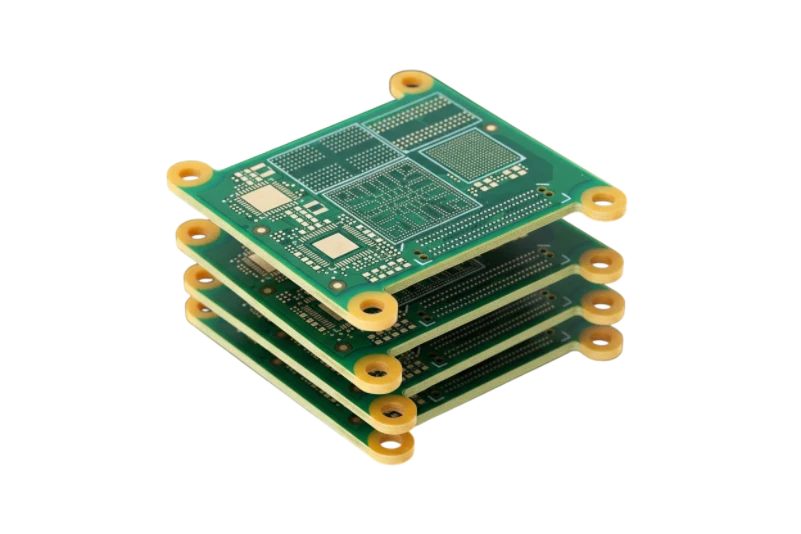
An FPC SMT assembly fixture transforms a flexible circuit into a stable manufacturing platform for solder paste printing, pick-and-place, inspection, and reflow.
Unlike rigid PCBs, flexible circuits can bend, stretch, curl, and change dimensions during thermal cycling. Without controlled support, the SMT process may experience stencil gasketing failures, component placement errors, solder bridging, or inconsistent reflow results.
A good FPC carrier design balances four engineering decisions:
- Carrier material and thermal stability.
- Surface flatness and pocket accuracy.
- FPC locating and hold-down method.
- Validation requirements before production release.
What is the correct FPC SMT fixture solution for my application?
The correct fixture depends on the FPC structure, assembly process, and production volume.
| Production situation | Recommended fixture approach | Main design priority |
|---|---|---|
| Prototype or low-volume manual assembly | Simple FR4 carrier or temporary fixation | Low tooling cost |
| Automated SMT with standard components | Precision pocket carrier with locating pins | Repeatable positioning |
| Fine pitch, BGA, CSP, or 0201 assembly | High-flatness carrier with full support | Prevent flex movement during placement |
| Double-sided SMT | Carrier with component clearance pockets | Protect assembled components |
| High-volume production | Magnetic cover fixture | Fast loading and repeatability |
| Ultra-thin FPC | Vacuum or full-area support carrier | Prevent bending and lifting |
A dedicated fixture becomes necessary when the FPC cannot maintain the flatness required by the SMT process window.
Which material should be used for an FPC SMT carrier?
Material selection affects thermal performance, machining accuracy, service life, and production cost.
| Material | Best use case | Advantages | Limitations |
|---|---|---|---|
| Synthetic stone (Durostone/Ricocel) | Production SMT and repeated lead-free reflow | Low thermal expansion, good dimensional stability, high temperature resistance | Higher tooling cost |
| Aluminum 6061/7075 | Applications requiring strength or heat transfer | Durable, easy machining, reusable | Higher thermal conductivity can influence heating balance |
| FR4 | Prototype and short production runs | Low cost and easy fabrication | Lower durability during repeated thermal cycling |
| Silicone carrier materials | Temporary support and special thin assemblies | Flexible support and clean removal | Process temperature limitations |
For repeated lead-free SMT production, synthetic stone is commonly selected because the fixture must survive repeated thermal cycles while maintaining dimensional control.
How flat should an FPC SMT fixture be?
Flatness is one of the most important fixture parameters because stencil printing depends on consistent contact between the FPC surface and stencil.
A practical production fixture design should control:
- Pocket depth.
- Carrier surface flatness.
- FPC support under component areas.
- Locating accuracy.
- Thermal deformation after reflow.
A typical fixture specification includes:
| Parameter | Recommended value/range | Why it matters | Verification method |
|---|---|---|---|
| Fixture thickness | 2.0mm–5.0mm (3.0mm common) | Provides rigidity and conveyor compatibility | Caliper measurement |
| Pocket depth | FPC thickness + approximately 0.05mm | Keeps FPC surface aligned with stencil plane | Depth gauge |
| XY pocket clearance | +0.05mm to +0.10mm per side | Allows loading and PI dimensional movement | Optical measurement |
| Positioning pin diameter | Hole diameter minus approximately 0.05mm | Maintains location without damaging FPC | Pin gauge |
| Spring pin force | 100g–200g | Provides retention without deformation | Force measurement |
| Magnetic force | >3000 Gauss for high-temperature magnets | Prevents lifting during processing | Gauss meter |
| Cover plate thickness | 0.15mm–0.20mm stainless steel | Provides retention without affecting printing | Micrometer |
| Thermal resistance | >260°C continuous capability | Supports lead-free reflow environments | Material datasheet |
| Fiducial marks | Two diagonal fixture references | Supports machine alignment | Optical inspection |
| ESD surface resistance | 10⁵–10⁹ ohms/sq | Controls static discharge risk | Resistance meter |
Which FPC SMT hold-down method should be selected?
The hold-down design determines loading speed, pressure distribution, and repeatability.
| Hold-down method | Suitable applications | Benefits | Considerations |
|---|---|---|---|
| Magnetic steel cover | Medium and high-volume SMT | Fast loading and uniform pressure | Higher initial tooling cost |
| Mechanical clamps | Special shapes or restricted areas | Adjustable retention | May reduce printable area |
| High-temperature tape | Prototype builds | Low tooling investment | Requires replacement and cleaning |
| Vacuum support | Very thin FPCs | Uniform support over large areas | Requires compatible equipment |
For production environments, magnetic fixtures are often preferred because they combine fast operator handling with consistent pressure.
How should an FPC fixture account for PI shrinkage and dimensional control?
Polyimide (PI) layers can change dimensions because of temperature exposure, humidity, and material construction.
Fixture design should provide controlled freedom of movement while maintaining alignment.
Important design considerations include:
- Allowing appropriate XY pocket clearance.
- Avoiding excessive constraint from locating pins.
- Supporting areas with components or fine-pitch pads.
- Measuring FPC dimensions before and after thermal cycling.
The locating system should secure the FPC without stretching the material.
How is an FPC SMT fixture designed and validated?
A reliable fixture development process begins before machining.
Review FPC manufacturing data
Provide:
- FPC Gerber files.
- Mechanical drawing.
- Component placement data.
- BOM information.
- Panel dimensions.
- Reflow profile if available.
The fixture designer should review:
- Component locations near fixture edges.
- Stiffener areas.
- Fiducial locations.
- Locating holes.
- Clearance requirements for bottom-side components.
Design the carrier structure
The fixture should maintain the FPC at the same plane as the SMT printing surface.
Design reviews should confirm:
- Full support under placement areas.
- Correct pocket depth.
- Clearance for assembled components.
- Proper cover plate access.
- Compatibility with SMT equipment.
Machine and inspect the fixture
Critical inspection points include:
- Pocket dimensions.
- Surface flatness.
- Pin location.
- Cover alignment.
- Edge finishing.
- Vacuum channels if required.
Validate before production release
Production approval should include:
- Thermal profile testing.
- Solder paste printing inspection.
- FPC registration verification.
- Dimensional measurement after reflow.
- Fixture identification and maintenance records.
What FPC SMT fixture problems occur during production?
| Failure mode | Fixture-related cause | Verification | Corrective action |
|---|---|---|---|
| Solder bridging | FPC surface not flat during printing | Check pocket depth and support | Adjust support height or remachine pocket |
| Component shifting | Poor locating accuracy or worn pins | Inspect pin position | Replace pins and verify alignment |
| FPC buckling | Insufficient expansion clearance | Measure pocket dimensions | Increase clearance for PI movement |
| Tombstoning | Uneven thermal transfer | Review thermal profile | Modify carrier thermal behavior |
| Solder balls | Gas or residue trapped under FPC | Inspect pocket cleanliness | Add vent features and improve cleaning |
| Fixture warping | Incorrect material selection or thermal stress | Check fixture on flat reference surface | Replace with suitable high-temperature material |
What information should be included in an FPC SMT fixture RFQ?
A complete supplier request should include engineering information and production requirements.
Engineering files
Provide:
- FPC Gerber files.
- Assembly drawing.
- Component placement files.
- BOM.
- Panel drawing.
- Reflow profile.
Manufacturing requirements
Specify:
- SMT equipment model.
- Single-side or double-side assembly.
- Expected production quantity.
- Carrier material preference.
- Loading method.
- Cleaning requirements.
- ESD requirements.
Supplier evidence to request
Ask for:
- Fixture drawing approval before machining.
- Material specification.
- Flatness inspection report.
- Dimensional inspection results.
- Thermal validation method.
- Maintenance recommendations.
FAQ
How often should an FPC fixture be cleaned?
Cleaning frequency depends on production conditions. Many production environments clean fixtures every 24 hours or approximately every 1,000 cycles to prevent flux buildup from changing pocket height.
Can one fixture support both sides of an FPC assembly?
Usually not without additional machining. Second-side assembly often requires clearance pockets for previously installed components.
What is better for production: magnetic fixtures or tape?
Magnetic fixtures generally provide better repeatability for production because loading force and positioning are more consistent. Tape is commonly used for prototypes and low-volume work.
Can a fixture supplier design from only Gerber files?
Many suppliers can begin fixture design from Gerber data, but mechanical drawings and assembly information reduce revision cycles.
How should ESD be controlled with FPC fixtures?
Use ESD-compatible materials and verify surface resistance where sensitive electronic components require static protection.
Related pages & tools
- DFM Guidelines: Learn how to design your FPC to be manufacturing-friendly before ordering fixtures.
- PCB Manufacturing Services: Explore our capabilities for both rigid and flexible circuit fabrication.
- Request a Quote: Get pricing for your FPC fabrication and assembly, including tooling costs.
- Teflon & Special Materials: Understand material properties that affect thermal expansion and fixture requirements.
Glossary
| Term | Definition |
|---|---|
| Durostone / Ricocel | Glass-reinforced synthetic stone materials commonly used for SMT carriers. |
| Reflow Profile | Temperature-time process curve used during soldering. |
| CTE | Coefficient of thermal expansion describing material expansion with temperature. |
| Fiducial Mark | Optical reference used for machine alignment. |
| Counter-bore | Machined cavity allowing clearance for existing components. |
| Stiffener | Reinforcement attached to the FPC itself, separate from an SMT carrier. |
| Vacuum Holes | Fixture openings used for vacuum support systems. |
A successful FPC SMT assembly fixture design connects flexible circuit construction with stable SMT manufacturing. The best carrier is not simply the most expensive or rigid option; it is the one that matches the FPC geometry, process requirements, thermal environment, and production volume.
By selecting the correct material, controlling flatness, specifying measurable tolerances, and validating the fixture before mass production, manufacturers can improve SMT yield and reduce assembly defects.
Ready to validate your design? Contact APTPCB for FPC manufacturing and assembly support.