
Gate Operator PCB: what this playbook covers (and who it’s for)
This guide is designed for electrical engineers, product managers, and procurement leads tasked with sourcing or scaling the production of a Gate Operator PCB. Whether you are designing a sliding gate controller for residential use or a high-cycle industrial barrier system, the printed circuit board is the central nervous system that manages motor control, safety sensors, and RF communications. A failure here results in trapped vehicles, security breaches, or costly field service calls.
In this playbook, we move beyond basic datasheet parameters to cover the practical realities of manufacturing these boards. You will find specific requirements for outdoor reliability, a breakdown of hidden risks that occur during mass production, and a validation plan to ensure your board survives harsh environments. We also provide a buyer-ready checklist to help you audit potential suppliers effectively.
At APTPCB (APTPCB PCB Factory), we have seen how minor oversight in the specification phase—such as inadequate copper weight for motor inrush currents or insufficient conformal coating—can lead to catastrophic field failures. This guide aims to equip you with the knowledge to define a robust specification package and select a manufacturing partner capable of delivering consistent quality.
When Gate Operator PCB is the right approach (and when it isn’t)
Deciding between a custom Gate Operator PCB and an off-the-shelf general-purpose controller is the first strategic decision.
Go with a Custom PCB when:
- Specific Form Factor: Your enclosure has unique dimensions or mounting constraints that standard controllers cannot fit.
- Integrated Features: You need to combine motor control, battery backup charging, loop detection, and RF decoding onto a single board to reduce wiring and assembly time.
- High Volume Cost Reduction: You are producing over 500 units per year, where the NRE (Non-Recurring Engineering) cost of a custom design is amortized, resulting in a lower per-unit cost than buying generic controllers.
- Proprietary Logic: Your system uses unique encryption for remotes or specific safety algorithms that require a custom microcontroller setup.
- Smart Integration: You are building a "smart gate" that needs direct interfaces for modern peripherals, such as a
360 Degree Camera PCBfor security monitoring or license plate recognition systems.
Stick to Off-the-Shelf Controllers when:
- Low Volume: You are building fewer than 100 units annually; the design and tooling costs for a custom PCB may not be recoverable.
- Standard Functionality: The application is a simple open/close operation with no need for advanced diagnostics, solar charging, or network connectivity.
- Immediate Time-to-Market: You need a solution today and cannot wait for the 3-4 week prototyping and testing cycle.
Specs & requirements (before quoting)
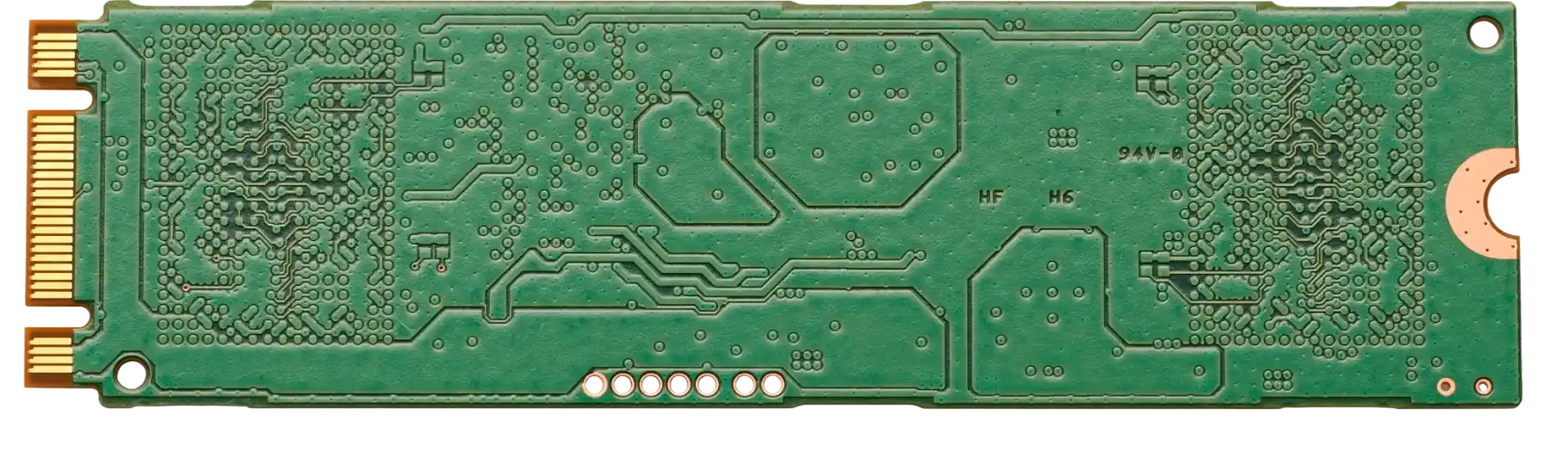
To get an accurate quote and a reliable product, you must define the following specifications clearly. Vague requirements lead to "standard" choices by the fab house that may not survive outdoor gate environments.
- Base Material (Laminate): Specify FR-4 with a High Tg (Glass Transition Temperature) of ≥150°C or ≥170°C. Gate operator enclosures in direct sunlight can easily exceed 60°C, and internal components add heat. High Tg prevents board delamination and barrel cracking.
- Copper Weight: Define ≥2oz (70µm) copper for outer layers if the board handles motor currents directly. Standard 1oz copper may overheat during stall conditions or high-duty cycles common in a
Barrier Gate PCB. - Surface Finish: Prefer HASL Lead-Free or ENIG (Electroless Nickel Immersion Gold). ENIG is better if you have fine-pitch components or need flat pads for keypad contacts; HASL is robust for larger through-hole components. Avoid OSP (Organic Solderability Preservative) for outdoor electronics as it degrades with shelf life and humidity.
- Solder Mask: Specify high-quality LPI (Liquid Photoimageable) solder mask, typically green or blue. Ensure the mask dam (bridge) between pads is sufficient to prevent solder bridging, especially on high-voltage relay pins.
- Conformal Coating: This is non-negotiable for outdoor electronics. Specify the type (Acrylic, Silicone, or Urethane) and the coverage area. Connectors and test points must be masked off.
- Trace Width & Spacing: Adhere to IPC-2221 standards for high-voltage spacing (creepage and clearance). For 110V/220V mains, ensure at least 2.5mm to 3mm clearance, or use slots (milling) between high-voltage pads to increase creepage distance.
- Terminal Blocks: Specify high-current, vibration-resistant terminal blocks (e.g., rising cage clamp style). Cheap leaf-spring terminals often loosen over time due to gate vibration, causing arcing and board burn-out.
- Relay Specifications: If relays are board-mounted, specify sealed or flux-tight versions to prevent wash solution ingress during manufacturing. Define the contact rating to handle the inductive load (motor), not just the resistive load.
- Test Points: Include accessible test points for 5V, 12V/24V rails, and ground. This is crucial for field technicians troubleshooting a system in the rain.
- Silkscreen Markings: Clearly label all terminal blocks (e.g., "MOTOR 1", "AC IN", "BATTERY"). Field installers rely on the PCB silkscreen, not the manual.
- Panelization: Request V-score or tab-routing that supports your assembly process. If you are hand-soldering large through-hole parts, single pieces might be better. If using automated SMT, panelize with fiducials and tooling holes.
- Documentation: Require a full Gerber package (RS-274X), Drill files, Pick & Place (XY) data, and a BOM (Bill of Materials) that lists approved alternates for critical components like capacitors and MOSFETs.
Hidden risks (root causes & prevention)
Moving from a working prototype to mass production introduces risks that are often invisible in the lab.
Risk: Relay Contact Welding
- Why it happens: Motors draw massive inrush currents (5-10x rated current) at startup. If the relay or PCB trace isn't rated for this surge, contacts weld shut, causing the gate to run continuously.
- Detection: Load testing with a locked rotor.
- Prevention: Use relays with high inrush ratings (TV-rated) and ensure PCB traces are wide enough or reinforced with solder/bus bars.
Risk: Moisture-Induced Dendrite Growth
- Why it happens: High humidity + voltage bias + ionic contamination (flux residue) = electrochemical migration (dendrites) growing between traces, causing shorts.
- Detection: Temperature-Humidity-Bias (THB) testing.
- Prevention: Strict cleanliness standards (IPC-A-610 Class 2 or 3), thorough flux cleaning before coating, and quality conformal coating.
Risk: Vibration Fatigue
- Why it happens: Gate operators vibrate. Heavy components like transformers or large capacitors held only by solder joints will eventually crack the copper pads.
- Detection: Vibration table testing.
- Prevention: Use adhesive (RTV silicone) to stake large components. Use plated through-holes with sufficient annular rings.
Risk: RF Interference (Range Reduction)
- Why it happens: Poor ground plane design or noisy switching power supplies on the PCB desensitize the onboard RF receiver (433MHz/868MHz).
- Detection: Spectrum analysis and field range tests.
- Prevention: Isolate the RF section ground; use shielded inductors in the power supply; keep high-current motor traces away from the antenna input.
Risk: Component Obsolescence
- Why it happens: A specific driver IC or microcontroller goes EOL (End of Life).
- Detection: BOM scrubbing tools.
- Prevention: Design with multi-source footprints where possible. APTPCB suggests validating alternate parts during the initial NPI phase.
Risk: Thermal Shutdown
- Why it happens: The linear regulator or MOSFET overheats in the sealed enclosure during summer.
- Detection: Thermal chamber testing at max load.
- Prevention: Use switching regulators (buck converters) instead of linear LDOs for voltage drops (e.g., 24V to 5V). Use the PCB copper as a heatsink with thermal vias.
Risk: Lightning/Surge Damage
- Why it happens: Long wire runs to keypads or loops act as antennas for induced surges.
- Detection: Surge immunity testing (IEC 61000-4-5).
- Prevention: Include MOV (Metal Oxide Varistors), TVS diodes, and gas discharge tubes on all inputs entering the board.
Risk: Connector Fretting
- Why it happens: Micro-movements in connectors due to thermal cycling cause oxidation and intermittent contact.
- Detection: Thermal shock testing.
- Prevention: Use gold-plated contacts for low-voltage signals; ensure connectors have positive locking mechanisms.
Validation plan (what to test, when, and what “pass” means)

Do not approve a production lot without a structured validation plan.
Visual Inspection (IPC-A-610):
- Objective: Verify solder quality and component placement.
- Method: AOI (Automated Optical Inspection) for SMT; Manual inspection for THT.
- Acceptance: Class 2 standard (or Class 3 for high-reliability industrial gates).
In-Circuit Test (ICT) / Flying Probe:
- Objective: Check for shorts, opens, and component values.
- Method: Automated probe testing before firmware loading.
- Acceptance: 100% pass on netlist connectivity.
Functional Test (FCT):
- Objective: Verify logic and power delivery.
- Method: Test jig that simulates motor load, limit switches, and safety inputs.
- Acceptance: Relays click, LEDs light up, correct voltage at motor terminals.
Burn-In Testing:
- Objective: Catch infant mortality failures.
- Method: Run the board under power for 4-24 hours, possibly cycling the relays.
- Acceptance: No failures after the duration.
Environmental Stress Screening (ESS) - Sample Basis:
- Objective: Validate coating and thermal design.
- Method: Thermal cycling (-20°C to +70°C) and humidity exposure.
- Acceptance: Board functions correctly during and after stress.
High Voltage Isolation Test (Hi-Pot):
- Objective: Ensure safety isolation between mains and low-voltage logic.
- Method: Apply high voltage (e.g., 1500V) across isolation barriers.
- Acceptance: Leakage current < 5mA; no breakdown.
RF Range Verification:
- Objective: Ensure remote control range is not compromised.
- Method: Test receiver sensitivity in a controlled environment.
- Acceptance: Signal reception at specified dBm level.
Stall Current Simulation:
- Objective: Verify traces and relays handle motor stall.
- Method: Apply locked-rotor current for a set duration (e.g., 2 seconds).
- Acceptance: No smoke, no trace delamination, relay contacts do not weld.
Supplier checklist (RFQ + audit questions)
Use this checklist when engaging a manufacturer for your Gate Operator PCB.
Group 1: RFQ Inputs (What you send)
- Complete Gerber files (RS-274X or X2).
- Centroid file (Pick & Place data).
- BOM with manufacturer part numbers and acceptable alternates.
- Assembly drawing showing component orientation (especially for polarized caps and diodes).
- Conformal coating drawing (areas to coat vs. mask).
- Programming instructions (hex file, checksum, voltage).
- Test procedure document (what to test and how).
- Packaging requirements (ESD bags, bubble wrap, bulk vs. individual).
Group 2: Capability Proof (What they must show)
- Do they have experience with heavy copper (2oz+) PCBs?
- Can they handle mixed assembly (SMT + heavy Through-Hole)?
- Do they have in-house conformal coating lines (spray or dip)?
- Can they perform X-ray inspection for QFN/BGA parts (if used)?
- Do they have potting capabilities if the unit needs full encapsulation?
- Can they source automotive-grade components if specified?
Group 3: Quality System & Traceability
- Is the factory ISO 9001 certified? (ISO 14001 is a bonus).
- Do they follow IPC-A-610 Class 2 or 3 standards?
- How do they track production batches? (Date codes, serial numbers).
- Do they perform Incoming Quality Control (IQC) on components (checking for fakes)?
- What is their procedure for handling non-conforming boards (MRB)?
- Do they store "Golden Samples" of approved boards for comparison?
Group 4: Change Control & Delivery
- Do they have a formal PCN (Product Change Notification) process?
- Will they notify you before changing a capacitor brand or PCB laminate supplier?
- What is the lead time for NPI vs. Mass Production?
- Do they offer safety stock programs for long-lead components?
- Can they provide DFM (Design for Manufacturing) reports before production starts?
Decision guidance (trade-offs you can actually choose)
Engineering is about compromise. Here is how to navigate the common trade-offs in Gate Operator PCB design.
- Trade-off: 2-Layer vs. 4-Layer PCB
- Guidance: If you prioritize cost, choose 2-layer. However, if you prioritize EMC/RF performance (better range for remotes) and heat dissipation, choose 4-layer. The internal ground planes act as heat spreaders and shields.
- Trade-off: HASL vs. ENIG Finish
- Guidance: If you prioritize cost and robust soldering for large terminals, choose HASL. If you prioritize flatness for fine-pitch chips or corrosion resistance for contacts, choose ENIG.
- Trade-off: Integrated vs. Modular Design
- Guidance: If you prioritize unit cost, integrate everything (RF, power, logic) on one board. If you prioritize serviceability, keep the high-voltage power board separate from the low-voltage logic board. If the power section blows due to lightning, you only replace the cheaper power board.
- Trade-off: Conformal Coating vs. Potting
- Guidance: If you prioritize repairability, choose conformal coating. If you prioritize maximum waterproofing and vibration resistance, choose potting (encapsulation), but accept that the board cannot be repaired.
- Trade-off: Screw Terminals vs. Plug-in Headers
- Guidance: If you prioritize installation speed, choose plug-in headers (installers wire the plug, then snap it in). If you prioritize current capacity and cost, choose fixed screw terminals.
FAQ
Q: Do I really need conformal coating for a board inside a plastic box? A: Yes. Enclosures "breathe" due to temperature changes, drawing in moisture that condenses on the PCB. Insects and geckos also enter enclosures and cause shorts. Coating is essential for longevity.
Q: Can I use standard FR-4 material? A: For consumer indoor electronics, yes. For gate operators, we recommend High-Tg FR-4 (Tg150 or higher) to withstand the thermal cycling of outdoor environments without delaminating.
Q: How do I improve the range of the onboard RF receiver? A: Keep the antenna area clear of copper pours on all layers. Use a dedicated ground plane for the RF section. Ensure the power supply to the RF chip is clean (low ripple).
Q: What is the difference between a Gate Operator PCB and a Barrier Gate PCB?
A: A Barrier Gate PCB (used in parking lots) cycles much more frequently (thousands of times a day) than a residential gate. It requires more robust thermal management for the motor driver and higher-grade capacitors to withstand the constant ripple current.
Q: Can APTPCB help with the layout design? A: While we primarily focus on manufacturing, our DFM engineers can review your layout to suggest improvements for yield and reliability. We can point out tracks that are too thin for the current or components that are too close to the edge.
Q: How do I handle high-voltage safety on the PCB? A: Use slots (air gaps cut into the PCB) between high-voltage and low-voltage areas to increase creepage distance. Follow IEC 60950 or UL 325 spacing guidelines.
Q: Should I use a fuse on the PCB? A: Yes, but make it replaceable. Use fuse clips rather than soldering the fuse directly, unless it is a specific safety requirement to prevent user tampering.
Q: What about smart features like cameras?
A: If your system needs to integrate a 360 Degree Camera PCB, ensure your main board has a high-speed interface (like Ethernet or USB) and sufficient power budget (PoE or dedicated 12V rail) to support the camera module.
Related pages & tools
- Security Equipment PCB – Explore our capabilities in manufacturing high-reliability boards for access control and surveillance systems.
- Heavy Copper PCB – Learn why increasing copper weight is critical for handling the high inrush currents of gate motors.
- PCB Conformal Coating – Understand the different coating options available to protect your electronics from moisture and pests.
- Box Build Assembly – See how we can handle the full assembly of your gate controller, including enclosure integration and testing.
- DFM Guidelines – Download our design rules to ensure your board is optimized for efficient and defect-free manufacturing.
Request a quote
Ready to validate your design or start production? Send us your files for a comprehensive DFM review and a competitive quote.
What to include for a Gate Operator PCB quote:
- Gerber Files: All layers, drill files, and outline.
- BOM: Excel format with quantities and part numbers.
- Specs: Copper weight, Tg requirement, and surface finish.
- Volume: Prototype quantity vs. estimated annual usage.
- Special Requirements: Conformal coating type, programming needs, or functional testing.
Get Your Quote & DFM Review Now – Our engineers are ready to help you scale your gate operator production safely.
Conclusion
Sourcing a reliable Gate Operator PCB is about more than just finding the lowest price; it is about ensuring safety, longevity, and consistent performance in the field. By defining strict requirements for materials and testing, understanding the hidden risks of outdoor deployment, and partnering with a capable manufacturer like APTPCB, you can build a product that withstands the elements and the test of time. Whether you are building a simple residential slider or a complex industrial barrier, the right PCB foundation is the key to a successful deployment.