
Definition, scope, and who this guide is for
A hair steam cap controller pcb is the electronic brain responsible for regulating temperature, timing, and safety mechanisms within thermal hair treatment devices. Unlike standard consumer electronics, this PCB operates in a uniquely hostile environment characterized by high humidity, direct steam exposure, and fluctuating thermal cycles, all while managing mains voltage (110V/220V) for heating elements. The controller must precisely modulate power to PTC heaters or resistive wires to prevent scalp burns while ensuring the device remains safe to touch.
This playbook is designed for product engineers, procurement managers, and quality leads who are sourcing or designing control boards for personal care appliances. It moves beyond basic circuit theory to address the manufacturing realities of producing safe, reliable beauty electronics. Whether you are scaling a new prototype or switching suppliers to improve yield, this guide provides the technical criteria needed to validate a manufacturer.
At APTPCB (APTPCB PCB Factory), we understand that the difference between a successful product and a recall often lies in the PCB's ability to resist moisture ingress and maintain dielectric strength over time. This guide outlines the specifications, risks, and validation steps required to procure a robust hair steam cap controller pcb that meets international safety standards like UL, CE, and CCC.
When to use hair steam cap controller pcb (and when a standard approach is better)
Understanding the definition and scope of these controllers leads directly to the decision of when to deploy a dedicated PCB solution versus a simpler mechanical alternative.
A dedicated hair steam cap controller pcb is essential when your product requires precise temperature regulation (e.g., maintaining exactly 55°C ±2°C), programmable timer settings, or intelligent safety features like auto-shutoff upon detecting abnormal current or heat. If your device aims to offer multiple heat modes (Low/Medium/High) or integrates with digital displays and touch controls, a custom PCB is mandatory. This is similar to the complexity found in an ipl hair removal controller pcb, where pulse timing and energy levels must be strictly controlled to prevent injury.
Conversely, a standard approach using simple mechanical components—such as a bimetallic thermostat wired directly to a heating element—may be better for entry-level, ultra-low-cost devices. If the product has only one "On/Off" state and relies on the self-limiting properties of a PTC heater without need for user feedback or precise timing, a full controller PCB might be over-engineering. However, as consumer expectations for safety and "smart" features rise, even budget models are shifting toward PCB-based control to ensure consistent performance and compliance with stricter safety regulations.
hair steam cap controller pcb specifications (materials, stackup, tolerances)
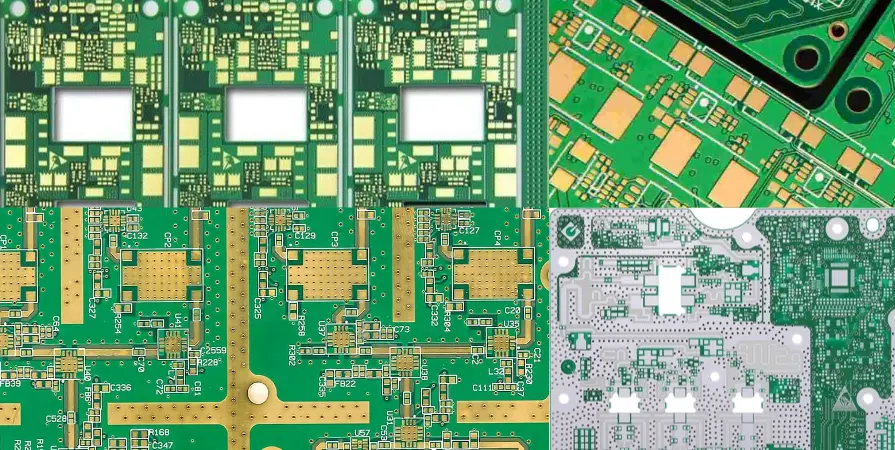
Once you have determined that a dedicated controller is necessary, the next step is defining the rigid specifications that will ensure the board survives its humid operating environment.
- Base Material: FR-4 High Tg (Glass Transition Temperature). Recommend Tg ≥ 150°C to withstand localized heating from power components without delamination.
- Copper Weight: Minimum 1 oz (35µm) finished copper. For higher power traces driving the heating element, consider 2 oz to reduce resistive heating on the board itself.
- Solder Mask: High-quality LPI (Liquid Photoimageable) mask. Green is standard, but white is often used in beauty devices for aesthetics. Crucially, the mask must have high chemical resistance.
- Surface Finish: HASL (Lead-Free) is acceptable for cost, but ENIG (Electroless Nickel Immersion Gold) is preferred for better corrosion resistance in humid environments.
- Conformal Coating: This is non-negotiable. Specify acrylic, silicone, or urethane coating (e.g., Humiseal) with a thickness of 25–75µm to protect against steam and condensation.
- Creepage and Clearance: Adhere strictly to UL 60335-1 standards. For 220V mains, maintain >3mm clearance between high-voltage and low-voltage (SELV) sections.
- PCB Thickness: Standard 1.6mm is robust. Avoid 0.8mm or 1.0mm unless space is critically tight, as thinner boards may warp under thermal cycling.
- Flame Retardancy: Must meet UL 94 V-0 flammability rating. This is a critical safety requirement for any device generating heat near the head.
- Component Temperature Ratings: All onboard components (capacitors, MCUs, regulators) should be rated for at least 85°C or 105°C operation.
- Trace Width/Spacing: Power traces must be sized for the maximum current (plus a safety margin). Signal traces should be kept away from AC power lines to prevent noise interference.
- Test Points: Include accessible test points for VCC, GND, and Heater Output to facilitate In-Circuit Testing (ICT) during mass production.
- Documentation: Require IPC-A-600 Class 2 acceptance criteria as the baseline for PCB fabrication quality.
hair steam cap controller pcb manufacturing risks (root causes and prevention)
Defining specifications is only half the battle; understanding where manufacturing can go wrong allows you to preemptively mitigate failures that are specific to steam-generating devices.
- Risk: Conductive Anodic Filament (CAF) Growth
- Root Cause: High humidity combined with voltage bias causes copper salts to migrate along glass fibers inside the FR-4, creating internal shorts.
- Detection: High-voltage insulation resistance testing (SIR).
- Prevention: Use "CAF-resistant" FR-4 materials and ensure adequate spacing between high-voltage vias.
- Risk: Solder Joint Corrosion
- Root Cause: Steam or condensation penetrates the enclosure and reacts with flux residues or exposed copper.
- Detection: Salt spray testing or damp heat cycling.
- Prevention: Thorough flux cleaning after assembly and 100% coverage with conformal coating.
- Risk: Triac/Relay Overheating
- Root Cause: Undersized heat dissipation pads or poor thermal interface to the enclosure.
- Detection: Thermal imaging during load testing.
- Prevention: Design large copper pour areas connected to the switching component's thermal tab; use thermal vias.
- Risk: False Touch Triggers
- Root Cause: Condensation on the control panel changes the capacitance of touch sensors.
- Detection: Water droplet tests on the user interface.
- Prevention: Implement software filtering for water rejection and use physical isolation (air gap or foam) between the PCB and the outer shell.
- Risk: High Voltage Arcing
- Root Cause: Dust accumulation combined with moisture bridging the gap between AC traces.
- Detection: Hi-Pot (Dielectric Withstand) testing.
- Prevention: Add slots (routing cutouts) between high-voltage and low-voltage areas to physically increase the creepage distance.
- Risk: Component Vibration Failure
- Root Cause: Drops or rough handling of the consumer device cracks solder joints on heavy components (like transformers).
- Detection: Drop testing and vibration testing.
- Prevention: Use adhesive bonding (RTV silicone) to secure heavy components to the PCB.
- Risk: Inconsistent Heating
- Root Cause: Poor calibration of the NTC thermistor circuit or tolerance variance in the NTC itself.
- Detection: Temperature profiling verification.
- Prevention: Use 1% tolerance resistors in the sensing divider and perform calibration during the Functional Circuit Test (FCT).
- Risk: Early Life Failure (Infant Mortality)
- Root Cause: Defective components or weak solder joints that pass initial tests but fail after a few thermal cycles.
- Detection: Burn-in testing.
- Prevention: Implement a burn-in cycle (e.g., 4 hours at max load) for 100% of production units.
hair steam cap controller pcb validation and acceptance (tests and pass criteria)
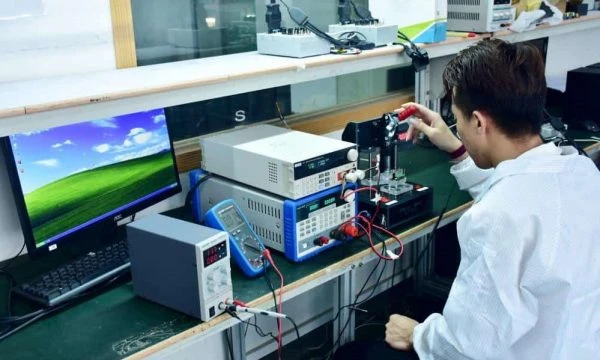
To ensure the risks identified above are effectively managed, a rigorous validation plan must be executed before accepting a production lot.
- Objective: Electrical Safety (Hi-Pot)
- Method: Apply 1500V AC (or 3000V AC depending on class) between the AC input and any accessible metal parts or low-voltage circuits for 1 minute.
- Acceptance Criteria: Leakage current must be < 5mA (or as per specific standard); no breakdown or arcing.
- Objective: Moisture Resistance
- Method: Place the PCB in a humidity chamber at 40°C / 93% RH for 48 hours, then power it on immediately.
- Acceptance Criteria: Device functions normally; no erratic behavior; insulation resistance remains > 10 MΩ.
- Objective: Thermal Cycling
- Method: Cycle the PCB between -20°C and +85°C for 50 cycles, with 30-minute dwell times.
- Acceptance Criteria: No solder joint cracks; no delamination; functional test passes.
- Objective: Conformal Coating Quality
- Method: UV light inspection (if coating contains UV tracer) or visual inspection under magnification.
- Acceptance Criteria: Continuous coverage over all required areas; no bubbles, voids, or peeling; keep-out areas (connectors) are clean.
- Objective: Power Surge Immunity
- Method: Apply surge voltages (e.g., ±1kV Line-to-Line) to the AC input.
- Acceptance Criteria: The controller must not be damaged and must not enter an unsafe state.
- Objective: Temperature Control Accuracy
- Method: Run the device and measure the heating element temperature with an external thermocouple.
- Acceptance Criteria: Measured temperature must stay within ±3°C of the setpoint after stabilization.
- Objective: Short Circuit Protection
- Method: Intentionally short the heater output.
- Acceptance Criteria: Fuse blows or protection circuit activates immediately; no smoke or fire; PCB traces do not burn open.
- Objective: Button/Interface Durability
- Method: Robotically press buttons 10,000 times.
- Acceptance Criteria: Tactile feel remains consistent; switch contact resistance remains within spec.
hair steam cap controller pcb supplier qualification checklist (RFQ, audit, traceability)
Validating the product is critical, but validating the supplier ensures consistency over time. Use this checklist when evaluating partners like APTPCB.
RFQ Inputs (What you send)
- Complete Gerber files (RS-274X) with clear drill charts.
- Bill of Materials (BOM) with approved vendor list (AVL) for critical safety components (Relays, Fuses, NTCs).
- Assembly drawing indicating component polarity and special mounting instructions (e.g., "Glue capacitor C4").
- Conformal coating drawing specifying areas to coat and areas to mask.
- Test procedure document (ICT and FCT requirements).
- Volume projections (EAU) and batch sizes.
- Packaging requirements (ESD bags, humidity indicator cards).
- Regulatory compliance requirements (RoHS, REACH, UL).
Capability Proof (What they provide)
- ISO 9001:2015 certification (mandatory).
- UL file number for the bare PCB fabrication (ZPMV2).
- Photos/video of their conformal coating line (automated spray vs. manual dip).
- Evidence of in-house testing equipment (Hi-Pot tester, Humidity chamber, AOI).
- DFM report sample from a previous similar project.
- Experience with similar high-voltage/consumer appliance electronics.
Quality System & Traceability
- Do they use AOI (Automated Optical Inspection) for 100% of SMT production?
- Is there a system to trace a specific PCB batch back to the raw laminate lot?
- How do they handle X-Ray inspection for any BGA or leadless components (if used)?
- Do they perform First Article Inspection (FAI) for every new revision?
- Is there a dedicated station for functional testing (FCT) with pass/fail logging?
- What is their procedure for handling non-conforming material (MRB)?
Change Control & Delivery
- Do they have a formal PCN (Product Change Notification) process?
- Can they support buffer stock or consignment inventory models?
- What is the standard lead time for bare PCBs vs. full turnkey assembly?
- How do they protect PCBs from moisture during shipping (vacuum sealing)?
- Do they offer failure analysis support if field returns occur?
- Is there a clear escalation path for engineering issues?
How to choose hair steam cap controller pcb (trade-offs and decision rules)
Selecting the right configuration for your hair steam cap controller pcb involves balancing performance, safety, and cost. Here are the key trade-offs to consider.
- Single-Sided vs. Double-Sided PCB:
- Decision Rule: If your circuit is simple (just a power supply and relay) and space allows, choose Single-Sided (CEM-1 or FR-4) for lowest cost. If you have a complex MCU, tight space constraints, or need robust ground planes for noise immunity, choose Double-Sided FR-4.
- Through-Hole vs. SMT Components:
- Decision Rule: If mechanical vibration is a major concern or you are hand-soldering prototypes, prioritize Through-Hole for connectors and heavy caps. For mass production efficiency and miniaturization, choose SMT for 90% of components.
- On-Board Power Supply vs. External Module:
- Decision Rule: If you prioritize a slim, lightweight cap design, choose an External Power Adapter (moving the high voltage out of the cap). If you prioritize a "cordless" feel or lower BOM cost, choose an On-Board AC-DC circuit, but ensure rigorous safety isolation.
- Relay vs. Triac Switching:
- Decision Rule: If you need absolute isolation when off and lower heat generation, choose a Relay. If you need precise PID temperature control (rapid switching/dimming) and silence (no clicking sound), choose a Triac.
- Generic vs. Brand Name Components:
- Decision Rule: For critical safety components (Fuse, X-Capacitor, Triac), always choose Brand Name (e.g., Littelfuse, ST). For generic passives (resistors, LEDs), standard Asian brands are acceptable to reduce cost.
- Conformal Coating vs. Potting:
- Decision Rule: If the PCB is fully enclosed and only needs humidity protection, choose Conformal Coating. If the PCB is located where water might pool or submerge it (like in a smart foot spa controller pcb), choose Full Potting (encapsulation).
hair steam cap controller pcb FAQ (cost, lead time, Design for Manufacturability (DFM) files, materials, testing)
What factors most significantly impact the cost of hair steam cap controller pcb manufacturing? The primary cost drivers are the layer count (1 vs. 2 layers), the type of conformal coating required (manual vs. automated), and the volume of copper (1oz vs. 2oz). Additionally, using specialized "brand name" connectors instead of compatible alternatives can increase BOM cost by 15-20%.
What is the typical lead time for a hair steam cap controller pcb order? For standard FR-4 boards, bare PCB fabrication typically takes 5-7 days. Full turnkey assembly (sourcing components + assembly) usually takes 2-3 weeks, depending on component availability. Expedited services can reduce this to 10-12 days for urgent NPI builds.
Which DFM files are required to quote a hair steam cap controller pcb accurately? You must provide Gerber files (RS-274X), a Centroid file (Pick & Place data), a BOM (Bill of Materials) with manufacturer part numbers, and an assembly drawing. If functional testing is required, a test procedure document is also mandatory.
Why is conformal coating critical for hair steam cap controller pcb reliability? Steam caps generate a micro-climate of high heat and 100% humidity. Without conformal coating, moisture will condense on the PCB surface, leading to dendritic growth (electromigration) between traces, causing short circuits or erratic behavior in the control logic.
Can I use a standard FR-4 material for a hair steam cap controller pcb? Yes, standard FR-4 is generally acceptable, but High-Tg FR-4 (Tg 150°C or higher) is recommended if the PCB is mounted close to the heating element. This prevents the board from softening or delaminating over years of thermal cycling.
What are the acceptance criteria for hair steam cap controller pcb functional testing? Acceptance criteria should include: passing the Hi-Pot safety test (no breakdown), verifying the power consumption is within range (e.g., <0.5W standby), confirming the heater switches on/off at the correct temperature thresholds, and ensuring all LEDs/buzzers function correctly.
How does a hair steam cap controller pcb differ from a smart hair dryer inverter pcb? A hair steam cap controller focuses on maintaining a static temperature over a long period (15-30 mins) in high humidity. A smart hair dryer inverter pcb manages high-speed motor control and rapid air heating, requiring more complex power electronics and thermal management for high-current switching.
Is it necessary to perform burn-in testing on every hair steam cap controller pcb? For high-quality consumer appliances, a 100% burn-in (e.g., 2-4 hours) is highly recommended during the initial production batches to weed out infant mortality failures. As yields stabilize, this can often be reduced to a sampling plan or a shorter duration.
Resources for hair steam cap controller pcb (related pages and tools)
- PCB Conformal Coating Services
- Learn about the specific coating materials and application methods that protect PCBs from the steam and humidity inherent in hair care devices.
- Turnkey PCB Assembly
- Understand how APTPCB manages the entire supply chain, from sourcing safety-critical components to final assembly, simplifying your procurement process.
- FR-4 PCB Manufacturing
- Explore the specifications of the standard rigid substrate used for these controllers, including Tg ratings and stackup options.
- DFM Guidelines
- Access design rules that help you optimize your PCB layout for manufacturability, reducing the risk of shorts and improving yield.
- Testing and Quality Assurance
- Review the testing protocols, including AOI, ICT, and functional testing, that ensure every controller meets safety standards before shipping.
Request a quote for hair steam cap controller pcb (Design for Manufacturability (DFM) review + pricing)
Ready to move your design from concept to production? Request a Quote from APTPCB today to receive a comprehensive DFM review and competitive pricing for your project.
To get the most accurate quote and engineering feedback, please prepare the following:
- Gerber Files: For the bare PCB fabrication.
- BOM (Bill of Materials): Including specific part numbers for safety components.
- Assembly Drawings: Showing any special mounting or coating requirements.
- Test Requirements: If you need us to perform functional testing or IC programming.
- Volume: Estimated annual usage or batch size.
Conclusion (next steps)
Sourcing a reliable hair steam cap controller pcb is about more than just finding the lowest price; it is about ensuring user safety and product longevity in a challenging, humid environment. By strictly defining your material specifications, understanding the risks of moisture ingress and thermal cycling, and validating your supplier against a robust checklist, you can mitigate the common pitfalls of beauty electronics manufacturing. Whether you are building a standalone steam cap or a complex ipl hair removal controller pcb, the right manufacturing partner will help you navigate these technical requirements to deliver a safe, high-quality product to market.