
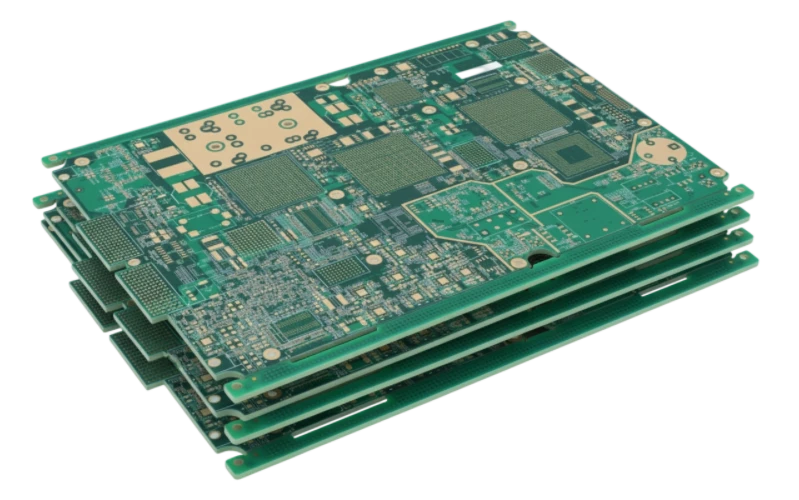
PCB handling damage is best prevented by controlling where the board is supported, how force enters the assembly, what surfaces and people contact it, and how each high-risk operation is verified. The objective is not simply to avoid a visibly broken PCB. It is to prevent hidden damage such as cracked ceramic components, pad cratering, fractured solder joints, contaminated contacts, moisture-related delamination, and ESD damage.
For designers, that means planning panelization, component placement, and mechanical interfaces before release. For NPI and quality teams, it means identifying high-strain and contamination-sensitive operations and defining measurable release criteria. For procurement, it means asking a supplier for the process controls and evidence appropriate to the actual assembly rather than accepting a generic statement that boards are "handled carefully."
There is no single microstrain, board-flex, cleanliness, or handling limit that is safe for every PCBA. Limits should come from the applicable customer requirement, component or material supplier, product qualification plan, or documented manufacturing process.
Where does PCB handling damage actually occur?
Handling risk extends from bare-board storage through assembly, test, depanelization, system integration, and shipping. The highest-risk operation is not necessarily manual handling: a poorly supported test fixture, connector insertion step, depaneling process, or mechanical installation can impose substantial local board flexure.
IPC/JEDEC-9704A specifically treats operations such as depanelization, manual handling, rework, connector installation, board testing, mechanical assembly, and shipping as candidates for strain characterization.
Mechanical damage also interacts with other controls. IPC-1601A addresses protection of printed boards from physical damage, contamination, solderability degradation, moisture uptake, and ESD where required. Moisture-sensitive components require additional controls under the applicable IPC/JEDEC J-STD-033 requirements.
The practical question is therefore:
What can damage this particular board, where will that load occur, and what evidence will show that the process remains controlled?
Which handling risks require the most attention?
Use the following matrix before deciding whether ordinary edge handling is sufficient or whether the product needs dedicated support, fixturing, process qualification, or strain measurement.
| Condition | Primary failure risk | Manufacturing response | Evidence to request |
|---|---|---|---|
| MLCCs, BGAs, LGAs, QFNs, brittle sensors, or large rigid packages near panel breaks | Component cracking, solder fracture, pad cratering | Reduce board flexure, review tab/score locations and component orientation, select controlled depanelization | Strain study where risk warrants it; post-process inspection/test |
| Thin, large, irregular, or heavily populated PCBA | Sagging and twisting during printing, test, transport, or installation | Add adequate panel/fixture support and control clamping or probe forces | Fixture review and repeatable process setup |
| Flex or rigid-flex construction | Creasing, copper fatigue, rigid-flex transition damage | Support the assembly by designed handling areas and respect bend restrictions | Handling instructions and visual/electrical acceptance |
| Soft or mechanically sensitive RF laminate | Surface damage and deformation | Control clamping, tooling contact, and surface handling | Material-specific DFM/process review |
| MCPCB or other heavy metal-backed board | Impact damage, bending during separation, damaged components | Support mass during transport and use a separation method compatible with the metal construction | Edge inspection and depanelization process approval |
| ESD-sensitive assembly | Immediate or latent electrical damage | Operate within a documented ESD control program | ESD control verification appropriate to the process |
| Exposed contacts, gold fingers, solderable surfaces | Oils, salts, scratches, solderability problems | Handle by permitted edges/rails with clean gloves or finger protection where appropriate | Visual cleanliness and process-specific acceptance |
| Moisture-sensitive devices or moisture-sensitive construction | Package cracking or delamination during thermal processing | Track exposure and dry-pack/bake only under approved conditions | MSL records, HIC/desiccant status, exposure history as applicable |
This matrix is more useful than assigning one generic "safe handling" specification to every product.
How should panelization and component placement reduce breakage risk?
Prevention begins before the first panel reaches assembly.
Panel rails should provide reliable transport and handling areas without requiring operators or equipment to grip populated regions. Breakaway tabs, routed paths, and V-scores must support the panel during assembly while still allowing controlled separation. Tooling holes and fiducials should also be positioned so fixtures can locate the panel without bending it.
Sensitive components deserve particular attention near separation features. Brittle ceramic components and area-array packages can be damaged when the surrounding PCB bends, even when the component itself is never touched. The required clearance cannot be reduced to a universal 3 mm or 5 mm rule because risk depends on board thickness, laminate, component construction, orientation, support, and separation method.
Use the manufacturer’s DFM guidelines to resolve panel construction and process-specific spacing before fabrication rather than treating depanelization as a downstream assembly problem.
For HDI or densely populated designs, also check that rails provide usable machine handling space and that fixtures, router heads, blades, clamps, and supports will not collide with tall components.
Which handling method should be used for different PCB constructions?
Material and construction change the mechanical problem.
RF and microwave boards
Soft or mechanically sensitive RF laminates can be damaged by inappropriate clamping, scratching, or uncontrolled contact. Handling requirements should follow the actual laminate system rather than assuming FR-4 behavior. When selecting these materials, review the mechanical and processing implications alongside their electrical properties in the Rogers and Teflon materials guide.
Metal-core PCBs
Aluminum- or copper-backed boards can be considerably heavier and behave differently during singulation than standard glass-reinforced laminates. The depanelization of MCPCB should therefore be reviewed together with board thickness, metal type, outline, component proximity, expected volume, and available tooling.
Do not assume that manually flexing a scored metal-core assembly is acceptable simply because the unpopulated substrate feels rigid. Separation forces can still be transmitted into mounted LEDs, ceramic components, solder joints, and dielectric interfaces.
Flex and rigid-flex circuits
Flexible construction reduces stiffness but does not make the circuit immune to mechanical damage. Avoid uncontrolled creasing, twisting, pulling on flex tails, or concentrating force at rigid-to-flex transitions. Temporary carriers or assembly fixtures may be appropriate where the product cannot support itself through printing, placement, reflow, or test.
Where should mechanical strain be controlled during assembly?
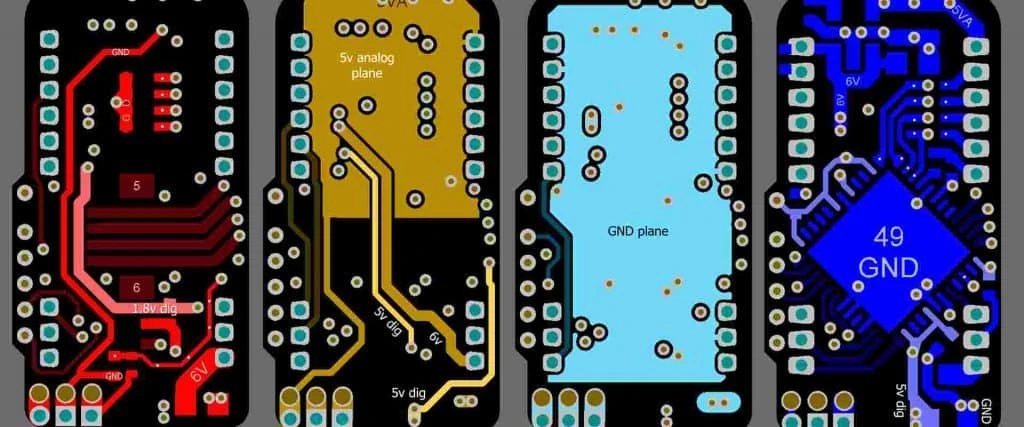
The most useful process audit follows the board and identifies every step that can bend, twist, compress, shock, or locally load it.
During solder paste printing, inadequate underside support can allow the panel to deflect under printing forces. During component placement, excessive or incorrectly controlled Z-axis force can load the board locally. Test fixtures can create similar problems when probes, clamps, vacuum fixtures, or support pins produce an uneven force distribution.
Connector insertion, heat-sink attachment, press-fit operations, fastening into an enclosure, and system integration should be reviewed for the same reason. Over-tightened mounting hardware can distort the PCB around holes or standoffs, while unsupported connector insertion can bend an otherwise acceptable assembly.
Rework requires separate attention because local heating and mechanical removal occur together. The process should release the component without pulling pads, scraping nearby features, or using the PCB itself as a lever.
The correct control is usually support close to the applied load, repeatable tooling, controlled force, and verification at the worst credible process condition.
How should PCB depanelization be selected?
Depanelization is frequently the point where an otherwise good assembly receives its highest mechanical load.
Manual bending or twisting is difficult to control because the PCB itself stores the force needed to fracture a tab or score. Controlled routing, sawing, punching, or machine-assisted V-score separation can reduce or better manage that flexure, but each option introduces different constraints involving tooling cost, throughput, board geometry, dust, edge quality, material compatibility, and fixture design.
A router, for example, supports complex outlines and can avoid deliberately bending the entire assembly, but the process still requires suitable support, tool-condition control, programming, and dust extraction. Punch tooling may suit stable high-volume designs but is less flexible after mechanical changes. Sawing can be appropriate for compatible straight cuts, including some metal-backed constructions.
The selection should therefore be based on the assembled product—not just the bare-board outline.
For sensitive designs, inspect the finished edge and verify that separation has not introduced laminate damage, cracked parts, damaged copper, unacceptable burrs, or dimensional problems.
When is strain-gauge testing worth requesting?
Strain gauges are most valuable when normal inspection cannot establish whether a mechanical operation is safe.
IPC/JEDEC-9704A provides a methodology for measuring PCB assembly strain and strain rate during operations that induce flexure. It does not establish one universal safe microstrain value for every component and PCB combination. Applicable limits may instead come from the customer, component manufacturer, qualified product data, or documented internal criteria.
Consider strain characterization when changing a depanelization method, introducing a new ICT or functional-test fixture, installing high-force connectors, modifying board support, moving sensitive components closer to panel breaks, or investigating unexplained cracked components and intermittent failures.
At APTPCB, strain analysis can be performed for critical projects or upon request. The project should identify the operation of concern and the acceptance criterion to be applied rather than requesting a generic "strain pass."
How should ESD, contamination, and moisture be separated from mechanical controls?
These risks can occur during the same handling step, but they require different evidence.
ESD control should be managed through a defined program appropriate to the sensitivity of the devices being handled. ANSI/ESD S20.20 establishes requirements for developing and maintaining an ESD control program; resistance measurements and verification methods depend on the relevant ESD control item and test method. A generic statement that every surface must fall within one resistance range is not sufficient.
Contamination control protects solderable surfaces, contacts, and the long-term electrical environment. Personnel should avoid touching exposed connector contacts and solderable areas, and handling materials must be clean and compatible with the process. When cleaning and surface preparation is required, the chemistry and method must be suitable for the assembly and any subsequent coating or bonding process.
Do not use the historical 1.56 µg/cm² NaCl-equivalent ROSE value as a universal modern process-qualification requirement. IPC removed that value as the default basis for qualifying a manufacturing process in later J-STD-001 revisions. Cleanliness requirements should instead be tied to the applicable specification and validated process.
Moisture control is another separate discipline. Follow the applicable J-STD-033 requirements for classified moisture-sensitive devices and IPC-1601 guidance where bare-board moisture handling is relevant. Baking should be a controlled corrective process, not a routine substitute for proper storage.
What evidence should quality and procurement require before release?
A useful supplier release package is product-specific. It should demonstrate control of the operations capable of damaging the assembly rather than simply state that operators are trained.
Before approving a new or mechanically sensitive PCBA, establish the following in the RFQ or quality plan:
- Manufacturing data: Gerbers or ODB++ data, stackup, board thickness, material system, panelization information, assembly drawings, and BOM.
- Mechanical risk information: identify sensitive components, rigid-flex transitions, press-fit parts, heavy components, edge connectors, mounting loads, unusual board thicknesses, and restricted handling areas.
- Depanelization requirement: state any prohibited method, critical edge requirement, maximum allowable process criterion, or customer-defined strain limit.
- ESD and cleanliness requirements: specify the governing customer or industry requirement rather than relying on generic supplier terminology.
- Moisture requirements: identify moisture-sensitive devices and any required packaging, exposure tracking, baking, or shipment conditions.
- Verification evidence: request strain data, fixture approval, inspection results, cleanliness evidence, traceability, or another record only where it supports an actual project release criterion.
For a broader review of fabrication and assembly scope, see PCB Manufacturing Services. Designers can also use the Gerber Viewer to inspect fabrication data before release, while unfamiliar manufacturing terminology is covered in the Glossary of Terms.
Who is responsible for preventing PCB handling damage?
Responsibility is shared, but qualification boundaries should remain clear.
The PCB/PCBA manufacturer is responsible for executing the agreed manufacturing process, maintaining applicable handling controls, and supplying any contracted inspection or process evidence.
The manufacturer and customer engineering teams must jointly determine project feasibility when the design introduces unusual materials, vulnerable components, special strain limits, restricted depanelization methods, or nonstandard handling requirements.
The product owner remains responsible for system-level qualification and for determining whether the finished assembly meets its intended environmental, reliability, safety, and regulatory requirements. A controlled PCB manufacturing process does not by itself qualify the final product for automotive, medical, aerospace, or other high-reliability service.
FAQ
Is a PCB safe if it passes electrical test after depanelization?
Not necessarily. Some mechanically initiated defects can be intermittent or may propagate later. Where mechanical risk is high, electrical test should be combined with an appropriate process validation or inspection method.
Are pink anti-static bags the same as ESD shielding bags?
No. Packaging must be selected for the required ESD function and transportation environment. Do not assume that charge-generating control and electrostatic shielding provide equivalent protection.
Do grounded operators still need gloves?
Grounding addresses ESD; gloves or finger protection can address contamination. Whether gloves are required depends on the permitted contact surfaces and process cleanliness requirements.
Can a cracked PCB corner be repaired?
The disposition depends on the extent and location of the damage, affected conductors or internal structures, applicable acceptance criteria, and product reliability requirements. A structural crack should not be cosmetically repaired and automatically released without engineering evaluation.
How often should handling and ESD controls be checked?
Use the verification frequency required by the applicable ESD control plan, equipment manufacturer, quality system, customer specification, or validated process. A universal daily or three-to-six-month interval is not appropriate for every control item.
What should you submit for a handling-risk review?
When requesting a quote or DFM review, provide complete fabrication and assembly data plus any handling requirement that could affect manufacturing. Flag sensitive component locations, panel-break constraints, unusual substrate construction, mechanical loading, ESD requirements, moisture controls, cleanliness criteria, and customer-defined strain limits.
The most important outcome is not a promise that the PCB will be "handled carefully." It is an agreed manufacturing plan showing where damage could occur, how that risk will be controlled, and what evidence will be used to release the assembly.