
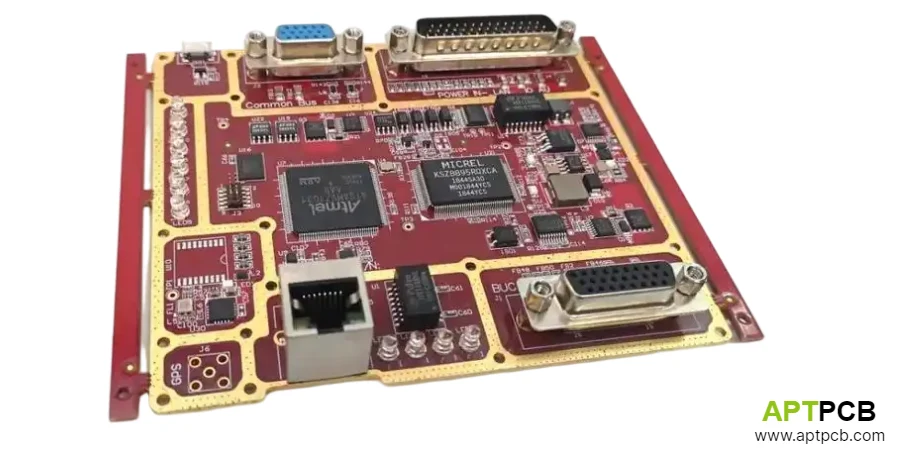
High frequency PCB assembly encompasses specialized processes required to populate and interconnect components on RF and microwave circuit boards while preserving carefully engineered electrical characteristics established during design and fabrication. Component selection, placement accuracy, soldering processes, and comprehensive testing demand enhanced attention compared to standard electronic assembly ensuring reliable RF performance from prototype through production volumes.
At APTPCB, we assemble high frequency PCBs with specialized expertise implementing RF-optimized processes, precision equipment, and comprehensive testing. Our capabilities support RF high frequency PCB assemblies from development prototypes through volume production with validated assembly processes ensuring performance and reliability.
Selecting Appropriate RF Component Technologies
High frequency assembly requires components specifically designed for RF applications with controlled parasitics, stable performance across frequency, and appropriate package characteristics. Standard components acceptable at lower frequencies exhibit parasitic effects limiting RF performance. Inadequate component selection causes circuit performance degradation from parasitic resonances, inconsistent results from component-to-component variation, or reliability failures from inappropriate environmental ratings — directly impacting RF system performance and product reliability.
At APTPCB, our assembly implements careful component selection ensuring RF performance requirements.
Key RF Component Technologies
- High Frequency Chip Capacitors: Specialized dielectric materials minimizing loss with controlled parasitic inductance supporting controlled impedance high frequency PCB matching networks and decoupling applications through high frequencies.
- RF Inductors: Air core, thin film, or multilayer ceramic construction with characterized Q-factor and self-resonant frequency enabling filter and matching network implementations.
- Thin Film Resistors: Superior high frequency performance compared to thick film with accurate resistance values, low parasitic reactance, and stability across temperature for RF applications.
- Active RF Devices: Amplifiers, mixers, oscillators, and switches in QFN, DFN, or bare die packages with characterized S-parameters and thermal specifications.
- MMIC Components: Monolithic microwave integrated circuits integrating multiple functions on single die for microwave RF PCB applications requiring compact implementation.
- RF Connectors: SMA, 2.92mm, 1.85mm, and other coaxial interfaces with frequency-appropriate performance and proper board launch design compatibility.
Component Performance Verification
Through careful component selection, supplier qualification, and incoming inspection supported by RF-specific specifications, APTPCB ensures assembled components meet high frequency performance requirements across applications.
Implementing Precision Assembly Processes
High frequency PCB assembly requires exceptional accuracy in solder paste application, component placement, and reflow profile execution. RF component orientation, placement tolerances, and thermal management affect circuit performance beyond standard assembly considerations. Inadequate assembly precision causes RF performance variations from component misalignment, solder defects affecting high-frequency grounding, or thermal damage to sensitive components — significantly impacting yield and product performance.
At APTPCB, our assembly processes implement precision control throughout RF board population.
Key Assembly Process Capabilities
- Solder Paste Application: Stencil design accommodating fine-pitch RF components with paste volume control and automated inspection ensuring consistent deposition through high frequency PCB fabrication quality practices.
- Precision Component Placement: Equipment achieving ±25μm placement accuracy for fine-pitch components with RF-aware orientation control maintaining coupling and isolation requirements.
- Reflow Profile Optimization: Nitrogen atmosphere processing with profiles tailored to PTFE substrate thermal characteristics and component temperature limits preventing material damage.
- Bottom Termination Component Processing: QFN, DFN, and LGA package soldering with X-ray inspection verifying hidden solder joint quality critical for RF grounding effectiveness.
- Power Device Thermal Management: Void-free soldering beneath power amplifiers verified by X-ray achieving thermal resistance specifications supporting continuous operation.
- Selective Soldering: Automated selective or wave soldering for through-hole RF connectors and components incompatible with reflow processing.
Assembly Process Excellence
By implementing precision assembly equipment, optimized processes, and comprehensive inspection coordinated with RF-specific requirements, APTPCB achieves assembly quality preserving high frequency PCB performance specifications.
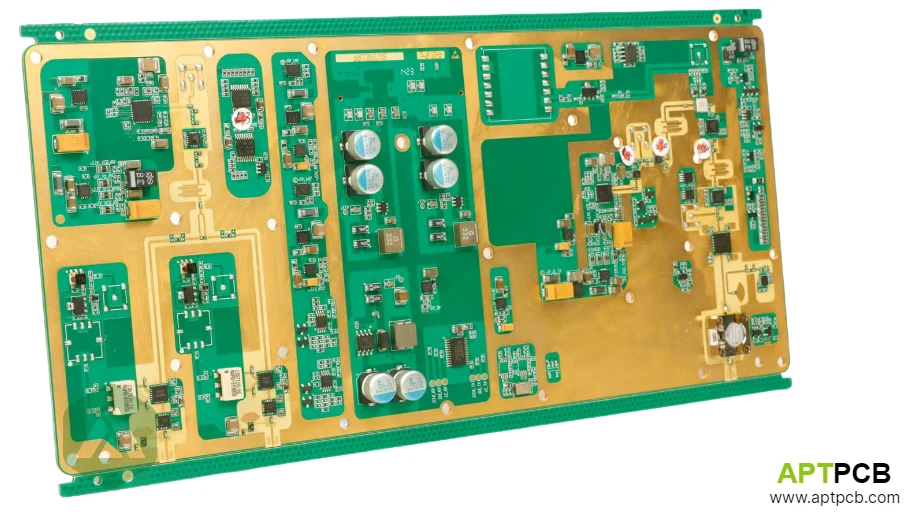
Mastering Wire Bonding and Die Attach
Bare die assembly for MMIC devices and custom semiconductors requires specialized die attach and wire bonding capabilities with process parameters maintaining RF performance. Bond wire inductance and loop profile directly affect high frequency circuit behavior. Inadequate wire bonding causes excessive parasitic inductance degrading high frequency performance, bond failures affecting reliability, or inconsistent results impacting production yield — directly limiting MMIC integration capability and product performance.
At APTPCB, our assembly implements precision die attach and wire bonding for RF applications.
Key Wire Bonding Capabilities
- Die Attach Processing: Eutectic (AuSn) or epoxy die attach with controlled bond line thickness achieving thermal resistance specifications for power devices.
- Gold Ball Bonding: Thermosonic ball bonding on die pads with stitch bonds to board pads achieving reliable interconnection with controlled loop profile minimizing inductance.
- Aluminum Wedge Bonding: Ultrasonic wedge bonding for aluminum metallized die with process parameters achieving reliable bonds on various pad metallizations.
- Multiple Wire Paralleling: Multiple bond wires in parallel reducing inductance for power and ground connections with via arrays beneath bond pads improving grounding effectiveness.
- Bond Pull Testing: Destructive testing validating bond strength meeting MIL-STD-883 requirements with statistical process control monitoring bond quality.
- Loop Profile Control: Bond wire trajectory optimization minimizing inductance while maintaining clearance and mechanical robustness for RF microwave PCB applications.
Die Attach and Wire Bond Excellence
Through precision die attach, controlled wire bonding, and comprehensive quality verification supported by trained operators and calibrated equipment, APTPCB enables bare die MMIC integration for demanding high frequency applications.
Providing Comprehensive RF Testing Services
High frequency PCB assemblies require thorough electrical testing validating RF performance beyond standard continuity verification. Network analyzer measurements, power testing, and functional verification ensure assembled boards meet design specifications. Inadequate testing misses RF performance defects affecting system operation, ships marginal product creating field failures, or lacks data supporting quality improvement — significantly impacting product reliability and customer satisfaction.
At APTPCB, our testing provides comprehensive RF verification ensuring assembly performance.
Key RF Testing Capabilities
- Network Analyzer Testing: S-parameter characterization including insertion loss, return loss, and isolation measurements across operating frequency range with calibrated test fixtures.
- Power Testing: Output power, gain, and efficiency measurements for amplifier assemblies under representative operating conditions with thermal monitoring.
- Functional Testing: System-level verification exercising complete circuit functionality under operational conditions through functional testing protocols.
- TDR Verification: Time domain reflectometry identifying impedance discontinuities and assembly-induced variations from bare board baseline.
- Production Test Development: Custom test fixture design and automated test sequence development supporting volume production requirements.
- Statistical Analysis: Test data collection and analysis identifying trends, process variations, and improvement opportunities supporting continuous quality enhancement.
Testing Excellence
By implementing comprehensive RF testing, calibrated equipment, and systematic data analysis coordinated with quality requirements, APTPCB validates high frequency PCB assembly performance meeting customer specifications.
Managing Assembly Rework and Repair
High frequency assemblies may require component replacement or repair addressing manufacturing defects or engineering changes while maintaining RF performance. Rework on PTFE substrates presents challenges from limited thermal cycling tolerance. Inadequate rework processes cause substrate damage from excessive thermal exposure, degraded RF performance from pad lifting or solder bridging, or reliability concerns from rework-induced stress — significantly impacting product quality and rework success rates.
At APTPCB, our rework processes implement controlled procedures protecting assembly integrity.
Key Rework Capabilities
- Localized Heating: Precision rework stations with hot air or focused IR heating minimizing thermal exposure to surrounding components and PTFE substrate material.
- BGA Rework: Precision placement and profiled reflow for ball grid array component replacement with X-ray verification of reworked solder joints.
- Wire Bond Repair: Rebonding capability for die assemblies with procedures for bond removal without damaging die metallization.
- Connector Replacement: Through-hole RF connector removal and replacement with proper thermal management and hole cleaning between operations.
- Rework Documentation: Tracking of rework history maintaining product traceability with rework count limits preventing excessive thermal exposure.
- Customer Authorization: Rework approval processes for aerospace and defense applications meeting quality system requirements through aerospace defense standards.
Rework Quality Assurance
Through controlled rework procedures, proper thermal management, and comprehensive documentation supported by trained operators, APTPCB enables assembly repair while protecting high frequency PCB performance and reliability.
Implementing Assembly Quality Systems
High frequency PCB assembly requires robust quality systems ensuring consistent processes, comprehensive testing, and complete traceability. Documentation supports regulatory compliance, customer requirements, and quality investigations. Inadequate quality systems cause inconsistent assembly results, documentation gaps affecting traceability, or process drift creating specification violations — significantly impacting product reliability and customer confidence.
At APTPCB, our assembly quality implements certified systems meeting demanding requirements.
Key Quality System Elements
- Process Documentation: Detailed work instructions specifying each assembly step with parameter specifications and control plan identification of critical characteristics.
- Statistical Process Control: Monitoring of solder paste volume, placement accuracy, and reflow temperatures with control charts identifying process variations through testing quality standards.
- ESD Protection: Grounded work surfaces, wrist straps, and ionizers protecting sensitive RF components with audit programs verifying protection effectiveness.
- Moisture Sensitivity Management: Dry storage and floor life tracking for moisture-sensitive components with bake procedures restoring components if exposure limits exceeded.
- Cleanliness Verification: Ionic contamination testing and visual inspection verifying cleaning effectiveness with specifications establishing acceptable limits.
- Traceability Systems: Component lot tracking and process records linking assembled products to materials, equipment, and operators supporting quality investigations.
Quality Excellence
Through comprehensive quality systems, documented procedures, and complete traceability supported by trained personnel and certified processes, APTPCB delivers high frequency PCB assembly quality meeting commercial, aerospace, and defense requirements.
Supporting Specialized Assembly Requirements
High frequency applications including phased arrays, satellite communications, and military systems impose specialized assembly requirements beyond standard RF production. Shielding installation, conformal coating, and environmental protection address application-specific needs. Inadequate specialized processing causes EMI performance degradation, environmental protection failures, or non-compliance with application requirements — significantly impacting product suitability and field reliability.
At APTPCB, our assembly supports specialized requirements across demanding applications.
Key Specialized Capabilities
- RF Shield Installation: Soldered shield cans with proper grounding achieving specified isolation with sequential assembly enabling testing before shield attachment.
- Conformal Coating: Acrylic, polyurethane, or parylene coating application protecting circuits from environmental exposure through PCB conformal coating capabilities.
- Underfill Application: Selective underfill on high-stress components preventing solder joint fatigue from thermal cycling or vibration.
- Potting and Encapsulation: Complete assembly potting for harsh environment protection with flexible materials accommodating thermal expansion.
- Thermal Interface Application: Thermal compound or pad application ensuring effective heat transfer from power devices to heat sinks or enclosures.
- Cable and Harness Integration: RF cable assembly and integration with PCBAs including strain relief and proper cable management.
Specialized Assembly Excellence
Through comprehensive specialized capabilities, validated processes, and application expertise coordinated with high frequency PCB manufacturer fabrication services, APTPCB delivers complete high frequency assembly solutions meeting demanding application requirements across communications, radar, and aerospace markets.