
high potting soak: what this playbook covers (and who it’s for)
This playbook is designed for Engineering Managers, Quality Engineers, and Procurement Leads responsible for high-reliability electronics that operate in harsh environments. Specifically, it addresses the critical intersection of encapsulation (potting) and high-voltage isolation testing (Hi-Pot) under environmental stress (soak). When a PCBA is designed to withstand high voltages while submerged or exposed to high humidity, the "high potting soak" process becomes the ultimate gatekeeper of reliability.
In this guide, we move beyond basic definitions to the practical execution of sourcing and validating these assemblies. You will find detailed specification requirements to include in your documentation, a breakdown of hidden failure modes that occur during the soak phase, and a validation plan to ensure your product does not fail in the field. We also provide a supplier audit checklist to help you evaluate if a manufacturing partner is truly capable of handling complex encapsulation processes.
At APTPCB (APTPCB PCB Factory), we often see designs fail not because the circuit is wrong, but because the interaction between the potting compound, the PCB surface, and the environmental stress was not fully defined. This guide aims to bridge that gap, ensuring your procurement and engineering teams are aligned on the rigorous demands of high potting soak applications.
When high potting soak is the right approach (and when it isn’t)
Understanding the specific utility of high potting soak protocols ensures you are not over-engineering consumer goods or under-engineering critical safety devices.
It is the right approach when:
- Voltage exceeds 50V in wet environments: If your device manages high voltage (HV) in automotive, marine, or industrial fluid applications, standard conformal coating is insufficient. You need full encapsulation verified by a soak test.
- Safety-critical isolation is required: For medical devices or EV chargers where dielectric breakdown could cause injury, a high potting soak test validates that the resin has fully impregnated the assembly without voids.
- Thermal shock and moisture are constant: If the device cycles between hot and cold while exposed to humidity, the "soak" phase of testing accelerates moisture ingress to detect delamination early.
- Vibration resistance is mandatory: The potting provides structural integrity, and the soak test ensures that this structural bond does not degrade when chemical agents or moisture attack the interface.
It is NOT the right approach when:
- Repairability is a priority: Potted assemblies are generally unrepairable. If you need to swap components in the field, mechanical housing seals are a better choice than potting.
- High-frequency RF signals are involved: Thick potting compounds can drastically alter the dielectric constant ($D_k$) around RF lines, detuning antennas or filters.
- Thermal management relies on airflow: Potting acts as a thermal blanket unless specific thermally conductive resins are used. If your design relies on convection cooling, full potting may cause overheating.
- Cost sensitivity is paramount: The material cost of potting resins and the extended cycle time for curing and soak testing significantly increase unit costs compared to standard housing.
Specs & requirements (before quoting)
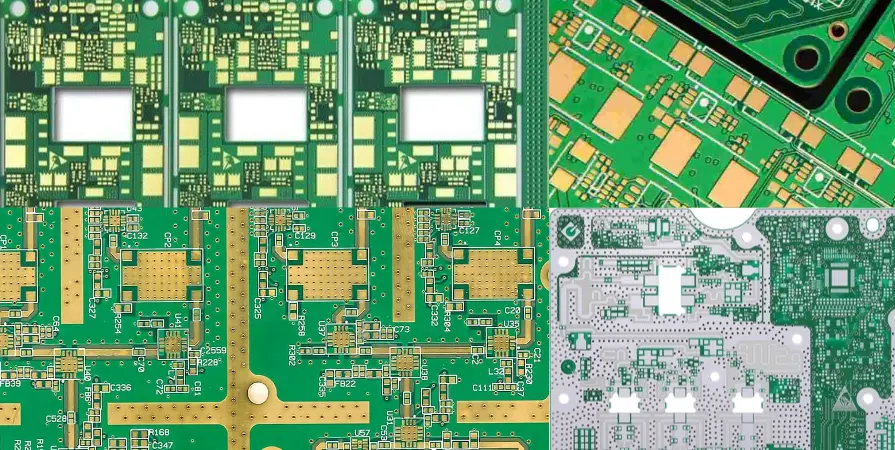
To avoid costly iterative loops with your manufacturer, you must define the following parameters clearly in your RFQ package. Vague requests like "potting required" lead to assumption-based pricing and reliability gaps.
- Potting Material Chemistry: Specify the exact base chemistry (Epoxy, Silicone, or Urethane). Epoxy offers hardness and chemical resistance; Silicone offers flexibility and high-temperature resistance; Urethane is tough but moisture-sensitive during cure.
- Dielectric Strength Requirements: Define the required isolation voltage (e.g., "Must withstand 3000V DC for 60 seconds"). This dictates the minimum thickness of the potting layer over high-voltage components.
- Soak Conditions: Explicitly state the soak parameters. For example, "Immerse in 5% saline solution for 24 hours at 25°C" or "85°C/85% RH soak for 168 hours."
- Leakage Current Limits: Define the pass/fail criteria for the Hi-Pot test. A common specification is "Leakage current < 100µA at test voltage."
- Void Acceptance Criteria: Define the maximum allowable void size. For high voltage, even micro-voids can cause partial discharge. Specify "No voids > 0.5mm in HV areas" or "Total void volume < 1%."
- Thermal Conductivity: If the potting aids heat dissipation, specify the required W/m·K (e.g., "Minimum 1.5 W/m·K").
- Hardness (Shore Scale): Define the cured hardness (e.g., "Shore A 60-80" for silicone or "Shore D 80" for epoxy) to ensure it protects components without crushing them during thermal expansion.
- Adhesion Requirements: Specify which surfaces the potting must adhere to (FR4, Aluminum housing, specific components). This may require plasma treatment or primers.
- Keep-Out Areas: Clearly mark connectors, sensors, or test points that must remain free of potting material. Provide a drawing with "Potting Keep-Out" layers.
- Curing Profile Constraints: If your components are temperature sensitive, state the maximum allowable curing temperature (e.g., "Cure temp must not exceed 85°C").
- Cleanliness Standards: Specify ionic contamination limits (e.g., per IPC-J-STD-001) prior to potting. Residues can cause delamination or leakage paths under the resin.
- Traceability Level: Define if you need lot traceability for the potting resin batch mixed with the specific PCBA serial numbers.
Hidden risks (root causes & prevention)
Scaling from a few prototypes to mass production introduces variables that can compromise the high potting soak performance.
- Risk: Exothermic Reaction Runaway
- Why it happens: Epoxy generates heat as it cures. In large volumes (thick potting), this heat can exceed component ratings or cause the resin to crack.
- Detection: Thermocouples embedded in the prototype during cure; visual inspection for cracks.
- Prevention: Use low-exotherm resins or multi-stage pouring (cure in layers).
- Risk: CTE Mismatch (Coefficient of Thermal Expansion)
- Why it happens: The potting material expands faster than the PCB or components during thermal cycling, shearing solder joints.
- Detection: Thermal shock testing followed by functional test or cross-sectioning.
- Prevention: Match the CTE of the resin to the PCB assembly or use flexible silicone buffers around sensitive components (BGA/QFN).
- Risk: Moisture Inhibition (Urethanes)
- Why it happens: Urethanes react with moisture in the air or on the PCB during curing, creating CO2 bubbles (foaming).
- Detection: Visual inspection reveals "swiss cheese" texture or bubbles.
- Prevention: Pre-bake PCBs to remove moisture; use vacuum potting; control humidity in the dispensing area.
- Risk: Shadowing and Voids
- Why it happens: Resin flows around tall components, trapping air pockets underneath them ("shadows").
- Detection: X-ray inspection or destructive cross-sectioning.
- Prevention: Optimize pour location and speed; use vacuum chamber potting; tilt the assembly during dispensing.
- Risk: Incomplete Mixing
- Why it happens: Automated mix-meter machines lose calibration, leading to resin-rich or hardener-rich spots that never fully cure.
- Detection: Soft spots in the cured potting; chemical analysis.
- Prevention: Daily purge checks; weight ratio monitoring; static mixer tube replacement schedules.
- Risk: Surface Contamination (Flux Residue)
- Why it happens: No-clean flux residues may be chemically incompatible with the potting, causing delamination.
- Detection: Adhesion peel tests; leakage current spikes during soak tests.
- Prevention: Implement rigorous washing processes even for "no-clean" fluxes; test chemical compatibility.
- Risk: Connector Wicking
- Why it happens: Low-viscosity resin wicks up into connector pins or cables through capillary action, insulating contacts that should be conductive.
- Detection: Visual inspection under UV light (if resin has tracer); continuity testing.
- Prevention: Use thixotropic (gel-like) dams around connectors; apply masking boots or temporary sealants.
- Risk: Partial Discharge (Corona)
- Why it happens: Micro-voids in high-voltage fields ionize, slowly eating away the insulation from the inside out.
- Detection: Partial Discharge (PD) testing equipment (specialized Hi-Pot).
- Prevention: Vacuum potting is mandatory for HV > 1kV; strict void criteria.
Validation plan (what to test, when, and what “pass” means)
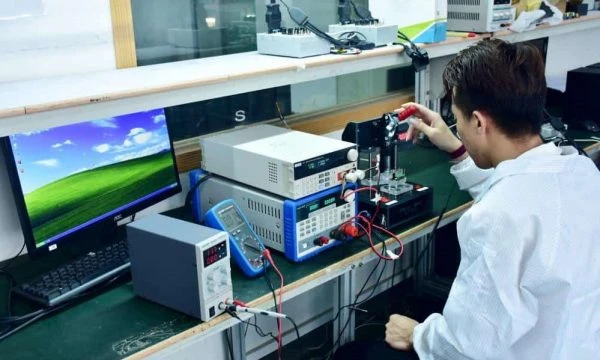
A robust validation plan moves beyond simple "pass/fail" at the end of the line. It validates the process itself.
- Chemical Compatibility Study
- Objective: Ensure flux, solder mask, and potting resin do not react negatively.
- Method: Pot test coupons, cure, and inspect for discoloration or liquefaction at the interface.
- Acceptance: No visible reaction; adhesion strength meets spec.
- Cross-Sectioning (Destructive)
- Objective: Verify resin penetration under low-standoff components (BGAs, QFNs).
- Method: Cut a cured unit, polish the cross-section, and inspect via microscope.
- Acceptance: 100% fill under components; no trapped air voids.
- Adhesion / Peel Test
- Objective: Verify the bond between resin and housing/PCB.
- Method: Attempt to mechanically separate the potting from the substrate.
- Acceptance: Cohesive failure (resin breaks) is preferred over adhesive failure (resin peels off clean).
- Pre-Potting Functional Test (Flying Probe)
- Objective: Ensure the PCBA is 100% functional before sealing. Once potted, it cannot be fixed.
- Method: Use flying probe best practice to test all nets.
- Acceptance: 100% electrical pass.
- Thermal Shock Soak
- Objective: Stress the mechanical bond.
- Method: Cycle -40°C to +85°C for 100 cycles, then soak in humidity.
- Acceptance: No cracking; no delamination.
- Wet Hi-Pot (The "High Potting Soak" Test)
- Objective: Verify insulation integrity under worst-case conditions.
- Method: Immerse the potted unit in conductive saline water (grounded). Apply HV to the internal circuit.
- Acceptance: Leakage current < specified limit (e.g., 5mA); no arc-over.
- Insulation Resistance (IR) Test
- Objective: Check for slow degradation.
- Method: Apply 500V DC and measure resistance.
- Acceptance: Resistance > 100 MΩ (or specific GΩ requirement).
- X-Ray Inspection
- Objective: Non-destructive void detection.
- Method: X-ray the finished unit focusing on HV areas.
- Acceptance: Void percentage below defined threshold.
- Shore Hardness Verification
- Objective: Confirm correct mix ratio and cure.
- Method: Use a Durometer on the cured surface.
- Acceptance: Within ±5 points of material datasheet spec.
- FCT Coverage Verification
- Objective: Ensure post-potting tests can still run.
- Method: Review fct coverage planning to ensure test pads are accessible via external connectors if the board is sealed.
- Acceptance: 100% of critical safety functions verifiable through external I/O.
Supplier checklist (RFQ + audit questions)
Use this checklist to vet potential manufacturing partners like APTPCB.
RFQ Inputs (What you send)
- Complete BOM including potting resin manufacturer and part number.
- 3D STEP file of the assembly and housing (for volume calculation).
- 2D drawing defining keep-out zones and fill levels.
- Curing profile constraints (max temp/time).
- Hi-Pot voltage and leakage current limits.
- Soak test parameters (liquid type, duration, temp).
- Acceptance criteria for voids (size/location).
- Packaging requirements for uncured vs. cured units.
Capability Proof (What they must show)
- Do they have vacuum potting chambers? (Essential for HV).
- Can they demonstrate automated mix-metering (vs. hand mixing)?
- Do they have in-house X-ray for void detection?
- Can they perform the specific "soak" test (humidity chamber or liquid tank)?
- Do they have experience with your specific resin chemistry (Urethane/Epoxy/Silicone)?
- Can they provide examples of masking fixtures used for similar projects?
Quality System & Traceability
- Is the potting process documented in a control plan?
- Do they record the batch number of the resin against the PCBA serial number?
- How do they control pot life (working time) of the mixed resin?
- Is there a procedure for purging static mixers?
- Do they perform daily weight-ratio checks on the dispensing machine?
- Are operators trained to IPC-A-610 / IPC-CC-830 standards?
Change Control & Delivery
- What is the procedure if the resin manufacturer changes the formula?
- How are rejected potted units handled (quarantine/scrap)?
- Can they scale from batch processing to continuous line processing?
- Do they have climate control in the potting area (temp/humidity)?
- How do they protect connectors during the potting process?
- What is the packaging plan to prevent damage to the potting surface during shipping?
Decision guidance (trade-offs you can actually choose)
Every engineering decision involves a trade-off. Here is how to navigate the most common ones in high potting soak applications.
- Hardness vs. Stress Relief:
- If you prioritize mechanical protection (impact resistance): Choose Epoxy. It is hard and durable but transfers thermal stress to components.
- If you prioritize thermal cycling reliability: Choose Silicone. It is soft and flexible, absorbing stress, but offers less physical protection against tampering.
- Vacuum vs. Atmospheric Potting:
- If you prioritize high voltage (>1kV) safety: You must choose Vacuum Potting to eliminate micro-voids.
- If you prioritize cost and speed: Atmospheric potting is faster but risks trapped air. Only acceptable for low-voltage, general waterproofing.
- Oven Cure vs. Room Temp Cure:
- If you prioritize throughput: Choose Oven Cure (Heat Cure). It’s faster but requires components to withstand the heat.
- If you prioritize component safety: Choose Room Temp Cure. It takes longer (24-48 hours) requiring more floor space for WIP, but is safer for sensitive sensors.
- Re-workability vs. Security:
- If you prioritize IP protection (anti-reverse engineering): Choose a hard, opaque epoxy. It is impossible to remove without destroying the board.
- If you prioritize troubleshooting: Choose a clear, soft silicone. You can dig through it to probe test points (though patching it is difficult).
- 100% Testing vs. Sampling:
- If you prioritize zero failures (Automotive/Medical): 100% Hi-Pot Soak test is mandatory.
- If you prioritize cost (Industrial IoT): Perform 100% Hi-Pot (dry) and sample test (10%) for Soak.
FAQ
Q: Can we use conformal coating instead of potting for high voltage soak? A: Generally, no. Conformal coating is too thin (microns) to provide sufficient dielectric strength for high voltage or to survive prolonged immersion. Potting (millimeters thick) is required for true waterproofing and HV isolation.
Q: How do we handle "keep-out" areas during the potting process? A: We use custom masking fixtures, temporary rubber boots, or thixotropic "dam" materials to create barriers. This prevents resin from flowing into connectors or onto sensor faces.
Q: What happens if the potting compound expires? A: Expired resin may not cure correctly, remaining tacky or soft. It can also have reduced dielectric properties. Strict shelf-life management (FIFO) is critical.
Q: Why do we see bubbles in the cured potting? A: Bubbles come from trapped air during mixing, moisture contamination (especially in urethanes), or air trapped under components during the pour. Vacuum degassing and vacuum potting solve this.
Q: Can we pot a board that has not been cleaned? A: It is risky. Flux residues can prevent the resin from bonding to the PCB, creating a path for moisture to travel (delamination). We recommend thorough cleaning and drying before potting.
Q: How thick should the potting be? A: Thickness depends on the voltage. A general rule of thumb is to check the dielectric strength of the material (e.g., 15kV/mm) and apply a safety factor of 2x or 3x.
Q: Does potting affect the thermal performance of the PCB? A: Yes. Standard resin is a thermal insulator. If your board generates heat, you must use a thermally conductive resin to transfer heat to the housing or ambient air.
Q: What is the difference between "potting" and "encapsulation"? A: They are often used interchangeably. Technically, "potting" involves pouring resin into a housing (shell) which becomes part of the unit. "Encapsulation" can sometimes refer to dipping or molding where the resin forms the outer shape itself (without a shell).
Related pages & tools
- PCB Conformal Coating – Understand the lighter-weight alternative to potting for standard environmental protection.
- Testing & Quality – Explore the full range of validation steps APTPCB uses, from AOI to functional testing.
- Automotive Electronics PCB – See how high potting soak is applied in one of the most demanding industries.
- FCT Test – Learn how to plan your functional testing strategy before the board is sealed in resin.
- Flying Probe Testing – The best method for validating PCBA integrity prior to the potting stage.
Request a quote
Ready to validate your high-reliability design? Request a quote from APTPCB today for a comprehensive DFM review that includes potting process feasibility and material selection.
For the most accurate quote, please provide:
- Gerber files and BOM.
- Potting material specifications (or request a recommendation).
- 3D model of the assembly/housing.
- Soak and Hi-Pot test requirements.
- Estimated annual volume.
Conclusion
Implementing a high potting soak process is the definitive way to ensure your electronics survive in hostile environments where high voltage and moisture coexist. It requires a shift in mindset from simple PCB assembly to complex chemical and mechanical systems integration. By defining clear requirements for materials and testing, understanding the risks of voids and cure profiles, and partnering with a capable supplier like APTPCB, you can scale your production without sacrificing reliability. The goal is not just to seal the board, but to prove it can withstand the worst-case scenarios your customers will throw at it.