
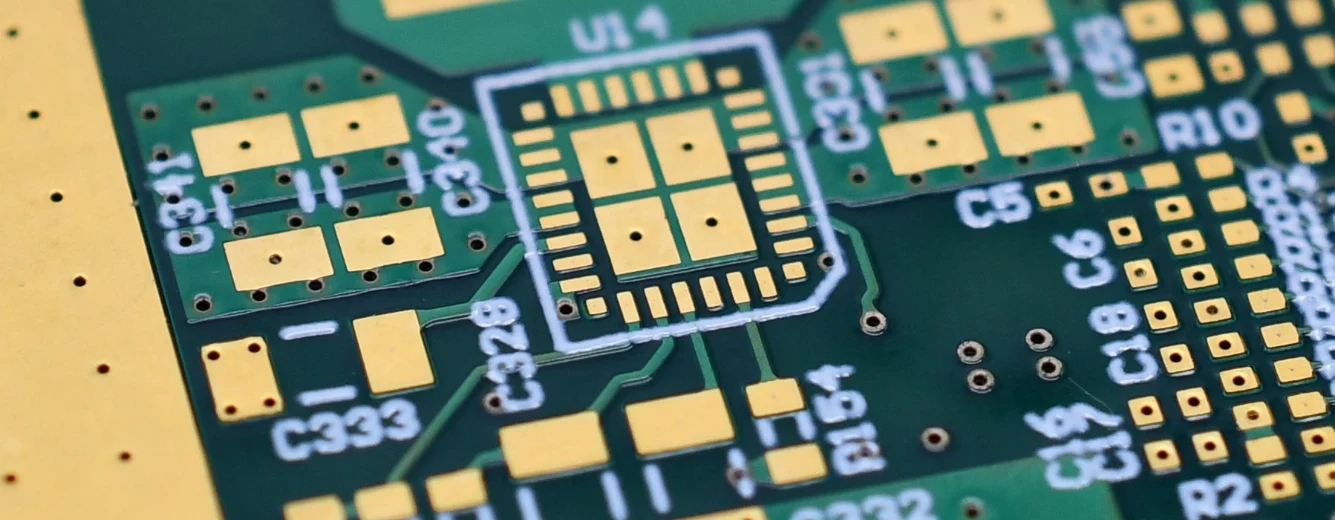
A high-speed ECG acquisition board is not simply a fast data-conversion PCB. The challenge is preserving a very small biological signal while managing digital noise, patient safety requirements, and repeatable manufacturing.
Although ECG waveform energy is typically concentrated around 0.05 Hz to 150 Hz, modern systems may require higher acquisition capability for applications such as:
- Pacemaker pulse detection.
- High-resolution diagnostic recording.
- Multi-channel ECG analysis.
- Long-duration Holter monitoring.
- Research and signal-processing platforms.
The correct design decision depends on the complete signal chain:
- Patient input protection.
- Analog front-end performance.
- ADC sampling architecture.
- PCB noise control.
- Isolation implementation.
- Manufacturing verification.
What decisions determine whether an ECG acquisition board will succeed?
A reliable ECG acquisition board should be evaluated using five primary decisions:
| Design decision | Why it matters | Verification method |
|---|---|---|
| Sampling architecture | Determines whether transient events and waveform details are captured | ADC data-rate verification and waveform testing |
| Patient-side isolation | Protects the applied part and separates sensitive circuitry | Creepage/clearance review and electrical safety evaluation |
| Analog/digital partitioning | Prevents digital switching noise from entering ECG inputs | PCB review and noise measurement |
| Power integrity | Maintains stable ADC references and analog rails | Rail-noise testing |
| Manufacturing process | Ensures repeatable production quality | DFM review, inspection, and functional testing |
The most important early decision is defining the intended medical function. A wearable heart-rate monitor and a diagnostic ECG recorder may both measure cardiac activity, but their PCB requirements are different.
When does a high-speed ECG acquisition board make sense?
Which ECG applications need higher acquisition performance?
Diagnostic 12-lead ECG systems
Diagnostic equipment requires accurate waveform reproduction across multiple channels. Higher-resolution acquisition helps preserve small waveform changes used during analysis.
Pacemaker detection systems
Pacemaker pulses are short transient events. The acquisition path must capture these events through appropriate sampling capability or dedicated detection circuitry.
Holter monitors
Portable recorders require low power consumption, reliable storage, and stable signal quality over long recording periods.
Stress testing and research systems
These systems often require flexible acquisition, advanced filtering, and post-processing capability.
Which ECG applications may not require high-speed acquisition?
Simple monitoring devices may prioritize:
- Battery life.
- Lower component cost.
- Reduced processing requirements.
Selecting excessive performance increases cost and complexity. Selecting insufficient performance can limit future functionality.
How should engineers select ECG acquisition architecture?
The ADC and analog front end should be selected from the required measurement goal rather than a maximum specification number.
| Requirement | Design consideration | Verification |
|---|---|---|
| Small ECG waveform amplitude | Low-noise signal chain and sufficient dynamic range | Noise-floor measurement |
| Pacemaker detection | Higher sampling rate or dedicated detection path | Pulse capture testing |
| Long recording duration | Efficient storage and processing architecture | Recording validation |
| Multiple channels | Synchronized acquisition | Channel timing verification |
A 24-bit ADC does not automatically guarantee better ECG performance. The final noise performance depends on:
- Electrode interface.
- Protection components.
- Amplifier selection.
- Reference stability.
- PCB layout.
- Power quality.
How should PCB layout reduce ECG signal noise?
The ECG analog front end is a high-impedance, low-amplitude circuit. The PCB must prevent digital activity from coupling into the measurement path.
Where should the ECG analog front end be placed?
Place electrode inputs, protection components, and the analog front end close together.
The layout should:
- Keep switching regulators away from ECG inputs.
- Separate digital processors and communication interfaces from analog measurement areas.
- Maintain controlled current return paths.
- Preserve reference-plane continuity.
- Prevent high-speed digital traces from crossing sensitive analog areas.
A solid reference strategy is usually more effective than unnecessary ground splitting. The objective is controlling return current paths.
How should analog and digital sections be separated?
| Circuit area | Layout priority | Main risk |
|---|---|---|
| Electrode input | Short traces and controlled environment | Noise pickup and leakage |
| Analog front end | Quiet placement and stable reference | Raised noise floor |
| ADC section | Clean power and reference routing | Conversion errors |
| Processor and communication | Controlled impedance and return paths | Digital coupling |
| Power conversion | Physical isolation from sensitive nodes | Switching interference |
High-speed digital interfaces should be designed with signal integrity in mind. Supporting topics such as multilayer PCB guidelines help define reference planes and layer structures.
How should patient isolation be designed into an ECG PCB?
Patient-connected circuitry requires isolation planning before routing begins.
The isolation approach may include:
- Isolation barriers between patient-side and system-side circuits.
- Appropriate creepage and clearance distances.
- Isolated power conversion.
- Digital isolation components.
- Protection circuitry.
Isolation values depend on the final device design, applicable standards, working voltage, pollution environment, and safety classification. PCB spacing should be confirmed as part of the device safety plan rather than selected as an arbitrary fixed value.
For medical electrical equipment, engineers should evaluate applicable requirements including IEC 60601-1 as part of the overall compliance strategy.
What ECG PCB manufacturing requirements should be defined before production?
A production-ready ECG board requires manufacturing decisions before fabrication.
| Manufacturing area | What to specify | Evidence to request |
|---|---|---|
| Stackup | Layer structure, materials, impedance requirements | Approved stackup document |
| Surface finish | Assembly compatibility and component requirements | Process confirmation |
| Cleanliness | Residue control for high-impedance circuits | Cleaning process records |
| Assembly | Placement and solder process | AOI/X-ray inspection plan |
| Testing | Functional verification requirements | Test procedure and results |
For sensitive analog circuits, cleanliness is especially important. Residue that may not affect ordinary digital electronics can create leakage paths in ECG input circuits.
Design teams can review multilayer PCB guidelines when defining layer structures and reference-plane arrangements.
What are the most common ECG board failures?
| Symptom | Likely causes | Investigation |
|---|---|---|
| 50/60 Hz interference | Grounding issues, cable coupling, common-mode problems | Review input routing and measurement setup |
| Baseline drift | Leakage paths, contamination, electrode issues | Inspect cleanliness and input leakage |
| High-frequency noise | Digital coupling or regulator ripple | Compare noise with digital activity |
| ADC saturation | Input offset or protection circuit limitations | Measure input operating range |
| Missing transient events | Insufficient bandwidth or filtering | Verify acquisition configuration |
Troubleshooting should identify whether the problem originates from:
- Signal source.
- PCB layout.
- Power system.
- Manufacturing process.
- Assembly quality.
How should engineers evaluate an ECG PCB manufacturing supplier?
A supplier should be evaluated on engineering support, not only fabrication price.
ECG supplier evaluation checklist
| Evaluation area | Supplier capability to confirm |
|---|---|
| PCB fabrication | Required layer count and stackup capability |
| Signal integrity | Controlled impedance support when required |
| Assembly | Inspection capability and process control |
| Traceability | Material and production records |
| Cleanliness | Appropriate handling for sensitive analog circuits |
| Engineering review | DFM feedback before fabrication |
| Testing | Functional test support when required |
A PCB manufacturer supports production quality, but the medical device developer remains responsible for final product qualification and regulatory compliance.
APTPCB provides PCB fabrication and assembly support for high-reliability electronics, including DFM review for complex medical electronics requirements.
What files should be included in an ECG PCB RFQ?
Accurate quotations require complete engineering information.
Prepare:
- Gerber fabrication files.
- Stackup requirements.
- Controlled impedance requirements when applicable.
- BOM files with approved part numbers.
- Assembly drawings.
- Inspection requirements.
- Functional test requirements.
- Cleanliness and traceability requirements.
For medical electronics, include isolation expectations and any special production controls.
A DFM review before quotation can identify:
- Spacing limitations.
- Assembly risks.
- Component availability problems.
- Manufacturing constraints.
For complete medical PCB production requirements, review:
Frequently asked questions about high-speed ECG acquisition boards
Why does an ECG board need high sampling speed if ECG signals are slow?
The requirement is determined by waveform details and transient events, not only heart rate. Pacemaker detection, diagnostic analysis, and digital processing can require higher acquisition performance.
Is FR4 suitable for high-speed ECG acquisition boards?
FR4 is commonly used for ECG PCB designs. Material selection depends on safety requirements, impedance requirements, reliability goals, and operating environment.
Should analog and digital grounds always be separated?
Not always. Poorly planned ground splits can create unexpected return paths. The design goal is controlling current flow and maintaining reference integrity.
What testing is required before medical certification?
Testing may include isolation checks, leakage evaluation, waveform accuracy measurements, noise analysis, and functional verification. Final certification applies to the complete medical device.
Can rigid-flex PCB technology improve ECG device design?
Rigid-flex can reduce connectors, improve mechanical reliability, and simplify packaging for compact wearable systems. The decision depends on enclosure design and reliability requirements. See the rigid-flex PCB overview.
Conclusion: design ECG boards around verification decisions
A high-speed ECG acquisition board succeeds when signal integrity, patient protection, and manufacturing repeatability are designed together.
The key engineering decisions are:
- Define acquisition requirements before selecting components.
- Protect the analog front end from digital interference.
- Establish isolation requirements before PCB routing.
- Document manufacturing expectations before production.
- Select suppliers based on process capability and verification support.
A successful ECG PCB design is not only a board that captures signals. It is a board architecture that can be manufactured repeatedly, tested effectively, and supported through the product lifecycle.