
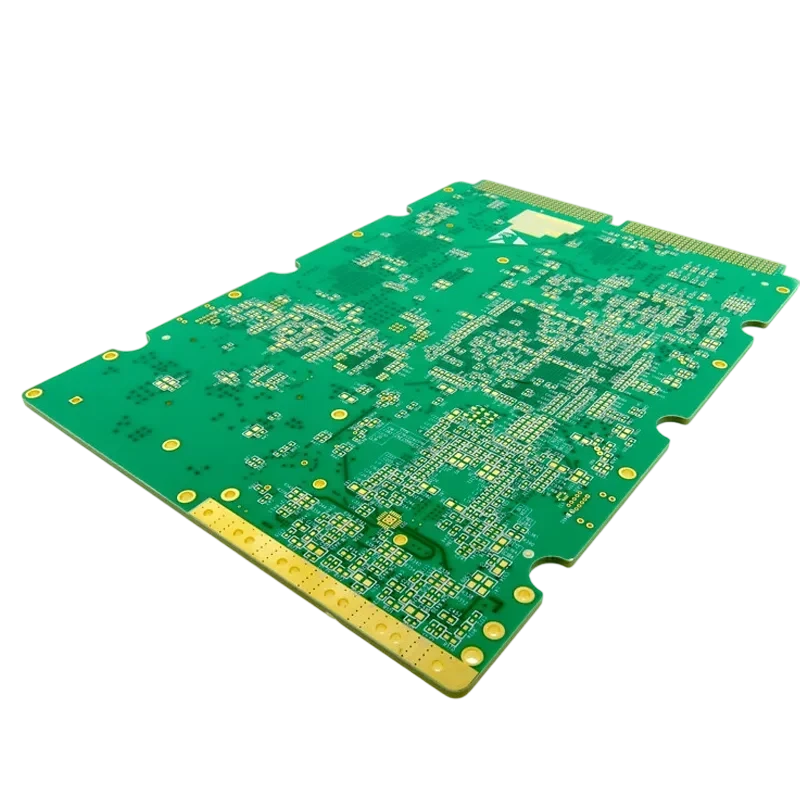
High-speed Grid code compliance interface quick answer (30 seconds)
Designing a high-speed Grid code compliance interface requires balancing rapid data processing with robust high-voltage isolation to meet utility standards like IEEE 1547 or IEC 61850.
- Latency is Critical: The interface must detect grid anomalies (voltage dips, frequency shifts) and trigger responses within milliseconds (often <20ms for FRT).
- Signal Integrity: High-speed communication lines (EtherCAT, Fiber, PCIe) require controlled impedance (typically 100Ω differential) to prevent data loss during switching events.
- Isolation Barriers: You must maintain strict creepage and clearance distances between the low-voltage control logic and high-voltage sensing circuits.
- EMI Hardening: The PCB layout must shield sensitive high-speed digital signals from the noise generated by IGBT/SiC switching.
- Thermal Management: High-performance FPGAs or DSPs used for compliance algorithms generate significant heat and require dedicated thermal vias or heatsinks.
- Validation: Functional testing must simulate grid faults (HIL testing) to verify the interface reacts correctly without resetting or latching up.
When high-speed Grid code compliance interface applies (and when it doesn’t)
Understanding when to deploy a specialized high-speed Grid code compliance interface ensures you don't over-engineer simple systems or under-spec critical infrastructure.
Applies to:
- Utility-Scale Inverters: Solar and wind power converters that must actively support grid voltage and frequency (Smart Inverters).
- Power Plant Controllers (PPC): Centralized control units managing multiple generation assets requiring real-time data synchronization via IEC 61850 GOOSE messages.
- Energy Storage Systems (BESS): Systems requiring sub-cycle response times for frequency regulation services.
- FACTS and STATCOMs: Devices that inject reactive power dynamically to stabilize the grid, requiring high-speed DSP calculation loops.
- Microgrid Controllers: Interfaces managing islanding and reconnection transitions seamlessly.
Does not apply to:
- Off-Grid Systems: Standalone power systems that do not interact with the utility grid.
- Small Consumer UPS: Basic backup power units where millisecond-level grid support logic is not required by regulation.
- Passive Monitoring: Data loggers that record grid quality but do not actively control power output in real-time.
- Low-Speed SCADA: Legacy systems using slow polling rates (seconds) rather than real-time event-driven communication.
High-speed Grid code compliance interface rules and specifications (key parameters and limits)
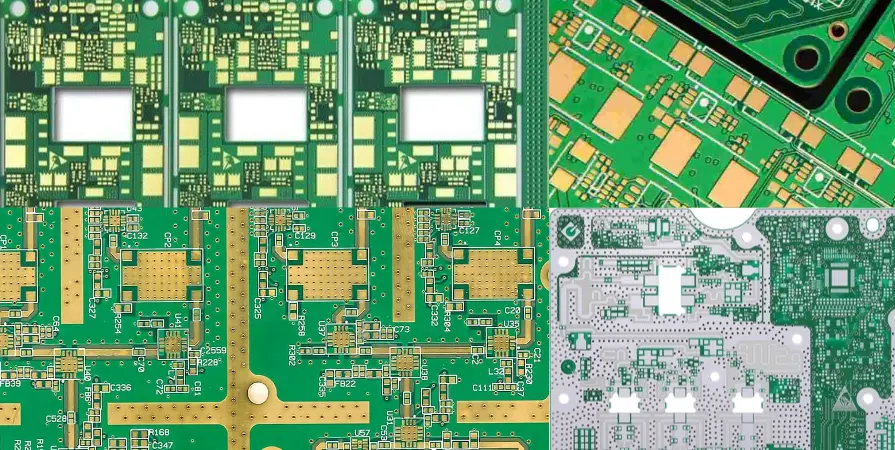
To achieve Grid code compliance interface compliance, the PCB design must adhere to strict electrical and mechanical rules. Failure to meet these often results in certification failure.
| Rule | Recommended Value/Range | Why it matters | How to verify | If ignored |
|---|---|---|---|---|
| Differential Impedance | 100Ω ±10% (Ethernet/PCIe) | Ensures signal integrity for high-speed data transfer between controller and sensors. | TDR (Time Domain Reflectometry) measurement. | Data packet loss; false grid fault detection. |
| Isolation Voltage | >2.5kV or >5kV (Application dependent) | Protects low-voltage logic (FPGA/CPU) from grid transients and switching noise. | Hi-Pot testing; Creepage analysis. | Catastrophic board failure; safety hazard. |
| Loop Inductance | <10nH for decoupling | Minimizes voltage spikes on power rails for high-speed processors. | PDN (Power Delivery Network) simulation. | Processor resets during grid transients. |
| Communication Latency | <10ms (System level) | Grid codes require immediate reaction to faults (e.g., LVRT). | Oscilloscope timing analysis (Input to Output). | Non-compliance fines; disconnection from grid. |
| Grounding Strategy | Split planes (AGND/DGND) with single point tie | Prevents high-power switching noise from corrupting ADC measurements. | Layout review; Noise floor measurement. | Inaccurate voltage/frequency sensing. |
| Material Tg | >170°C (High Tg FR4) | Withstands thermal stress in outdoor cabinets and high-power environments. | Datasheet verification; TMA analysis. | Pad lifting; barrel cracks; reduced reliability. |
| Creepage Distance | Per IEC 60664 (e.g., >8mm for 400V) | Prevents arcing across the PCB surface under pollution/humidity. | CAD rule check; Physical measurement. | Arcing; short circuits; fire risk. |
| Via Stitching | <λ/20 spacing along shield | Contains EMI from high-speed clocks and prevents external noise ingress. | Near-field probe scanning. | EMI test failure; communication errors. |
| Copper Weight | 2oz or greater for power paths | Handles surge currents during fault conditions without overheating. | Current density simulation; Thermal imaging. | Trace fusing; excessive voltage drop. |
| Clock Jitter | <100ps (Protocol dependent) | Essential for synchronized sampling in multi-phase systems. | Spectrum analyzer; Eye diagram. | Synchronization loss; harmonic analysis errors. |
High-speed Grid code compliance interface implementation steps (process checkpoints)
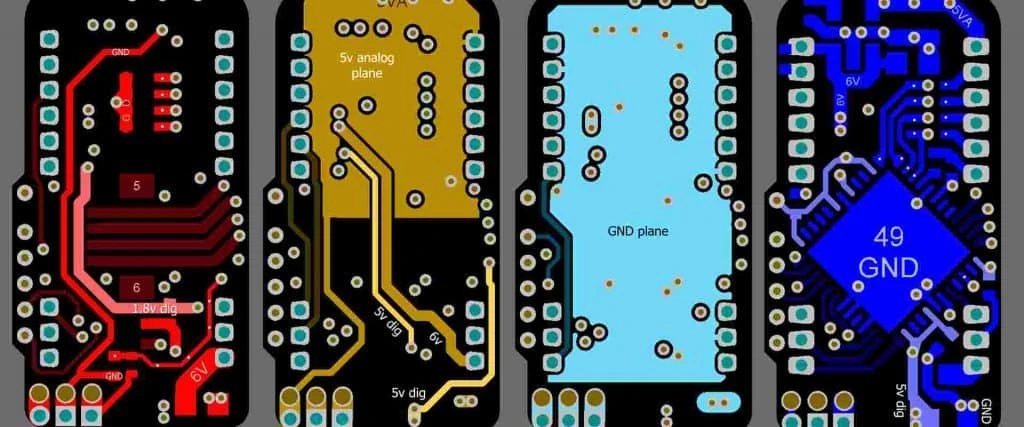
Implementing a robust high-speed Grid code compliance interface involves a disciplined workflow from stackup definition to final assembly. APTPCB (APTPCB PCB Factory) recommends the following sequence to minimize design spins.
- Define the Stackup: Select a layer stack that supports controlled impedance (50Ω/100Ω) and provides sufficient plane capacitance for high-speed ICs. Use a symmetrical build to prevent warpage.
- Partition the Layout: Clearly separate High Voltage (Grid side), Low Voltage (Control side), and Analog Sensing areas. Define "keep-out" zones for isolation barriers early.
- Place Critical Components: Position the FPGA/DSP and high-speed transceivers first. Minimize the distance to their decoupling capacitors to ensure stable power delivery.
- Route High-Speed Interfaces: Route differential pairs (Ethernet, LVDS) first. Match lengths to within tolerance (e.g., ±5 mils) to prevent skew. Avoid crossing split planes.
- Implement Isolation: Place optocouplers or digital isolators across the isolation barrier. Ensure no copper pours or traces cross the gap unless they are safety-rated capacitors.
- Design Power Planes: Create low-impedance power planes. Use multiple vias for high-current paths. Ensure the reference planes for high-speed signals are continuous.
- Add Protection Circuits: Place TVS diodes, gas discharge tubes, and fuses near the connector inputs to handle grid surges and ESD events.
- Perform DFM Review: Check minimum trace widths, annular rings, and aspect ratios against manufacturing capabilities.
- Fabrication and Assembly: Manufacture the bare board using controlled impedance processes. Assemble with high-precision pick-and-place machines for fine-pitch BGAs.
- Functional Validation: Test the interface using a Grid Simulator to inject faults (voltage dips, frequency steps) and verify the interface responds within the required time window.
High-speed Grid code compliance interface troubleshooting (failure modes and fixes)
Even with careful design, issues can arise during testing. Here is a guide to troubleshooting common high-speed Grid code compliance interface failures.
Symptom: Communication Link Drop
- Causes: Impedance mismatch, excessive via stubs, EMI coupling from power switching.
- Checks: Verify TDR impedance profiles. Check eye diagrams for closure. Look for noisy ground loops.
- Fix: Back-drill vias to remove stubs. Improve shielding. Add termination resistors.
- Prevention: Strict impedance control during fabrication; use shielded cables.
Symptom: Processor Reset during Grid Faults
- Causes: Ground bounce, insufficient decoupling, power rail sag.
- Checks: Monitor VCC rails with an oscilloscope during fault injection. Check PDN impedance.
- Fix: Add bulk capacitance. Strengthen ground connections. Use lower inductance capacitors.
- Prevention: Comprehensive PDN analysis during layout; separate noisy and quiet grounds.
Symptom: Inaccurate Voltage/Frequency Readings
- Causes: ADC noise, crosstalk between digital and analog sections, thermal drift.
- Checks: Measure noise floor on ADC inputs. Check reference voltage stability.
- Fix: Improve analog signal filtering. Move high-speed digital traces away from analog inputs.
- Prevention: Use differential sensing lines; implement guard traces.
Symptom: EMI Test Failure (Radiated Emissions)
- Causes: Unshielded high-speed clocks, slot antennas in ground planes, cable radiation.
- Checks: Near-field scanning to locate hot spots. Check return current paths.
- Fix: Add shielding cans. Stitch ground planes. Add ferrite beads on I/O cables.
- Prevention: Continuous ground planes; edge plating; proper enclosure grounding.
Symptom: PCB Delamination or Burning
- Causes: Overheating traces, insufficient creepage causing arcing, moisture absorption.
- Checks: Thermal imaging under load. Inspect for carbonization tracks.
- Fix: Increase trace width/copper weight. Apply conformal coating. Use higher Tg material.
- Prevention: Thermal simulation; adhere to IPC-2221 current limits; specify IPC Class 3 for reliability.
Symptom: False Trip of Protection Logic
- Causes: Signal glitches, software timing errors, lack of hysteresis.
- Checks: Capture logic analyzer traces of the trip signal. Review software debounce settings.
- Fix: Add hardware RC filters. Adjust software thresholds.
- Prevention: Robust signal conditioning; rigorous software-in-the-loop testing.
How to choose high-speed Grid code compliance interface (design decisions and trade-offs)
Selecting the right architecture for your high-speed Grid code compliance interface involves balancing performance, cost, and complexity.
Centralized vs. Distributed Architecture
- Centralized: A single high-performance controller handles all compliance logic.
- Pros: Easier synchronization, lower hardware cost.
- Cons: Single point of failure, long analog cable runs (noise susceptibility).
- Distributed: Smart sensors and local controllers communicate via high-speed digital links.
- Pros: Modular, scalable, better noise immunity (digital transmission).
- Cons: Higher complexity, requires robust synchronization (e.g., IEEE 1588 PTP).
Communication Medium: Copper vs. Fiber
- Copper (Ethernet/RS485): Standard, low cost.
- Trade-off: Susceptible to EMI and ground potential differences. Requires robust galvanic isolation transformers.
- Fiber Optics: Immune to EMI, perfect isolation.
- Trade-off: Higher cost, requires specialized transceivers and careful handling. Preferred for high-voltage (>1kV) environments.
Processing Core: FPGA vs. MCU
- FPGA: Parallel processing, deterministic latency (<1µs).
- Best for: Complex filtering, high-frequency switching control, custom protocols.
- MCU/DSP: Sequential processing, easier to program.
- Best for: Standard communication stacks, slower control loops, lower cost applications.
PCB Material Selection
- Standard FR4: Low cost.
- Limit: Higher dielectric loss, not suitable for very high frequencies or extreme heat.
- High-Speed Materials (e.g., Megtron, Rogers): Low loss, stable Dk.
- Benefit: Essential for >10Gbps links or precise analog sensing, but significantly more expensive.
High-speed Grid code compliance interface FAQ (cost, lead time, common defects, acceptance criteria, Design for Manufacturability (DFM) files)
What factors drive the cost of a high-speed Grid code compliance interface PCB? The primary cost drivers are the layer count (often 6-12 layers for impedance control), material type (High Tg or low-loss laminates), and special processes like via-in-pad or back-drilling for signal integrity.
What is the typical lead time for manufacturing these interfaces? Standard prototypes typically take 5-8 days. Complex boards with special materials or HDI features may require 10-15 days. APTPCB offers expedited services for urgent validation builds.
How do I define acceptance criteria for Grid code compliance interface assembly? Acceptance should be based on IPC-A-610 Class 2 or Class 3 standards. Specific criteria include 100% Automated Optical Inspection (AOI) for component placement, X-ray inspection for BGAs (voiding <25%), and passing functional In-Circuit Test (ICT) for impedance and isolation.
What are the most common defects in Grid code compliance interface manufacturing? Common defects include impedance mismatches due to dielectric thickness variations, solder bridging on fine-pitch controller pins, and contamination affecting isolation resistance.
Do I need to provide specific DFM files for high-speed interfaces? Yes. Beyond standard Gerbers, you must provide an impedance control table specifying trace widths and reference layers. A netlist is crucial for electrical testing validation.
Can standard FR4 be used for high-speed Grid code compliance interfaces? For moderate speeds (e.g., 100Mbps Ethernet) and standard environments, High-Tg FR4 is often sufficient. However, for multi-gigabit links or high-precision sensing, low-loss materials are recommended to preserve signal integrity.
How does the interface handle "Low Voltage Ride Through" (LVRT)? The interface detects the voltage drop via high-speed ADCs and signals the controller to inject reactive current within milliseconds. The PCB must maintain power to the controller (via hold-up capacitors) even when the grid voltage collapses.
What testing is required for Grid code compliance interface best practices? Best practices dictate a combination of Flying Probe Testing for open/shorts, TDR for impedance verification, Hi-Pot testing for isolation, and functional testing using a grid simulator to verify code compliance logic.
Is conformal coating necessary for these interfaces? Yes, especially if the equipment is installed outdoors or in unconditioned enclosures. Coating protects high-impedance sensing circuits from humidity and dust, preventing tracking failures.
How do I ensure my design meets Grid code compliance interface checklist requirements? Start with a pre-layout review of the schematic against the grid code specs. Use simulation tools for signal and power integrity. Engage your PCB manufacturer early for a DFM review to ensure the stackup is manufacturable.
Resources for high-speed Grid code compliance interface (related pages and tools)
- High-Speed PCB Manufacturing: Explore capabilities for controlled impedance and low-loss material processing.
- Industrial Control PCB Solutions: Learn about reliability standards for industrial electronics.
- Impedance Calculator: Verify your trace width and spacing calculations before layout.
- Power & Energy PCB Applications: See how we support the renewable energy sector.
- Testing & Quality Assurance: Details on our inspection processes including AOI and X-ray.
High-speed Grid code compliance interface glossary (key terms)
| Term | Definition | Context in Interface Design |
|---|---|---|
| PCC | Point of Common Coupling | The interface point between the generation source and the utility grid; where compliance is measured. |
| LVRT | Low Voltage Ride Through | Requirement for the equipment to stay connected during short voltage dips. |
| FRT | Fault Ride Through | General term covering voltage and frequency anomalies the interface must survive. |
| IEC 61850 | Communication Standard | Protocol for substation automation; requires high-speed Ethernet interfaces. |
| GOOSE | Generic Object Oriented Substation Event | Fast messaging mechanism (<4ms) used in IEC 61850 for protection tripping. |
| THD | Total Harmonic Distortion | Measure of signal purity; the interface must measure this accurately. |
| Islanding | Loss of Grid | Condition where a generator continues to power a location without grid power; must be detected quickly. |
| Creepage | Surface Distance | Shortest path between two conductive parts along the surface of the insulation. |
| Clearance | Air Distance | Shortest path between two conductive parts through the air. |
| HIL | Hardware-in-the-Loop | Testing method where the PCB interface is connected to a real-time simulator. |
Request a quote for high-speed Grid code compliance interface (Design for Manufacturability (DFM) review + pricing)
APTPCB provides specialized manufacturing services for high-reliability grid interfaces, including comprehensive DFM reviews to optimize signal integrity and isolation.
To get an accurate quote and DFM analysis, please provide:
- Gerber Files: RS-274X format preferred.
- Stackup Diagram: Including material requirements and impedance constraints.
- Bill of Materials (BOM): For assembly quotes, include manufacturer part numbers.
- Test Requirements: Specify TDR, Hi-Pot, or functional test needs.
- Volume & Lead Time: Prototype quantity vs. production targets.
Conclusion (next steps)
Designing a high-speed Grid code compliance interface is a complex task that demands rigorous attention to signal integrity, high-voltage isolation, and rapid response times. By adhering to the rules and implementation steps outlined above, engineers can ensure their systems meet stringent utility requirements and operate reliably in the field. Partnering with an experienced manufacturer like APTPCB ensures that your design intent is faithfully translated into a compliant, high-performance hardware solution.