
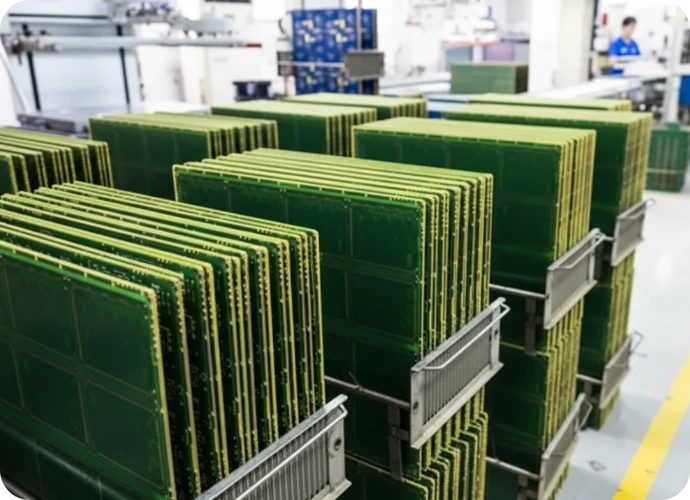
High temperature storage (HTS) test: definition, scope, and who this guide is for
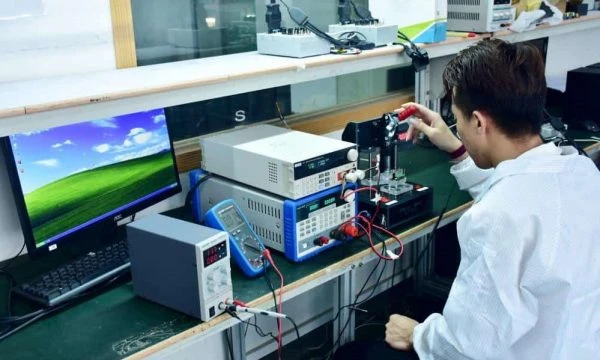
High temperature storage (HTS) test for PCB is a critical reliability assessment used to determine how a printed circuit board withstands prolonged exposure to elevated temperatures without electrical bias. Unlike dynamic burn-in tests where the board is powered, HTS focuses purely on the thermal stability of the materials, the integrity of the plating, and the degradation of the surface finish over time. It simulates the aging process that occurs when electronics are stored in hot warehouses or deployed in engine compartments, ensuring the board remains solderable and mechanically sound after thermal stress.
This guide is written for procurement leads, quality engineers, and product managers who must source PCBs for harsh environments. If you are building automotive ECUs, industrial sensors, or downhole drilling equipment, standard PCB specifications are insufficient. You need a validated strategy to define HTS requirements in your RFQ, preventing field failures caused by delamination or oxidation.
At APTPCB (APTPCB PCB Factory), we often see engineering teams underestimate the impact of thermal aging on solderability. A board might pass initial inspection but fail at the assembly line after sitting in storage, or fail in the field after six months of heat exposure. This playbook provides the specifications, risk mitigation strategies, and supplier checklists necessary to procure high-reliability boards that survive the high temperature storage (hts) test for pcb.
When to use High temperature storage (HTS) (and when another test fits better)
Determining whether to mandate HTS testing depends on the lifecycle profile of your product and the environment it will endure.
Scenarios requiring HTS testing:
- Automotive Under-Hood Applications: Electronics mounted near engines or exhaust systems face constant ambient heat. HTS validates that the laminate resin will not degrade and the copper-to-resin bond remains strong.
- Long-Term Storage Requirements: If your supply chain involves storing bare boards for 12+ months before assembly, HTS simulates this aging to ensure the surface finish (like ENIG or Immersion Silver) does not oxidize to the point of non-wetting.
- Aerospace and Defense: Mission-critical hardware requires evidence that intermetallic compound (IMC) growth between copper and plating will not cause brittle fractures over time.
- High-Power Industrial Controls: Devices operating in unventilated enclosures where ambient temperatures consistently exceed 85°C.
When a standard approach is sufficient:
- Consumer Electronics (Short Lifecycle): For mobile phones or toys with a 2-year lifespan operating at room temperature, standard thermal cycling is usually enough.
- Rapid Prototyping: If the boards will be assembled immediately and discarded after testing, the lead time and cost of HTS (which can take 1000 hours) are unnecessary.
- Benign Office Environments: IT equipment in climate-controlled server rooms typically prioritizes signal integrity over thermal aging.
Test conditions to define (temp, time, sample size)
To ensure your boards pass the high temperature storage (hts) test for pcb, you must define specific parameters in your fabrication drawing and procurement documents. Vague requests like "ensure reliability" will not suffice.
- Base Material Tg (Glass Transition Temperature):
- Specify High-Tg FR4 (Tg ≥ 170°C) or Polyimide for HTS requirements above 150°C. Standard FR4 (Tg 130-140°C) may soften or delaminate during extended testing.
- Decomposition Temperature (Td):
- Require Td ≥ 340°C (at 5% weight loss). This ensures the resin matrix does not physically break down during the test.
- Surface Finish Selection:
- Recommended: ENIG (Electroless Nickel Immersion Gold) or ENEPIG. These provide a robust barrier against oxidation during heat exposure.
- Avoid: OSP (Organic Solderability Preservative). OSP degrades rapidly under high heat, leading to immediate solderability failure post-test.
- Test Duration and Temperature:
- Standard: 1000 hours at 150°C (common for automotive).
- Accelerated: 500 hours at 175°C (for high-performance applications).
- Short-term: 96 hours at 125°C (for basic storage simulation).
- Copper Peel Strength:
- Target > 1.0 N/mm (post-stress). Heat ages the adhesive bond; starting with high peel strength is essential.
- CTE (Coefficient of Thermal Expansion):
- Z-axis CTE should be < 3.5% (50°C to 260°C). Excessive expansion during the test can crack plated through-holes (PTH).
- Solder Mask Type:
- Specify high-temperature resistant ink. Standard inks may discolor, become brittle, or flake off after 1000 hours at 150°C.
- Intermetallic Compound (IMC) Limits:
- For tin-based finishes, define acceptable IMC thickness growth. Excessive IMC leads to brittle solder joints.
- Pre-Conditioning:
- Mandate a baking cycle (e.g., 120°C for 4 hours) before the HTS test to remove absorbed moisture, preventing "popcorning" which invalidates the test.
- Sample Size:
- Define the number of coupons per lot (typically 5–10) representing the worst-case features (smallest vias, densest routing).
Common failure modes (root causes & prevention)
Understanding why boards fail the high temperature storage (hts) test for pcb allows you to implement preventative measures during the design and DFM phase.
- Risk: Delamination (Blistering)
- Root Cause: Moisture trapped in the PCB layers turns to steam, or resin cures improperly.
- Detection: Visual inspection shows bubbles; cross-section shows layer separation.
- Prevention: Strict moisture control during lamination; high-quality bonding sheets; baking boards prior to testing.
- Risk: Surface Finish Oxidation
- Root Cause: Porous gold plating (in ENIG) allows nickel to oxidize, or OSP degrades.
- Detection: Discoloration; failure in wetting balance test.
- Prevention: Minimum gold thickness specifications (e.g., 2-3µin); avoid OSP for HTS applications; use high-phosphorus nickel.
- Risk: Plated Through-Hole (PTH) Cracks
- Root Cause: Z-axis expansion of the laminate stresses the copper barrel.
- Detection: Resistance increase > 10%; open circuits; microsection cracks.
- Prevention: Use materials with lower Z-axis CTE; ensure minimum copper plating thickness (average 25µm).
- Risk: Solder Mask Embrittlement
- Root Cause: Thermal over-curing makes the mask brittle and prone to flaking.
- Detection: Tape test (adhesion loss); visual cracking.
- Prevention: Qualify solder mask ink specifically for long-term thermal aging.
- Risk: CAF (Conductive Anodic Filament) Growth
- Root Cause: While HTS is dry, thermal stress can create micro-cracks. If followed by humidity,
caf failure in pcb: causes and design rulesbecomes relevant. - Detection: Electrical isolation failure.
- Prevention: Increase clearance between vias; use anti-CAF resin systems.
- Root Cause: While HTS is dry, thermal stress can create micro-cracks. If followed by humidity,
- Risk: Bow and Twist
- Root Cause: Uneven copper distribution releases stress asymmetrically under heat.
- Detection: Board warping exceeds 0.75%.
- Prevention: Copper balancing in design; symmetrical stackup construction.
- Risk: Via Fill Pop-out
- Root Cause: Mismatch in CTE between plugging epoxy and laminate.
- Detection: Dimples or protrusions at via sites.
- Prevention: Match plugging ink CTE to the base laminate; ensure proper planarization.
- Risk: Legend/Silkscreen Discoloration
- Root Cause: Ink pigments degrade at high temperatures (e.g., white turns brown).
- Detection: Visual illegibility.
- Prevention: Use laser marking instead of ink, or specify high-temp inks.
Validation & acceptance (pass/fail criteria)
Once the HTS cycle is complete, the boards must undergo a battery of tests to confirm they survived without latent damage.
- Visual Inspection (10x - 40x Magnification)
- Objective: Check for gross defects.
- Acceptance Criteria: No blistering, measles, delamination, or mask flaking. Legend must remain legible.
- Electrical Continuity and Isolation
- Objective: Verify circuit integrity.
- Acceptance Criteria: Resistance change < 10% from baseline. No shorts or opens.
- Microsection Analysis (Cross-Section)
- Objective: Inspect internal structure.
- Acceptance Criteria: No barrel cracks, no corner cracks, no resin recession > 20%. Interconnect separation is not allowed.
- Solderability Testing (Dip and Look / Wetting Balance)
- Objective: Ensure the surface finish can still be soldered.
- Acceptance Criteria: > 95% coverage of the critical area with a smooth, continuous solder coating. Wetting time < 2 seconds.
- Peel Strength Test
- Objective: Verify copper-to-laminate bond.
- Acceptance Criteria: Peel strength must remain > 0.8 N/mm (or > 80% of initial value).
- Shear Testing (for assembled coupons)
- Objective: If components were mounted, test joint strength.
- Acceptance Criteria: Shear force must meet IPC-9701 or specific project requirements.
- Dielectric Withstanding Voltage (Hi-Pot)
- Objective: Check insulation integrity.
- Acceptance Criteria: No breakdown or leakage current exceeding limits at specified voltage.
- Comparison with
damp heat and humidity test for pcb (85c/85rh)- Objective: Contextualize failure modes.
- Acceptance Criteria: If the board passes HTS (Dry) but fails Damp Heat, the issue is likely moisture absorption/hydrolysis rather than pure thermal degradation.
Supplier checklist (RFQ, traceability, reports)
Use this checklist to vet suppliers like APTPCB before awarding a contract for high-reliability boards.
RFQ Inputs (What you must send):
- Explicit reference to HTS standard (e.g., JEDEC JESD22-A103 or IPC-TM-650 Method 2.6.8).
- Temperature profile (e.g., 150°C) and duration (e.g., 1000 hours).
- Defined "Pass/Fail" criteria for solderability post-aging.
- Requirement for specific base materials (Brand/Grade) known for thermal stability.
- Request for a "Reference Coupon" design if not provided in Gerber data.
Capability Proof (What they must show):
- In-house reliability lab with calibrated thermal chambers.
- Data logging capability (temperature vs. time records for the full duration).
- Experience with High-Tg and Heavy Copper manufacturing.
- Ability to perform in-house microsectioning and solderability testing.
- History of automotive or aerospace production (IATF 16949 certification).
Quality System & Traceability:
- Can they trace a failed board back to the specific lamination press cycle?
- Do they store retention samples from every lot?
- Is there a procedure for "Bake Out" prior to HTS to prevent false failures?
- Are calibration records for ovens up to date?
Change Control & Delivery:
- Agreement that no material changes (resin, ink, plating chemistry) will occur without PCN (Product Change Notification).
- Confirmation that HTS testing time is built into the lead time (add 6+ weeks for 1000-hour tests).
Decision guidance (trade-offs and decision rules)
Engineering is about trade-offs. Here is how to balance cost, time, and reliability when specifying HTS.
- If you prioritize Speed vs. Full Qualification:
- Decision: Choose a shorter duration (96 hours or 168 hours) at a higher temperature (175°C) for a quick "sanity check."
- Trade-off: This may not reveal slow-growing intermetallic issues that appear at 1000 hours.
- If you prioritize Cost vs. Material Performance:
- Decision: Stick to standard High-Tg FR4 (Tg 170) rather than exotic Polyimide or Ceramic substrates.
- Trade-off: FR4 has limits. If your HTS requirement is > 175°C, FR4 will fail; you must pay for Polyimide.
- If you prioritize Solderability vs. Cost:
- Decision: Choose ENIG or ENEPIG over Immersion Tin or Silver.
- Trade-off: Higher unit cost, but significantly lower risk of oxidation failure after thermal aging.
- If you prioritize Data vs. Lab Fees:
- Decision: Request a "Certificate of Conformance" based on monthly periodic testing of the process, rather than testing every specific lot.
- Trade-off: Saves money and time, but assumes your lot behaves exactly like the monthly sample.
- If you are worried about
caf failure in pcb: causes and design rules:- Decision: HTS alone is not enough. You must pair HTS with THB (Temperature Humidity Bias) testing.
- Trade-off: Doubles the testing cost and time but covers both thermal and moisture failure modes.
FAQ (conditions, duration, sample prep, reporting)
1. How much does high temperature storage (hts) test for pcb add to the cost?
It depends on whether you require lot-specific testing or periodic qualification. Lot-specific testing is expensive due to chamber time and destructive analysis coupons. Periodic testing is usually amortized into the overhead. Expect a $500-$2000 surcharge for a dedicated 1000-hour validation run.
2. What is the impact on lead time for HTS testing? A 1000-hour test is approximately 42 days (6 weeks). You cannot speed up time. If you need HTS validation before shipment, you must plan for this delay. Most buyers accept shipment based on "concurrent testing" (shipping while testing is ongoing) for established suppliers.
3. Which PCB materials are best for passing HTS tests? Materials with high Tg (Glass Transition) and high Td (Decomposition) are essential. Brands like Isola (370HR, 185HR), Panasonic (Megtron 6), and Rogers (RO4000 series) are industry standards for high-thermal reliability.
4. Can I use OSP finish for boards requiring HTS? No. OSP (Organic Solderability Preservative) is an organic film that degrades rapidly above 100°C. After HTS, the copper will be oxidized and unsolderable. Use ENIG, ENEPIG, or HASL (if planarity allows).
5. What DFM files are required to set up an HTS test? You need to provide the Gerber files, the fabrication drawing (specifying the test standard), and a netlist. Crucially, you must include a "test coupon" design (like IPC-2221 Appendix A coupons) in the panel frame, or ask the supplier to add one.
6. How does HTS differ from damp heat and humidity test for pcb (85c/85rh)?
HTS is a "dry" test focusing on thermal aging and oxidation. Damp heat (85°C / 85% RH) focuses on moisture absorption, corrosion, and CAF growth. They test different failure mechanisms; high-reliability boards often need both.
7. What are the acceptance criteria for solderability after HTS? Typically, the industry follows J-STD-003. The area of the pad must be at least 95% covered by new solder coating, and the coating must be smooth and shiny (for SnPb) or continuous (for Lead-Free). Non-wetting or de-wetting indicates failure.
8. Why do boards fail HTS even with high-quality materials? Process control issues are often to blame. Poor cleaning before plating, insufficient plating thickness, or improper lamination pressure can cause failures even if the raw material is excellent. This is why supplier auditing is critical.
Related pages & tools
- High Tg PCB Manufacturing: Understand the base materials required to survive 150°C+ storage conditions without softening.
- Automotive Electronics PCB: Explore how the automotive industry applies HTS standards to ensure safety and longevity.
- PCB Surface Finishes: Compare ENIG, OSP, and Immersion Silver to select the right finish for thermal aging resistance.
- PCB Quality Control System: Learn about the testing protocols and certifications (like IATF 16949) that underpin reliable manufacturing.
- Isola PCB Materials: Review specifications for specific laminate brands often used in high-temperature applications.
Request a quote (Design for Manufacturability (DFM) review + pricing)
Ready to validate your design for harsh environments? APTPCB provides comprehensive DFM reviews to identify thermal risks before fabrication begins.
Get Your HTS-Ready PCB Quote – We review your stackup and material choice to ensure compliance with high-temperature storage requirements.
To get an accurate quote and DFM for HTS boards, please provide:
- Gerber Files: RS-274X or X2 format.
- Fab Drawing: Clearly state "HTS Testing Required" and the specific standard (e.g., 1000hrs @ 150°C).
- Material Spec: Tg and Td requirements.
- Volume: Prototype vs. Mass Production (affects testing strategy).
- Acceptance Criteria: If you have specific pass/fail limits for resistance or peel strength.
Conclusion (next steps)
Implementing a robust high temperature storage (hts) test for pcb strategy is the difference between a product that lasts a decade and one that fails in the first summer of use. By specifying the right materials, understanding the risks of oxidation and delamination, and enforcing strict validation criteria, you protect your supply chain from costly recalls. Whether you are designing for automotive under-hood applications or long-term industrial storage, the key is early collaboration with a capable manufacturer who understands the physics of thermal aging.