
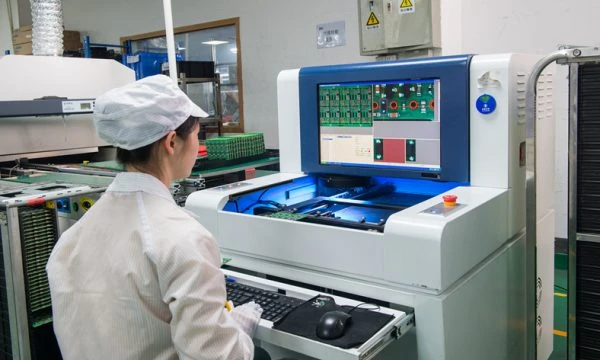
A hurricane monitor PCB supports the sensing, processing, power, and telemetry functions inside severe-weather equipment such as dropsondes, marine buoys, coastal monitoring stations, and airborne sensor platforms.
The reliable design approach begins with the deployment environment. A board used for a disposable dropsonde has different requirements from a multi-year offshore buoy controller. Moisture exposure, RF performance, battery behavior, vibration, corrosion, and validation requirements must be defined before selecting laminate, coating, IPC class, or manufacturing processes.
Key decisions for a hurricane monitor PCB
- Define the mission profile before selecting materials or protection methods.
- Treat enclosure design, connectors, cable entries, cleaning, and coating as one environmental protection system.
- Control impedance only on interfaces that require it, using the radio, module, cable, antenna, or protocol requirements.
- Select fabrication and assembly standards from product risk and contractual requirements.
- Validate the complete device, including enclosure, antenna, battery, harness, firmware, and communications system.
What types of hurricane monitoring systems need PCB reliability planning?
A hurricane monitor PCB may operate in several platforms with different dominant failure mechanisms.
| Deployment profile | Primary PCB concerns | Design inputs required |
|---|---|---|
| Aircraft-released dropsonde | Size, weight, battery life, sensor accuracy, RF telemetry, deployment shock | Descent duration, sampling rate, radio band, antenna placement, temperature range |
| Marine buoy | Salt exposure, condensation, corrosion, long unattended operation | Enclosure rating, cable entries, battery source, service interval, communications link |
| Coastal station | Rain, salt contamination, surge, lightning interfaces, maintenance access | Mounting location, grounding, surge boundary, enclosure thermal design |
| Drone or reusable airborne payload | Vibration, RF coexistence, repeated handling, weight limits | Vibration spectrum, mounting points, flight duration, inspection interval |
NASA Earthdata describes dropsondes as instruments that measure atmospheric conditions such as temperature, humidity, pressure, wind, and position while transmitting data during descent. UCAR's AVAPS system demonstrates a weather telemetry architecture using sensors, GPS, processor electronics, battery power, and meteorological-band radio communication. Those values describe specific systems and should not be copied as universal requirements.
How should a hurricane monitor PCB be partitioned?
A reliable layout separates electrical functions according to sensitivity.
How should sensor circuits be designed?
Pressure, temperature, and humidity measurements depend on both electrical design and mechanical placement.
Keep low-level analog signals away from switching regulators and high-current paths. Provide stable references, appropriate filtering, calibration access, and test points that remain usable after assembly.
Sensor protection must also preserve measurement accuracy. Coatings, seals, and mechanical barriers cannot block required airflow or create uncontrolled thermal gradients around sensing elements.
How should RF telemetry and GNSS circuits be designed?
RF performance depends on the complete installed assembly, not only the bare PCB.
Specify controlled impedance from the actual interface requirement. A 50-ohm RF feed, for example, should be derived from the antenna system, module, cable, and stackup—not applied automatically to every trace.
Review:
- PCB stackup and dielectric construction
- Reference planes and return paths
- Antenna clearance
- Battery and enclosure interaction
- Cable routing
- Coating effects
- Final installed tuning
See high-frequency PCB manufacturing when the design requires controlled RF materials or stackup review.
How should power systems be designed?
Power architecture should include:
- Sensor startup current
- Radio transmit peaks
- Battery aging
- Storage conditions
- Voltage drop through connectors and cables
- Recovery behavior after brownouts
External power connections may require reverse-polarity protection, surge protection, filtering, and ESD control.
How do you select moisture and salt protection?
Moisture reliability depends on the complete product boundary.
Conformal coating helps reduce contamination-driven leakage and corrosion, but it does not replace:
- Sealed enclosures
- Proper cable glands
- Connector selection
- Drainage paths
- Cleaning processes
- Environmental validation
Define coating zones before production:
| Area | Treatment |
|---|---|
| Exposed circuitry | Protective coating where compatible |
| Connectors and sensors | Masking or specialized protection |
| Programming/test access | Remain serviceable if required |
| Coating type | Typical advantages | Design considerations |
|---|---|---|
| Acrylic | Repairable and commonly used | Chemical and temperature performance depend on formulation |
| Silicone | Flexible under thermal cycling and vibration | Rework and adhesion require process control |
| Urethane | Strong moisture and chemical resistance | Removal and repair are more difficult |
| Parylene | Uniform thin protective barrier | Requires specialized processing, masking, and rework planning |
Parylene is not automatically the correct choice. Select coating based on contamination, temperature cycling, repair strategy, component compatibility, and qualification requirements.
APTPCB's PCB conformal coating service describes available coating approaches that can be reviewed against project requirements.
Which PCB materials and standards should be specified?
Material selection should follow electrical, mechanical, thermal, and manufacturing requirements.
High-Tg FR-4 may be suitable when thermal cycling and assembly requirements allow it. Low-loss RF laminates may be required when insertion loss, phase stability, or antenna-feed performance becomes critical.
Use advanced PCB manufacturing when the design requires features such as HDI, via-in-pad, rigid-flex construction, heavy copper, or tighter impedance control.
IPC requirements should match product risk:
| Requirement | Purpose |
|---|---|
| IPC-6012 | Rigid PCB qualification and performance requirements |
| IPC-A-600 | Printed board acceptability criteria |
| J-STD-001 | Soldering requirements |
| IPC-A-610 | Assembly acceptability criteria |
| IPC-CC-830 | Conformal coating qualification |
IPC Class 3 may be appropriate for high-reliability products when required by contract, but it does not prove hurricane exposure capability. Environmental qualification remains a system-level responsibility.
What failures commonly occur in hurricane monitor PCBs?
| Failure symptom | Likely causes | Investigation focus |
|---|---|---|
| Sensor drift in humidity | Condensation, residue, leakage, contamination | Cleaning, coating coverage, sensor keep-outs |
| Reduced telemetry range | Antenna detuning, enclosure interaction, power droop | Installed antenna, RF path, transmit voltage |
| Connector corrosion | Ingress, trapped contamination, plating mismatch | Connector sealing and coating boundaries |
| Processor resets during transmission | Battery impedance, regulator response, insufficient capacitance | Power rail measurements during RF activity |
| Vibration-related opens | Board flex, connector stress, solder fatigue | Mounting, harness strain relief, solder joints |
| Temperature-related sensor error | Self-heating, thermal gradients, calibration limits | Thermal layout and calibration data |
What validation tests should a hurricane monitor PCB pass?
A complete qualification plan connects each stress to evidence.
| Environment | PCB controls | Manufacturing evidence | Final validation |
|---|---|---|---|
| Humidity and condensation | Cleaning, spacing, coating design | Cleaning records, coating inspection | Powered humidity testing |
| Salt exposure | Protected interfaces and compatible materials | Finish and coating records | Corrosion testing |
| Temperature cycling | Suitable materials and thermal design | Material documentation | Thermal cycling with functional monitoring |
| Shock and vibration | Mechanical restraint and strain relief | Assembly inspection | System-level vibration testing |
| RF operation | Controlled stackup and return paths | Impedance data when required | Link testing in final enclosure |
| Long operation | Derating and recovery design | Traceability documentation | Mission-duration testing |
Applicable methods may include:
- IEC 60068-2-6 vibration
- IEC 60068-2-27 shock
- IEC 60068-2-14 temperature change
- IEC 60068-2-78 damp heat
- ASTM B117 salt spray
The selected severity, duration, mounting condition, powered state, and pass/fail limits must represent the actual deployment.
What should be included in a hurricane monitor PCB RFQ?
A complete RFQ allows suppliers to quote the real reliability requirement.
Design package
- Gerber or ODB++ files
- NC drill files
- Fabrication drawing
- Netlist
- Layer stackup
- Copper weights
- Material requirements
- Controlled impedance requirements
Deployment information
- Platform type
- Operating environment
- Temperature range
- Humidity and condensation exposure
- Salt exposure
- Shock and vibration profile
- Enclosure details
- Antenna and cable configuration
- Battery requirements
Manufacturing and testing requirements
- PCB acceptance class
- Assembly workmanship standard
- Cleaning specification
- Coating material and thickness requirements
- Coat/mask/access drawing
- Functional test procedure
- Environmental test methods
- Reporting requirements
Request a hurricane monitor PCB manufacturing review
Provide the deployment profile together with design files. APTPCB can review stackup requirements, RF constraints, assembly inputs, coating plans, and manufacturing test scope before quotation. Final environmental qualification remains part of the customer's complete product validation program.
FAQ
Is IPC-6012 Class 3 required for every hurricane monitor PCB?
No. The correct class depends on product risk, customer requirements, and procurement specifications. Class 3 does not replace environmental qualification.
Does conformal coating waterproof a PCB?
No. Coating provides contamination and moisture protection but does not replace enclosure sealing, connectors, cable protection, or system testing.
Is Parylene the best coating for marine weather electronics?
Not always. Acrylic, silicone, urethane, Parylene, and enclosure-based approaches may each be appropriate depending on exposure and maintenance requirements.
Should every telemetry trace use 50-ohm impedance?
No. Controlled impedance should be applied only where required by the RF device, antenna system, cable, or interface specification.
Can FR-4 be used for hurricane monitoring equipment?
Yes, when the electrical, thermal, mechanical, and environmental requirements support the selection.
What information matters most in an RFQ?
The most valuable inputs are the deployment environment, stackup requirements, protection plan, test requirements, quantities, and acceptance criteria.
Conclusion
Reliable hurricane monitor PCBs are designed around measurable deployment conditions. When sensing, RF, power, moisture protection, mechanical design, manufacturing controls, and validation ownership are defined together, the result is a board qualified by evidence rather than by generic ruggedness claims.