

In the realm of heavy machinery and automation, safety is not a feature; it is the baseline requirement. The industrial-grade Dual-channel safety control PCB represents the hardware backbone of modern safety instrumented systems (SIS). Unlike standard consumer electronics, these boards must actively detect faults and force machinery into a safe state if a failure occurs. Whether managing emergency stops on an assembly line or monitoring high-voltage interlocks, the integrity of the printed circuit board determines the safety integrity level (SIL) of the entire machine.
This guide covers the entire lifecycle of these critical components, from architectural definitions to manufacturing validation.
Key Takeaways
- Redundancy is mandatory: True dual-channel designs require physical and electrical separation to prevent Common Cause Failures (CCF).
- Material selection drives reliability: High Tg FR4 or Polyimide is often required to withstand industrial thermal cycling without delamination.
- Metrics go beyond connectivity: You must evaluate Mean Time to Dangerous Failure (MTTFd) and Diagnostic Coverage (DC) during the design phase.
- Testing is non-negotiable: 100% Flying Probe and Functional Circuit Testing (FCT) are standard for APTPCB (APTPCB PCB Factory) production runs.
- Cleanliness impacts safety: Ionic contamination can bridge isolated channels; strict washing protocols are essential.
- Validation requires traceability: Every board must be traceable to its raw material batch and test results.
What “dual-channel safety control PCB” means (scope & boundaries)
Before diving into metrics, we must define the core architecture that separates a standard board from a safety-critical one.
An industrial-grade Dual-channel safety control PCB is a circuit board designed to support "1oo2" (1 out of 2) or "2oo2" logic architectures. In a 1oo2 system, two independent channels process the same safety signal (e.g., a light curtain breach). If either channel detects a fault or a discrepancy, the system trips to a safe state.
The "Industrial-grade" Distinction
The term "industrial-grade" implies adherence to IPC Class 3 standards (or Class 2 with specific enhancements). It signifies that the PCB can withstand:
- Vibration: Constant mechanical stress typical of robotics.
- Temperature: Operating ranges often spanning -40°C to +85°C or higher.
- EMI/EMC: High electromagnetic interference from variable frequency drives (VFDs) and motors.
The "Dual-channel" Requirement
This refers to physical redundancy. The PCB layout must ensure that a single event (like a short circuit or a physical crack) cannot disable both safety channels simultaneously. This often requires:
- Physical separation distances (creepage and clearance) exceeding standard UL requirements.
- Galvanic isolation between channels.
- Diverse routing paths to minimize cross-talk.
Metrics that matter (how to evaluate quality)
Once the architecture is defined, we evaluate performance using specific metrics that quantify safety and reliability.
Engineers cannot rely solely on "pass/fail" continuity tests. For safety PCBs, the metrics focus on the probability of failure and the ability to detect that failure.
| Metric | Why it matters | Typical Range / Factor | How to Measure |
|---|---|---|---|
| CTI (Comparative Tracking Index) | Determines how well the PCB material resists electrical breakdown (tracking) across the surface under voltage. | PLC 0 or 1 (>600V) for high-voltage safety. | IEC 60112 standard testing on base laminate. |
| Dielectric Breakdown Voltage | Ensures insulation between the two redundant channels does not fail during surges. | >40kV/mm for standard FR4; higher for specialized materials. | Hi-Pot testing (High Potential) between channels. |
| Tg (Glass Transition Temp) | Prevents barrel cracking and pad lifting during high-heat operation or assembly. | >170°C (High Tg) is standard for industrial safety. | TMA (Thermomechanical Analysis). |
| Ionic Contamination | Residue can cause electrochemical migration (dendrites), shorting the two safety channels. | <1.56 µg/cm² NaCl equivalent (IPC-6012). | ROSE testing (Resistivity of Solvent Extract). |
| Impedance Control | Critical for high-speed communication between safety processors (MCUs). | ±5% or ±10% tolerance. | TDR (Time Domain Reflectometry) coupons. |
| Copper Peel Strength | Ensures traces do not lift under thermal shock or vibration. | >1.4 N/mm (after thermal stress). | Peel test on test coupons. |
How to choose (trade-offs by scenario)
Understanding these metrics allows engineers to select the right board configuration for specific operational scenarios.
Different industrial environments stress the PCB in different ways. A board designed for a clean server room will fail in a mining excavator. Here is how to choose the right industrial-grade Dual-channel safety control PCB configuration based on the application.
Scenario 1: Heavy Robotics (High Vibration)
- Challenge: Constant mechanical shock can crack solder joints or vias.
- Trade-off: Flexibility vs. Rigidity.
- Selection: Use Rigid-Flex PCB technology to eliminate connectors (which are failure points). Use resin-filled vias to prevent barrel cracks.
- Key Spec: IPC Class 3 plating thickness.
Scenario 2: High-Voltage Power Distribution
- Challenge: Arcing between redundant channels.
- Trade-off: Size vs. Isolation.
- Selection: Require high CTI (>600V) laminates. Increase physical spacing (creepage) between Channel A and Channel B.
- Key Spec: Heavy copper (2oz or 3oz) for current handling.
Scenario 3: Outdoor Crane Control (Thermal Cycling)
- Challenge: Rapid temp changes cause expansion/contraction, stressing plated through-holes (PTH).
- Trade-off: Cost vs. CTE match.
- Selection: Choose materials with a low Coefficient of Thermal Expansion (CTE) in the Z-axis.
- Key Spec: Tg > 170°C.
Scenario 4: Automotive Assembly Line (EMI Noise)
- Challenge: Welding robots generate massive EMI that can trigger false safety trips.
- Trade-off: Layer count vs. Signal Integrity.
- Selection: Use a Multilayer PCB stackup (6+ layers) with dedicated ground planes shielding the safety signals.
- Key Spec: Solid reference planes; stitching vias.
Scenario 5: Chemical Processing (Corrosion)
- Challenge: Corrosive gases attack exposed copper and solder.
- Trade-off: Surface finish cost vs. Longevity.
- Selection: Avoid OSP or Immersion Silver. Use ENIG (Electroless Nickel Immersion Gold) or ENEPIG. Apply conformal coating.
- Key Spec: Conformal coating thickness verification.
Scenario 6: Compact AGV (Automated Guided Vehicle)
- Challenge: Limited space for dual-channel routing.
- Trade-off: Density vs. Isolation.
- Selection: Use HDI PCB (High Density Interconnect) with blind/buried vias to route channels on different internal layers.
- Key Spec: Laser drill registration accuracy.
Implementation checkpoints (design to manufacturing)
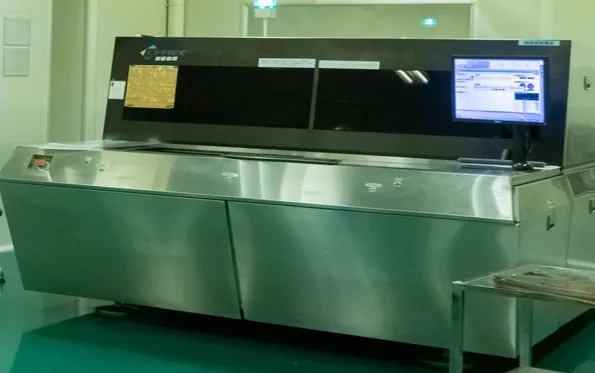
After selecting the right approach, the focus shifts to executing the design through manufacturing without introducing latent defects.
APTPCB recommends the following checkpoint system to ensure the final product meets safety requirements.
| Phase | Checkpoint | Recommendation | Risk if Ignored | Acceptance Method |
|---|---|---|---|---|
| Design | Netlist Separation | Verify Channel A and B share no common nets except defined power/ground points. | Common Cause Failure (CCF). | Schematic DRC / Netlist Compare. |
| Layout | Creepage/Clearance | Maintain >3mm (or per voltage standard) between channels. | Arcing / Shorting. | 3D Design Rule Check. |
| Stackup | Dielectric Selection | Specify Prepreg type explicitly (e.g., 1080 vs 7628) for impedance and isolation. | Impedance mismatch / Hi-Pot failure. | Stackup approval sheet. |
| Sourcing | Component Grade | Ensure active components are Automotive or Industrial grade. | Early component mortality. | BOM Scrub / COC verification. |
| Fabrication | Etch Compensation | Adjust for heavy copper etching to maintain trace width. | Current bottleneck / Overheating. | Cross-section analysis (Microsection). |
| Fabrication | Plating Thickness | Target average 25µm copper in hole walls (IPC Class 3). | Open vias under thermal stress. | CMI / Cross-section. |
| Assembly | Solder Paste | Use water-soluble flux or no-clean with strict validation. | Dendrite growth (leakage current). | SPI (Solder Paste Inspection). |
| Assembly | Reflow Profile | Optimize for component thermal mass to ensure solid joints. | Cold solder joints (intermittent failure). | Profiling verification. |
| Testing | ICT (In-Circuit Test) | Test passive components on both channels independently. | Wrong resistor value affects safety timing. | ICT Report. |
| Testing | Isolation Test | Apply high voltage between Channel A and B. | Hidden shorts or contamination. | Hi-Pot Pass/Fail. |
Common mistakes (and the correct approach)
Even with a rigorous checklist, specific pitfalls often compromise dual-channel integrity during the transition from prototype to mass production.
1. Shared Ground Planes Creating Loops
Mistake: Connecting the ground planes of Channel A and Channel B at multiple points to "improve" grounding. Correction: This creates ground loops and defeats isolation. Use a "star ground" topology or fully isolated grounds (galvanic isolation) depending on the safety controller IC requirements.
2. Ignoring "Sneak Circuits" in Layout
Mistake: Routing Channel A traces directly underneath Channel B traces on adjacent layers. Correction: Even with a dielectric in between, a manufacturing defect (pinhole) or high-voltage spike could bridge them. Offset traces or place a ground plane between signal layers.
3. Over-reliance on Software Debouncing
Mistake: Relying solely on firmware to filter noise on safety inputs, allowing poor PCB signal integrity. Correction: Hardware filtering is safer. Ensure the PCB layout supports RC filters close to the input terminals to kill noise before it reaches the MCU.
4. Insufficient Thermal Management for Power Stages
Mistake: Placing high-current safety relays too close to sensitive logic without thermal breaks. Correction: Use Heavy Copper PCB features or thermal vias to dissipate heat away from the logic section. Heat can cause logic threshold drift.
5. Inadequate Conformal Coating Coverage
Mistake: Spraying coating without masking connectors properly, or missing shadow areas under tall components. Correction: Use selective coating machines rather than manual spray. Inspect with UV light to ensure the isolation barrier is intact.
6. Assuming "Standard" FR4 is Enough
Mistake: Using standard Tg 130 material for a safety board in a hot enclosure. Correction: Always specify High Tg (170°C+) for industrial safety applications to prevent pad cratering.
FAQ (cost, lead time, materials, testing, acceptance criteria)
To address lingering uncertainties regarding these mistakes, here are answers to frequent inquiries we receive at APTPCB.
Q: How much does upgrading to an industrial-grade Dual-channel safety control PCB increase cost? A: Typically, moving from standard consumer specs to industrial safety specs (IPC Class 3, High Tg, specific testing) increases unit cost by 20-40%. However, this eliminates the risk of expensive liability and downtime.
Q: What is the lead time impact for these safety boards? A: Fabrication time increases by 1-2 days due to additional testing (Hi-Pot, cross-sectioning) and tighter tolerance controls. Sourcing automotive-grade components may extend assembly lead time if not stocked.
Q: Can I use standard FR4 for a dual-channel safety board? A: Only if the operating environment is benign (room temperature, low vibration). For true industrial environments, High Tg FR4 is the minimum recommendation to ensure the Z-axis expansion doesn't break vias.
Q: What are the acceptance criteria for these PCBs? A: We recommend IPC-A-600 Class 3 for the bare board and IPC-A-610 Class 3 for the assembly. This requires tighter criteria for hole plating, solder fillet size, and cleanliness.
Q: How do you test the "Dual-channel" functionality during manufacturing? A: We use Testing & Quality protocols that include Functional Circuit Testing (FCT). We simulate a fault on Channel A and verify that Channel B triggers the safety output, and vice versa.
Q: Why is the color of the solder mask important? A: While not functional, safety PCBs often use Red or Yellow solder masks to denote their critical nature to maintenance personnel. However, Green yields the best inspection contrast.
Q: Do I need impedance control for safety signals? A: If your safety system uses high-speed communication (like Safety-over-EtherCAT or ProfiSAFE), impedance control is mandatory to prevent data packet loss which causes nuisance tripping.
Q: What documentation should I provide for a quote? A: Provide Gerbers, BOM, Pick & Place file, and a "ReadMe" specifying IPC Class 3, dielectric requirements, and specific isolation voltage tests required between channels.
Related pages & tools
For those seeking deeper technical data beyond these answers, the following resources provide extended support for your design and manufacturing planning.
- Industrial Control PCB Solutions: Deep dive into the specific requirements of the industrial automation sector.
- PCB Quality Systems: Details on certifications (ISO 9001, IATF 16949) and inspection standards used at APTPCB.
- Heavy Copper PCB Capabilities: Technical specs for handling high currents in safety relays and power distribution.
- Rigid-Flex PCB Technology: Design guidelines for 3D safety sensors and robotics applications.
- PCBA Testing Services: Explanation of ICT, FCT, and Flying Probe testing methodologies.
Glossary (key terms)
Finally, to ensure clarity across all documentation, we define the key terminology used above.
| Term | Definition |
|---|---|
| 1oo2 (One out of Two) | A safety architecture where two channels operate in parallel; if either channel demands a stop, the machine stops. |
| CCF (Common Cause Failure) | A failure where a single event (e.g., power surge, temp spike) disables both redundant channels simultaneously. |
| DC (Diagnostic Coverage) | The percentage of dangerous failures that the system can detect automatically. |
| SIL (Safety Integrity Level) | A relative level of risk-reduction provided by a safety function (SIL 1 to SIL 4). |
| PL (Performance Level) | ISO 13849 standard rating (PL a to PL e) for the reliability of safety parts. |
| Galvanic Isolation | Isolating functional sections of electrical systems to prevent current flow; no direct conduction path. |
| Creepage | The shortest distance between two conductive parts along the surface of the insulation. |
| Clearance | The shortest distance between two conductive parts through the air. |
| IPC Class 3 | The highest IPC standard for PCB reliability, used for products where downtime is not acceptable. |
| High Tg | High Glass Transition Temperature. Material that remains rigid at higher temperatures (>170°C). |
| FCT (Functional Circuit Test) | Testing the assembled PCB by simulating real-world inputs and measuring outputs. |
| CAF (Conductive Anodic Filament) | Electrochemical migration of copper along the glass fibers inside the PCB, causing internal shorts. |
Conclusion (next steps)
The industrial-grade Dual-channel safety control PCB is the silent guardian of the factory floor. Its reliability dictates the safety of human operators and the uptime of expensive machinery. By prioritizing separation, selecting robust materials, and enforcing strict validation protocols, you ensure that your safety system fails safe, not dangerous.
When you are ready to move from design to production, the manufacturing partner you choose matters as much as the design itself.
Ready to manufacture your safety-critical designs? To get an accurate DFM review and quote from APTPCB, please prepare:
- Gerber Files (RS-274X format).
- Stackup details (specifying dielectric thickness for isolation).
- Fabrication Drawing (noting IPC Class 3 and CTI requirements).
- Test Requirements (specifically Hi-Pot and Impedance specs).
Ensure your safety systems are built on a foundation of quality.