
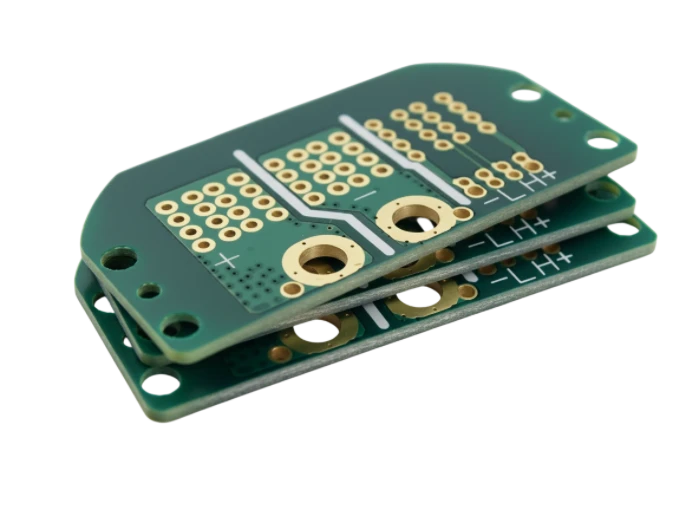
An IGBT or GaN gate driver PCB converts low-voltage control signals into precise switching commands while managing isolation, transient immunity, protection response and power-device reliability. Although both technologies use gate-driver circuits, their PCB requirements are significantly different.
IGBT designs typically prioritize controlled switching energy, DESAT protection, soft shutdown and robust isolation. GaN designs require tighter control of parasitic inductance, gate voltage limits, common-source inductance and high-frequency switching behavior.
A reliable design starts with choosing the correct device technology, then matching the PCB layout, protection strategy and validation plan to the switching characteristics.
What are the key differences between IGBT and GaN gate driver PCBs?
| Design factor | IGBT gate driver PCB | GaN gate driver PCB |
|---|---|---|
| Switching behavior | Slower switching with higher gate charge and tail current effects | Very fast switching with low gate charge and strong parasitic sensitivity |
| Gate control | Commonly uses positive gate drive with optional negative turn-off bias | Requires strict compliance with device gate voltage limits; many devices use narrow gate-drive ranges |
| Turn-off control | Miller clamp, negative bias and soft shutdown are common design options | Low-inductance turn-off path and precise voltage control are critical |
| Protection | DESAT, soft turn-off and overcurrent protection are widely used | Fast overcurrent response must match the device short-circuit capability |
| Layout priority | Short gate loop and Kelvin emitter connection | Minimum gate loop inductance and extremely compact driver placement |
| Isolation challenge | Creepage, clearance and CMTI requirements | Same isolation requirements with higher dv/dt sensitivity |
| Validation focus | Gate waveform, collector voltage, switching loss and fault response | Gate ringing, overshoot, EMI behavior and parasitic effects |
How should engineers decide between an IGBT and GaN gate driver design?
The correct choice depends on switching requirements, efficiency targets, voltage range, thermal constraints and system cost.
| Application requirement | Typical design direction |
|---|---|
| High-power industrial drives with moderate switching frequency | IGBT gate driver architecture |
| High-efficiency compact converters | GaN gate driver architecture |
| Systems requiring mature short-circuit protection methods | IGBT solutions often provide more established protection approaches |
| High-frequency switching and reduced magnetic size | GaN can provide advantages |
| Existing validated IGBT platforms | Maintain IGBT unless efficiency, size or frequency requirements justify redesign |
| New high-density power stages | Evaluate GaN early because PCB parasitics become a primary design factor |
The semiconductor choice affects the PCB from the first placement decision. A gate driver designed around IGBT tolerances cannot automatically transfer to GaN without reviewing layout, protection timing and measurement methods.
How should the gate loop be designed for IGBT and GaN devices?
The gate loop is the highest-priority PCB area because it directly controls switching speed, ringing and false turn-on behavior.
Design the gate path with:
- Driver output placed close to the device gate connection.
- Gate resistor positioned near the gate pin.
- Gate return routed directly to the Kelvin emitter or Kelvin source connection.
- Separate turn-on and turn-off resistance when switching behavior requires independent tuning.
- Minimal overlap between high-current switching paths and driver return paths.
- Dedicated probe points that do not create additional inductive loops.
For IGBT modules, Kelvin emitter routing reduces common-emitter inductance and improves switching consistency.
For GaN devices, the gate loop and power loop often need significantly tighter geometry because small parasitic inductances can create voltage overshoot, ringing and unexpected turn-on behavior.
How do copper weight and stack-up differ for IGBT and GaN driver boards?
The gate driver section itself carries little current, but it often shares a board with the power stage, the bus bars, or the module interface.
| Board area | IGBT driver boards | GaN driver boards |
|---|---|---|
| Power-stage copper | Often heavy copper (several oz) for module terminals, bus connections, and current sensing in industrial drives | Usually thinner copper; current per device is lower and layer spacing matters more than copper weight |
| Stack-up priority | Creepage, clearance, and thermal spreading around high-current paths | Thin dielectric between the power loop and its return plane to minimize loop inductance |
| Gate loop layer | Can share a layer with signal routing if kept short and Kelvin-referenced | Often routed on the layer directly adjacent to its return plane, next to the device |
| Thermal path | Module baseplate and heatsink carry most heat; PCB copper handles terminals and shunts | PCB copper and thermal vias often carry device heat directly |
When the power stage sits on the same board, specify it as a heavy copper PCB build and confirm minimum spacing and plating with the fabricator before routing the gate driver around it. Mixed copper weights on one board also need a drawing note, because fine driver traces and thick power copper cannot always be etched on the same layer.
What isolation requirements matter for gate driver PCBs?
Isolation design requires both electrical specification and PCB implementation control.
Define:
- Working voltage
- Transient and impulse voltage
- Insulation class
- Pollution degree
- Altitude requirements
- Applicable product standard
- Isolation lifetime requirement
The isolation barrier includes more than the digital isolator. The isolated DC/DC supply, PCB spacing, copper geometry and parasitic capacitance all influence performance.
How does CMTI affect IGBT and GaN gate driver PCB design?
Common-mode transient immunity (CMTI) describes how well the isolation system maintains correct operation during rapid voltage changes.
A robust CMTI design combines:
- Isolator selection with suitable CMTI rating.
- Controlled isolation barrier capacitance.
- Compact isolated supply routing.
- Reduced primary-to-secondary plane overlap.
- Correct grounding and return-path strategy.
- Verification under real switching conditions.
High CMTI performance cannot be achieved through component selection alone. PCB geometry and system-level switching behavior determine the final result.
How should protection circuits differ between IGBT and GaN designs?
Protection timing must match the switching device.
| Protection function | IGBT implementation focus | GaN implementation focus |
|---|---|---|
| Overcurrent protection | DESAT detection and controlled soft shutdown are common | Fast current protection matched to device capability |
| UVLO | Prevent partial turn-on during supply transitions | Maintain strict gate voltage control during all states |
| Miller protection | Reduce unwanted turn-on caused by collector voltage changes | Control very fast dv/dt coupling through layout and drive impedance |
| Gate shutdown | Manage device energy during faults | Limit overshoot and prevent gate stress |
| Fault reset | Prevent repetitive destructive restart cycles | Ensure deterministic switching recovery |
What are common IGBT and GaN gate driver PCB failure modes?
| Failure mode | Primary cause | Design verification |
|---|---|---|
| False turn-on | Miller coupling, excessive loop inductance or poor return path | Double-pulse testing and gate waveform measurement |
| Gate overshoot | Long gate loop, excessive switching speed or poor damping | High-bandwidth probing at the device pins |
| Protection nuisance trips | Noise coupling, incorrect filtering or poor grounding | Fault injection and timing analysis |
| Missed fault shutdown | Incorrect threshold or response timing | Controlled short-circuit or overcurrent testing |
| Isolation failure | Insufficient spacing, contamination or excessive capacitance | Insulation and environmental testing |
| Production variation | Layout sensitivity, assembly variation or component substitution | First article inspection and process controls |
How should gate driver PCB assembly be controlled?
Production reliability depends on controlling both electrical design and manufacturing processes.
Specify:
- Exact driver IC, isolator, DC/DC and protection component manufacturer part numbers.
- Approved alternates only after electrical review.
- Isolation slot dimensions and cleanliness requirements.
- PCB material, stack-up and copper thickness.
- Connector specifications and retention requirements.
- Soldering process controls for thermal pads and high-current packages.
- Traceability requirements for critical components.
For high-current driver boards, assembly quality directly affects parasitic behavior. Solder voids, contamination or inconsistent component placement can change switching performance.
How should engineers validate an IGBT or GaN gate driver PCB?
Validation should progress from low-energy checks to application-level switching.
Recommended validation sequence:
- Verify PCB assembly, isolation spacing and component placement.
- Test isolated power supplies and UVLO behavior.
- Confirm PWM propagation delay and channel timing.
- Measure gate voltage at the semiconductor terminals.
- Perform controlled double-pulse testing.
- Validate protection response using safe test fixtures.
- Evaluate thermal performance and EMI behavior.
- Complete converter-level qualification.
GaN measurements require careful probe selection because probe inductance can create misleading waveforms. IGBT measurements also require attention to switching-node probing and safe test conditions.
What should be included in an IGBT or GaN gate driver PCB RFQ package?
A complete supplier package should include:
- Exact semiconductor device or module part number.
- Topology, bus voltage, current range and switching frequency.
- Gate voltage limits, gate charge information and target switching speed.
- Gate resistor strategy and turn-off requirements.
- Protection thresholds, timing and fault behavior.
- Isolation voltage, CMTI requirement and applicable standards.
- PCB stack-up, creepage, clearance and mechanical requirements.
- BOM control requirements and approved alternates.
- Assembly inspection requirements.
- Functional test scope.
- First article requirements and engineering change notification process.
IGBT vs GaN gate driver PCB design checklist
| Decision item | Required input |
|---|---|
| Power device | Exact IGBT module or GaN transistor model |
| Gate drive voltage | Device-specific limits and recommended operating range |
| Layout | Gate loop, Kelvin connection and switching-node placement |
| Protection | DESAT, overcurrent, UVLO and shutdown timing |
| Isolation | Voltage rating, creepage, clearance and CMTI |
| Manufacturing | PCB materials, assembly process and inspection |
| Validation | Switching tests, fault tests and environmental qualification |
For converters built into motor drives and inverters, see industrial control PCB builds for application context. When the board is ready, use turnkey PCB assembly and submit the package through the PCB quote form.
Standards and scope
Relevant standards and engineering references may include:
- IEC 61800-5-1 — Adjustable speed electrical power drive systems safety
- IEC 60664-1 — Insulation coordination
- IEC 60747 series — Semiconductor devices
- IEC 61000-4 series — EMC immunity tests
- IPC J-STD-001 and IPC-A-610
Confirm current revisions and device-specific application notes before design release. The gate driver PCBA does not independently certify the complete converter.
IGBT and GaN gate driver FAQ
Can the same gate driver PCB support both IGBT and GaN devices?
Only when the voltage levels, timing, protection circuits, isolation design and PCB parasitics are validated for both devices. Mechanical compatibility does not guarantee electrical compatibility.
Is negative gate bias required for GaN devices?
Not universally. Follow the exact GaN manufacturer specifications because some devices have narrow allowable gate voltage ranges and different turn-off requirements.
Why is Kelvin source or emitter routing important?
A Kelvin connection separates the driver return path from high-current switching current, reducing common inductance feedback into the gate signal.
Is CMTI only determined by the isolator datasheet?
No. The complete isolation system includes PCB layout, isolated power supply capacitance, component placement and switching conditions.
Is GaN replacing IGBT in gate driver designs?
Not across the board. GaN is gaining ground in compact, high-frequency converters, while IGBTs remain common in high-power industrial drives at moderate switching frequency. Many programs evaluate both, and the PCB layout, protection timing, and validation plan must be redesigned when switching between them.
What is the safest way to test a new gate driver PCB?
Begin with low-energy functional tests, then move to controlled switching fixtures and converter-level testing with appropriate protection and measurement equipment.