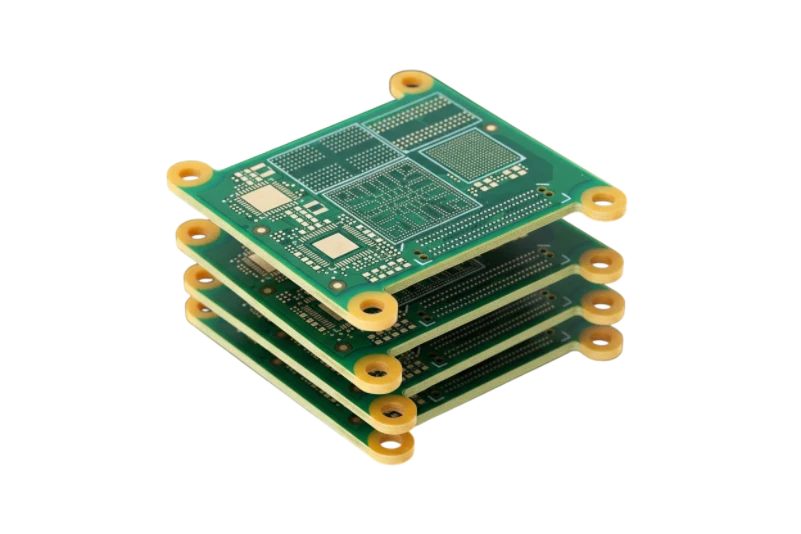
Multilayer printed circuit board fabrication relies heavily on precise alignment between copper layers and drilled holes. This innerlayer registration lesson focuses on the critical engineering principles required to achieve layer-to-layer alignment within strict tolerances. Misregistration leads to drill breakouts, open circuits, and compromised signal integrity in high-speed designs.
At APTPCB (APTPCB PCB Factory), we emphasize that registration is not just a manufacturing step but a holistic process involving material selection, artwork scaling, and lamination control. This guide provides actionable specifications, troubleshooting steps, and DFM rules to help engineers minimize registration errors.
Innerlayer registration lesson quick answer (30 seconds)
- Definition: Innerlayer registration is the alignment accuracy of internal copper layers relative to the drilled hole pattern and other layers.
- Standard Tolerance: Most standard multilayer processes require alignment within +/- 3 mils (75 microns). Advanced HDI requires tighter control (+/- 1 to 2 mils).
- Key Variable: Material movement (expansion and shrinkage) during the lamination heat cycle is the primary cause of misalignment.
- Compensation: Manufacturers use linear scaling factors (scaling the artwork) to predict and counteract material shrinkage.
- Verification: X-ray inspection after lamination and before drilling is the standard validation method.
- Design Impact: Insufficient annular rings in the design file leave no room for inevitable manufacturing tolerances, causing breakout.
When innerlayer registration lesson applies (and when it doesn’t)
Understanding when to apply strict registration controls helps balance cost and yield.
When this lesson applies:
- Multilayer PCBs (4+ layers): Any board requiring lamination of core and prepreg materials.
- HDI (High Density Interconnect): Designs with blind/buried vias require extremely precise registration to capture small laser-drilled holes.
- Rigid-Flex PCBs: Different materials (Polyimide vs. FR4) expand at different rates, making registration complex.
- Controlled Impedance Designs: Misalignment between signal lines and reference planes can alter impedance values.
- Backplanes: Thick boards with high layer counts accumulate tolerance errors, requiring advanced pinning systems.
When it generally doesn’t apply:
- Single-sided PCBs: There are no internal layers to align.
- Double-sided PCBs (Non-plated): While top-to-bottom alignment matters, the complex lamination shrinkage factors of multilayers are absent.
- Low-precision consumer electronics: Designs with massive annular rings (e.g., >10 mil) can tolerate significant misalignment without functional failure.
Innerlayer registration lesson rules and specifications (key parameters and limits)

The following table outlines the critical parameters governing innerlayer registration. These rules help engineers set realistic expectations and acceptance criteria.
| Rule / Parameter | Recommended Value/Range | Why it matters | How to verify | If ignored |
|---|---|---|---|---|
| Annular Ring (Standard) | Min 5-6 mil (0.125mm) | Accommodates drill wander and layer shift without breakout. | CAM review / Gerber analysis. | Drill breakout; open circuits. |
| Annular Ring (Advanced) | Min 3-4 mil (0.075mm) | Required for HDI or dense BGAs; requires tighter process control. | CAM review. | High scrap rate; potential latent defects. |
| Layer-to-Layer Tolerance | +/- 3 mil (75µm) | Standard manufacturing capability for rigid FR4. | Cross-section (microsection). | Short circuits between nets on adjacent layers. |
| Core Thickness Consistency | +/- 10% of nominal | Variations affect thermal expansion and lamination pressure. | Micrometer check on raw material. | Unpredictable material movement (scaling errors). |
| Artwork Scaling Factor | X/Y specific (e.g., 1.0005) | Compensates for material shrinkage after etching and lamination. | Compare film/data to post-lamination panel. | Layers shrink smaller than the drill pattern. |
| Drill True Position | +/- 1-2 mil | The drill bit itself can wander or deflect. | X-ray drill verification. | Hole is not centered on the pad. |
| Prepreg Resin Content | High resin % | Ensures voids are filled, but too much resin flow can shift cores. | Material datasheet review. | Core shifting ("swimming") during press cycle. |
| Pinning System Accuracy | +/- 0.5 mil | The mechanical pins holding layers together must be tight. | Optical measurement of tooling holes. | Global shift of all inner layers. |
| Thermal Ramp Rate | 2-5°C / min | Controls how fast the resin cures and locks the layers in place. | Press profile data log. | Warpage and internal stress causing shift. |
| Copper Balance | Symmetric distribution | Uneven copper causes uneven stress and warping. | Visual inspection / CAM density map. | Bow and twist; localized distortion. |
Innerlayer registration lesson implementation steps (process checkpoints)

Achieving perfect registration requires a sequence of controlled steps. Each step introduces a variable that must be managed.
- Material Stabilization (Baking)
- Action: Bake cores and prepreg before processing to remove moisture.
- Key Parameter: Time and temperature (e.g., 150°C for 4 hours).
- Acceptance Check: Moisture content measurement; dimensional stability test.
- Etch Compensation Planning
- Action: Apply scaling factors to the Gerber data before plotting films or direct imaging.
- Key Parameter: Scaling percentages based on material type (e.g., FR4 vs. Rogers).
- Acceptance Check: Verify artwork dimensions match the calculated compensated values.
- Innerlayer Imaging and Etching
- Action: Transfer the circuit pattern to the core and etch away excess copper.
- Key Parameter: Etch factor and line width consistency.
- Acceptance Check: AOI (Automated Optical Inspection) to verify pattern integrity before lamination.
- Post-Etch Punching
- Action: Punch tooling holes in the etched cores using optical targets.
- Key Parameter: Target recognition accuracy.
- Acceptance Check: Verify the center of the tooling hole relative to the copper fiducials.
- Automated Optical Inspection (AOI)
- Action: Scan inner layers for defects and positional accuracy.
- Key Parameter: aoI data analytics are used here to track repetitive shifts or scaling errors.
- Acceptance Check: Pass/Fail report; no open/shorts; alignment within tolerance.
- Layup and Lamination
- Action: Stack cores and prepreg on the lamination pins and press under heat/vacuum.
- Key Parameter: Press pressure (PSI) and thermal profile.
- Acceptance Check: Thickness measurement after press; visual check for resin bleed.
- X-Ray Drill Verification
- Action: Use X-ray to locate internal targets and optimize the drill program origin.
- Key Parameter: Scaling optimization (best fit) for the drill file.
- Acceptance Check: Verify that the calculated drill centers fall within the capture pads.
- Drilling
- Action: Drill the via holes based on the X-ray optimized coordinates.
- Key Parameter: Spindle speed and feed rate to minimize deflection.
- Acceptance Check: Backlight test or cross-section to confirm hole-to-pad alignment.
Innerlayer registration lesson troubleshooting (failure modes and fixes)
Even with strict controls, registration issues occur. This section details common failure modes and how to resolve them.
1. Linear Expansion/Shrinkage (Scaling Error)
- Symptom: Holes line up at the center of the panel but drift further off-center towards the edges.
- Cause: Incorrect scaling factor applied to the artwork; material batch variation.
- Check: Measure the distance between fiducials on the processed core vs. the design data.
- Fix: Adjust the global scaling factor in the CAM software for future batches.
- Prevention: Implement dynamic scaling based on historical material data.
2. Non-Linear Distortion (Warpage/Stretch)
- Symptom: Random misalignment in specific quadrants of the panel; "trapezoidal" distortion.
- Cause: Uneven copper distribution; improper lamination pressure; grain direction mismatch.
- Check: Review copper density maps; check if prepreg grain direction is alternating or parallel.
- Fix: Add copper thieving (balancing) to empty areas; ensure grain direction matches.
- Prevention: Enforce symmetric stackups and copper balancing during DFM.
3. Core Shift ("Swimming")
- Symptom: Entire inner layers are shifted relative to each other in random directions.
- Cause: Low viscosity prepreg flowing too fast; low lamination pressure; loose pinning.
- Check: Inspect the tooling holes for elongation; check resin flow indicators.
- Fix: Use "low flow" prepreg or adjust the press cycle (slower ramp up).
- Prevention: Use multi-pin bonding systems (e.g., 4-slot or post-etch punch) to secure layers.
4. Drill Deflection (Wander)
- Symptom: Top layer alignment is perfect, but bottom layers are misregistered.
- Cause: Drill bit is flexible and wanders as it penetrates deep into the stackup.
- Check: Microsection analysis showing the hole path curving.
- Fix: Reduce stack height; use shorter flute drills; optimize feed/speed.
- Prevention: Limit aspect ratio; use backup material to stabilize the drill entry.
5. Rotation Misalignment
- Symptom: The layer is rotated around the center point.
- Cause: Pinning system error; debris in the tooling holes during layup.
- Check: Inspect tooling pins for wear; check for debris between layers.
- Fix: Clean tooling pins; replace worn bushings.
- Prevention: Regular maintenance of the lamination press tooling.
6. Reverse Layer Order
- Symptom: Electrical shorts; wrong nets connected.
- Cause: Operator error during layup; incorrect layer numbering on films.
- Check: Visual inspection of layer ID markers on the edge of the panel.
- Fix: Scrap and re-manufacture.
- Prevention: Add clear layer numbers and "stacking stripes" on the panel border.
How to choose innerlayer registration lesson (design decisions and trade-offs)
Engineers must make design choices that influence the difficulty of achieving registration.
1. Pinning System Selection
- Pin-Lam: Uses mechanical pins to hold layers. Best for standard tolerances.
- Mass-Lam: Uses rivets or fusion bonding. Better for high-volume, standard density.
- Fusion Bonding: Melts spots of epoxy to hold cores. Reduces stress but requires specialized equipment.
- Decision: For high-layer-count boards (10+), APTPCB recommends Pin-Lam with post-etch punching for maximum accuracy.
2. Material Selection
- Standard FR4: Moderate movement. Good for standard designs.
- Low-CTE Materials: Materials that expand less (e.g., Rogers, specialized FR4). Essential for large backplanes or HDI.
- Trade-off: Low-CTE materials are significantly more expensive but reduce yield loss due to misalignment.
3. Pad Size vs. Drill Size
- Rule of Thumb: Pad Diameter = Drill Diameter + 10 mil (for standard) or + 6 mil (for advanced).
- Trade-off: Larger pads reduce routing space but increase yield. Smaller pads allow tight routing but risk breakout.
- Decision: Always maximize the annular ring where space permits. Do not use minimum specs unless necessary.
Innerlayer registration lesson FAQ (cost, lead time, common defects, acceptance criteria, Design for Manufacturability (DFM) files)
Q1: How does innerlayer registration affect PCB cost? Tighter registration requirements (e.g., Class 3) require advanced equipment (LDI, X-ray drill) and slower processing speeds. This increases manufacturing cost by 15-25% compared to standard tolerances due to lower throughput and higher inspection overhead.
Q2: What is the standard lead time for high-layer-count boards requiring precise registration? Standard lead time is typically 8-12 days. Boards with 20+ layers or strict registration specs may require 15-20 days to allow for slow lamination cycles and extensive X-ray verification.
Q3: Can I use teardrops to improve registration yield? Yes. Teardrops add copper at the junction of the pad and trace. If the drill breaks out slightly, the teardrop ensures the connection to the trace remains intact. This is a highly recommended DFM practice.
Q4: What is "breakout" and is it acceptable? Breakout occurs when the drilled hole extends outside the copper pad. IPC Class 2 allows 90° breakout (provided the connection is maintained). IPC Class 3 does not allow breakout; the hole must be fully contained within the pad.
Q5: How does copper balance affect registration? Large areas of copper on one side of a core and no copper on the other cause the core to warp during heating. This warpage physically moves the pads, causing misalignment. Always balance copper density.
Q6: What files are needed for a DFM review of registration? Send Gerber files (RS-274X), the NC Drill file, and a stackup drawing. The stackup is critical because it defines the material types and thicknesses, which dictate the scaling factors.
Q7: How does APTPCB handle etch compensation planning? We analyze the material type and copper percentage of your design. We then apply a calculated scaling factor (e.g., 100.05%) to the artwork so that when the material shrinks after lamination, the features return to their correct nominal positions.
Q8: Why is registration harder on rigid-flex boards? Rigid-flex boards combine FR4 (rigid) and Polyimide (flex). These materials have vastly different Coefficients of Thermal Expansion (CTE). Managing the "fight" between these materials during lamination requires specialized scaling and tooling.
Q9: What is the role of X-ray in registration? After lamination, the inner layers are hidden. X-ray machines look through the board to find specific target pads. The machine calculates the average center of all layers and tells the drill machine exactly where to drill to hit the "best fit" center.
Q10: Does drill diameter affect registration accuracy? Indirectly, yes. Smaller drills (e.g., 0.15mm) are more flexible and prone to "wandering" or deflecting as they cut through glass fibers. This creates an apparent registration error at the bottom of the stackup.
Q11: How do you inspect for registration errors non-destructively? We use "coupons" or test structures on the panel border. These structures allow us to measure layer-to-layer shift using X-ray or electrical continuity tests without destroying the actual PCB.
Q12: What is the difference between "layer-to-layer" and "layer-to-drill" registration? Layer-to-layer is how well the copper patterns on Core 1 align with Core 2. Layer-to-drill is how well the drilled hole hits the target pad on any given layer. Both are critical, but layer-to-drill is usually the ultimate pass/fail criteria.
Resources for innerlayer registration lesson (related pages and tools)
To deepen your understanding of PCB manufacturing and design, explore these related resources:
- Multilayer PCB Manufacturing Process – Detailed overview of the lamination process.
- PCB Stackup Design Guide – How material choices impact alignment.
- PCB Drilling Capabilities – Specs on drill tolerances and aspect ratios.
- AOI Inspection Services – How we verify inner layers before lamination.
- DFM Guidelines – Design rules to ensure manufacturability.
Innerlayer registration lesson glossary (key terms)
| Term | Definition |
|---|---|
| Annular Ring | The ring of copper around a drilled hole. Calculated as (Pad Diameter - Hole Diameter) / 2. |
| Breakout | A condition where the drilled hole is not fully enclosed by the copper pad. |
| C-Stage | Fully cured resin. The state of the core material before lamination. |
| B-Stage (Prepreg) | Partially cured resin that melts and flows during lamination to bond layers. |
| Etch Compensation | Increasing the size of copper features on the artwork to account for lateral etching. |
| Scaling Factor | A multiplier applied to artwork dimensions to compensate for material movement (shrinkage/expansion). |
| Fiducial | A copper target used by vision systems (AOI, Pick & Place) for alignment. |
| Lamination | The process of bonding PCB layers together using heat and pressure. |
| Run-out | The cumulative error or drift of features across the length of the panel. |
| True Position | The theoretical exact location of a feature (hole or pad) as defined in the design file. |
| Aspect Ratio | The ratio of the board thickness to the drilled hole diameter. Higher ratios increase drill wander. |
| X-Ray Drill | A drilling process that uses X-ray targets to optimize the coordinate system for each panel. |
Request a quote for innerlayer registration lesson (Design for Manufacturability (DFM) review + pricing)
Ensure your multilayer designs meet strict registration requirements by partnering with APTPCB. We offer comprehensive DFM reviews to identify potential alignment risks before production begins.
To get a precise quote and DFM analysis, please provide:
- Gerber Files: RS-274X or ODB++ format.
- Stackup Drawing: Specify material types (Tg, halogen-free, etc.) and layer order.
- Drill File: NC Drill format with tool list.
- Volume: Prototype quantity vs. mass production estimates.
- Special Requirements: IPC Class 2 or 3, specific impedance control, or advanced tolerances.
Request Your PCB Quote Here – Our engineers will review your stackup and registration constraints within 24 hours.
Conclusion (next steps)
Mastering the innerlayer registration lesson is essential for producing reliable multilayer PCBs, especially as designs become denser and more complex. By understanding the physics of material movement, applying correct scaling factors, and designing robust annular rings, engineers can significantly reduce the risk of shorts and opens. Successful registration is a collaboration between the designer's layout choices and the manufacturer's process controls. Always validate your stackup and tolerance requirements early in the design phase to ensure a smooth transition from prototype to production.