
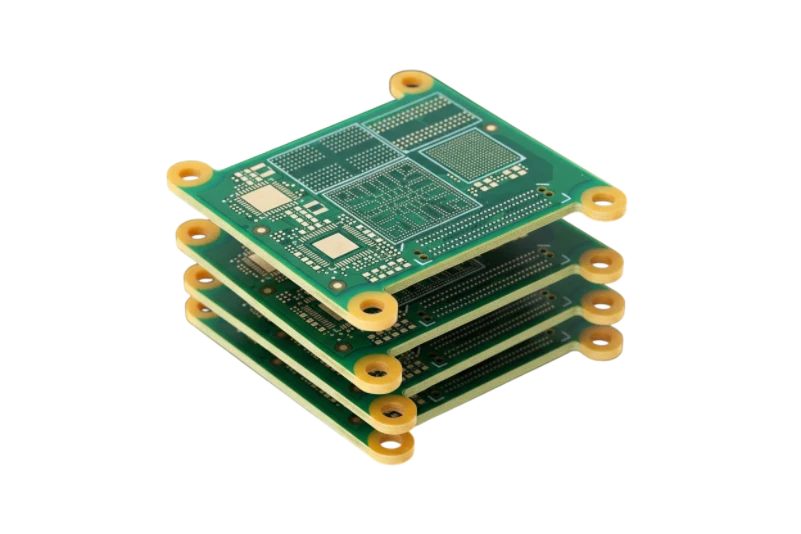
In the world of electronics manufacturing, "quality" is not a subjective feeling; it is a defined set of visual and mechanical standards. For engineers and procurement managers, understanding the ipc 610 (IPC-A-610) acceptance criteria overview is essential for ensuring that printed circuit board assemblies (PCBAs) function reliably in their intended environment. Whether you are building a disposable toy or a life-support system, this standard dictates what a compliant solder joint looks like and what constitutes a critical defect.
Short answer: IPC 610 (formally IPC-A-610, "Acceptability of Electronic Assemblies") is the globally recognized standard that defines what an acceptable finished PCB assembly looks like: solder joints, component placement, cleanliness, coating and hardware. It sorts products into Class 1, 2 and 3 and grades each condition as target, acceptable, process indicator or defect. Most commercial and industrial boards are built to IPC 610 Class 2; automotive, medical and aerospace programs mandate Class 3 compliance under the latest Revision J.
At APTPCB (APTPCB PCB Factory), we apply these standards daily to bridge the gap between design intent and physical reality. This guide serves as a central hub for understanding how to define, select, and validate electronic assembly quality using the IPC-A-610 framework.
Scaling to production? IPC-A-610 assembly quality inspection — send Gerbers or your test plan for a review and quote.
Key Takeaways
Before diving into the technical nuances, here are the core principles that drive the ipc-a-610 acceptance criteria overview.
- Visual Standard: IPC-A-610 is primarily a visual inspection standard, defining what the final assembly should look like, not necessarily how the process was performed (which is covered by J-STD-001).
- Three Classes: The criteria become stricter as you move from Class 1 (General Electronic Products) to Class 2 (Dedicated Service) and Class 3 (High Performance/Harsh Environment).
- Four Conditions: Every inspection point falls into one of four categories: Target (Perfect), Acceptable (Functional but not perfect), Process Indicator (Warning sign), or Defect (Must be fixed).
- Holistic Scope: It covers soldering, component damage, cleanliness, mechanical mounting, and wire routing.
- Validation is Key: You cannot verify compliance without specific tools like AOI (Automated Optical Inspection) and X-Ray for hidden joints.
- Cost Implication: Moving from Class 2 to Class 3 often increases inspection time and rework costs, impacting the final unit price.
What Is IPC 610
IPC 610 (officially published as IPC-A-610, Acceptability of Electronic Assemblies) is the international benchmark for visual inspection of printed circuit board assemblies (PCBAs). Rather than dictating soldering manufacturing recipes, IPC 610 defines visual and mechanical acceptance criteria for solder joints, component alignment, through-hole fill, surface mount placement, cleanliness, and conformal coating.
The standard establishes three distinct end-product acceptance classes:
- Class 1 (General Electronic Products): Consumer-grade electronics where basic circuit functionality is the primary criterion and cosmetic imperfections are tolerated.
- Class 2 (Dedicated Service Electronic Products): Commercial and industrial equipment requiring extended operating life and high reliability where uninterrupted service is preferred, representing the standard production baseline for most commercial electronics.
- Class 3 (High Performance / Harsh Environment Electronic Products): Mission-critical hardware (aerospace, automotive safety systems, defense, and medical life support) where downtime cannot be tolerated and assemblies must perform reliably under severe thermal, mechanical, and environmental stress.
The standard undergoes continuous revisions to accommodate advanced component packaging, finer pitches, and updated metallurgy. The latest release, IPC-A-610 Revision J (2024), provides updated acceptance criteria for bottom-terminated components (BTCs), quad-flat no-lead (QFN) packages, press-fit pins, voiding limits in surface-mount solder joints, and modernized solder fillet height rules for lead-free alloys.
What IPC-A-610 means (scope & boundaries)
Building on the key takeaways, a proper ipc-a-610 acceptance criteria overview requires defining exactly what the standard covers and where its authority ends.
IPC-A-610, titled "Acceptability of Electronic Assemblies," is the most widely used standard in the electronics industry. It does not define the process of soldering (e.g., reflow profiles or flux types); rather, it defines the result. It provides the visual benchmarks that inspectors and quality control machines use to accept or reject a board.
The Three Classes Defined
The standard organizes acceptance criteria into three classes based on the product's end-use reliability requirements.
- Class 1 (General Electronic Products): Includes consumer electronics where the major requirement is the function of the completed assembly. Cosmetic imperfections are generally acceptable. Examples: Toys, cheap LED lights.
- Class 2 (Dedicated Service Electronic Products): Includes communications equipment, business machines, and instruments where high performance and extended life are required, and for which uninterrupted service is desired but not critical. This is the default standard for most industrial and commercial PCBs.
- Class 3 (High Performance/Harsh Environment Electronic Products): Includes equipment where continued high performance or performance-on-demand is critical, equipment downtime cannot be tolerated, end-use environment may be uncommonly harsh, and the equipment must function when required. Examples: Automotive electronics, aerospace, and medical life-support systems.
The Four Levels of Acceptance
When inspecting a solder joint or component placement, the result falls into one of these buckets:
- Target Condition: The ideal state. It is rarely achieved 100% of the time but serves as the goal.
- Acceptable Condition: The assembly may not be perfect, but it is reliable and maintains integrity. It is not a defect.
- Process Indicator: A condition that does not affect form, fit, or function but indicates the manufacturing process is drifting out of control (e.g., slightly shifted components that still make electrical contact).
- Defect: A condition that may be insufficient to ensure form, fit, or function. The product must be reworked or scrapped.
What does IPC stand for, and what is IPC in quality?
IPC is the electronics industry association that publishes the standards, originally the Institute for Printed Circuits and now known simply as IPC. "IPC" in a quality context means building and inspecting to the IPC document named on the drawing. For a finished assembly that is IPC-A-610; the other common ones are listed below.
IPC-A-610 among the other IPC standards
| Standard | What it covers | Who uses it |
|---|---|---|
| IPC-A-610 | Visual acceptability of the finished assembly | Assembly inspectors, customer incoming inspection |
| J-STD-001 | Requirements for the soldering process and materials | Assembly process engineers |
| IPC-A-600 | Visual acceptability of the bare printed board | Bare-board inspection |
| IPC-6012 | Qualification and performance of rigid bare boards | Board fabricators and buyers |
| IPC-7711/7721 | Rework, modification and repair procedures | Rework operators |
| IPC-7351 | Land pattern (footprint) design | PCB designers |
IPC publishes official translations of IPC-A-610, including Spanish ("aceptabilidad de ensambles electrónicos"). The standard itself is copyrighted and has to be bought from IPC; this guide only summarizes how it is applied.
What to check (acceptance criteria by area)
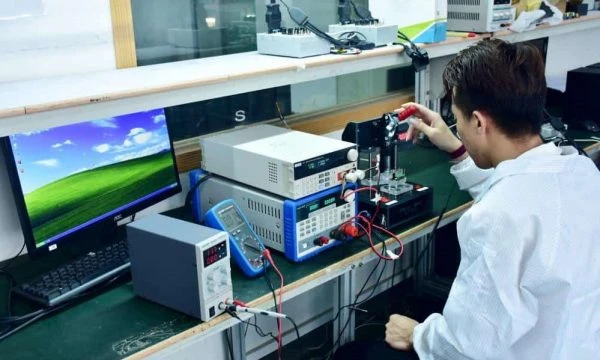
Once the scope is defined, we must quantify the ipc-a-610 acceptance criteria overview using specific metrics. These are the physical characteristics inspectors measure.
| Metric | Why it matters | Typical Range / Factors | How to measure |
|---|---|---|---|
| Solder Wetting Angle | Indicates how well the solder has bonded to the pad and lead. | < 90° is generally required. Ideally, the meniscus should be concave and smooth. | Visual inspection (microscope) or AOI. |
| Fillet Height (Heel) | Critical for mechanical strength, especially on gull-wing leads (QFP, SOIC). | Class 2: Solder must reach at least 50% of lead thickness. Class 3: Often requires 100% or lead thickness + distance. | Side-angle visual inspection. |
| Side Overhang | Determines if a component is skewed too far off the pad. | Class 2 allows up to 50% overhang (width). Class 3 usually allows only 25% or less. | AOI Inspection systems. |
| Voiding Percentage | Air pockets inside solder joints (especially BGAs) reduce thermal and electrical conductivity. | Typically < 25% area for Class 2/3. Large voids in critical paths are defects. | X-Ray inspection is mandatory. |
| Component Tilt (Tombstoning) | A component standing on one end causes an open circuit. | Any lift that breaks electrical connection is a Defect. Minor tilt is a Process Indicator. | Visual or AOI. |
| Cleanliness (Ionic) | Residues can cause corrosion or dendritic growth (shorts) over time. | < 1.56 µg/cm² NaCl equivalent (common industry baseline). | ROSE testing or Ion Chromatography. |
Good vs bad solder joint: what IPC-A-610 looks for
Most IPC-A-610 rejects come down to a handful of solder joint conditions. In plain terms:
| Good solder joint (acceptable) | Bad solder joint (defect in Class 2 and 3) |
|---|---|
| Smooth, concave fillet that feathers out onto pad and lead | Convex ball of solder with no visible wetting edge (non-wetting) |
| Lead outline visible through the solder | Solder bridging between adjacent leads or pads |
| Wetting angle under 90° on both pad and lead | Cold or disturbed joint: grainy, cracked or wrinkled surface |
| Heel fillet present on gull-wing leads | Insufficient solder, or missing heel fillet where one is required |
| Through-hole barrel fill meets the class requirement | Exposed base metal, dewetting, pinholes or blowholes |
A dull, grainy look is not always a defect. Some lead-free alloys naturally look less shiny, and IPC-A-610 accepts that when wetting is otherwise correct. For a full bench checklist, see the PCB visual inspection checklist.
Conformal coating acceptance criteria
IPC-A-610 also covers conformal coating, which is often the last visual check before shipment. Inspectors usually look at:
- Coverage: the coating is present where the drawing requires it and absent from keep-out areas such as connectors, test points and adjustable parts.
- Defects in the film: bubbles, voids, cracking, delamination, orange peel or foreign material. Whether they are acceptable depends on size, location and whether they bridge conductors.
- Thickness: measured to the drawing or to the coating material type, not judged by eye.
- Inspection light: most coatings carry a UV tracer so coverage can be checked under UV light.
Masking and coating material choices are decided before the build, so put them on the drawing. Our conformal coating services page covers material types and masking options.
How to use IPC-A-610 (by scenario)
Understanding the metrics is useful, but applying them requires context. This section provides a "how to choose" guide for the ipc-a-610 acceptance criteria overview, comparing Class 2 vs Class 3 in real-world scenarios.
Choosing the wrong class is a common error. Over-specifying (asking for Class 3 when Class 2 suffices) drives up costs due to slower inspection and higher rework rates. Under-specifying risks field failures.
Scenario 1: Consumer Smart Home Device
- Requirement: Low cost, moderate reliability, indoor environment.
- Selection: Class 2.
- Trade-off: Allows for some cosmetic imperfections and wider solder variances, keeping yield high and unit cost low.
Scenario 2: Automotive Engine Control Unit (ECU)
- Requirement: High vibration, extreme temperature cycling, zero tolerance for failure.
- Selection: Class 3.
- Trade-off: Requires 100% inspection (often automated + manual). Solder fillets must be robust. Any deviation is reworked. Higher cost is justified by safety.
Scenario 3: Industrial PLC Controller
- Requirement: 24/7 operation, factory environment, long service life.
- Selection: Class 2 (Enhanced).
- Trade-off: Standard Class 2 is usually sufficient, but specific critical components (like power connectors) might be held to Class 3 standards. This hybrid approach balances cost and reliability.
Scenario 4: Medical Implantable Device
- Requirement: Impossible to repair once deployed, life-critical.
- Selection: Class 3.
- Trade-off: Documentation and traceability are as important as the physical solder joint. Every step is logged.
Scenario 5: Rapid Prototyping (Proof of Concept)
- Requirement: Speed is the only priority. The board only needs to work for a week.
- Selection: Class 2 (or even Class 1).
- Trade-off: Focus is on functionality. Cosmetic defects are ignored to expedite delivery.
Scenario 6: Aerospace Avionics
- Requirement: High G-force, vacuum environment, radiation.
- Selection: Class 3.
- Trade-off: IPC standards (IPC-6012, IPC-A-600, IPC-A-610) are strictly enforced, and an IPC-A-610 PCBA quality system has to document every inspection. The bare board (IPC-6012 Class 3) must match the assembly quality.
Implementation checkpoints (inspection to supplier control)

After selecting the appropriate class, you must implement the ipc-a-610 acceptance criteria overview throughout the production lifecycle. Quality cannot be "inspected in" at the end; it must be designed in.
1. Design for Manufacturing (DFM) - Footprints
- Recommendation: Ensure PCB footprints match the component leads according to IPC-7351 guidelines.
- Risk: If pads are too small, you cannot achieve the required Class 3 heel fillet, regardless of how much solder is applied.
- Acceptance Method: Design Rule Check (DRC) during layout.
2. Stencil Design
- Recommendation: Adjust aperture size based on the component type.
- Risk: Too much paste causes bridging (shorts); too little causes insufficient wetting (opens).
- Acceptance Method: SPI (Solder Paste Inspection) before component placement.
3. Component Placement
- Recommendation: Ensure pick-and-place machines are calibrated for pressure and accuracy.
- Risk: Components placed with too much pressure can crack; skewed placement leads to overhang defects.
- Acceptance Method: Machine vision alignment verification.
4. Reflow Profiling
- Recommendation: Tune the thermal profile to the specific solder paste and board thermal mass.
- Risk: Cold solder joints (grainy, poor wetting) or overheated components.
- Acceptance Method: Thermocouple profiling on a test board.
5. Automated Optical Inspection (AOI)
- Recommendation: Program AOI machines with the specific tolerances of the chosen Class (2 or 3).
- Risk: False calls (rejecting good boards) or escapes (missing bad boards).
- Acceptance Method: Statistical analysis of AOI pass/fail rates.
6. X-Ray Inspection (AXI)
- Recommendation: Mandatory for BGAs, QFNs, and LGAs where joints are hidden.
- Risk: Voids and shorts under the package are invisible to the naked eye.
- Acceptance Method: 2D or 3D X-Ray analysis against voiding percentage limits.
7. Final Visual Inspection
- Recommendation: Human oversight for cosmetic issues AOI might miss (e.g., conformal coating coverage).
- Risk: Subjectivity of the inspector.
- Acceptance Method: Certified IPC-A-610 specialists (CIS) performing the check.
8. Cleanliness Testing
- Recommendation: Verify flux residues are removed (if using water-soluble) or inert (if No-Clean).
- Risk: Electrochemical migration causing shorts in humid environments.
- Acceptance Method: ROSE testing or Ion Chromatography.
Common mistakes (and the correct approach)
Even with a solid plan, errors occur. Here are common pitfalls regarding the ipc-a-610 acceptance criteria overview and how APTPCB advises correcting them.
Confusing "Process Indicator" with "Defect"
- Mistake: Rejecting a board because a resistor is slightly crooked but still fully on the pad (Class 2).
- Correction: If it meets the "Acceptable" criteria, do not rework it. Rework applies heat stress and can reduce reliability more than the original imperfection.
Ignoring the Bare Board Standard (IPC-A-600)
- Mistake: Applying IPC-A-610 (assembly) criteria to the bare PCB (fabrication).
- Correction: Use IPC-A-600 for the PCB itself, backed by IPC-6012 requirements and PCB electrical testing of the bare board. A perfect assembly on a delaminating board is still a failure.
Blindly Requesting Class 3
- Mistake: Specifying Class 3 for a simple prototype to "ensure quality."
- Correction: This adds unnecessary cost and lead time. Use Class 2 for prototypes unless the prototype is for validation in a harsh environment.
Neglecting Heel Fillets
- Mistake: Focusing only on the side fillets of a gull-wing lead.
- Correction: The heel fillet (behind the lead) provides the majority of the mechanical strength. It is a critical inspection point in IPC-A-610.
Inconsistent Inspection Lighting
- Mistake: Inspecting boards under varying light conditions, leading to inconsistent judgment of solder shine and wetting.
- Correction: Use standardized magnification and lighting (e.g., ring lights) as defined in the standard.
Lack of Design Support for Class 3
- Mistake: Demanding Class 3 assembly on a layout designed with minimal annular rings.
- Correction: Class 3 assembly needs a layout that supports the tighter tolerances, starting with annular rings and pad sizes. The guide to IPC Class 2 vs Class 3 assembly explains what changes on the drawing and on the line.
FAQ (classes, rework limits, documentation)
Q: How does selecting Class 3 acceptance criteria affect the cost of my PCBA? A: Moving from Class 2 to Class 3 typically increases assembly costs by 15-30%. This is due to slower machine running speeds (to ensure precision), more frequent sampling/inspection, mandatory X-Ray usage, and the potential for higher scrap rates if criteria are not met.
Q: Does the ipc-a-610 acceptance criteria overview dictate which materials I must use? A: Indirectly. While IPC-A-610 is a visual standard, achieving Class 3 compliance often requires higher-grade materials. For example, you may need high-reliability solder alloys or PCBs with higher Tg (Glass Transition Temperature) to withstand rework without lifting pads.
Q: What is the impact on lead time when using stricter acceptance criteria? A: Lead times generally increase. Class 3 requires more rigorous First Article Inspection (FAI) and often requires 100% visual or X-Ray inspection rather than batch sampling, which adds time to the post-reflow process.
Q: Can I use Class 2 testing methods for a Class 3 product? A: Generally, no. Class 3 products usually require more advanced testing coverage. For example, while Class 2 might rely on AOI, Class 3 might mandate AOI plus 100% X-Ray for BGAs and potentially functional testing (FCT) to ensure reliability under load.
Q: What is IPC-A-610 Class 2? A: Class 2 covers "dedicated service" products: industrial controls, communication equipment, instruments and most commercial electronics, where long life is expected but an occasional failure is not life-critical. It is the default if a drawing says "IPC-A-610" without a class, but it is better to state the class explicitly.
Q: Is IPC-A-610 available in Spanish? A: Yes. IPC sells translated editions, including Spanish. Make sure the translation is the same revision as the English document named on your drawing.
Q: What is the difference between IPC-A-610 and IPC-J-STD-001? A: IPC-A-610 is the inspection standard (what it looks like). J-STD-001 is the process standard (how it is made). J-STD-001 dictates material types, flux compatibility, and process controls. Usually, if you require Class 3 A-610, you also require J-STD-001 Class 3 process controls.
Q: How do I specify these acceptance criteria in my quote package? A: Clearly state "Build to IPC-A-610 Class [X]" in your fabrication notes or assembly drawings. If you have specific exceptions (e.g., "Class 2 generally, but Class 3 for U1 and U2"), list them explicitly.
Q: What visual criteria define a good solder joint vs bad under the IPC 610 standard? A: Under the ipc 610 standard (also cited as ipc610 or ipc a610), a proper solder joint exhibits complete wetting with a concave fillet, feathered edges (wetting angle ≤ 90° for lead-free SAC305), and smooth metallic luster without de-wetting. In contrast, determining a good solder joint vs bad or evaluating a good soldering joint requires checking for critical defects defined in IPC a 610: cold joints with crystalline dullness, solder bridging across fine pitches, insufficient vertical barrel fill (< 75% for Class 2), or excessive voiding (> 25% under BGAs).
Q: What are the primary differences between IPC-A-610 Class 2 and IPC-A-610 Class 3? A: While ipc a 610 class 2 governs commercial and industrial electronics where sustained operational life is required, ipc-a-610 class 3 enforces zero-tolerance criteria for mission-critical aerospace, defense, and medical hardware. Key differences include vertical hole fill in through-hole joints (Class 2 requires 50% barrel fill, while Class 3 mandates 75%), stricter allowable component overhang, mandatory 100% automated optical inspection (AOI) paired with X-Ray inspection for hidden BTC/BGA joints, and comprehensive lot traceability under overarching IPC standards.
Q: What are the IPC A 610 conformal coating criteria for thickness and coverage? A: The ipc a 610 conformal coating criteria specify that protective coatings (acrylic, polyurethane, epoxy, silicone, or parylene) must be transparent, free from blisters, bridging between uninsulated conductors, or cracking. Under the standard, nominal dry-film thickness ranges from 0.03 mm to 0.13 mm depending on resin chemistry, with 100% coverage over active solder joints, components, and leads while strictly keeping designated keep-out zones (test points, card-edge connectors, and RF shields) completely free of overspray.
Related pages & tools
To further understand how these criteria fit into the broader manufacturing ecosystem, explore these related APTPCB resources:
- Quality System & Certifications: How we maintain compliance across all manufacturing stages.
- Automated Optical Inspection (AOI): The primary tool for validating IPC-A-610 compliance.
- PCB Fabrication Process: Understanding the bare board foundation (IPC-6012) before assembly.
Glossary (key terms)
| Term | Definition |
|---|---|
| Cold Solder Joint | A joint where the solder did not fully melt or wet, often appearing dull, grainy, or rough. It is a defect. |
| Wetting | The ability of molten solder to spread and bond to the metal surface (pad or lead). Good wetting creates a smooth, feathered edge. |
| Fillet | The curved surface of the solder joint connecting the component lead to the PCB pad. |
| Meniscus | The curved upper surface of a liquid (solder) in a tube or joint; indicates wetting angle. |
| Tombstoning | A defect where a passive component stands up on one end during reflow, breaking the connection. |
| Head-in-Pillow (HiP) | A BGA defect where the solder ball rests on the paste but does not coalesce, creating a false connection. |
| Bridging | Unwanted solder connecting two adjacent conductors (a short circuit). |
| De-wetting | A condition where solder initially covers a surface and then pulls back, leaving mounds of solder and exposed base metal. |
| Disturbed Joint | A joint that moved while the solder was solidifying, resulting in a wrinkled surface. |
| Coplanarity | The condition where all leads of a component lie on the same geometric plane. Critical for fine-pitch parts. |
| Solder Balls | Tiny spheres of solder separated from the main joint, often caused by explosive outgassing of flux. |
| Conformal Coating | A protective chemical layer applied to the PCBA; IPC-A-610 has specific criteria for its thickness and coverage. |
Conclusion (next steps)
Mastering the ipc-a-610 acceptance criteria overview is about more than just memorizing defect photos; it is about aligning your design, budget, and reliability goals. Whether you need the cost-efficiency of Class 2 or the mission-critical assurance of Class 3, clarity is your best asset.
At APTPCB, we ensure that your specifications are translated accurately into the final product. When you are ready to move from design to production, ensure your data package includes:
- Gerber Files (for the bare board).
- BOM (Bill of Materials).
- Assembly Drawings specifying the IPC Class (1, 2, or 3).
- Special Inspection Notes (e.g., specific components requiring X-Ray or 100% visual check).
By defining these parameters early, you prevent costly rework and ensure your product performs exactly as intended.