
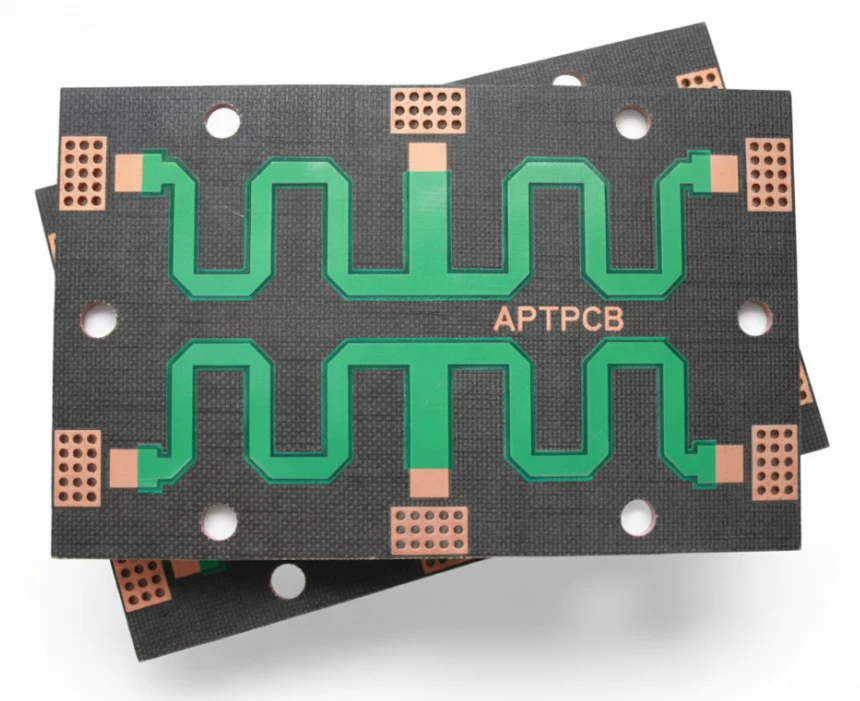
Lane Control PCB: what this playbook covers (and who it’s for)
This playbook is designed for hardware engineers, procurement managers, and product leads responsible for deploying automation systems. Specifically, it focuses on the Lane Control PCB—the critical circuit board managing traffic flow, sensor data, and motor actuation in defined lanes. Whether you are building a Conveyor Control PCB for a logistics hub or an Intersection Control PCB for smart city infrastructure, the core challenge is the same: reliability under continuous operation.
In this guide, we move beyond basic definitions. We provide a structured approach to specifying, validating, and sourcing these boards. You will find concrete technical requirements, a breakdown of hidden risks that cause field failures, and a rigorous validation plan. We also include a buyer-ready checklist to help you audit suppliers like APTPCB (APTPCB PCB Factory) effectively.
The goal is to help you transition from prototype to mass production without the common pitfalls of signal interference, vibration damage, or component obsolescence. If you need to ensure your AGV Control PCB or Approach Control PCB functions flawlessly for years, this guide serves as your decision-making framework.
When Lane Control PCB is the right approach (and when it isn’t)
Choosing a custom Lane Control PCB over a generic PLC (Programmable Logic Controller) is a strategic decision. It is not always the right choice, but for specific scenarios, it is the only viable path to scalability and performance.
It is the right approach when:
- Space is constrained: You need to fit control logic, motor drivers, and communication interfaces into a specific mechanical enclosure, such as the side rail of a conveyor or the chassis of a small AGV.
- Cost at scale matters: For high-volume deployments (e.g., 1,000+ lane meters), a custom PCB reduces unit cost significantly compared to off-the-shelf PLCs.
- Integration is required: You need to integrate specific sensors (Hall effect, IR, RFID) directly onto the board to minimize cabling and points of failure.
- Real-time communication is critical: You require optimized layouts for CAN bus, EtherCAT, or RS-485 to ensure low-latency communication between zones.
It is NOT the right approach when:
- Volume is very low: If you are building a one-off system, the NRE (Non-Recurring Engineering) costs of design and testing outweigh the benefits. Use a standard PLC.
- Flexibility is paramount: If the logic changes daily and requires constant rewiring by technicians without soldering skills, a modular PLC is safer.
- Environment is extreme without protection: If you cannot afford proper enclosures or conformal coating, a ruggedized industrial controller might be a safer, albeit more expensive, bet.
Specs & requirements (before quoting)
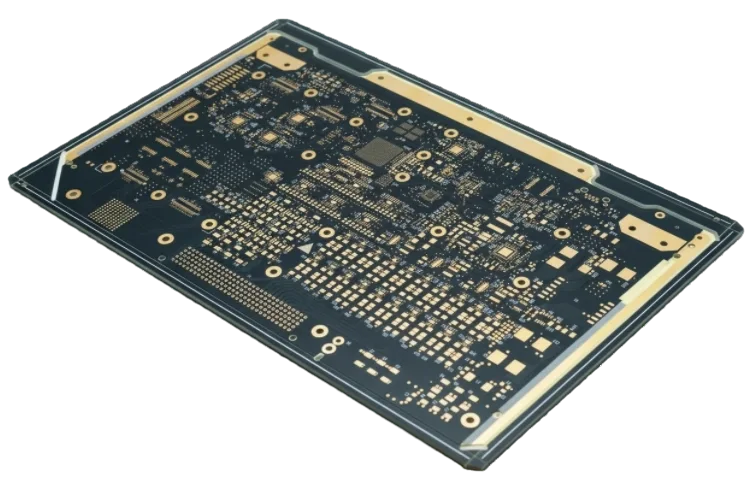
To get an accurate quote and a reliable product, you must define the "must-haves" clearly. Vague specifications lead to "best effort" manufacturing, which is insufficient for industrial automation.
- Base Material & Tg: Specify FR4 with a High Tg (Glass Transition Temperature) of at least 150°C, preferably 170°C. Lane controls often operate in unventilated enclosures where ambient heat rises quickly.
- Copper Weight: Define minimum copper weight based on current load. For Conveyor Control PCB units driving DC motors directly, 2oz or 3oz copper is often necessary to handle current without overheating.
- Surface Finish: Request ENIG (Electroless Nickel Immersion Gold). It offers excellent planarity for fine-pitch components and superior corrosion resistance compared to HASL, which is critical for Ground Control PCB units in outdoor cabinets.
- Solder Mask Color: Use Matte Green or Matte Black. Matte finishes reduce glare during automated optical inspection (AOI) and manual assembly, improving defect detection.
- Impedance Control: Explicitly state impedance requirements (e.g., 100Ω differential pairs) if your board uses Ethernet or high-speed CAN FD. This ensures signal integrity over long cable runs.
- Cleanliness Standards: Specify IPC-6012 Class 2 as a baseline, or Class 3 for mission-critical Intersection Control PCB applications where failure risks human safety.
- Conformal Coating: Define the type (Acrylic, Silicone, or Urethane) and coverage area. This is non-negotiable for environments with dust, humidity, or conductive debris.
- Test Points: Require test points for all power rails and critical signal lines. They must be accessible on one side of the board to facilitate efficient In-Circuit Testing (ICT).
- Component Grade: Mandate "Industrial Grade" components (-40°C to +85°C) for all active ICs. Commercial grade parts often fail in unconditioned warehouse environments.
- Connector Durability: Specify through-hole (THT) connectors for I/O ports. Surface mount (SMT) connectors can rip off the pads under the mechanical stress of repeated plugging and unplugging.
- Traceability: Require a unique QR code or barcode printed on the silkscreen or laser-etched on each PCB for full lifecycle tracking.
- Panelization: Define panel margins and fiducials to match your assembly line’s conveyor width and clamping requirements.
Hidden risks (root causes & prevention)
Scaling up production reveals weaknesses that prototypes hide. Understanding these risks allows you to engineer defenses into your Lane Control PCB before mass manufacturing begins.
- Vibration-Induced Solder Fatigue:
- Risk: Constant vibration from motors or AGV movement causes solder joints to crack over time.
- Detection: HALT (Highly Accelerated Life Testing) during prototyping.
- Prevention: Use underfill for large BGAs, glue for heavy capacitors, and prioritize THT connectors.
- Connector Fretting Corrosion:
- Risk: Micro-movements in connectors wear down plating, leading to intermittent signal loss.
- Detection: Resistance monitoring during vibration tests.
- Prevention: Use gold-plated contacts and locking connectors; avoid mixing tin and gold contacts.
- Thermal Runaway in Enclosures:
- Risk: The PCB works on the bench but overheats inside a plastic IP65 box.
- Detection: Thermal simulation and chamber testing with the actual enclosure.
- Prevention: Design adequate copper pours for heat sinking; use aluminum-backed PCBs if power density is high.
- Ground Loops and Noise:
- Risk: Long cables in lane systems act as antennas, picking up noise from VFDs (Variable Frequency Drives).
- Detection: EMC testing in a noisy industrial environment.
- Prevention: Use isolated communication interfaces (opto-isolators) and proper differential pair routing.
- Component Obsolescence:
- Risk: A specific MCU or driver chip goes EOL (End of Life), halting production.
- Detection: BOM health check tools.
- Prevention: Choose parts with a "Active" status and 5+ year lifecycle; design footprints that can accept alternatives.
- Electrochemical Migration (ECM):
- Risk: Moisture and voltage cause copper dendrites to grow between traces, causing shorts.
- Detection: Temperature-Humidity-Bias (THB) testing.
- Prevention: Increase spacing between high-voltage traces beyond the minimum IPC standard; apply conformal coating.
- Mechanical Stress Cracking:
- Risk: Mounting screws torque the PCB, cracking ceramic capacitors (MLCCs).
- Detection: Visual inspection and dye-and-pry analysis.
- Prevention: Keep components away from mounting holes and V-score edges; use soft-termination capacitors.
- Firmware Corruption:
- Risk: Voltage spikes during motor startup corrupt the MCU flash memory.
- Detection: Power cycling tests.
- Prevention: Robust decoupling capacitors, brown-out detection enabled, and hardware watchdogs.
- Cable Harness Strain:
- Risk: Heavy cables pull on the PCB headers, causing PCB warping.
- Detection: Physical inspection of installed units.
- Prevention: Strain relief clamps on the chassis, not just the PCB.
- Inconsistent PCB Dielectric:
- Risk: Variations in FR4 batches affect impedance, causing communication errors.
- Detection: TDR (Time Domain Reflectometry) testing on coupons.
- Prevention: Specify dielectric constant tolerances and require TDR reports from the supplier.
Validation plan (what to test, when, and what “pass” means)
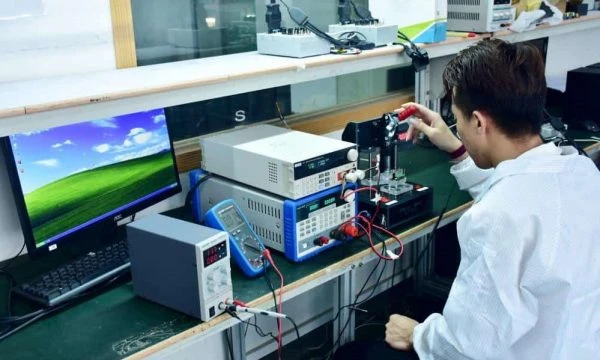
A "working" prototype is not a validated product. You need a structured plan to prove the Lane Control PCB can survive its intended environment.
- Design for Manufacturing (DFM) Review:
- Objective: Ensure the design can be manufactured with high yield.
- Method: Supplier engineering review of Gerbers and drill files.
- Pass Criteria: No "showstopper" violations; yield estimate >98%.
- First Article Inspection (FAI):
- Objective: Verify the manufacturing process matches the documentation.
- Method: Measure dimensions, check BOM against build, X-ray BGAs.
- Pass Criteria: 100% compliance with drawings and BOM.
- In-Circuit Testing (ICT):
- Objective: Detect shorts, opens, and wrong values before power-up.
- Method: Bed-of-nails fixture testing passive components and continuity.
- Pass Criteria: 100% pass on netlist verification.
- Functional Circuit Test (FCT):
- Objective: Verify logic and behavior.
- Method: Power up, flash firmware, simulate inputs (sensors), measure outputs (motor drive).
- Pass Criteria: All functional blocks operate within specified voltage/current limits.
- Burn-In Testing:
- Objective: Weed out infant mortality failures.
- Method: Run the board at max load and elevated temp (e.g., 60°C) for 24-48 hours.
- Pass Criteria: No functional failure during or after the cycle.
- Thermal Cycling:
- Objective: Test solder joint reliability under expansion/contraction.
- Method: Cycle between -40°C and +85°C for 50-100 cycles.
- Pass Criteria: No cracks in solder joints; resistance values remain stable.
- Vibration Testing:
- Objective: Simulate transport and operating vibration (crucial for AGV Control PCB).
- Method: Random vibration profile based on industry standards (e.g., IEC 60068).
- Pass Criteria: No mechanical damage; no intermittent electrical contact.
- EMI/EMC Pre-compliance:
- Objective: Ensure the board doesn't emit excessive noise or succumb to it.
- Method: Near-field probe scanning and ESD gun testing.
- Pass Criteria: Emissions below limits; system recovers from ESD strikes without reset.
- Environmental Stress Screening (ESS):
- Objective: Validate coating and corrosion resistance.
- Method: Salt spray or high humidity exposure (for Approach Control PCB).
- Pass Criteria: No visible corrosion; leakage current within limits.
- Drop Test:
- Objective: Simulate handling mishaps.
- Method: Drop packaged and unpackaged units from 1 meter.
- Pass Criteria: Case remains intact; PCB functions normally.
- Connector Cycle Test:
- Objective: Validate I/O durability.
- Method: Mate and un-mate connectors 50-100 times.
- Pass Criteria: Contact resistance does not increase significantly.
- Software Integration Test:
- Objective: Ensure hardware supports all firmware features.
- Method: Full regression test of the software stack on the final hardware revision.
- Pass Criteria: No hardware-induced software bugs.
Supplier checklist (RFQ + audit questions)
Use this checklist to vet suppliers. A partner like APTPCB should be able to answer these confidently.
Group 1: RFQ Inputs (What you send)
- Gerber files (RS-274X or X2 format) with clear layer stackup.
- Centroid/Pick-and-Place file for assembly.
- Bill of Materials (BOM) with manufacturer part numbers and acceptable alternates.
- Assembly drawings showing component polarity and special mounting instructions.
- Test requirements (ICT/FCT procedures).
- Conformal coating specifications (areas to coat vs. mask).
- Packaging requirements (ESD bags, bubble wrap, carton weight limits).
- Estimated annual volume and batch sizes.
Group 2: Capability Proof (What they must have)
- Experience with Industrial Control PCBs.
- Capability to handle Heavy Copper (2oz-4oz) for power distribution.
- In-house Conformal Coating line (automated preferred).
- Automated Optical Inspection (AOI) for both SMT and THT.
- X-Ray inspection capability for BGAs or QFNs.
- Impedance control reporting accuracy.
Group 3: Quality System & Traceability
- ISO 9001 certification (current and valid).
- Do they have a Manufacturing Execution System (MES) for traceability?
- Can they provide a Certificate of Compliance (CoC) with every shipment?
- Do they perform incoming inspection (IQC) on all components?
- Is there a defined procedure for handling non-conforming material (MRB)?
- Do they archive reflow profiles and test results for your batches?
Group 4: Change Control & Delivery
- Is there a formal Process Change Notification (PCN) system?
- What is the policy on substituting passive components (resistors/caps)?
- Do they offer buffer stock programs for long-lead items?
- What is the disaster recovery plan for their facility?
- Can they support "Quick Turn" for prototype revisions?
- How do they handle EOL notifications from component distributors?
Decision guidance (trade-offs you can actually choose)
Engineering is the art of compromise. Here are the common trade-offs for Lane Control PCB designs and how to navigate them.
- ENIG vs. HASL:
- Trade-off: Cost vs. Reliability.
- Guidance: If you have fine-pitch components (BGAs, small QFNs) or need long shelf life, choose ENIG. If you are building a simple through-hole board for a budget conveyor, HASL is acceptable.
- 2-Layer vs. 4-Layer Stackup:
- Trade-off: Unit Cost vs. Signal Integrity/EMI.
- Guidance: If you have high-speed comms (Ethernet) or sensitive analog sensors, choose 4-layer (Ground/Power planes). It dramatically reduces noise. Only use 2-layer for slow, simple logic.
- Integrated vs. Modular Drivers:
- Trade-off: Size/Cost vs. Repairability.
- Guidance: If the motor driver fails often, use a socketed module. If reliability is high and space is tight, integrate the driver chip directly onto the PCB.
- Conformal Coating vs. Potting:
- Trade-off: Reworkability vs. Ultimate Protection.
- Guidance: Use conformal coating for general industrial use (allows repair). Use potting (encapsulation) only for Ground Control PCB units that might be submerged or subjected to extreme shock (impossible to repair).
- THT vs. SMT Connectors:
- Trade-off: Assembly Speed vs. Mechanical Strength.
- Guidance: Always prioritize THT (Through-Hole) for connectors that users will plug/unplug frequently. SMT is fine for internal connections that are mated once.
- Rigid vs. Rigid-Flex:
- Trade-off: Cost vs. Reliability/Space.
- Guidance: If you have complex cabling in a tight AGV chassis, Rigid-Flex PCB eliminates cables and connectors (common failure points) but costs more.
- Off-shore vs. Local Sourcing:
- Trade-off: Unit Price vs. Communication Speed.
- Guidance: For mass production, off-shore (like APTPCB) offers the best value. For Day 1 prototypes where you need same-day iteration, local might be faster, but transitioning later adds risk.
FAQ
1. What is the typical lifespan of a Lane Control PCB? In a controlled industrial environment, these boards should last 10-15 years. However, in high-vibration or outdoor settings, 5-7 years is a realistic target without rigorous maintenance.
2. Can I use a standard FR4 material for outdoor Lane Controls? Yes, but only if it is enclosed in a sealed (IP65/IP67) box. If the PCB is exposed to temperature swings, a High-Tg FR4 is recommended to prevent delamination.
3. How do I protect the PCB from lightning surges in outdoor lanes? You must include TVS (Transient Voltage Suppression) diodes and gas discharge tubes (GDT) on all input lines. The PCB layout must also have a robust earth ground path.
4. What is the difference between an AGV Control PCB and a Conveyor Control PCB? An AGV Control PCB requires battery power management, wireless comms, and high vibration resistance. A Conveyor Control PCB typically runs on mains/24V DC and relies on wired comms (Ethernet/CAN).
5. Why is my Lane Control PCB failing at the connector? This is usually due to "connector fretting" caused by vibration or lack of strain relief on the cable. Switch to gold-plated contacts and add mechanical support to the cable harness.
6. Do I need impedance control for CAN bus? Technically, CAN bus is robust, but for long lane runs (100m+), controlling differential impedance to 120 Ohms is best practice to prevent signal reflections.
7. Can APTPCB handle the assembly of these boards? Yes, we offer full Turnkey Assembly, including component sourcing, PCB fabrication, assembly, and functional testing.
8. What documentation is needed for a "Copy Exact" requirement? You need to specify that no changes to the BOM, PCB materials, or manufacturing location are allowed without prior written approval. This is common in validated industries.
Related pages & tools
- Industrial Control PCB: Deep dive into the specific standards and reliability requirements for factory automation boards.
- Heavy Copper PCB: Learn how to manage high currents for motor drivers and power distribution in your lane controls.
- PCB Conformal Coating: Essential reading for protecting your electronics from moisture, dust, and chemical exposure.
- Turnkey Assembly Services: Understand how we handle the entire process from bare board to fully tested PCBA.
- Quote Request: Ready to move forward? Get a comprehensive quote that includes DFM review.
Request a quote
To get an accurate quote and a complimentary DFM review from APTPCB, please visit our Quote Page. When submitting your request, ensure you include:
- Gerber Files: For the PCB layout.
- BOM (Bill of Materials): Including manufacturer part numbers.
- Assembly Drawings: Highlighting any special mounting or coating requirements.
- Volume Estimates: Prototype quantity vs. production volume.
- Test Requirements: If you need us to perform ICT or FCT.
Conclusion
The Lane Control PCB is the silent workhorse of modern automation. Whether it is guiding an AGV across a warehouse floor or managing the flow of a high-speed conveyor, its reliability determines the uptime of the entire system. By defining clear requirements for materials and testing, understanding the hidden risks of vibration and environment, and partnering with a capable supplier, you can deploy systems that stand the test of time. Don't leave reliability to chance; engineer it into your board from day one.