
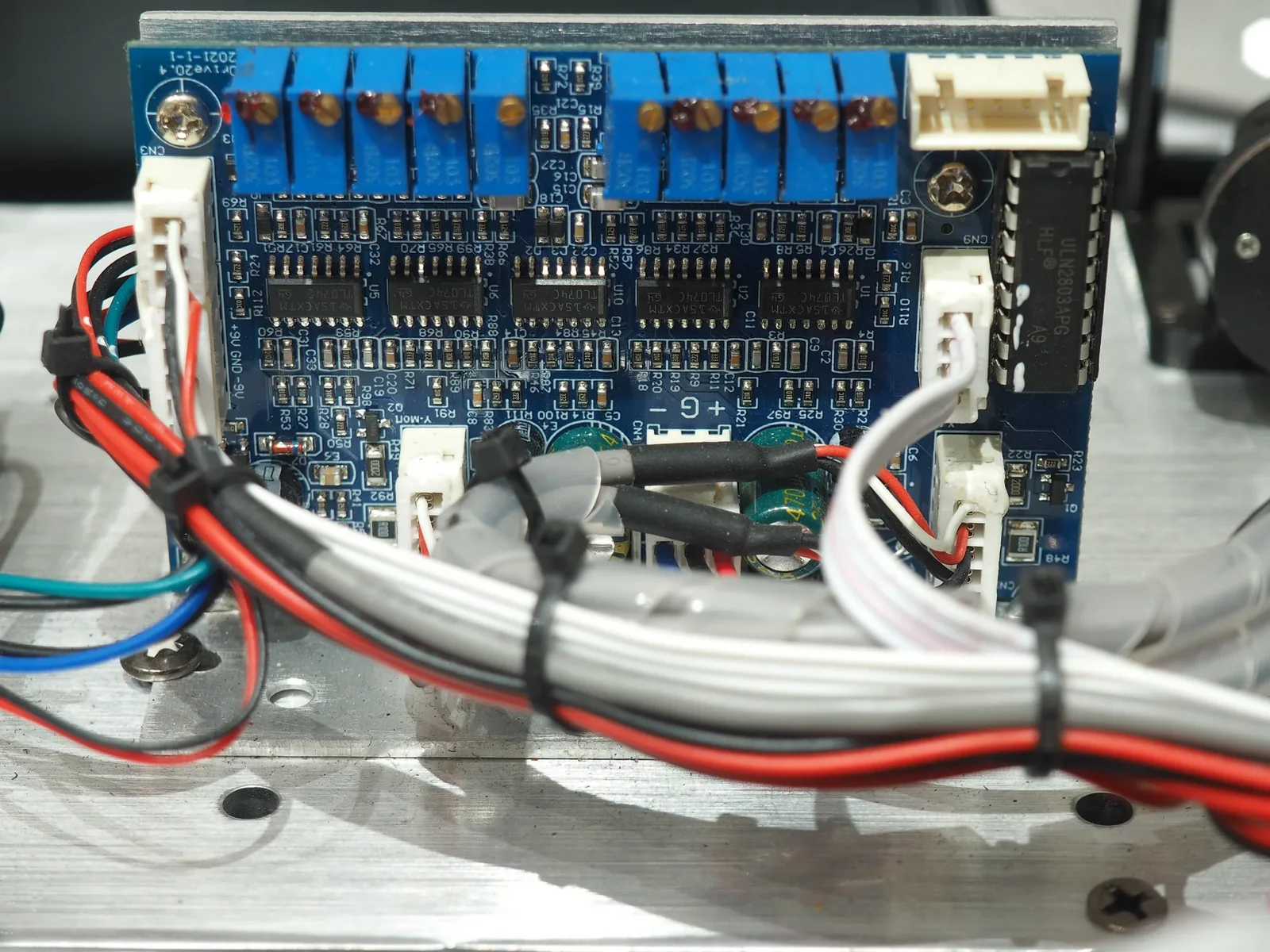
A laser driver PCB validation process proves that a board can deliver the required current pulse or continuous-wave drive condition while maintaining laser protection, waveform integrity, thermal margin, and repeatable manufacturing evidence.
For LiDAR transmitters, optical sensors, industrial lasers, and high-speed photonic systems, a successful validation plan must connect three domains:
- Electrical behavior: current pulse, voltage stress, timing, switching behavior, and control response
- PCB implementation: current loops, return paths, sensing, thermal structures, and assembly quality
- Optical performance: emitted power, pulse timing, wavelength response, and system-level output
A board that powers on successfully has not necessarily passed laser driver validation. Fast current transitions expose parasitic inductance, measurement errors, connector effects, and thermal drift that are invisible during low-speed checks.
What should a laser driver PCB validation plan prove?
The validation plan begins with the laser operating envelope and the release decision criteria.
Define the laser part number, driver topology, peak current, pulse width, repetition rate, duty cycle, temperature range, protection limits, and required optical output before PCB review.
| Requirement area | Parameters to define | Validation purpose |
|---|---|---|
| Laser load | Part number, package, polarity, forward-voltage range, monitor photodiode, thermal limits | Establish safe operating boundaries |
| Current pulse | Peak current, rise/fall time, pulse width, repetition rate, overshoot, undershoot | Confirm waveform performance |
| Control behavior | Enable, modulation, startup, shutdown, fault response, current limit | Verify predictable operation |
| Environment | Temperature, airflow, enclosure, cable, heat sink interface | Confirm operating margin |
| Release evidence | Test procedure, instruments, raw traces, limits, calibration records | Make results repeatable |
Which laser driver PCB areas require the most review?
Fast laser pulses are controlled by physical geometry. The schematic may show a simple current path, but the PCB determines the real inductance, resistance, and return-current behavior.
Review these structures together:
| PCB region | Design decision | Validation impact |
|---|---|---|
| Pulse-current loop | Keep switch, capacitor, laser connection, sense element, and return path compact | Reduces overshoot and ringing |
| Gate-drive loop | Minimize distance between driver and switching device | Improves switching stability |
| Current-sense path | Use Kelvin routing and controlled references | Prevents feedback errors |
| Power delivery path | Place pulse capacitors close to switching devices | Reduces voltage droop |
| Connector and cable interface | Include harness parasitics in the design model | Prevents system-level surprises |
The high-speed PCB review should include current-loop mapping, return-path continuity, and switching-node control. The PCB stack-up determines reference-plane behavior, layer transitions, thermal paths, and impedance structures. Apply impedance control where modulation, triggering, or communication signals require controlled transmission lines.
How should a laser driver board be brought up safely?
A controlled bring-up sequence prevents a damaged laser diode from becoming the first diagnostic result.
- Inspect the unpowered assembly for polarity, solder quality, connector orientation, component values, and test-point access.
- Verify the safe state. Confirm that enable, interlock, shutdown, and discharge behavior work before applying laser current.
- Use a representative dummy load capable of reproducing the required current, voltage, pulse energy, bandwidth, and thermal behavior.
- Begin with limited energy and reduced operating conditions.
- Exercise protection features including current limits, faults, temperature response, shutdown, and recovery.
- Measure electrical waveforms before connecting the optical device.
- Connect the laser under controlled conditions with approved cooling, ESD handling, and safety procedures.
A resistor that matches only DC resistance may not reproduce diode behavior, package inductance, or fixture effects.
Use NPI assembly practices to preserve serialized builds, controlled revisions, inspection records, and prototype-to-production traceability.
How should fast laser current pulses be measured?
The measurement setup becomes part of the circuit at high speed. Probe inductance, fixture geometry, channel delay, and bandwidth can create false conclusions.
| Measurement | Required evidence | Measurement concern |
|---|---|---|
| Laser current | Calibrated current probe or low-inductance shunt measurement | Confirm bandwidth and delay |
| Laser voltage | Differential measurement at the load connection | Avoid long probe grounds |
| Switch node | Appropriate high-bandwidth probing | Probe placement can change ringing |
| Gate waveform | Driver output and switching timing | Check reference quality |
| Supply behavior | Local rail voltage and source current | Bench supply readings may hide local collapse |
Record:
- Probe model
- Bandwidth limit
- Trigger source
- Channel deskew
- Fixture configuration
- Operating condition
- Calibration status
A waveform is only meaningful when the measurement chain is documented.
How do electrical and optical laser validation differ?
Electrical validation proves that the PCB delivers the intended current and voltage behavior. It does not prove that the laser produces the required optical output.
Electrical tests should verify:
- Current amplitude
- Pulse width
- Rise and fall time
- Overshoot and ringing
- Supply stability
- Fault behavior
- Thermal effects
Optical tests should verify:
- Optical power or energy
- Optical pulse width
- Timing relative to electrical command
- Detector bandwidth
- Temperature-dependent output
- Receiver response
The optical detector must match the wavelength and bandwidth requirements of the application. A current waveform that passes electrical validation may still produce unacceptable optical performance because of laser threshold, temperature, aging, package behavior, or receiver limitations.
Laser driver PCB release decision matrix
| Release gate | Evidence package | Decision question |
|---|---|---|
| Requirements definition | Approved limits, laser data, driver data, operating envelope | Are all limits traceable to requirements? |
| PCB design review | Stack-up, layout review, loop analysis, thermal review | Does the physical design support the pulse behavior? |
| Assembly quality | Inspection records, traceability, approved deviations | Is the tested board representative? |
| Electrical validation | Current and voltage waveforms across operating corners | Does the driver meet electrical limits? |
| Optical validation | Calibrated optical measurements correlated with electrical data | Does the system produce the required light output? |
| Thermal validation | Temperature measurements and derating analysis | Are components within operating limits? |
| Production readiness | Fixtures, calibration records, golden unit, test limits | Can production reproduce the result? |
The PCBA testing and quality process should separate design validation from manufacturing screening. Use functional circuit testing only for characteristics that can be safely stimulated and measured in production.
What are the common laser driver PCB failure modes?
| Failure symptom | Evidence to collect | Typical cause |
|---|---|---|
| Excessive ringing | Load voltage, current waveform, probe setup comparison | Loop inductance, fixture resonance, return-path problems |
| Current overshoot | Gate, switch node, current, and voltage traces | Stored energy, poor damping, switching interaction |
| Optical pulse failure | Electrical trace, optical trace, temperature data | Laser condition, detector limits, thermal drift |
| Output appears while disabled | Enable, interlock, gate, and load current traces | Unsafe startup sequencing or leakage paths |
| Pulse amplitude drops during bursts | Supply rail, temperature, connector voltage drop | Energy delivery or thermal limitations |
| Current measurement changes between setups | Probe comparison and fixture repeatability data | Measurement loading or poor sensing layout |
What should be included in a laser driver PCB RFQ package?
A complete supplier package should include:
Electrical requirements
- Laser diode manufacturer and part number
- Driver IC and switching-device information
- Peak current and pulse conditions
- Continuous-wave operating points
- Protection requirements
- Fault handling behavior
PCB and assembly data
- Schematics
- Fabrication files
- Stack-up
- BOM
- Placement data
- Mechanical drawings
- Thermal requirements
- Connector information
- Test-point requirements
Use the DFM guidelines to align fabrication and assembly requirements before quotation.
Validation requirements
- Dummy-load requirements
- Required instruments
- Measurement bandwidth
- Acceptance limits
- Test fixtures
- Required reports
- Production test requirements
Which standards apply to laser driver PCB validation?
Applicable standards may include:
- IEC 60825-1 — Safety of laser products
- IEC 61340-5-1 — Electrostatic protection
- IEC 61000-4-2 — Electrostatic discharge testing where applicable
- IPC-2221 — Printed board design guidance
- J-STD-001 — Soldered assembly requirements
- IPC-A-610 — Electronic assembly acceptability
PCB validation supports electrical, manufacturing, and reliability evidence. It does not by itself classify accessible laser emission, verify protective housing design, or establish complete laser-product compliance.
Laser Driver PCB Validation FAQ
What is laser driver PCB validation?
It verifies that a laser driver board can deliver the required electrical pulse or continuous current while maintaining protection, thermal stability, optical performance, and production evidence.
Should a laser diode be connected during the first power test?
No. Initial testing should use a representative load and controlled energy until protection functions and waveform behavior are verified.
Why can a laser driver pass DC testing but fail at pulse speed?
Fast pulses expose parasitic inductance, return-path problems, switching noise, supply droop, and measurement limitations that DC tests cannot reveal.
Does a correct current waveform prove correct optical output?
No. Optical output depends on laser characteristics, temperature, wavelength, package behavior, and detector response.
What information should be supplied for a laser driver PCB quote?
Provide the electrical requirements, laser and driver data, PCB files, assembly information, thermal requirements, test expectations, and acceptance criteria.
Request a Laser Driver PCB Review
Send the laser and driver part numbers, schematics, fabrication and assembly data, stack-up, waveform limits, operating environment, dummy-load plan, optical test boundary, and required release evidence. APTPCB can review manufacturability, high-speed layout risks, assembly controls, test access, and the production package before quotation through the laser driver PCB validation request.