
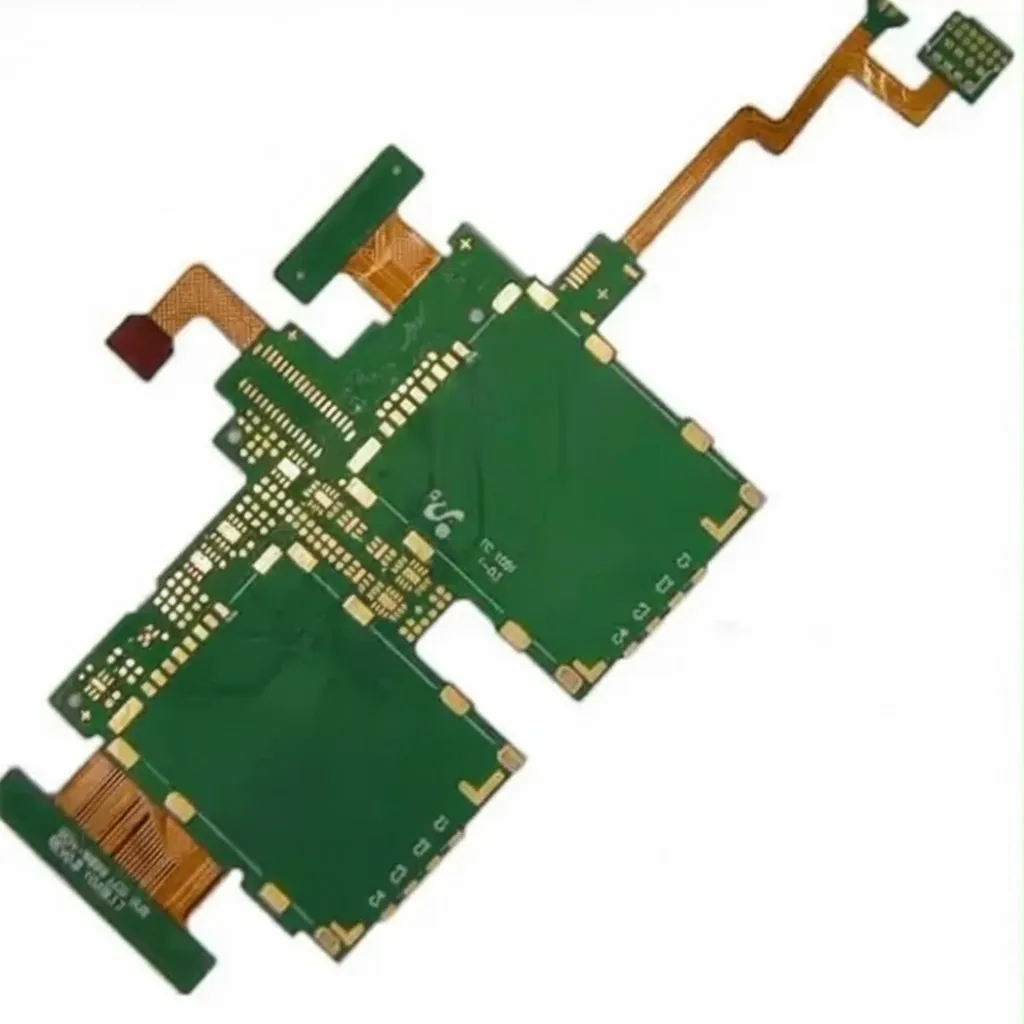
A low thermal conductivity stackup should not be specified simply as “use a low-k PCB material.” For cryogenic instruments, quantum hardware, precision sensors, and thermally isolated electronics, the engineering objective is to keep the total conducted heat through the PCB below the system's thermal budget while preserving electrical and mechanical performance.
That makes the complete conduction path the design variable: conductor material and cross-section, dielectric geometry, vias, planes, connectors, mounting points, slots, flex regions, and thermal anchors all matter.
For cryogenic designs, another complication is critical: material thermal conductivity changes substantially with temperature. A room-temperature conductivity value therefore cannot, by itself, predict heat flow between a 300 K interface and a 4 K or millikelvin stage. NIST's cryogenic materials references provide temperature-dependent property data for materials such as copper, while published cryogenic measurements also show strongly temperature-dependent behavior in polyimide.
The practical design question is therefore:
Which thermal paths can be reduced without creating unacceptable current density, impedance discontinuities, mechanical weakness, or manufacturing risk?
This guide provides a decision framework for answering that question and turning the result into an RFQ-ready PCB specification.
When does a PCB actually need a low thermal conductivity stackup?
Use this approach when heat conducted through the interconnect consumes a meaningful part of the available cooling or stability budget.
Typical cases include a cryostat feedthrough PCB, cryogenic detector wiring, quantum-computing interconnects, infrared or bolometer readout, vacuum instrumentation, and circuits that deliberately isolate a heated or temperature-controlled region.
It is usually the wrong approach when the PCB's main thermal requirement is removing component heat. High-power converters, processors, LEDs, and similar assemblies generally benefit from lower thermal resistance to a heat spreader or cooling surface rather than greater isolation.
High-speed and RF designs require another decision. Removing reference planes or aggressively narrowing conductors may lower heat conduction but can degrade return-current continuity, impedance, crosstalk, and EMI behavior. Thermal isolation therefore cannot be optimized independently of signal integrity.
How should you calculate the thermal budget before choosing a stackup?
Start with allowable heat leak, not a laminate name.
For a simple conductor with approximately constant properties, thermal conductance follows the familiar relationship:
[ G = \frac{kA}{L} ]
where (k) is thermal conductivity, (A) is cross-sectional area, and (L) is path length.
Across a large temperature range, especially in cryogenic systems, use temperature-dependent material data instead:
[ Q = \frac{A}{L}\int_{T_c}^{T_h} k(T),dT ]
A real PCB contains several parallel paths, so the thermal model should include conductors, dielectric, plated holes, mounting hardware, connectors, shields, stiffeners, and other structures crossing the thermal boundary.
This immediately gives a better design rule than “use the thinnest copper possible”: rank the heat paths, then reduce the dominant contributors.
For example, reducing dozens of narrow signal traces may accomplish little if a continuous ground plane, connector shell, mounting bracket, or dense via array remains across the same temperature boundary.
NIST's Cryogenic Materials Properties Reference List identifies temperature-dependent thermal-property references for copper and other engineering materials. Published measurements in Cryogenics likewise show that polyimide conductivity changes significantly over cryogenic temperature ranges.
Which stackup strategy should you choose?
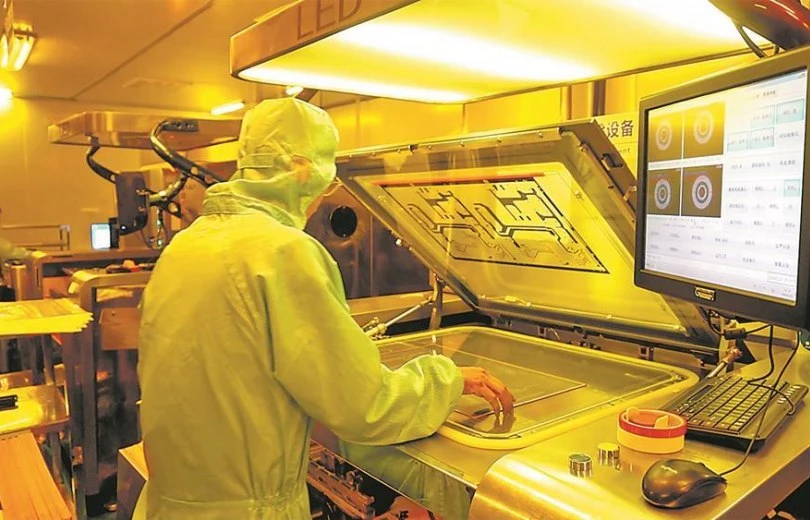
Use the following matrix before modifying the layer structure.
| Design condition | Preferred first move | Main trade-off | Evidence to require |
|---|---|---|---|
| DC or low-frequency signals crossing a thermal boundary | Reduce conductor cross-section and increase path length | Voltage drop and current capacity | Finished conductor dimensions and electrical verification |
| RF or controlled-impedance signals | Preserve a defined return structure and optimize it with field solving | Thermal conductance versus impedance/EMI | Impedance model plus representative coupon |
| Large thermal gradient between stages | Add intermediate thermal anchoring where the system allows it | Mechanical and assembly complexity | Interface drawing and thermal model |
| Heat leak dominated by dielectric or board body | Reduce bridge width, use slots, or use a flex section | Fragility and handling risk | Mechanical dimensions and inspection |
| Heat leak dominated by planes | Segment, narrow, or locally mesh the plane only after SI analysis | Return-current discontinuity | Layout review and impedance/EM simulation |
| Vacuum environment | Qualify laminate, adhesive, coverlay, mask, and other polymers for the actual environment | Material/process restrictions | Material identification and project-required outgassing evidence |
| Severe thermal cycling | Favor mechanically balanced construction and minimize stress concentrations | Added area or stackup constraints | Qualification coupons and cycle-test plan |
The important point is that “low thermal conductivity PCB” describes a system result, not one universal construction.
A PCB Stackup Design review should therefore begin only after the thermal zones, electrical interfaces, and allowable heat flow are defined.
How do copper, vias, planes, and flex regions affect heat leak?
Copper frequently becomes an important parallel heat path because conductors run directly between thermal stages. Reduce that path only as far as the electrical design permits.
Trace width, finished copper thickness, number of conductors, and path length all affect thermal conductance. Serpentine or folded interconnect geometries can increase effective path length, but routing should not be added blindly: extra length changes resistance, delay, parasitics, and available board area.
Continuous planes deserve special attention. A solid plane crossing from a warm region to a cold region can dominate a design that otherwise uses narrow traces. Plane segmentation, neck-down regions, or engineered meshes may help, but the geometry must still provide the required electrical return path.
The same principle applies to vias. A via is a plated metal connection, so arrays of vias crossing an isolation region create parallel conductive paths. Avoid unnecessary stitching and thermal-via structures where thermal isolation is the goal, while retaining vias required for electrical reliability and return-current control.
For larger reductions in board cross-section, mechanical slots or narrow bridges can be more effective than small material changes. The penalty is structural: bridge width, corner radii, routing tolerance, assembly handling, and vibration requirements become first-order constraints.
Flex and rigid-flex architectures can extend the thermal path while preserving rigid component regions. They are especially useful when the interconnect must accommodate movement caused by differential contraction. See Rigid-Flex PCB Capabilities and Flex PCB Manufacturing when evaluating that architecture.
Which material should you use for cryogenic or vacuum PCB isolation?
Polyimide is widely used in cryogenic interconnect structures because thin flexible constructions can provide long, small-cross-section thermal paths. Published measurements have characterized polyimide thermal conductivity from room temperature into cryogenic ranges, including low-conductance cable applications.
That does not mean “polyimide is always better than FR-4.”
Material selection should consider the full operating-temperature range, dielectric requirements, copper adhesion, z-axis construction, mechanical contraction, adhesives or coverlay, manufacturing availability, and project qualification requirements.
A conventional rigid laminate with carefully designed slots and restricted copper may be the simpler solution when the required thermal resistance is moderate. Conversely, a thin flex structure may be advantageous when the interconnect itself is the dominant warm-to-cold bridge.
For vacuum systems, do not approve materials merely because they are called “polyimide,” “low outgassing,” or “space grade.” NASA Goddard maintains an outgassing database based on ASTM E595 testing for Total Mass Loss and Collected Volatile Condensable Materials. Use test data applicable to the actual laminate, adhesive, solder mask, coverlay, coating, and processing condition required by the project.
What failure modes should DFM and qualification catch?
A thermally optimized design can fail for reasons that have little to do with its calculated heat leak.
| Failure mode | Why isolation features increase the risk | Design or verification response |
|---|---|---|
| Bow or twist | Large copper removal can create an asymmetric construction | Balance the stack where possible and verify finished flatness |
| Trace or pad damage | Narrow conductors and thin flex regions tolerate less handling stress | Use appropriate pad transitions, strain relief, and handling controls |
| Via or interconnect damage during cycling | Materials contract differently across large temperature excursions | Define representative thermal-cycle qualification |
| Impedance discontinuity | Plane voids, meshes, slots, and narrow bridges alter return paths | Model the actual geometry and use coupons when required |
| Mechanical fracture | Slots concentrate load into narrow PCB bridges | Radius internal corners and evaluate assembly/vibration loads |
| Uncontrolled thermal short | CAM-added copper, stitching, plating, or hardware can bypass the intended isolation path | Identify protected thermal zones explicitly in fabrication data |
| Vacuum contamination | Polymers, adhesives, coatings, or process residues may release volatiles | Approve materials and cleaning/bake processes against system requirements |
For manufacturing-rule checks around slots, narrow conductors, and other unusual features, use the DFM Guidelines as a starting point rather than assuming a generic minimum geometry is suitable.
How should a low thermal conductivity PCB be validated?
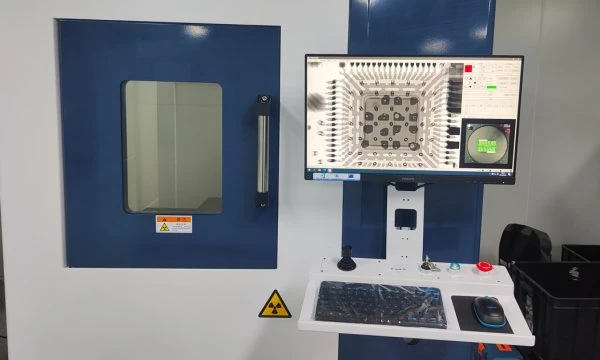
Electrical continuity proves connectivity; it does not prove the thermal design.
The strongest validation plan separates fabrication conformity, interconnect reliability, and system thermal qualification.
Fabrication acceptance should verify the dimensions that control the model: finished copper, critical trace widths, slot and bridge dimensions, dielectric construction, via structure, and material identity. Cross-sections or coupons may be specified for the characteristics that cannot be confirmed adequately from external inspection.
Electrical validation should address the actual interface. Controlled-impedance designs may require TDR or other agreed measurements using coupons representative of the isolation geometry rather than a conventional solid-plane coupon.
Cryogenic qualification should use a thermal-cycle profile derived from the real product environment. The number of cycles, temperature limits, dwell conditions, measurement method, and failure criteria belong in the project specification; there is no universal “five-cycle cryogenic PCB qualification” that proves suitability for every system.
Finally, system-level thermal performance should be demonstrated against the thermal model. A representative assembly can be instrumented to determine whether measured heat flow or stage temperature meets the allocated cooling budget.
For broader fabrication inspection and acceptance planning, see PCB Quality Control.
What should you send in the RFQ?
A supplier cannot manufacture “minimum thermal conductivity” from a Gerber package alone. The fabrication documentation should identify which features are deliberate and which characteristics require evidence.
Use this RFQ/release checklist:
- Thermal-zone drawing: define warm stage, cold stage, intermediate anchors, isolation zones, and any areas where copper must not be added.
- Approved stackup: identify laminate or material specification, dielectric construction, starting or finished copper requirements, and controlled dimensions.
- Copper constraints: identify intentional narrow traces, segmented or meshed reference structures, and any maximum as well as minimum finished dimensions that matter to the thermal model.
- Mechanical data: provide routed slots, bridge geometry, stiffeners, connector interfaces, and critical tolerances.
- Electrical requirements: identify controlled-impedance nets, reference geometry, test-coupon requirements, current constraints, and any sensitive ultra low noise readout layout interfaces.
- Qualification requirements: state thermal-cycle, vacuum-material, cross-section, dimensional, electrical, and other project-specific testing instead of assuming they are standard deliverables.
- Traceability: request the material identity, revision-controlled fabrication data, agreed inspection records, and notification before changes affecting the qualified construction.
- Release boundary: define which results are required for first article approval and which are required with production lots.
IPC-6013 covers qualification and performance requirements for flexible and rigid-flexible printed boards, while IPC-2223 addresses flexible/rigid-flexible design. The applicable revision, performance class, installation usage, and additional project requirements should be stated in procurement documentation rather than inferred by the manufacturer.
Who is responsible for proving the thermal performance?
This boundary should be explicit before quotation.
The PCB manufacturer is responsible for building and inspecting the board to the mutually approved fabrication specification. That may include DFM review, material control, dimensional verification, coupons, cross-sections, impedance testing, or other specifically quoted evidence.
Project feasibility is shared during engineering review. A fabricator can identify manufacturability problems such as an unsafe bridge width, unusual copper requirement, or difficult flex construction, but approval of a manufacturable geometry does not establish its system thermal performance.
Product qualification remains the responsibility of the system owner unless a specific qualification service is contracted. The designer controls the cooling budget, operating temperatures, heat sources, mounting interfaces, connectors, qualification profile, and allowable thermal leak.
APTPCB can provide DFM feedback on manufacturability of thermal-isolation features, but thermal-system simulation and final product qualification should remain tied to the customer's system requirements.
Low thermal conductivity stackup FAQ
Does ENIG make a PCB meaningfully more thermally insulating than HASL?
Surface finish should primarily be selected for assembly, bonding, corrosion, and reliability requirements. Treating ENIG as a major thermal-isolation mechanism is inappropriate because the dominant warm-to-cold paths are normally the board conductors and structural geometry.
Should a cryostat feedthrough PCB always be rigid-flex?
No. Rigid, flex, and rigid-flex constructions can all be valid. The choice depends on required thermal path length, connector geometry, sealing architecture, mechanical movement, channel count, and electrical performance.
Can a manufacturer guarantee thermal conductivity from Gerber files?
Not reliably. Gerbers define important conductor geometry but do not contain the entire thermal model. Material properties, finished plating, dielectric construction, connectors, mounting structures, temperature range, and thermal interfaces are also required.
Should CAM engineers add copper balancing to an isolation zone?
Only when the approved engineering data allow it. Copper balancing that is harmless on a conventional PCB may create an unintended thermal bypass. Protected isolation regions should therefore be clearly identified in fabrication notes.
Is vacuum bake-out a substitute for material qualification?
No. Bake-out is a processing step, while outgassing qualification concerns the behavior of specified materials under defined test conditions. Use the material and process requirements established for the actual vacuum system.
Request a low thermal conductivity PCB DFM review
Before requesting pricing, freeze the thermal architecture far enough that the manufacturer can distinguish intentional isolation features from layout defects.
Request a Quote with the fabrication package, approved stackup, thermal-zone drawing, mechanical data, controlled-impedance requirements, and the specific inspection or qualification evidence you need.
The key release question is not whether the PCB uses a material advertised as low conductivity. It is whether the manufactured board preserves the conductor, dielectric, mechanical, and interface geometry on which your thermal budget depends.