
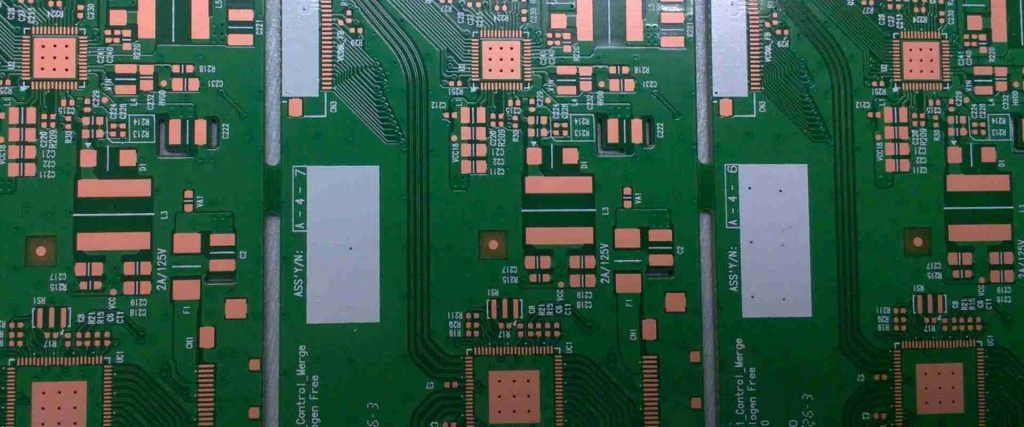
A Man Down PCB is the hardware foundation of a lone-worker safety device. It combines sensing, processing, power management, and communications into a compact circuit assembly that must detect falls, loss of movement, or incapacitation and send an emergency alert without requiring user interaction.
For engineers selecting a PCB technology for a safety wearable, the key decision is not simply whether the board works in a laboratory environment. The decision is whether the PCB continues operating after vibration, drops, temperature changes, moisture exposure, battery stress, and long operating periods.
A production-ready Man Down PCB must balance:
- sensor accuracy;
- RF communication reliability;
- battery life;
- mechanical durability;
- manufacturing yield;
- certification requirements;
- long-term field reliability.
Modern systems may also combine man-down sensing with video verification using a 360 Degree Camera PCB or 4K Camera PCB, creating additional requirements for high-speed signal integrity, thermal management, and impedance control.
What should engineers consider when selecting a Man Down PCB?
A Man Down PCB typically integrates:
- MEMS accelerometers and gyroscopes for movement and orientation detection;
- microcontrollers running fall-detection algorithms;
- wireless modules such as LTE, Bluetooth, Wi-Fi, LoRa, or LMR;
- GNSS positioning;
- battery charging and power management circuits;
- optional camera interfaces and storage systems.
The PCB must distinguish normal activity from emergency conditions such as:
- impact followed by inactivity;
- abnormal body orientation;
- extended lack of movement;
- manual emergency activation.
The PCB architecture directly affects false alarms, battery runtime, enclosure size, and production cost.
Which Man Down PCB technology is best for each application?
| Application | Preferred PCB Technology | Key Design Priority | Typical Material Choice |
|---|---|---|---|
| Oil & gas lone worker | Rugged multilayer PCB | Hazardous-area reliability and environmental protection | High-Tg FR4 with protective coating |
| Healthcare pendant | HDI or rigid-flex PCB | Miniaturization and comfort | Thin-core FR4 or rigid-flex |
| Mining helmet device | Rugged rigid PCB | Shock and vibration resistance | Standard FR4 with reinforced mechanical design |
| Body camera integration | High-speed multilayer PCB | Video signal integrity | Low-loss materials such as Rogers laminates or Megtron 6 |
| Firefighter equipment | High-temperature PCB | Thermal survival | Ceramic or specialized polyimide materials |
| Warehouse wearable scanner | Power-optimized PCB | Battery efficiency | FR4 with optimized copper distribution |
The correct selection depends on the operating environment rather than PCB complexity alone.
What reliability metrics define a high-quality Man Down PCB?
| Metric | Engineering Purpose | Typical Requirement | Validation Method |
|---|---|---|---|
| MTBF | Measures expected operating reliability | >50,000 hours for industrial-grade designs | Accelerated life testing and field data |
| RF impedance control | Maintains communication reliability | ±5% or ±10% impedance tolerance depending on design | TDR and VNA testing |
| Deep sleep current | Protects battery runtime | <10µA for low-power standby modes | Power analyzer measurement |
| Thermal conductivity | Prevents heat-related sensor drift | Approximately 1.0 W/mK to 3.0 W/mK dielectric range depending on material | Thermal imaging and temperature measurement |
| Flex endurance | Supports wearable bending cycles | >100,000 dynamic flex cycles where applicable | IPC-TM-650 2.4.3 testing |
| Z-axis CTE | Reduces solder and package stress | <50 ppm/°C below Tg | Thermomechanical analysis |
How do you choose the right Man Down PCB material?
Material selection should follow the device environment and signal requirements.
High-reliability industrial devices
High-Tg FR4 is commonly selected for industrial Man Down PCBs because it provides:
- improved thermal stability;
- mechanical strength;
- predictable manufacturing performance.
Conformal coating is frequently used where moisture, dust, chemicals, or condensation are expected.
Compact wearable devices
HDI and rigid-flex technologies allow designers to reduce enclosure size while maintaining sensor placement accuracy.
HDI PCB designs use microvias and fine traces to increase routing density.
Link: HDI PCB Capabilities
Rigid-flex designs reduce connector count and allow the PCB to follow curved wearable housings.
Link: Rigid-Flex PCB Technology
Camera-enabled safety devices
When a Man Down PCB includes video capture, the design must support high-speed interfaces such as MIPI CSI.
A 4K Camera PCB requires controlled impedance routing, careful layer planning, and low-noise power delivery.
High-speed applications may require:
- low-loss laminate materials;
- controlled dielectric thickness;
- optimized return paths;
- thermal analysis around processors and camera modules.
What are the most important Man Down PCB failure modes?
| Failure Mode | Engineering Cause | Design Response |
|---|---|---|
| False emergency alarms | Poor sensor placement, vibration noise, or algorithm instability | Place MEMS sensors away from mechanical stress points and validate movement profiles |
| Lost emergency communication | Poor RF layout or antenna interference | Maintain controlled impedance routing and isolate RF sections |
| Accelerometer drift | Thermal stress or PCB deformation | Protect MEMS areas from mechanical strain and heat sources |
| Battery failure during operation | Excessive standby current or inefficient power design | Optimize sleep modes and measure current consumption |
| Cracked solder joints | Thermal cycling or vibration | Control CTE mismatch and validate assembly quality |
| Moisture damage | Inadequate protection against environment | Apply appropriate conformal coating and sealing strategy |
How should a Man Down PCB supplier be evaluated?
A qualified manufacturing partner should be able to support:
| Supplier Evaluation Item | Required Evidence |
|---|---|
| PCB manufacturing capability | Layer count, HDI, rigid-flex, and material capability documentation |
| Safety-grade production | IPC Class capability and inspection procedures |
| RF manufacturing | Controlled impedance reports and test capability |
| Assembly quality | AOI, X-ray inspection, ICT, and functional testing |
| DFM support | Pre-production engineering review |
| Traceability | Material and process records |
A supplier should receive complete production information including:
- Gerber files (RS-274X format).
- PCB fabrication drawings.
- Stack-up requirements.
- Material specifications.
- Pick & Place files.
- Functional test requirements.
How is a Man Down PCB validated before production?
A complete validation process should cover electrical, mechanical, and environmental performance.
Design validation
Key checks include:
- Place accelerometers and gyroscopes close to the intended sensing center to reduce rotational measurement errors.
- Separate RF antennas from switching regulators and sensitive MEMS devices.
- Define stack-up requirements early for RF and camera interfaces.
For impedance-controlled designs, use:
Manufacturing validation
Production validation normally includes:
- AOI inspection;
- X-ray inspection for LGA/BGA components;
- ICT electrical testing;
- functional man-down event simulation;
- environmental stress testing.
Surface finishes such as ENIG or ENEPIG are commonly selected for fine-pitch MEMS packages because they provide a flat soldering surface and corrosion resistance.
What mistakes reduce Man Down PCB reliability?
Incorrect sensor placement
Mechanical stress near MEMS components can create offset drift. Maintain appropriate clearance around inertial sensors and review the PCB against the mechanical enclosure.
Poor RF grounding
Fragmented ground planes can degrade antenna performance. Use continuous reference planes and proper via stitching around RF structures.
Excessive thermal coupling
Battery charging circuits and power regulators can introduce heat that affects sensor accuracy. Separate high-temperature components from sensing areas.
Unnecessary material upgrades
Using expensive RF laminates across the entire PCB can increase cost without improving performance. Hybrid stack-ups can place advanced materials only where high-speed signals require them.
Insufficient environmental protection
Wearable devices experience sweat, humidity, and contamination. Select suitable conformal coating methods for the application.
Link: PCB Conformal Coating Services
Man Down PCB FAQ
What IPC class should a Man Down PCB use?
Safety-critical products commonly use IPC Class 2 as a baseline. Applications where failure consequences are severe may require IPC Class 3 manufacturing controls.
Can a standard FR4 PCB be used for a Man Down device?
Yes. Many industrial devices use FR4 successfully. Rigid-flex or HDI becomes beneficial when the enclosure requires smaller dimensions, curved geometry, or reduced connector count.
How does a camera integrate with a Man Down PCB?
Camera integration requires high-speed interfaces such as MIPI CSI. Controlled impedance routing, low-noise power delivery, and suitable stack-up design are required.
What surface finish is recommended?
ENIG is widely used because it provides a flat surface suitable for fine-pitch packages and good corrosion resistance.
How long does Man Down PCB manufacturing take?
Simple rigid prototypes may be produced quickly, while HDI and rigid-flex assemblies typically require additional fabrication time due to additional lamination and process steps.
Does APTPCB support Man Down PCB production?
APTPCB provides manufacturing and DFM support, including stack-up review, material selection guidance, inspection planning, and production optimization.
Man Down PCB glossary
| Term | Definition |
|---|---|
| Accelerometer | Sensor measuring acceleration used for fall and movement detection. |
| Gyroscope | Sensor measuring angular velocity and orientation changes. |
| MEMS | Micro-Electro-Mechanical Systems technology used in compact sensors. |
| HDI | High-Density Interconnect PCB technology using microvias and fine routing. |
| Rigid-Flex | PCB structure combining rigid and flexible sections. |
| IPC Class 3 | High-reliability PCB manufacturing standard. |
| ENIG | Electroless Nickel Immersion Gold surface finish. |
| LGA | Land Grid Array package requiring careful assembly inspection. |
| MIPI CSI | High-speed camera interface standard. |
| Conformal Coating | Protective PCB coating against moisture and contamination. |
| Impedance Control | Manufacturing control of electrical signal characteristics. |
| ATEX | European certification framework for explosive atmospheres. |
Conclusion: selecting a production-ready Man Down PCB
A Man Down PCB must be engineered as a safety system component, not simply an electronic assembly. The correct design combines reliable sensing, efficient power management, robust communications, appropriate materials, and disciplined manufacturing validation.
Whether the device is a lone-worker badge, industrial radio, firefighter wearable, or camera-enabled safety system, the PCB must perform during the moment it is needed most.
For DFM review or quotation, provide:
- Gerber files.
- Stack-up requirements.
- Fabrication drawings with IPC requirements.
- Pick & Place files.
- Functional test specifications.