
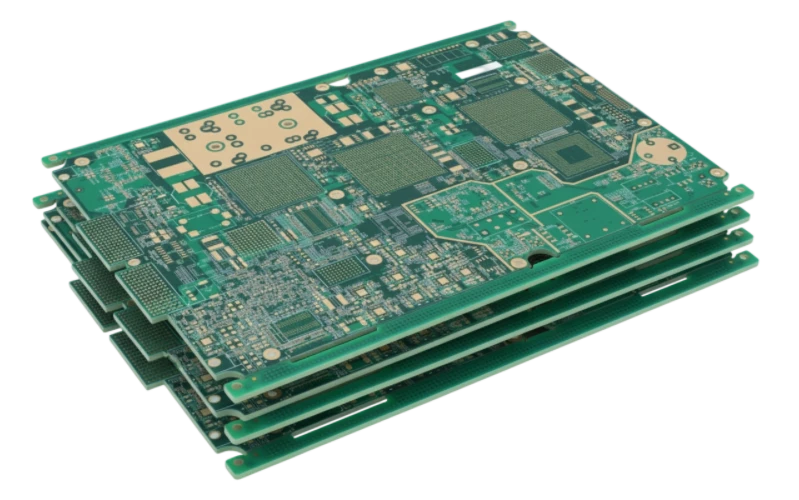
Successful PCB manufacturing and assembly requires more than generating Gerber files and requesting a quotation. A production-ready PCBA depends on decisions made before fabrication begins: material selection, layer stack-up, component availability, assembly constraints, inspection strategy, and supplier process capability.
For engineering and procurement teams, the important question is not only:
Can this PCB be built?
The better questions are:
- Can it be built repeatedly at the required yield?
- Are the specifications appropriate for the operating environment?
- Can the manufacturer prove process control?
- Will defects be detected before shipment?
This guide explains how to define PCB requirements, evaluate manufacturing partners, prepare an RFQ package, understand the assembly workflow, and troubleshoot common PCBA failures.
What information does a PCB manufacturer need before production?
A complete manufacturing package gives the supplier enough information to quote accurately and identify risks early.
PCB fabrication files
Provide:
- Gerber RS-274X or ODB++ manufacturing files.
- NC drill files.
- Layer stack-up information.
- Material requirements.
- Copper thickness requirements.
- Surface finish selection.
- Controlled impedance requirements.
- Board outline and mechanical drawings.
PCB assembly files
Provide:
- Bill of Materials (BOM) with manufacturer part numbers (MPN).
- Pick-and-place centroid files.
- Assembly drawings.
- Component orientation requirements.
- Test requirements.
- Programming or firmware instructions when applicable.
Incomplete documentation commonly causes quotation delays, incorrect assumptions, and production changes after release.
When should you use professional PCB manufacturing and assembly?
Professional PCB manufacturing and assembly is typically required when reliability, repeatability, or production volume matters.
Common applications include:
- New Product Introduction (NPI).
- High-density interconnect (HDI) designs.
- Fine-pitch BGA assemblies.
- High-speed digital circuits.
- RF communication products.
- Industrial, automotive, medical, and aerospace electronics.
- Products requiring traceability and documented quality controls.
Early prototypes may use simpler methods, but production designs require controlled processes and repeatable inspection.
Which PCB specifications should be defined before manufacturing?
PCB specifications directly affect cost, yield, reliability, and assembly performance.
PCB Specification Decision Matrix
| Parameter | Typical Selection | Higher-Complexity Requirement | Main Manufacturing Impact | Verification |
|---|---|---|---|---|
| Trace/space | ≥0.127 mm (5 mil) | HDI below 0.1 mm | Etching difficulty and yield loss | DRC and AOI |
| Mechanical drill | Around 0.2 mm | Microvias around 0.1 mm laser drill | Plating and reliability challenges | Cross-section analysis |
| Via aspect ratio | ≤8:1 preferred | Higher ratios require tighter process control | Barrel plating defects | Microsection testing |
| Surface finish | HASL or OSP | ENIG for BGA and fine pitch | Solder reliability | Surface inspection |
| Controlled impedance | ±10% typical | Tight RF/high-speed requirements | Signal integrity failures | TDR testing |
| Solder mask dam | 3-4 mil minimum | Fine-pitch packages | Solder bridging risk | Design review |
| Board flatness | ≤0.75% bow/twist | Large multilayer boards | Assembly alignment issues | IPC measurement |
The correct specification depends on electrical requirements, mechanical constraints, assembly technology, and expected production volume.
How does PCB fabrication affect assembly quality?
PCB fabrication and assembly are connected processes. A board that is difficult to fabricate often creates assembly problems later.
Examples:
- Incorrect stack-up selection can create impedance failures.
- Poor surface finish control can reduce solder joint reliability.
- Insufficient solder mask spacing can create bridges.
- Excessive board warpage can reduce placement accuracy.
A capable supplier reviews fabrication and assembly requirements together during NPI rather than treating them as separate manufacturing steps.
What are the PCB manufacturing and assembly process steps?
1. Design review and DFM analysis
Before production starts, manufacturers review:
- Gerber or ODB++ data.
- PCB stack-up.
- Component footprints.
- BOM availability.
- Drill sizes.
- Trace spacing.
- Assembly clearances.
- Test access.
A strong DFM review identifies manufacturability problems before tooling, materials, and production capacity are committed.
2. PCB fabrication
PCB fabrication converts raw laminate into a finished bare circuit board.
The process normally includes:
- Inner-layer imaging.
- Copper etching.
- Layer alignment and lamination.
- Mechanical and laser drilling.
- Copper plating.
- Solder mask application.
- Surface finishing.
- Electrical testing.
3. Solder paste printing
SMT assembly begins with solder paste deposition.
A stainless-steel stencil applies controlled solder paste volumes onto component pads.
Important variables include:
- Stencil thickness.
- Aperture design.
- Paste condition.
- Printer alignment.
- Solder Paste Inspection (SPI) results.
Incorrect paste volume can cause:
- Solder bridges.
- Insufficient solder joints.
- Component movement.
- Voiding problems.
4. Pick-and-place assembly
Automated placement equipment installs components using:
- BOM data.
- Centroid files.
- Fiducial alignment.
- Component package information.
Critical controls include polarity, orientation, placement accuracy, and component verification.
5. Reflow soldering
The assembled PCB passes through controlled thermal zones where solder melts and forms electrical connections.
Lead-free assemblies commonly use peak temperatures around 245°C-260°C depending on solder alloy and component requirements.
Incorrect thermal profiles can create:
- Tombstoning.
- Weak solder joints.
- Excessive voiding.
- Component damage.
6. Inspection and testing
Production validation may include:
- SPI inspection.
- AOI inspection.
- X-ray inspection.
- Flying probe testing.
- In-circuit testing.
- Functional testing.
The inspection strategy should match product risk. A simple controller board and a medical device PCB require different validation levels.
How do you select a PCB manufacturer for NPI and production?
The lowest quoted price does not always represent the lowest manufacturing cost. A supplier should demonstrate technical capability, communication quality, and documented process control.
PCB Supplier Evaluation Checklist
| Evaluation Area | Questions to Ask | Evidence to Request |
|---|---|---|
| Fabrication capability | Can you support my layer count, materials, HDI, and impedance requirements? | Capability statement |
| Engineering support | How are DFM issues identified before production? | Sample DFM report |
| Quality systems | How are defects detected and documented? | Inspection records |
| Assembly capability | Can you support required packages and solder technologies? | Equipment list |
| Component management | How are obsolete or risky parts handled? | BOM review process |
| Production validation | How is the first build approved? | First Article Inspection report |
| Traceability | Can production history be reviewed? | Lot records |
For NPI projects, supplier engineering involvement before the first build often reduces redesign cycles and unexpected production delays.
What are the most common PCB assembly failures?
PCB Failure Troubleshooting Table
| Failure Mode | Symptoms | Root Causes | Prevention and Verification |
|---|---|---|---|
| Tombstoning | Passive component stands vertically | Uneven heating, pad imbalance | Balanced footprints and reflow profile validation |
| Solder bridging | Short between adjacent pins | Excess paste, insufficient spacing | SPI inspection and stencil optimization |
| BGA voiding | Hidden solder defects | Trapped gases during reflow | X-ray inspection and profile control |
| Delamination | PCB layers separate | Moisture exposure or thermal stress | Material handling and laminate selection |
| Open circuit | Missing electrical connection | Poor solder joint or board damage | AOI and electrical testing |
| Copper peeling | Lifted copper features | Excess thermal stress or poor adhesion | Process control and inspection |
| Impedance failure | Signal integrity problems | Incorrect stack-up or dielectric variation | Manufacturer stack-up review and TDR testing |
Which PCB materials and surface finishes should you choose?
Material selection
FR4 is suitable for many commercial and industrial designs.
Special applications may require:
- High-frequency laminates for RF applications.
- High-Tg materials for elevated temperature environments.
- Metal-core PCBs for thermal management.
Specify exact material requirements when performance depends on electrical or thermal properties.
Surface finish selection
| Finish | Advantage | Typical Application |
|---|---|---|
| HASL | Cost-effective and durable | General electronics |
| ENIG | Flat surface and oxidation resistance | BGA and fine-pitch components |
| OSP | Flat and economical | Short storage cycles |
| Hard Gold | Wear resistance | Edge connectors |
What quality checks should be completed before PCB shipment?
A reliable production release includes evidence that the board meets design requirements.
Recommended validation includes:
- Manufacturing data review.
- Visual inspection.
- AOI inspection.
- X-ray inspection for hidden solder joints.
- Electrical testing.
- Dimensional verification.
- First Article Inspection for new builds.
The supplier should provide inspection results and explain how nonconforming boards are handled.
What should be included in a PCB manufacturing RFQ?
A complete RFQ package should allow suppliers to evaluate capability without guessing.
Fabrication RFQ requirements
Include:
- Gerber or ODB++ files.
- Drill files.
- Layer stack-up.
- Material requirements.
- Copper weights.
- Surface finish.
- Impedance requirements.
- Quantity and delivery requirements.
Assembly RFQ requirements
Include:
- BOM with manufacturer part numbers.
- Centroid files.
- Assembly drawings.
- Test requirements.
- Special handling instructions.
- Programming requirements if needed.
A complete RFQ improves quotation accuracy and reduces engineering clarification cycles.
FAQ
What is the difference between PCB and PCBA?
A PCB is the fabricated circuit board containing copper layers, traces, vias, and mechanical features. A PCBA is the completed assembly after electronic components are mounted and soldered.
What is the standard PCB assembly process?
The standard process includes solder paste printing, component placement, reflow soldering, inspection, testing, and final validation.
What files does a PCB manufacturer need?
Most manufacturers require Gerber files, drill data, BOM files, centroid files, and assembly drawings.
How can PCB manufacturing cost be reduced?
Cost can often be reduced by:
- Selecting appropriate layer counts.
- Using standard materials where possible.
- Improving panel utilization.
- Reducing unnecessary microvias.
- Completing DFM review before fabrication.
Why did my impedance test fail?
Common causes include:
- Incorrect dielectric thickness.
- Incorrect material selection.
- Trace width variation.
- Stack-up mismatch.
Controlled impedance designs should be reviewed with the manufacturer before production.
Glossary
| Term | Definition |
|---|---|
| Gerber | PCB fabrication data format containing manufacturing layer information |
| BOM | Bill of Materials listing required components |
| Centroid File | Component placement coordinate file |
| DFM | Design for Manufacturing review |
| AOI | Automated Optical Inspection |
| SPI | Solder Paste Inspection |
| FAI | First Article Inspection |
| ENIG | Electroless Nickel Immersion Gold surface finish |
| HDI | High Density Interconnect PCB technology |
| TDR | Time Domain Reflectometry impedance measurement |
Conclusion
Reliable PCB manufacturing and assembly depends on decisions made before production begins.
Engineers and procurement teams should define manufacturable specifications, validate manufacturing data, evaluate supplier capability, and confirm inspection methods before releasing production.
A successful PCB project passes three checkpoints:
- Design readiness — the board can be manufactured and assembled.
- Production readiness — the supplier has controlled processes.
- Release readiness — quality results confirm the product meets requirements.
Before requesting quotations, prepare complete manufacturing files, define critical specifications, and select a supplier that can provide measurable evidence of process control.