
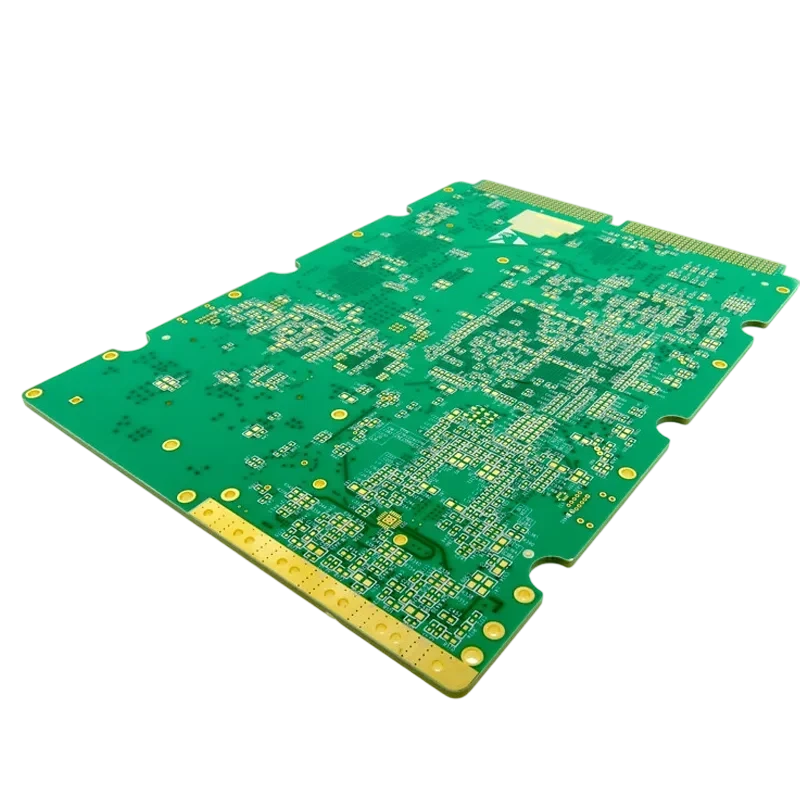
A Marine Compass PCB is the foundational hardware for electronic navigation systems, translating magnetic field data into digital heading information. Unlike standard consumer electronics, these boards must operate reliably while subjected to constant salt spray, high humidity, mechanical vibration, and extreme temperature cycling. The primary challenge in manufacturing these boards is maintaining "magnetic hygiene"—ensuring that the PCB itself does not generate interference that distorts the sensor's reading.
Engineers at APTPCB (APTPCB PCB Factory) frequently encounter designs where improper trace routing or material selection introduces "hard iron" errors before the device even leaves the factory. A successful Marine Compass PCB requires a strict adherence to non-magnetic design principles, robust environmental protection, and precise fabrication tolerances. This guide outlines the specific engineering rules, failure modes, and manufacturing steps required to build navigation-grade circuit boards.
Marine Compass PCB quick answer (30 seconds)
- Magnetic Hygiene is Critical: Avoid nickel-heavy surface finishes (like standard HASL) near sensors; Electroless Nickel Immersion Gold (ENIG) is preferred but must be controlled.
- Current Loop Management: Route power traces as differential pairs or twisted pairs on the PCB to cancel out induced magnetic fields.
- Environmental Armor: Apply conformal coating (Acrylic or Urethane) to protect against salt mist and prevent leakage currents that cause sensor drift.
- Thermal Stability: Use High-Tg FR4 (Tg > 170°C) or ceramic substrates to prevent warping that physically shifts the sensor axis.
- Vibration Damping: Place mounting holes strategically and use locking connectors; marine vibration can induce micro-cracks in solder joints.
- Grounding Strategy: Employ a star ground topology to prevent ground loops from affecting sensitive analog sensor signals.
When Marine Compass PCB applies (and when it doesn’t)
Understanding the operational context ensures you do not over-engineer a simple indicator or under-engineer a critical safety device.
When Marine Compass PCB applies
- Fluxgate & MEMS Compasses: Systems using sensitive magnetometers to detect the Earth's magnetic field for navigation.
- Integrated Navigation Systems: Boards combining compass data with Marine AIS PCB or GPS modules.
- Autopilot Feedback Units: Sensors providing real-time heading data to a Marine Autopilot PCB for steering correction.
- Dynamic Positioning Systems: High-precision sensors used in commercial vessels to maintain position.
- Solid-State Gyrocompasses: Hybrid systems utilizing accelerometers and magnetometers requiring rigid alignment.
When Marine Compass PCB does not apply
- Mechanical Magnetic Compasses: Traditional fluid-filled compasses with no electronics do not require PCB design rules.
- General Cabin Lighting: Simple LED boards do not need magnetic hygiene, though they still need marine-grade corrosion protection.
- Non-Critical Consumer Gadgets: Handheld waterproof toys may not require IPC Class 3 reliability standards.
- Shore-Based Electronics: Equipment located in climate-controlled harbor offices does not face the same salt-spray requirements.
Marine Compass PCB rules and specifications (key parameters and limits)
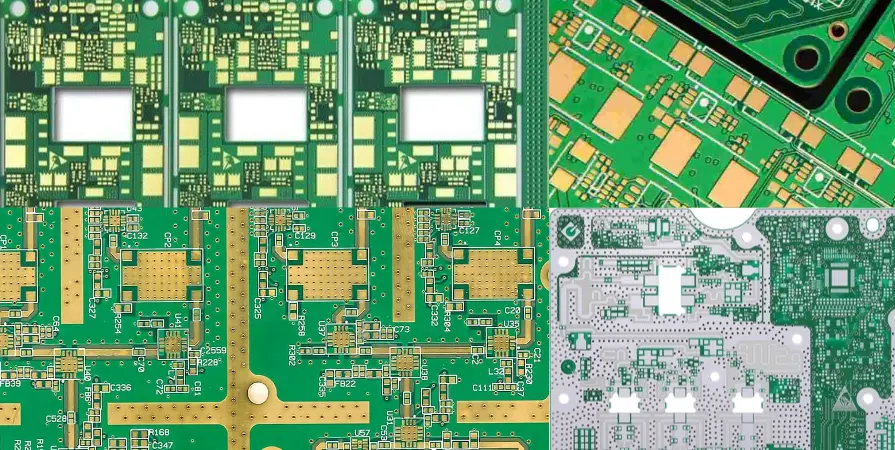
To ensure the Marine Compass PCB functions correctly, specific design and manufacturing rules must be enforced. These rules prevent signal distortion and physical degradation.
| Rule | Recommended Value/Range | Why it matters | How to verify | If ignored |
|---|---|---|---|---|
| Surface Finish | ENIG or ENEPIG (Low Phosphorus) | Thick nickel layers in HASL can be ferromagnetic and distort sensor readings. | X-Ray Fluorescence (XRF) to measure thickness. | Permanent "hard iron" offset in compass heading. |
| Dielectric Material | FR4 High Tg (>170°C) or Ceramic | Prevents board warping which alters the physical alignment of the magnetometer chip. | TMA (Thermal Mechanical Analysis) datasheet check. | Sensor axis misalignment leads to heading errors. |
| Trace Routing | Differential Pairs for Power | Minimizes the magnetic field generated by current flowing to components. | EMI simulation or visual inspection of layout. | "Soft iron" effects that change with power load. |
| Conformal Coating | IPC-CC-830 (Type AR or UR) | Blocks salt spray and humidity from creating conductive paths between sensitive pins. | UV inspection (coating usually contains UV tracer). | Signal drift due to leakage currents; corrosion. |
| Copper Weight | 1 oz or 2 oz (balanced) | Ensures thermal consistency; unbalanced copper causes bowing during reflow. | Microsection analysis after fabrication. | PCB warpage stresses sensor solder joints. |
| Via Protection | Tented or Plugged Vias | Prevents salt residue from trapping inside vias and corroding from within. | Visual inspection under magnification. | Long-term reliability failure due to barrel corrosion. |
| Component Keep-out | > 20mm from Sensor | Ferrous components (speakers, relays, screws) distort the local magnetic field. | BOM review and 3D CAD interference check. | Non-linear calibration errors that are hard to fix. |
| Solder Mask | Green or Blue (High Dam) | Provides insulation; high dams prevent solder bridging on fine-pitch sensors. | Visual inspection. | Short circuits during assembly or operation. |
| Ionic Cleanliness | < 1.56 µg/NaCl eq/cm² | Residues combined with humidity create dendrites and leakage. | ROSE testing (Resistivity of Solvent Extract). | Intermittent sensor failure in humid conditions. |
| Layer Stackup | Symmetrical 4+ Layers | Provides dedicated ground planes for shielding and impedance control. | Stackup diagram review. | High noise floor; unstable sensor readings. |
Marine Compass PCB implementation steps (process checkpoints)
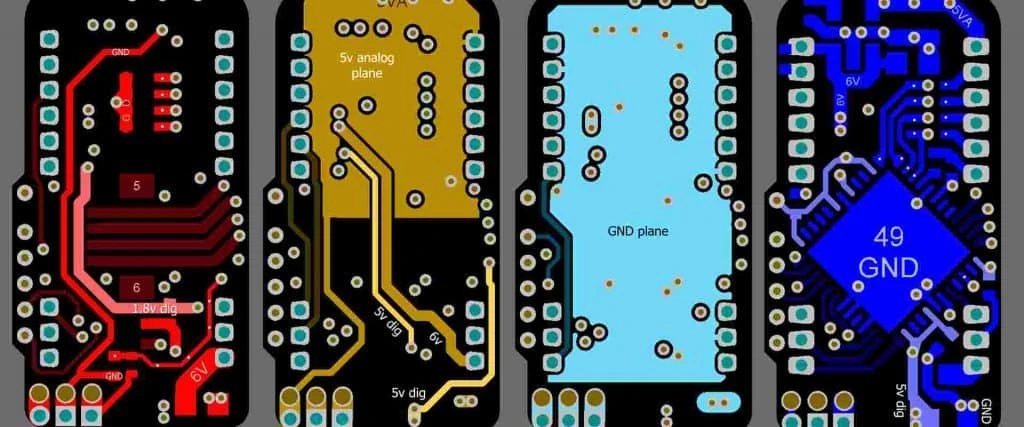
Building a reliable Marine Compass PCB requires a process that integrates design logic with strict manufacturing controls.
Sensor Selection & Placement Strategy
- Action: Choose a MEMS or Fluxgate sensor with high linearity. Place it at the geometric center of the PCB or far from high-current drivers (like those on a Marine Control PCB).
- Key Parameter: Keep-out zone radius > 20mm for ferrous parts.
- Acceptance Check: Verify placement in 3D CAD against the enclosure and mounting screws.
Schematic Design & Noise Filtering
- Action: Add decoupling capacitors (0.1µF and 10µF) close to the sensor power pins. Use ferrite beads to suppress high-frequency noise from the power supply.
- Key Parameter: Power Supply Rejection Ratio (PSRR).
- Acceptance Check: SPICE simulation of power line noise.
PCB Layout & Magnetic Cancellation
- Action: Route supply and return traces directly on top of each other (on adjacent layers) or side-by-side to cancel magnetic fields. Avoid large ground loops.
- Key Parameter: Loop area < 5 mm².
- Acceptance Check: Visual review of current return paths.
Stackup & Material Selection
- Action: Select a rigid laminate with low moisture absorption. If the compass is part of a larger Marine Battery PCB system, ensure high-voltage isolation.
- Key Parameter: CTE (Coefficient of Thermal Expansion) matching the sensor package.
- Acceptance Check: Confirm material availability with the fabricator.
Fabrication (Etching & Plating)
- Action: Manufacture the bare board. Ensure the plating process does not introduce excess ferromagnetic impurities.
- Key Parameter: Etch tolerance ±10%.
- Acceptance Check: E-test (Electrical Test) for opens/shorts.
Assembly & Reflow Profiling
- Action: Solder components using a profile that minimizes thermal shock. Sensors are often sensitive to peak temperatures.
- Key Parameter: Peak temp < 245°C (or per sensor spec).
- Acceptance Check: X-ray inspection for voiding under QFN/LGA sensor packages.
Calibration & Testing
- Action: Perform a "hard iron" calibration to offset static magnetic fields from the PCB itself.
- Key Parameter: Offset value (X, Y, Z).
- Acceptance Check: Linearity test using a Helmholtz coil or non-magnetic turntable.
Conformal Coating Application
- Action: Apply silicone or acrylic coating. Mask the pressure sensor ports if the device also measures barometric pressure.
- Key Parameter: Thickness 25-75 microns.
- Acceptance Check: UV light inspection for coverage gaps.
Marine Compass PCB troubleshooting (failure modes and fixes)
Even with robust design, issues can arise in the field. Here is how to diagnose common problems with Marine Compass PCB units.
1. Heading Drift with Temperature
- Symptom: The compass heading changes as the device warms up, even if the boat is stationary.
- Causes: PCB warping stressing the sensor; poor thermal coefficient of the sensor; lack of thermal relief.
- Checks: Monitor heading vs. internal temperature sensor. Check for physical board bending.
- Fix: Re-calibrate at operating temperature. Use ceramic or stiffer FR4 in next revision.
- Prevention: Use symmetrical stackups and stress-relieving cutouts around the sensor.
2. "Sticky" or Jumping Heading
- Symptom: Heading values jump erratically or get stuck at certain angles.
- Causes: Magnetic interference from nearby currents (e.g., a Marine Charger PCB switching on); digital noise on I2C/SPI lines.
- Checks: Scope the data lines for crosstalk. Check if the issue correlates with other devices turning on.
- Fix: Add stronger pull-up resistors; improve shielding.
- Prevention: Route sensor lines away from high-speed digital or power switching lines.
3. Corrosion & Intermittent Failure
- Symptom: Device stops working after exposure to sea air; visible green/white residue.
- Causes: Salt spray penetration; inadequate conformal coating; flux residue not cleaned.
- Checks: Visual inspection under microscope. Look for "dendrites" between pads.
- Fix: Clean with isopropyl alcohol (if possible) and recoat. Usually requires board replacement.
- Prevention: Switch to Conformal Coating with higher salt resistance and ensure strict ionic cleanliness during manufacturing.
4. Offset Errors (Hard Iron)
- Symptom: The compass consistently reads X degrees off in one direction.
- Causes: Magnetized screws, nickel plating, or batteries placed too close.
- Checks: Rotate the board 360 degrees and plot the output circle. If the circle is shifted off-center, it is hard iron.
- Fix: Software calibration (subtraction of offset). Demagnetize ferrous parts if possible.
- Prevention: Use brass or stainless steel (316 grade) hardware; keep Marine Battery PCB packs at a distance.
5. Scaling Errors (Soft Iron)
- Symptom: The compass output plots as an ellipse instead of a circle.
- Causes: Nearby soft magnetic materials (iron shields, RF cans) distorting the earth's field.
- Checks: Rotate board and analyze the max/min values on X and Y axes.
- Fix: Software calibration (matrix multiplication). Remove shielding cans near sensor.
- Prevention: Avoid using ferromagnetic RF shields over the magnetometer section.
6. Communication Bus Lockup
- Symptom: The main processor loses contact with the compass sensor.
- Causes: Voltage spikes from the marine engine starter; ESD strikes.
- Checks: Check TVS diodes and protection circuits.
- Fix: Power cycle. Replace damaged ESD protection components.
- Prevention: Install robust TVS diodes on all external connector pins.
How to choose Marine Compass PCB (design decisions and trade-offs)
When finalizing the architecture, engineers must make trade-offs between cost, durability, and precision.
Rigid vs. Flex-Rigid
For compact sensor housings, a Rigid-Flex PCB is often superior. It allows the sensor section to be mounted on a separate rigid plane that is mechanically isolated from the main board's vibration and thermal stress. This improves accuracy but increases manufacturing cost.
- Learn more: Rigid-Flex PCB Capabilities
Surface Finish Selection
While HASL (Hot Air Solder Leveling) is cheap and robust, it is uneven and contains no gold. ENIG (Electroless Nickel Immersion Gold) is flat and excellent for fine-pitch sensors, but the nickel layer has magnetic properties. For ultra-sensitive scientific marine compasses, ENEPIG or Immersion Silver might be considered to minimize magnetic signatures, although ENIG is the standard compromise for commercial marine electronics.
- Learn more: PCB Surface Finishes
Integration with Other Marine Systems
A Marine Compass PCB rarely works alone. It sends data to the Marine Autopilot PCB and may receive power from a Marine Battery PCB. The grounding scheme must be unified. If the compass shares a ground return with a high-current motor driver (like a winch or pump), the voltage drop across the ground trace can induce signal errors. Isolated power supplies (DC-DC converters) are often required to separate the sensitive compass logic from the noisy marine power network.
Marine Compass PCB FAQ (cost, lead time, Design for Manufacturability (DFM) files, stackup, impedance, X-ray inspection)
Q: Can I use standard FR4 for a Marine Compass PCB? A: Yes, standard FR4 is acceptable for general marine use, provided it is High-Tg (High Glass Transition Temperature) to resist thermal warping. For high-precision military or survey grade compasses, ceramic substrates offer better thermal stability.
Q: How close can I place the battery to the compass sensor? A: Batteries contain metal casings and chemical compositions that can be magnetic. A safe distance is typically at least 100mm. If integrating with a Marine Battery PCB, ensure the battery pack is magnetically shielded or placed remotely.
Q: Does the PCB thickness matter? A: Yes. A thicker PCB (1.6mm or 2.0mm) is more rigid and less prone to vibration-induced resonance than a thin 0.8mm board. Rigidity helps maintain the sensor's alignment with the vessel's keel line.
Q: What is the best way to protect the PCB from salt water? A: Potting (encapsulation) offers the highest protection but makes repair impossible. Conformal coating (Acrylic or Urethane) is the standard industry balance between protection and reworkability.
Q: Why is my compass reading changing when I turn on the boat lights? A: This indicates that the power cables for the lights are running too close to the compass, or the ground return path is shared. The current creates a magnetic field. Re-route cables or use twisted pairs for the lighting circuit.
Q: Do I need to shield the compass PCB? A: Generally, no. Placing a metal shield over a magnetometer will block or distort the Earth's magnetic field, which is exactly what the sensor needs to measure. Shielding is only used for the CPU/RF sections, not the sensor itself.
Q: What is the difference between 2-axis and 3-axis compasses? A: A 2-axis compass must be held perfectly level to work. A 3-axis compass (tilt-compensated) uses an accelerometer to correct for the boat's pitch and roll. Almost all modern marine PCBs use 3-axis sensors.
Q: How do I specify the "magnetic cleanliness" to the fabricator? A: Specify "Non-magnetic hardware" (no nickel-plated steel screws) and request material certificates. However, the intrinsic nickel in ENIG plating is usually acceptable if calibrated out.
Q: Can APTPCB manufacture boards with specific impedance for NMEA 2000? A: Yes. NMEA 2000 networks require controlled impedance (typically 60 ohms or 120 ohms differential). We can adjust the stackup and trace width to match these requirements.
Q: What file formats are needed for manufacturing? A: We need Gerber files (RS-274X), a Centroid file (Pick & Place), a BOM (Bill of Materials), and assembly drawings specifying the coating areas.
Marine Compass PCB glossary (key terms)
| Term | Definition |
|---|---|
| Fluxgate | A type of magnetic sensor that uses a saturable core to detect magnetic fields; highly sensitive and common in marine navigation. |
| Hard Iron | Permanent magnetic fields generated by components on the PCB or the vessel itself (e.g., speakers, steel screws) that add a constant offset to the heading. |
| Soft Iron | Induced magnetic fields caused by ferromagnetic materials (like RF shields) that distort the Earth's magnetic field, changing the shape of the compass response. |
| Declination | The angle difference between Magnetic North (where the compass points) and True North (geographic north). |
| Deviation | The error in the compass reading caused by local magnetic fields on the boat. |
| Tilt Compensation | The mathematical process of using an accelerometer to correct the magnetometer reading when the PCB is not perfectly level (pitch/roll). |
| NMEA 0183/2000 | Standard communication protocols used in marine electronics to share data between the compass, GPS, and autopilot. |
| Conformal Coating | A protective chemical film applied to the PCB to prevent corrosion from moisture, salt spray, and dust. |
| MEMS | Micro-Electro-Mechanical Systems; chip-scale sensors used for modern solid-state compasses. |
| Galvanic Corrosion | Damage caused when two dissimilar metals are in electrical contact in the presence of an electrolyte (salt water). |
| IP Rating | Ingress Protection rating (e.g., IP67) defining how well the enclosure protects the PCB from water and dust. |
| AIS | Automatic Identification System; a tracking system that often interfaces with compass data to transmit vessel heading. |
Request a quote for Marine Compass PCB (Design for Manufacturability (DFM) review + pricing)
Ready to manufacture your navigation electronics? APTPCB provides specialized DFM reviews to ensure your layout meets marine reliability standards.
- Get a DFM Review: We check your files for potential manufacturing risks, including solder mask dams around fine-pitch sensors and panelization for coating.
- What to send: Please provide Gerber files, your BOM (highlighting critical sensors), and a fabrication drawing specifying the conformal coating type and keep-out areas.
Conclusion (next steps)
A Marine Compass PCB is more than just a circuit board; it is a precision instrument that dictates the safety and accuracy of a vessel's navigation. By strictly controlling magnetic interference, selecting the right surface finishes, and applying robust environmental protection, engineers can eliminate common failures like heading drift and corrosion. Whether you are designing a standalone fluxgate sensor or a complex integrated system with Marine AIS PCB and Marine Autopilot PCB functions, adhering to these design rules ensures reliable performance in the open ocean. APTPCB stands ready to support your production with high-reliability manufacturing processes tailored for the marine industry.