
Key Takeaways
- Definition: A Marine Power PCB is a specialized circuit board designed to handle high currents while resisting salt spray, humidity, and constant vibration.
- Critical Metrics: Thermal conductivity and Comparative Tracking Index (CTI) are as important as copper weight in marine environments.
- Material Selection: FR-4 is standard, but high-Tg or metal-core materials are necessary for high-power applications like a Marine Charger PCB.
- Protection: Conformal coating is not optional; it is a primary defense against galvanic corrosion.
- Validation: Testing must go beyond electrical connectivity to include thermal cycling and vibration stress tests.
- Common Pitfall: Underestimating the impact of electrolysis on exposed copper in humid, salty air.
- Manufacturing: Early DFM engagement with a specialized manufacturer like APTPCB (APTPCB PCB Factory) prevents costly revisions.
What Marine Power PCB really means (scope & boundaries)
A Marine Power PCB is defined not just by its electrical function, but by the hostile environment it must survive. Unlike standard consumer electronics, these boards operate in conditions where failure can lead to navigational loss or propulsion failure. The scope of this technology covers everything from low-voltage control systems to high-voltage distribution units.
The primary boundary for these boards is the intersection of high power and high corrosion risk. A standard PCB will fail rapidly at sea due to the hygroscopic nature of standard laminates and the corrosive effect of salt mist. Therefore, a true marine-grade board incorporates heavy copper for current carrying capability and specialized surface finishes to seal the metal.
Engineers often categorize these boards based on their location within the vessel. A Ground Power PCB manages the connection between the ship and shore power, requiring robust isolation. Conversely, a Marine Autopilot PCB requires precision signal integrity alongside durability. The common thread is reliability under stress.
APTPCB emphasizes that the manufacturing process for these boards differs from standard production. It requires stricter controls on plating thickness, solder mask adhesion, and ionic cleanliness. If the board is not clean before coating, residues will trap moisture and cause failure from the inside out.
Metrics that matter (how to evaluate quality)
Understanding the definition of marine electronics leads directly to the specific metrics used to measure their quality. You cannot rely on standard datasheets alone; you must evaluate parameters that predict longevity in saltwater environments.
The following table outlines the critical metrics for a Marine Power PCB.
| Metric | Why it matters | Typical Range / Factors | How to measure |
|---|---|---|---|
| Copper Weight | Determines current carrying capacity and thermal dissipation. | 2 oz to 10 oz (Heavy Copper). | Micro-section analysis or E-Test resistance check. |
| Tg (Glass Transition Temp) | Prevents barrel cracking and pad lifting during thermal stress. | High Tg (>170°C) is preferred for engine rooms. | TMA (Thermomechanical Analysis). |
| CTI (Comparative Tracking Index) | Measures resistance to electrical breakdown (tracking) on the surface. | PLC 0 or 1 (>600V) is ideal for high voltage. | IEC 60112 standard tracking test. |
| Moisture Absorption | High absorption leads to delamination and "popcorning" during repair. | <0.25% (Standard FR-4 is often higher). | Weight change after 24h water immersion. |
| Ionic Cleanliness | Residues cause dendritic growth (shorts) under conformal coating. | <1.56 µg/cm² NaCl equivalent. | ROSE testing (Resistivity of Solvent Extract). |
| Solder Mask Thickness | Primary barrier against salt spray before coating. | >25 µm over conductors. | Cross-section microscopy. |
| Peel Strength | Ensures heavy components do not rip pads off during vibration. | >1.4 N/mm (varies by laminate). | Tensile pull test. |
| Thermal Conductivity | Critical for removing heat from power FETs in sealed enclosures. | 1.0 - 3.0 W/mK (or Metal Core). | Laser flash method. |
Selection guidance by scenario (trade-offs)
Once you have established the necessary metrics, you must apply them to specific operational scenarios. Every design choice involves a trade-off between cost, thermal performance, and mechanical durability.
Scenario 1: High-Current Battery Management (Marine Battery PCB)
- Context: Managing large lithium-ion banks requires handling hundreds of amps.
- Challenge: Excessive heat generation in a confined, potentially damp battery compartment.
- Trade-off: You must choose between extremely heavy copper (expensive, harder to etch fine lines) or adding busbars (manual assembly labor).
- Recommendation: Use 3-4 oz copper for the PCB traces and supplement with mechanical busbars for the main current paths. Prioritize high-Tg materials to withstand heat spikes during rapid charging.
Scenario 2: Automatic Identification Systems (Marine AIS PCB)
- Context: RF transmission and GPS signal processing.
- Challenge: Maintaining signal integrity while protecting the board from humidity. Thick coatings can detune RF circuits.
- Trade-off: Signal performance vs. environmental protection.
- Recommendation: Use controlled impedance traces. Apply a thin, acrylic conformal coating, but mask off the RF connector pads and antenna outputs carefully. Select a laminate with stable dielectric constant (Dk) over temperature.
Scenario 3: Propulsion Control (Marine Autopilot PCB)
- Context: The brain of the vessel, controlling steering actuators.
- Challenge: Constant vibration from the engine and hull slamming.
- Trade-off: Rigidity vs. vibration damping. A very stiff board might crack solder joints; a flexible one might fatigue.
- Recommendation: Use a standard rigid FR-4 but focus on component mounting. Use large pads for heavy components and add adhesive staking. Avoid placing heavy inductors in the center of the board where flexion is highest.
Scenario 4: Dockside Power Management (Ground Power PCB)
- Context: Interfacing 110V/220V shore power with the boat’s DC system.
- Challenge: High voltage isolation and galvanic corrosion risk from shore grounds.
- Trade-off: Isolation distance vs. board size.
- Recommendation: Maximize creepage and clearance distances beyond IPC standards. Use slots (air gaps) between high-voltage and low-voltage sections to prevent tracking if salt residue accumulates.
Scenario 5: Onboard Energy Replenishment (Marine Charger PCB)
- Context: Converting AC generator power to DC for batteries.
- Challenge: Continuous high-power switching generates significant heat.
- Trade-off: Thermal management vs. enclosure sealing. You cannot use fans if the unit is not waterproof.
- Recommendation: Consider a Metal Core PCB (MCPCB) or a heavy-copper FR-4 bonded to an aluminum chassis. This allows heat to conduct out to the case without air exchange.
Scenario 6: Deep Sea Sensors (High Pressure)
- Context: Submersible electronics.
- Challenge: Pressure can compress the laminate, changing electrical properties or cracking vias.
- Trade-off: Reliability vs. repairability. Potting the entire assembly is best for pressure but makes repair impossible.
- Recommendation: Use a high-density interconnect (HDI) design to keep the board small, then fully encapsulate (pot) the assembly in epoxy. Ensure the materials selected for the PCB have a thermal expansion coefficient (CTE) that matches the potting compound to prevent internal shearing.
From design to manufacturing (implementation checkpoints)
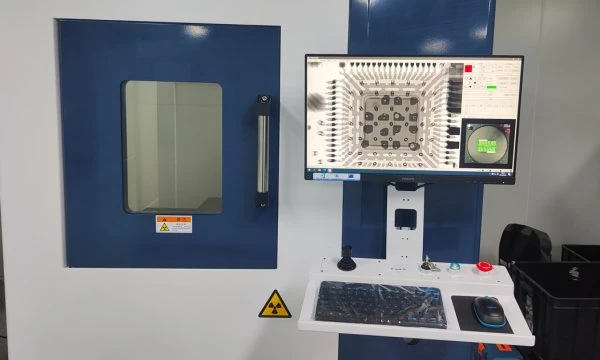
After selecting the right strategy for your scenario, the focus shifts to the tactical execution of the design. The transition from a CAD file to a physical product is where most errors occur.
Use this checklist to validate your Marine Power PCB design before sending it to production.
Checkpoint 1: Trace Width and Spacing
- Recommendation: Use an external calculator to determine trace width for temperature rise, then add 50% margin. Increase spacing to prevent arcing in humid air.
- Risk: Traces overheating and delaminating; salt bridges causing shorts.
- Acceptance: Verify Gerber files show >0.5mm clearance for high voltage lines.
Checkpoint 2: Thermal Reliefs on Power Pads
- Recommendation: Use thermal reliefs (spokes) for soldering pads, even on heavy copper planes, unless wave soldering is used.
- Risk: Cold solder joints because the heavy copper plane sucks heat away from the soldering iron too fast.
- Acceptance: Visual inspection of CAD thermal settings.
Checkpoint 3: Via Tenting and Plugging
- Recommendation: Fully plug and tent vias in the solder mask.
- Risk: Open vias trap salt water or flux residues, leading to long-term corrosion.
- Acceptance: Specify IPC-4761 Type VI (filled and covered) in fabrication notes.
Checkpoint 4: Surface Finish Selection
- Recommendation: Use ENIG (Electroless Nickel Immersion Gold) or ENEPIG. Avoid HASL if fine pitch components are present, and avoid OSP (Organic Solderability Preservative) as it degrades in humidity.
- Risk: Exposed copper oxidation or uneven surfaces affecting assembly.
- Acceptance: Specify finish clearly in the quote request.
Checkpoint 5: Component Layout for Vibration
- Recommendation: Place heavy components (transformers, large capacitors) near mounting holes or board edges.
- Risk: Board flexing causes solder fatigue and component detachment.
- Acceptance: Vibration simulation or physical review of placement.
Checkpoint 6: Conformal Coating Keep-outs
- Recommendation: Clearly mark areas not to be coated (connectors, test points, heat sinks) on a separate mechanical layer.
- Risk: Coating insulating the contacts, requiring expensive rework.
- Acceptance: Review the "Coating Layer" in the Gerber viewer.
Checkpoint 7: Galvanic Isolation
- Recommendation: Ensure grounds are separated (Digital vs. Power vs. Chassis) and only connected at a single star point if necessary.
- Risk: Ground loops causing noise or rapid corrosion of the hull/fittings.
- Acceptance: Schematic review of ground nets.
Checkpoint 8: Test Points
- Recommendation: Add test points for all critical rails, but ensure they are accessible after the board is installed in the housing.
- Risk: Inability to diagnose field failures without disassembling the waterproof seal.
- Acceptance: Design review against mechanical housing model.
Checkpoint 9: Solder Mask Quality
- Recommendation: Request high-quality, hydrolysis-resistant solder mask.
- Risk: Standard masks may blister or peel in hot, humid engine rooms.
- Acceptance: Adhesion test (tape test) on a sample coupon.
Checkpoint 10: Final DFM Review
- Recommendation: Send data to APTPCB for a DFM analysis before ordering the full batch.
- Risk: Unmanufacturable features causing delays.
- Acceptance: Receive and approve the EQ (Engineering Question) report.
Common mistakes (and the correct approach)
Even with a checklist, specific engineering habits can lead to failure in marine environments. Recognizing these mistakes early saves significant time and capital.
Mistake 1: Relying on Solder Mask as the Only Insulator
Engineers often assume the green solder mask is a perfect waterproof barrier. It is not. Solder mask is porous and can develop micro-cracks.
- Correct Approach: Always design with the assumption that moisture will reach the board surface. Use conformal coating and sufficient creepage distances.
Mistake 2: Ignoring Dissimilar Metals (Galvanic Corrosion)
Using tin-lead solder in direct contact with gold plating without a nickel barrier, or mounting the PCB directly to an aluminum chassis with steel screws without washers.
- Correct Approach: Use compatible metals or insulating washers. Ensure the surface finish (like ENIG) provides a barrier layer.
Mistake 3: Insufficient Copper for Surge Currents
Designing traces based on average current rather than peak surge current (e.g., motor startup). A Marine Autopilot PCB often sees spikes 3x the nominal load.
- Correct Approach: Size power traces for the peak surge current or use solder-reinforced tracks (leaving the mask open on the trace to add solder).
Mistake 4: Neglecting Thermal Expansion Mismatch
Using a standard FR-4 board rigidly mounted to a metal enclosure. As the enclosure heats up, it expands at a different rate than the PCB, stressing the mounting holes.
- Correct Approach: Use slotted mounting holes or flexible standoffs to allow for differential expansion.
Mistake 5: Poor Cleaning Before Coating
Applying conformal coating over flux residues. This traps the corrosive chemicals against the board, accelerating failure.
- Correct Approach: Mandate strict ionic cleanliness testing (ROSE test) before the coating process begins.
Mistake 6: Overlooking Voltage Drop
In 12V or 24V marine systems, a small resistance in the PCB trace results in significant voltage drop, causing logic errors in sensitive devices like a Marine AIS PCB.
- Correct Approach: Calculate the total loop resistance including the PCB traces. Use polygon pours (planes) for power and ground rather than thin traces.
FAQ
To clarify any remaining confusion regarding these mistakes and checkpoints, here are answers to frequent questions about marine PCB fabrication.
Q: What is the best surface finish for a Marine Power PCB? A: ENIG (Electroless Nickel Immersion Gold) is generally the best choice. It offers a flat surface for components and excellent corrosion resistance. ENEPIG is also excellent but more expensive.
Q: How thick should the copper be for a Marine Battery PCB? A: It depends on the current. For currents under 10A, 2oz is usually sufficient. For 20A-50A, you typically need 3oz or 4oz. Above 50A, consider busbars or 6oz+ heavy copper.
Q: Is conformal coating always required? A: For marine environments, yes. Even if the device is in a waterproof enclosure, condensation can form inside. Coating provides the necessary backup protection.
Q: Can I use standard FR-4 for marine applications? A: Yes, standard FR-4 is common, but "High-Tg" FR-4 is better for engine rooms or hot environments. It resists thermal expansion better than standard FR-4.
Q: What is the difference between a Marine Charger PCB and a standard charger PCB? A: A marine charger board must withstand higher vibration (G-force), unstable input voltages (dirty shore power), and must be heavily protected against salt air, often requiring potting.
Q: How do I test for salt spray resistance? A: You perform a Salt Mist Test (IEC 60068-2-11). The PCB is exposed to a saline fog for a set period (e.g., 48 or 96 hours) and then tested for function and corrosion.
Q: Why do my vias corrode first? A: Vias are often the thinnest point of plating and can trap chemicals. If not tented or plugged, they collect salty moisture which eats through the copper barrel.
Q: Does APTPCB handle the conformal coating process? A: Yes, APTPCB offers various post-fabrication services, including conformal coating, to ensure the boards are ready for marine deployment.
Related pages & tools
- PCB Manufacturing Services: Explore capabilities for rigid, flex, and metal-core boards.
- Impedance Calculator: Essential for designing RF traces on AIS and navigation boards.
- Rogers PCB Materials: High-frequency laminates suitable for marine radar and communication systems.
Glossary (key terms)
Below is a reference list of technical terms used in the answers and sections above.
| Term | Definition |
|---|---|
| Conformal Coating | A protective chemical film applied to the PCB to resist moisture and dust. |
| Creepage | The shortest distance between two conductors along the surface of the insulation. |
| Clearance | The shortest distance between two conductors through the air. |
| CTE | Coefficient of Thermal Expansion; how much a material expands when heated. |
| Dk (Dielectric Constant) | A measure of a material's ability to store electrical energy; affects signal speed. |
| ENIG | Electroless Nickel Immersion Gold; a corrosion-resistant surface finish. |
| Fiducial | A marker on the PCB used by assembly machines for optical alignment. |
| HASL | Hot Air Solder Leveling; a surface finish (less flat than ENIG). |
| Heavy Copper | PCB manufacturing using ≥3 oz of copper per square foot. |
| IPC Class 3 | The highest standard for PCB reliability, used for life-support and critical systems. |
| Potting | Encapsulating the entire electronic assembly in a solid compound (epoxy/silicone). |
| ROSE Test | A test to measure the amount of ionic contamination (cleanliness) on a PCB. |
| Solder Mask | The green (or other color) coating that covers traces to prevent short circuits. |
| Thermal Relief | A spoke pattern connecting a pad to a plane to make soldering easier. |
| Via Tenting | Covering the via hole with solder mask to prevent solder wicking or corrosion. |
Conclusion (next steps)
Successfully deploying a Marine Power PCB requires a shift in mindset from "consumer electronics" to "critical infrastructure." Whether you are designing a Ground Power PCB for a marina or a Marine Autopilot PCB for a yacht, the principles remain the same: manage the heat, seal out the salt, and design for vibration.
The difference between a reliable system and a field failure often lies in the details—the thickness of the plating, the quality of the cleaning before coating, and the selection of the right laminate. These are not decisions to be made at the last minute.
When you are ready to move from prototype to production, ensure your manufacturing partner understands these specific requirements. To get an accurate quote and DFM review, please prepare the following:
- Gerber Files: Including all copper, mask, and drill layers.
- Stackup Details: Specifying copper weight (e.g., 3oz) and material type (e.g., High-Tg FR4).
- Fabrication Notes: Clearly stating IPC Class requirements, color, and surface finish (ENIG recommended).
- Testing Requirements: Specify if you need ionic cleanliness reports or impedance coupons.
For expert assistance with your marine electronics projects, contact APTPCB today or submit your files through our online quote system. We ensure your design is built to withstand the open ocean.