
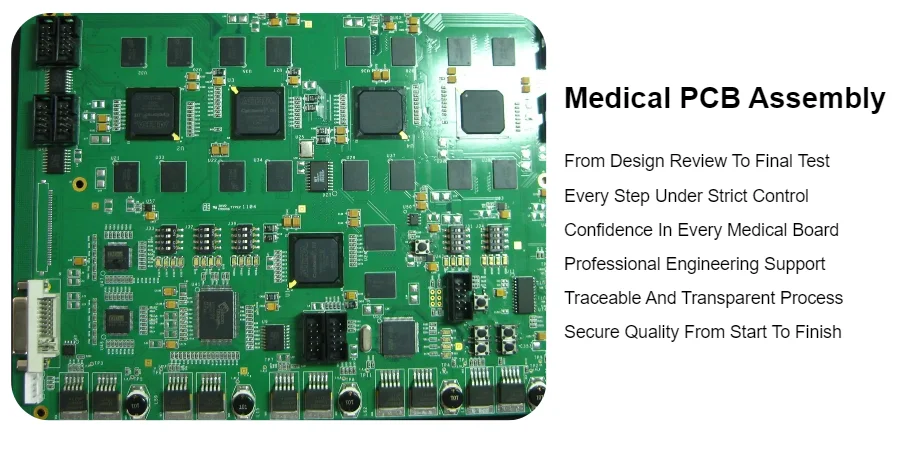
In the rapidly evolving healthcare industry, electronic devices are at the forefront of innovation, from life-saving diagnostic tools and implantable devices to advanced monitoring systems and sophisticated surgical equipment. At the heart of nearly every medical device lies a printed circuit board (PCB), and the process of bringing these boards to life—medical PCB assembly (PCBA)—is a discipline unlike any other.
Unlike consumer electronics, medical devices operate under a stringent trifecta of demands: uncompromising reliability, absolute precision, and rigorous regulatory compliance. A failure in a medical device PCBA can have severe, even life-threatening, consequences.
This in-depth guide is designed for medical device OEMs, engineers, and product managers who need to understand the critical nuances of medical PCBA, especially for applications such as diagnostic analyzers, ventilators, infusion pumps and other medical devices. It covers:
- The unique requirements that set medical device assembly apart
- Key considerations for materials, components, and manufacturing processes
- Crucial regulatory standards like ISO 13485 and FDA compliance
- The importance of full traceability and quality control
- How to choose a specialized medical PCBA manufacturer to ensure product integrity and patient safety
1. Why Medical PCB Assembly Demands Unparalleled Standards
Medical PCB assembly is not merely about placing components on a board; it's about building trust, ensuring patient safety, and delivering consistent performance in critical applications. The stakes are profoundly higher than in almost any other electronics manufacturing sector.
The Unique Imperatives of Medical PCBA
Zero Tolerance for Failure
Unlike a faulty smartphone, a malfunctioning medical device can directly impact patient health, leading to misdiagnoses, treatment failures, or even fatality. This drives a “zero defects” mindset, especially for Class II and Class III devices.Extreme Reliability & Longevity
Many medical devices, especially implantables or critical care equipment, must operate flawlessly for years, often in challenging biological or environmental conditions. This requires robust designs, carefully controlled processes, and validated assembly.Miniaturization & High Density
Modern medical devices are often compact (e.g., wearables, endoscopes, implantables), demanding high-density component placement, fine-pitch soldering, and advanced interconnect technologies such as micro-BGAs and flex/rigid-flex interconnects.Biocompatibility & Sterilization
Devices that contact the human body (internally or externally) must use biocompatible materials. Additionally, many require repeated sterilization (autoclave, EtO, gamma radiation), which can impact PCBA materials, coatings, and solder joints.Data Accuracy & Signal Integrity
Diagnostic and monitoring devices rely on precise sensor data. The PCBA must ensure excellent signal integrity, low noise, and stable performance to prevent erroneous readings that could mislead clinicians.Strict Regulatory Oversight
The medical device industry is heavily regulated by bodies like the FDA (U.S.), EU authorities (MDR), and other national agencies. Compliance is not optional; it is the foundation for market access.
This complex landscape necessitates a specialized approach to healthcare electronics manufacturing, prioritizing quality and compliance above all else.
2. Key Considerations for Medical-Grade PCB & medical PCB assembly (PCBA) Processes
Achieving the stringent requirements of medical device assembly starts with the raw PCB and extends through every stage of the assembly process.
a. Medical-Grade PCB Fabrication (Bare Board)
While this article focuses on assembly, the quality of the bare medical-grade PCB is foundational. Considerations include:
Material Selection
Biocompatible laminates for implantables, high-Tg materials for repeated sterilization, or specialized low-loss materials for imaging and RF diagnostics. For complex stack-ups or multi-layer constructions, working with a partner experienced in advanced PCB manufacturing ensures that material choice, copper distribution, and via structures support long-term reliability.Process Control & PCB Quality
Tight control of registration, hole quality, copper plating, and solder mask is critical. Medical PCBs will often leverage the same process discipline used in high-reliability sectors, backed by a formal PCB quality system that defines acceptance criteria, inspections, and continuous improvement.Traceability
Etching batch numbers, date codes, and unique identifiers on the bare board is common practice to support component-level and board-level traceability.IPC Class 2 or 3
Most medical PCBs require IPC Class 2 (dedicated service electronic products) or, more commonly, Class 3 (high-reliability electronic products), ensuring superior workmanship and performance at the fabrication level.
b. Component Sourcing & Management
Authorized Distributors Only
Components must be sourced exclusively from authorized, reputable distributors to mitigate the risk of counterfeit parts—completely unacceptable in medical devices.Lifecycle Management
Long-term availability is crucial. Manufacturers must have strategies for managing component obsolescence, including last-time-buy planning and qualification of alternatives.Full Traceability
Every component, down to the batch and date code, must be tracked for each assembled board. This is essential for recall management and root-cause analysis.BOM Control and Engineering Support
A mature approach to components and BOM management is essential to keep designs manufacturable over the product lifecycle. Working with a partner that provides dedicated components & BOM services helps ensure consistency, compliance and proactive risk mitigation.
c. Assembly Processes for High-Reliability PCBA
Controlled Environment
Assembly may occur in controlled environments (e.g., cleanrooms) to prevent contamination, especially for implantable or sterile devices.IPC J-STD-001 (Class 3)
Assembly processes must adhere to IPC J-STD-001 Class 3 standards, which define the highest levels of soldering quality, workmanship, and inspection for critical applications.Automated Optical Inspection (AOI) & X-ray Inspection (AXI)
Near-100% inspection is expected. AOI verifies component placement and solder joint quality; AXI is indispensable for inspecting hidden joints (BGAs, QFNs) and ensuring internal integrity.Conformal Coating & Potting
For devices exposed to moisture, chemicals, or biological fluids, conformal coating or potting protects the PCBA. The chemistry must be compatible with both the electronics and the device’s sterilization method.Cleaning
Residues from flux or other processes must be thoroughly cleaned—especially for implantable or body-contacting devices—to prevent biocompatibility issues or corrosion.Robust Soldering
Precise temperature profiles, high-quality solder paste (often lead-free for RoHS, with some medically justified exemptions), and stable process control are mandatory to avoid latent defects such as cold joints or voiding.Systematic Testing & Quality Control
For medical assemblies, test strategy, documentation and release criteria are as important as the solder joints themselves. A partner with dedicated testing and quality capabilities can integrate ICT, FCT and stress testing into a unified, validated flow.
d. Testing & Validation
- Functional Testing (FCT)
Comprehensive functional tests verify that the PCBA behaves exactly as intended, often under simulated real-world conditions. - In-Circuit Testing (ICT)
ICT checks for shorts, opens, incorrect values and orientation errors, catching many manufacturing defects early. - Environmental Stress Testing (ESS)
Thermal cycling, humidity testing and vibration testing help ensure long-term reliability under various clinical and environmental conditions. - Burn-In Testing
For critical devices, extended burn-in tests can reveal early-life failures before the product reaches the field.
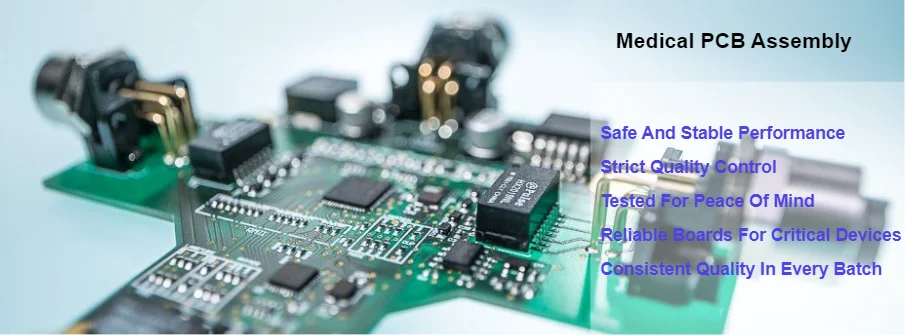
3. Regulatory Compliance: The Non-Negotiable Foundation of Medical medical PCB assembly (PCBA)
Compliance with regulatory standards is not an afterthought; it is woven into the very fabric of medical electronics manufacturing. Without it, a medical device cannot be legally marketed or sold.
Key Regulatory Standards & Certifications
ISO 13485: Medical Devices – Quality Management Systems
This is the most crucial international standard for organizations involved in the lifecycle of medical devices. An ISO 13485-certified PCBA manufacturer demonstrates a robust quality system aligned with medical requirements.FDA Regulations (U.S.)
For devices sold in the U.S., compliance with FDA's Quality System Regulation (QSR) 21 CFR Part 820 is mandatory. It covers design controls, purchasing controls, process controls, CAPA and more.CE Mark & MDR (Europe)
Devices sold in the European Economic Area must comply with the Medical Device Regulation (MDR) and bear the CE mark, confirming conformity with health, safety and performance requirements.RoHS / REACH
Lead-free (RoHS) soldering is standard, with specific exemptions in limited cases where no equivalent alternative exists. REACH compliance ensures restricted substances are controlled throughout the supply chain.IPC Standards
Adherence to IPC-A-610 Class 3 and J-STD-001 Class 3 is the baseline expectation for workmanship and solder quality in life-critical products.
A reputable medical contract manufacturing partner will not only understand these standards but will have embedded them into their documented quality system and day-to-day manufacturing practice.
4. Traceability, Documentation & Risk Management in Biomedical Electronics Assembly
Given the critical nature of medical devices, meticulous documentation, complete traceability and proactive risk management are essential throughout biomedical electronics assembly.
Essential Practices
Full Product Traceability
From raw materials (bare PCB and every component) to process parameters (equipment, operator, date, shift), test results and final shipment—every step must be recorded. This supports fast, surgical recalls and precise root-cause analysis.Comprehensive Documentation
Detailed work instructions, build records, process validation reports, test data and material certifications all form part of the technical file and regulatory submission.Design History File (DHF) Support
PCBA manufacturers contribute data and change history to the OEM’s DHF, which tracks design and development decisions.Device History Record (DHR)
Each finished medical device requires a DHR capturing its manufacturing and test history.Failure Mode and Effects Analysis (FMEA)
Proactive identification and mitigation of potential failure modes in the PCBA and process.Process Validation (IQ/OQ/PQ)
Installation Qualification (IQ), Operational Qualification (OQ) and Performance Qualification (PQ) for critical processes ensure they can consistently produce compliant products.
5. Choosing Your Medical medical PCB assembly (PCBA) Manufacturer: A Partnership for Patient Safety
Selecting the right medical PCBA manufacturer is a strategic decision that directly affects product quality, regulatory approval and time-to-market. It’s more than a supplier relationship; it’s a partnership where trust and shared commitment to patient safety are essential.
Key Evaluation Criteria for a Medical Electronics Supplier
- ISO 13485 Certification
Essential proof that the manufacturer operates a QMS built for medical device requirements. - Proven Medical Experience
Look for a portfolio of successful projects in diagnostic equipment, monitoring devices, surgical systems or implantables that resemble your product. - Manufacturing & Test Capability
Fine-pitch SMT, micro-BGA handling, advanced cleaning, coating, ICT, FCT and stress testing should all be available under one roof. - Component Sourcing & Traceability
Strict control of the supply chain, anti-counterfeit measures and full traceability from reel to finished device. - DFM/DFT Support
Engineering teams should be able to review your design and suggest improvements that enhance manufacturability, test coverage and reliability. - Scalability from Prototype to Volume
Ideally, the same factory should support early engineering builds and volume production. An experienced partner can guide you through NPI and small-batch medical PCBA while also planning for future mass-production assembly once the design is stable and approved. - Integrated Services & Turnkey Capability
For many OEMs, having a single partner that can handle PCB fabrication, component sourcing and full turnkey assembly simplifies supply chain management and reduces risk during audits and regulatory reviews.
Conclusion: Elevating Healthcare with Expert Medical medical PCB assembly (PCBA)
Medical PCB assembly is a specialized art and science that forms the backbone of modern healthcare. It demands not just technical proficiency, but also an unwavering commitment to quality, a deep understanding of regulatory landscapes and a culture centered on patient safety.
By partnering with a medical PCBA manufacturer that combines robust PCB quality and fabrication expertise with mature testing and quality systems, medical device OEMs can confidently bring life-enhancing and life-saving innovations to market. Invest in a partner who understands the gravity of your mission, and together you can build safer, more reliable electronic platforms that support better outcomes for patients worldwide.