
Key Takeaways
Understanding the specific requirements of pool and spa electronics is the first step toward a reliable product. A mineral cartridge controller pcb operates in one of the harshest consumer environments, requiring robust protection against moisture, chemicals, and thermal cycling.
- Definition: It is the central circuit board managing the ionization or mineral release process in pool sanitization systems.
- Critical Metric: The Comparative Tracking Index (CTI) is vital for preventing electrical breakdown in humid environments.
- Material Choice: Standard FR4 is often insufficient without high-grade conformal coating or potting.
- Integration: These boards often interface with a salt chlorinator controller pcb to provide hybrid sanitization.
- Validation: Testing must go beyond electrical function to include accelerated life testing (ALT) under high humidity.
- Common Mistake: Underestimating the corrosive nature of chlorine gas accumulation inside the enclosure.
- Manufacturing: APTPCB (APTPCB PCB Factory) recommends specific surface finishes like ENIG to prevent contact oxidation.
What mineral cartridge controller pcb really means (scope & boundaries)
Building on the key takeaways, defining the exact scope of this component helps engineers avoid scope creep during the design phase. A mineral cartridge controller pcb is specifically designed to regulate the voltage and current sent to mineral electrodes (usually copper, silver, or zinc) to sanitize water.
Unlike a standard consumer electronics board, this PCB is an industrial control unit operating in a residential setting. It must handle power regulation (converting AC to DC for electrolysis), timing logic (controlling duty cycles), and user interface management. While it shares similarities with a spa jet controller pcb, the mineral controller focuses heavily on precise current delivery to consumable cartridges.
The boundary of this PCB usually stops at the high-voltage mains input and the low-voltage electrode output. However, modern designs often integrate Wi-Fi or Bluetooth modules for app connectivity. This integration adds RF complexity to a board that is already heavily potted for waterproofing. The primary goal is reliability: the board must function correctly for years despite exposure to pool chemicals and outdoor temperature swings.
mineral cartridge controller pcb metrics that matter (how to evaluate quality)
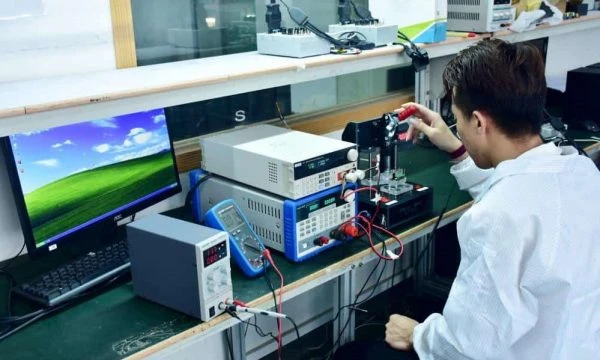
Once the scope is defined, you must establish quantifiable metrics to ensure the mineral cartridge controller pcb meets performance standards. These metrics guide the manufacturing process and quality assurance steps.
| Metric | Why it matters | Typical range or influencing factors | How to measure |
|---|---|---|---|
| CTI (Comparative Tracking Index) | Prevents short circuits caused by conductive paths forming on the PCB surface due to humidity and contamination. | PLC 0 or PLC 1 (600V+) is preferred for high-voltage areas. | IEC 60112 standard testing. |
| Surface Insulation Resistance (SIR) | Indicates the cleanliness of the PCB and the effectiveness of the flux residue removal. | >100 MΩ after humidity exposure. | IPC-TM-650 2.6.3.3 test method. |
| Thermal Resistance (Rth) | Critical for power MOSFETs controlling the electrode current. | Depends on copper weight (2oz vs 1oz) and thermal vias. | Thermal imaging during load testing. |
| Coating Thickness | Ensures the conformal coating provides an adequate barrier against chlorine gas. | 25–75 µm (acrylic/urethane) or thinner for Parylene. | Micrometer or eddy current gauge. |
| Dielectric Withstand Voltage | Ensures safety isolation between the mains input and the low-voltage user interface. | Typically 1500V AC or higher for 1 minute. | Hi-Pot tester. |
| Solder Joint Shear Strength | Vital for heavy components like transformers or relays subject to vibration. | Varies by component package size. | Shear testing machine. |
How to choose mineral cartridge controller pcb: selection guidance by scenario (trade-offs)
Metrics provide the data, but the correct design choices depend heavily on the specific application scenario of the mineral cartridge controller pcb. Below are common scenarios and how to choose the right approach versus alternative methods.
Scenario 1: Residential In-Ground Pools (Cost vs. Longevity)
For standard residential units, the balance is between warranty costs and BOM costs.
- Recommendation: Use a standard FR4 TG150 material with HASL (Lead-Free) finish.
- Trade-off: HASL is cheaper but less flat than ENIG.
- Protection: Rely on a high-quality silicone conformal coating rather than full potting to allow for repairability.
Scenario 2: Commercial Spa Systems (High Heat/Humidity)
A spa jet controller pcb environment is hotter and more chemically aggressive than a pool.
- Recommendation: Upgrade to High-TG (TG170+) material to withstand constant heat.
- Trade-off: Higher raw material cost.
- Protection: Full epoxy potting is often required to meet IP68 standards, making the unit non-repairable but highly durable.
Scenario 3: Solar-Integrated Systems (Power Efficiency)
When integrating with a solar pool heating controller pcb, power consumption is critical.
- Recommendation: Use low-leakage components and design for low standby power.
- Trade-off: Requires more expensive, high-efficiency power management ICs.
- Design: Thicker copper (2oz or 3oz) to reduce resistive losses in high-current traces.
Scenario 4: Retrofit "Drop-in" Cartridges (Size Constraints)
Replacing older mechanical timers with digital mineral controllers requires compact designs.
- Recommendation: Utilize HDI (High Density Interconnect) techniques or 4-layer boards to save space.
- Trade-off: Higher manufacturing complexity compared to 2-layer boards.
- Design: Place tall components on one side to fit into slim existing enclosures.
Scenario 5: Combo Units (Salt + Mineral)
These units combine a salt chlorinator controller pcb with mineral logic.
- Recommendation: Isolate the high-current salt cell drivers from the sensitive mineral control logic using optocouplers.
- Trade-off: Increases board footprint and component count.
- Design: Use separate ground planes to prevent noise from the high-amperage salt cell switching affecting the mineral precision.
Scenario 6: Smart/IoT Connected Controllers
Adding Wi-Fi requires careful material selection to avoid signal attenuation.
- Recommendation: Keep the antenna area free of copper fill and potting material that absorbs RF.
- Trade-off: Potting process becomes more complex (selective potting or using RF-transparent resins).
- Design: Impedance controlled traces for the antenna line.
mineral cartridge controller pcb implementation checkpoints (design to manufacturing)

After selecting the right strategy, the implementation phase moves the mineral cartridge controller pcb from a CAD file to a physical product. APTPCB suggests following these checkpoints to minimize production risks.
Schematic Review for Isolation:
- Action: Verify electrical isolation between high-voltage AC and low-voltage DC sections.
- Risk: Safety hazards and certification failure (UL/CE).
- Acceptance: Creepage and clearance distances meet IEC 60335 standards.
Stackup Definition:
- Action: Define layer stackup early, especially if impedance control is needed for IoT features.
- Risk: Signal integrity issues or warping during reflow.
- Acceptance: Manufacturer approves the stackup for balanced copper distribution.
Component Selection for Environment:
- Action: Choose AEC-Q200 or industrial-grade passives where possible.
- Risk: Standard commercial parts failing due to sulfur or moisture corrosion.
- Acceptance: BOM review confirms operating temperature ranges and sulfur resistance.
Heavy Copper Implementation:
- Action: If the board drives high current, specify Heavy Copper PCB capabilities.
- Risk: Overheating traces leading to delamination.
- Acceptance: Current density calculations (IPC-2152) match trace width and thickness.
Conformal Coating Strategy:
- Action: Define which areas must be masked (connectors, test points) and which type of coating to use (Acrylic, Silicone, Urethane).
- Risk: Coating getting onto connector pins, causing connectivity failure.
- Acceptance: PCB Conformal Coating drawing is clear and unambiguous.
Test Point Accessibility:
- Action: Place test points on the bottom side for ICT (In-Circuit Test) fixtures.
- Risk: Inability to test the board automatically in mass production.
- Acceptance: 100% test coverage for critical nets.
Thermal Management Design:
- Action: Add thermal vias under power MOSFETs and ensure they are not tented if soldering to a heatsink is required.
- Risk: Component thermal shutdown during hot summer days.
- Acceptance: Thermal simulation or prototype thermal profiling.
Gerber File Generation:
- Action: Export RS-274X or ODB++ files.
- Risk: Missing apertures or misaligned drill hits.
- Acceptance: Run a DFM check using DFM Guidelines.
First Article Inspection (FAI):
- Action: Produce a small batch (5-10 units) before mass production.
- Risk: Systemic errors affecting thousands of units.
- Acceptance: Physical verification of dimensions and electrical function.
Box Build Integration:
- Action: Verify fitment inside the waterproof enclosure.
- Risk: PCB mounting holes not aligning with enclosure standoffs.
- Acceptance: Successful Box Build Assembly fit check.
mineral cartridge controller pcb common mistakes (and the correct approach)
Even with a solid plan, specific pitfalls often plague mineral cartridge controller pcb projects. Avoiding these ensures a smoother launch.
- Mistake 1: Ignoring Galvanic Corrosion.
- Issue: Dissimilar metals in the connector or PCB finish react in humid environments.
- Correction: Use compatible plating materials (e.g., Gold-plated connectors with ENIG finish) and ensure hermetic sealing.
- Mistake 2: Relying Solely on Solder Mask for Insulation.
- Issue: Solder mask is not a perfect insulator against high-voltage creepage in wet conditions.
- Correction: Maintain physical spacing (clearance) regardless of solder mask presence.
- Mistake 3: Poor Potting Material Selection.
- Issue: Using a potting compound that is too rigid causes solder joints to crack during thermal expansion.
- Correction: Select a potting compound with a CTE (Coefficient of Thermal Expansion) matched to the PCB or use a softer silicone gel.
- Mistake 4: Inadequate Test Coverage for "IP68" Designs.
- Issue: Assuming an ip68 pool controller pcb is waterproof without testing the seal integrity of the final assembly.
- Correction: Implement vacuum leak testing on the final enclosure assembly.
- Mistake 5: Overlooking Chlorine Gas Penetration.
- Issue: Chlorine gas can permeate standard silicone seals and corrode copper traces from the inside.
- Correction: Use sulfur-resistant resistors and ensure the conformal coating is chemically resistant to chloramines.
- Mistake 6: Weak Connector Mechanical Support.
- Issue: Installers often pull cables hard. If the connector relies only on solder pads, they will rip off.
- Correction: Use through-hole connectors or add mechanical support brackets/glue.
mineral cartridge controller pcb FAQ (cost, lead time, materials, testing, acceptance criteria)
Addressing common questions helps clarify the procurement and engineering process for mineral cartridge controller pcb.
Q: What is the typical cost driver for a mineral cartridge controller pcb? A: The primary cost drivers are the copper weight (if heavy copper is needed), the type of surface finish (ENIG is more expensive than HASL), and the complexity of the conformal coating or potting process.
Q: How does lead time differ for these boards compared to standard electronics? A: Lead times are generally standard (2-3 weeks), but if specific sulfur-resistant components or specialized potting materials are required, lead times can extend to 4-6 weeks.
Q: Which materials are best for preventing delamination in pool environments? A: High-TG FR4 materials (TG170) are recommended because they withstand thermal cycling better than standard TG130/140 materials, reducing the risk of delamination in hot equipment rooms.
Q: What specific testing is required for acceptance criteria? A: Beyond standard electrical testing (E-Test), acceptance criteria should include Ionic Contamination testing (to ensure cleanliness before coating) and functional testing under load to simulate the electrode current.
Q: Can I use a standard PCB for a salt chlorinator controller pcb application? A: No. Salt chlorinators handle significantly higher currents (often 20A-40A). Standard PCBs cannot handle this without heavy copper traces, bus bars, or reinforced thermal management.
Q: How do I specify the acceptance criteria for conformal coating? A: You should specify the standard (e.g., IPC-CC-830), the coverage area (usually everything except connectors), and the thickness range. UV inspection under black light is the standard acceptance method.
Q: Is it necessary to use gold fingers for the cartridge connection? A: If the mineral cartridge plugs directly into the PCB (edge connector), Hard Gold plating (Gold Fingers) is mandatory to withstand repeated insertion cycles without wearing through.
Q: How does an IP68 pool controller pcb differ from IP65? A: IP65 protects against water jets, while IP68 allows for continuous submersion. For a PCB, achieving IP68 usually requires full potting (encapsulation) rather than just conformal coating.
Resources for mineral cartridge controller pcb (related pages and tools)
To further assist in your design and procurement process, utilize these internal resources from APTPCB.
- Design Guidelines: Review our DFM Guidelines to ensure your layout is manufacturable.
- Material Specs: Understand the differences in substrate materials by visiting our PCB Materials page.
- Assembly Services: Learn about our capabilities in Box Build Assembly for fully finished controllers.
- Protection: Detailed information on PCB Conformal Coating options.
- Power Handling: Explore Heavy Copper PCB solutions for high-current applications.
mineral cartridge controller pcb glossary (key terms)
This glossary defines technical terms frequently used when discussing mineral cartridge controller pcb manufacturing.
| Term | Definition |
|---|---|
| Electrolysis | The process of using electricity to drive a chemical reaction, used here to release minerals into the water. |
| Potting | The process of filling a complete electronic assembly with a solid or gelatinous compound for resistance to shock and vibration, and for exclusion of moisture and corrosive agents. |
| Conformal Coating | A thin polymeric film which conforms to the contours of a printed circuit board to protect the board's components. |
| Creepage | The shortest distance between two conductive parts along the surface of a solid insulating material. |
| Clearance | The shortest distance between two conductive parts through the air. |
| IP68 | Ingress Protection rating indicating the device is dust-tight and protected against the effects of continuous immersion in water. |
| Salt Chlorinator | A device that uses electrolysis to convert dissolved salt into chlorine gas for sanitization. |
| Galvanic Corrosion | An electrochemical process in which one metal corrodes preferentially when it is in electrical contact with another, in the presence of an electrolyte. |
| HASL (Hot Air Solder Leveling) | A surface finish method where the panel is dipped in molten solder and then leveled with hot air knives. |
| ENIG (Electroless Nickel Immersion Gold) | A two-layer metallic coating of 2-8 μin Au over 120-240 μin Ni, offering a flat surface and excellent oxidation resistance. |
| BOM (Bill of Materials) | A comprehensive list of parts, items, assemblies, and other materials required to create a product. |
| Gerber File | An open ASCII vector format for 2D binary images, the standard file format for PCB fabrication data. |
| Sulfur Resistance | The ability of a component (usually a resistor) to resist the formation of silver sulfide, which can cause open circuits. |
Conclusion (next steps)
Designing a successful mineral cartridge controller pcb requires a holistic approach that balances electrical performance with extreme environmental durability. From selecting the right CTI-rated materials to implementing rigorous potting and testing protocols, every step impacts the longevity of the final product. Whether you are building a standalone unit or a complex system integrated with a salt chlorinator controller pcb, the goal remains the same: reliability in a corrosive environment.
To move forward with your project, APTPCB recommends preparing the following data for a comprehensive DFM review and quote:
- Gerber Files: Including all copper layers, drill files, and solder mask layers.
- Stackup Requirements: Specify copper weight (e.g., 2oz) and total thickness.
- BOM: With specific callouts for sulfur-resistant or AEC-Q200 components.
- Coating/Potting Specs: Clearly define the type of protection required (e.g., "Silicone Conformal Coating, 50 microns").
- Test Requirements: Define if ICT, FCT, or specific high-humidity testing is needed.
By providing detailed specifications upfront, you ensure that your mineral cartridge controller pcb is built to last, reducing warranty claims and enhancing user satisfaction.