
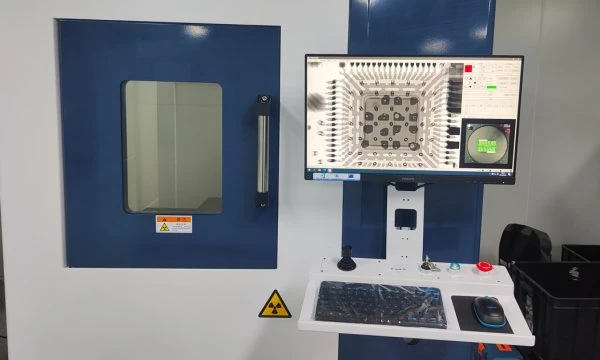
Mining rig PCBis best read as a board-review label, not a performance claim.- The first split is usually board role, current path, thermal route, connector handoff, and validation ownership.
- Some mining boards are power-distribution problems. Others are mixed power-and-signal boards.
Quick Answer
Review a mining rig PCB as a release package for a power-heavy board. If current path, thermal route, connector handoff, and validation ownership are not clear, the board is not ready for release.
Table of Contents
- What should engineers review first?
- Which board family is this actually?
- Where does the first release risk appear?
- How should thermal route be handled?
- What should be frozen before release?
- Next steps with APTPCB
- FAQ
- Public references
- Author and review information
What should engineers review first?
Start with board role, current path, thermal route, connector handoff, and validation ownership.
That sequence matters because mining rig PCB can easily become a vague keyword bucket. A useful engineering review first decides what the board is actually doing inside the platform.
The first review questions should be:
- Is this board mainly a hashboard, a GPU riser or backplane, a PSU breakout board, or a small control board?
- Which routes are current-driven and which are interface-sensitive?
- Does the thermal problem belong to the copper path, the base material, or the enclosure and heatsink interface?
- Does the package clearly show the connector or cable handoff, or is that still implied?
- What does the board team prove at release, and what belongs to later system bring-up?
| Review axis | What to ask | Why it matters | What usually goes wrong |
|---|---|---|---|
| Board role | Is this a hashboard, a riser/backplane, a PSU breakout board, or a control board? | Different board families create different routing and validation burdens | One generic label hides multiple design problems |
| Current path | Where does the main current flow, and where does it change layers or leave the board? | Current-driven routes need their own layout and thermal review | Power and signal language gets mixed together |
| Thermal route | Is heat leaving through copper, base material, airflow, or chassis contact? | The right platform depends on the real heat path | Material choice is discussed before the heat path is frozen |
| Connector handoff | Does the board exit through connectors, press-fit zones, or harness routes? | The interface zone often creates the first hold | The connector field is treated like a footprint detail |
| Validation ownership | What does DFM, fabrication, assembly, and powered test each prove? | Release confidence depends on layered evidence | One tested label is used for every stage |
Four Mining Board Families That Need Different Reviews
Mining hardware looks similar at the headline level, but the release burden changes once you separate current, connectors, heat, and access.
Current distribution and heat concentration dominate the review.
Connector transitions and interface spacing become the first hold.
Power-path geometry and connector handoff are the main risks.
Housekeeping logic and access planning matter more than mining output claims.
Which board family is this actually?
Conclusion: The label is useful only when the article stays inside one board family at a time.
That usually means:
- hashboards inside ASIC mining hardware
- GPU risers or backplanes used to space or connect multiple cards
- PSU breakout boards that distribute supply power into several exits
- small control boards that support fans, sensing, or housekeeping logic
It becomes much less useful when the article starts merging unrelated hardware such as:
- standard ATX motherboards
- low-power monitoring boards
- wallet or payment hardware
- generic breadboard prototypes
The reason is simple: those categories do not share one clean review model. A hashboard and a riser board may both live in mining hardware, but one is dominated by current and heat while the other is dominated by connector zones and interface transitions.
Where does the first release risk appear?
Conclusion: The first hold usually appears in the transition between current path, connector handoff, and thermal route.
| Risk area | What should be reviewed | Why the risk appears early | Typical release burden |
|---|---|---|---|
| Current path | Copper distribution, path geometry, and where the board hands current off to hardware | Current-driven routes need their own layout logic | The package says power board, but the current path was never frozen |
| Connector or cable handoff | Plug-in exits, soldered exits, press-fit zones, and harness transitions | Small transition errors often create the first hold | The connector field is named, but the route class is still implied |
| Thermal route | Whether heat leaves through copper mass, board construction, airflow, or chassis contact | Heat concentration affects placement and material choice | Material choice is discussed before the heat path is clear |
| Assembly and validation | DFM, inspection, powered test, and later system bring-up | These stages prove different things | One tested label is made to carry every claim |
A realistic hold pattern looks simple at first: the package says mining rig PCB, lists a power stage, and shows a mostly complete fabrication set. But the review team still cannot tell whether the board is being released as a hashboard, a power breakout board, or a mixed board that needs stricter partitioning. That ambiguity is not a spec problem. It is a release-package problem.
Another common mistake is treating the board as if heavy copper solves everything. It does not. Copper mass helps, but the real risk may sit in connector choice, thermal bottlenecks, or whether the board is actually a power distribution structure rather than a routing-dense compute board.
How should thermal route be handled?
Conclusion: As a project-dependent route, not as a universal answer.
For mining hardware, the thermal question is usually not just how much copper. It is which thermal route still leaves enough routing and assembly room for the actual board family.
| Thermal route | What it is good for | What it does not prove |
|---|---|---|
| Heavy copper multilayer board | High-current paths that still need routing density | It does not prove the whole mining system is thermally solved |
| High-thermal / metal-core route | Local heat extraction when the board is dominated by power devices | It does not automatically fit every routing-heavy hashboard |
| Backplane-style route | Boards where connectors and spacing dominate the design | It does not replace current-path or connector review |
The question is not Which material is best? The useful question is Which thermal bottleneck is actually driving the design?
What should be frozen before release?
Before RFQ or release, freeze:
- the actual board family inside the mining platform
- the current path and any local transitions
- the connector or cable handoff
- the thermal route and enclosure interaction
- the validation ladder, including what the board team proves before system bring-up
If those items are still moving, the board may still be buildable, but it is not yet a clean mining-release package.
Next steps with APTPCB
If your mining board is still balancing current-path clarity, connector-zone details, or a thermal route that has not been frozen, send the Gerbers, stackup intent, connector notes, assembly notes, and validation expectations to [email protected] or upload them through the quote page. APTPCB's engineering team can return DFM feedback within 24 hours and point out whether the first hold is happening in current path, thermal route, connector handoff, or validation ownership.
If the package still needs front-end cleanup, use heavy copper PCB for current-path context, backplane PCB for connector-heavy structure context, high thermal PCB when the design is moving toward a thermal-platform route, and DFM guidelines for release-stage manufacturability review.
FAQ
Is a mining rig PCB just one board family?
No. Hashboards, GPU risers, PSU breakout boards, and control boards create different review problems.
Does heavy copper solve the whole design?
No. It helps with current and heat, but connector zones and thermal routes still need separate review.
Are GPU risers and hashboards reviewed the same way?
No. Risers are connector and interface problems first; hashboards are current and heat problems first.
Does board-level test prove mining uptime?
No. Board-level test supports release confidence. Uptime belongs to later system-level proof.
Should immersion-cooling boards follow the same review model?
Only partly. The board-review model is the same, but thermal-route and material-compatibility questions need separate attention.
Public references
APTPCB server and data center PCB
Supports mining hashboards as a compute-infrastructure board family.APTPCB heavy copper PCB page
Supports heavy-copper board-family context for high-current hardware.APTPCB high thermal PCB page
Supports thermal-platform choice as a separate review route.APTPCB backplane PCB page
Supports connector-heavy board context for GPU risers and backplanes.IPC-2152 PDF table of contents
Supports current-carrying review as a dedicated conductor-sizing problem.Analog Devices AN-136
Supports the guarded layout posture that large-current paths should be short and wide.
Author and review information
- Author: APTPCB compute-hardware and board-process content team
- Technical review: current-path, connector, and thermal-route engineering team
- Last updated: 2026-04-21