
High-speed data transmission systems, particularly those utilizing optical interconnects, rely heavily on the precision of the physical layer. At the heart of these systems lies the MT ferrule connector interface impedance control, a critical design and manufacturing parameter that ensures signal integrity between the printed circuit board (PCB) and the optical engine. As data rates climb to 400G, 800G, and beyond, the margin for error at the connector launch point vanishes. This guide provides a complete roadmap for engineers and procurement teams to navigate the complexities of impedance matching at this specific interface.
At APTPCB (APTPCB PCB Factory), we frequently encounter designs where the trace routing is perfect, but the connector footprint—the interface itself—causes significant signal reflection. This page serves as a central hub for understanding how to design, specify, and validate this critical junction.
Key Takeaways
- Definition: It refers to maintaining a specific characteristic impedance (usually 85Ω or 100Ω) at the PCB pads and breakout region where the MT-style connector mounts.
- Criticality: Mismatches here cause return loss (reflections), which directly increases bit error rates (BER) in high-speed links.
- Material Impact: The choice of dielectric material (Dk/Df) immediately under the connector pads is just as important as the trace width.
- Manufacturing Reality: Etch compensation and surface finish thickness can alter the calculated impedance by 2-5 Ohms.
- Validation: Time Domain Reflectometry (TDR) is the non-negotiable standard for verifying compliance.
- Misconception: Many assume the connector manufacturer guarantees impedance; however, the PCB layout and stackup determine the actual performance of the mounted interface.
- Tip: Always model the "anti-pad" (void in the reference plane) beneath the connector pins to reduce capacitive coupling.
What impedance control means at MT ferrule interfaces (scope & boundaries)
To fully grasp the technical requirements, we must first define the boundaries of the interface within the context of PCB manufacturing. MT ferrule connector interface impedance control is not about the optical fiber itself, but rather the electrical path on the PCB that transitions into the optical transceiver or connector housing.
The "MT ferrule" (Mechanically Transferable) is the standard for high-density fiber connectivity (like MPO/MTP connectors). However, these ferrules reside inside transceivers or board-mounted optical assemblies. The "interface" discussed here is the copper footprint on the PCB—the BGA pads, the differential pairs leading to them, and the vertical vias connecting layers. Controlling impedance here means managing the inductance and capacitance of these copper features to match the system's target impedance (typically 85 ohms for PCIe/Intel UPI or 100 ohms for Ethernet). If APTPCB manufactures a board with a deviation in this zone, the signal reflects before it ever reaches the fiber, rendering the optical quality irrelevant.
Metrics that matter (how to evaluate quality)
Once the scope is defined, we look at the specific numbers that determine pass or fail status during production. The following metrics are essential for quantifying the quality of the MT ferrule connector interface impedance control.
| Metric | Why it matters | Typical range or influencing factors | How to measure |
|---|---|---|---|
| Differential Impedance (Zdiff) | The primary measure of resistance to AC current; mismatches cause reflections. | 85Ω ±10% or 100Ω ±10% (tighter tolerances of ±5% are common for 112G PAM4). | TDR (Time Domain Reflectometry) using a differential probe. |
| Insertion Loss (IL) | Measures how much signal power is lost as it travels through the interface. | < -1.5 dB at Nyquist frequency (varies by channel length). Influenced by copper roughness and Df. | VNA (Vector Network Analyzer) or S-parameter extraction. |
| Return Loss (RL) | Measures the signal power reflected back to the source due to impedance discontinuities. | > 10 dB (absolute value) is generally desired. Poor breakout design spikes this metric. | VNA or TDR. |
| Skew (Intra-pair) | The time delay difference between the positive and negative signals in a differential pair. | < 5 ps. Caused by glass weave effect or unequal trace lengths in the breakout region. | TDR or Oscilloscope. |
| Surface Roughness | Rough copper increases skin effect losses at high frequencies. | VLP (Very Low Profile) or HVLP copper foil is preferred for >25 Gbps. | Profilometer or SEM cross-section. |
| Dielectric Constant (Dk) | Determines the propagation speed and capacitance; consistency is key. | 3.0 - 3.8 for high-speed materials. Variations cause impedance fluctuations. | Material datasheet verification / Coupon testing. |
How to choose an approach (trade-offs by scenario)
Understanding metrics allows engineers to make better choices in specific scenarios, balancing cost against signal integrity requirements. When designing for MT ferrule connector interface impedance control, the "best" solution depends entirely on the application environment and data rate.
1. Hyperscale Data Centers (400G/800G)
- Priority: Maximum signal integrity and density.
- Trade-off: High cost for ultra-low loss materials (e.g., Megtron 7 or Tachyon).
- Guidance: Choose tight impedance tolerance (±5%). Use backdrilling to remove via stubs at the connector interface.
2. Industrial Automation (Sensors/Robotics)
- Priority: Reliability and vibration resistance.
- Trade-off: Slightly higher signal loss is acceptable for mechanical robustness.
- Guidance: Standard FR-4 (high Tg) is often sufficient if data rates are <10 Gbps. Focus on robust pad adhesion rather than exotic dielectrics.
3. 5G Telecom Infrastructure (Outdoor)
- Priority: Thermal stability and moisture resistance.
- Trade-off: Materials must withstand temperature cycling without shifting impedance.
- Guidance: Select materials with stable Dk over temperature. The interface design must account for conformal coating, which can slightly alter impedance.
4. Consumer Electronics (High-End Video)
- Priority: Cost efficiency and compact size.
- Trade-off: Limited layer count makes routing the breakout difficult.
- Guidance: Use HDI (High Density Interconnect) technology to fan out signals quickly. Accept standard ±10% tolerance to keep yields high.
5. Aerospace & Defense (Radar/Avionics)
- Priority: Zero failure rate and extreme environmental tolerance.
- Trade-off: Long lead times for specialized Rogers or Taconic materials.
- Guidance: Strict MT ferrule connector interface design rules apply. 100% TDR testing is mandatory on every board, not just coupons.
6. Medical Imaging (High Resolution)
- Priority: Low noise and precision.
- Trade-off: Complex stackups to shield sensitive analog signals from high-speed digital interfaces.
- Guidance: Use buried capacitance or dedicated ground planes immediately adjacent to the connector interface layer.
Implementation checkpoints (design to manufacturing)
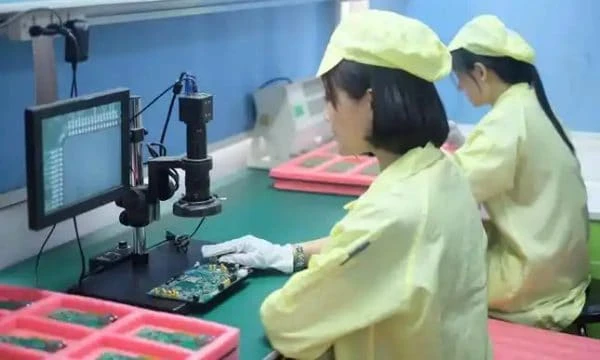
After selecting the right approach, the focus shifts to execution where the design data is converted into a physical product. Successful MT ferrule connector interface assembly and fabrication require adherence to a strict checklist.
- Stackup Verification: Before routing, confirm the stackup with APTPCB. Ensure the material availability matches the Dk values used in simulation.
- Anti-Pad Optimization: Design the ground plane void (anti-pad) beneath the connector pads to reduce parasitic capacitance. This is the #1 lever for fixing impedance dips.
- Trace Width Compensation: Adjust trace widths in the layout to account for the "etch factor" (trapezoidal shape of traces) during manufacturing.
- Reference Plane Continuity: Ensure the return path (ground plane) is unbroken beneath the differential pairs leading to the connector.
- Via Stub Removal: If the signal transitions layers, specify backdrilling to remove the unused portion of the via (stub), which acts as an antenna.
- Breakout Routing: Route signals symmetrically from the connector pads. Asymmetry creates skew and mode conversion.
- Surface Finish Selection: Use ENIG or ENEPIG. Avoid HASL, as the uneven surface makes fine-pitch connector placement and impedance control difficult.
- Solder Mask Definition: Define whether pads are Solder Mask Defined (SMD) or Non-Solder Mask Defined (NSMD). NSMD is usually preferred for impedance consistency.
- Coupon Design: Include test coupons on the panel rails that mimic the actual connector interface geometry for TDR testing.
- First Article Inspection (FAI): Require a cross-section analysis of the interface area to verify layer alignment and dielectric thickness.
For detailed assistance on layer planning, refer to our PCB Stack-up guide.
Common mistakes (and the correct approach)
Even with a solid plan, specific pitfalls can derail the project during the transition from prototype to mass production. Avoiding these common errors in MT ferrule connector interface best practices saves time and money.
- Mistake 1: Ignoring the "Launch" Discontinuity.
- The Issue: Engineers match the trace impedance but ignore the capacitive spike at the connector pad.
- Correction: Use 3D field solvers to simulate the transition from the connector pin to the PCB trace.
- Mistake 2: Relying on Generic Material Constants.
- The Issue: Using a generic "FR-4 Dk=4.5" for calculation.
- Correction: Use the specific frequency-dependent Dk value for the exact laminate (e.g., Isola 370HR @ 10GHz).
- Mistake 3: Overlooking Fiber Weave Effect.
- The Issue: One leg of a differential pair runs over a glass bundle, the other over resin, causing skew.
- Correction: Use "spread glass" styles (like 1067 or 1086) or route traces at a slight angle (zig-zag routing).
- Mistake 4: Poor Grounding at the Interface.
- The Issue: Insufficient ground vias around the connector housing.
- Correction: Surround the connector footprint with ground stitching vias to shield the interface.
- Mistake 5: TDR Testing on Traces Only.
- The Issue: Measuring the trace but excluding the connector footprint in the test.
- Correction: Ensure the TDR rise time is fast enough to resolve the short physical distance of the connector interface.
- Mistake 6: Neglecting Manufacturing Tolerances.
- The Issue: Designing to the exact nominal limit without buffer.
- Correction: Design for ±10% but target the center. If the spec is 100Ω, do not accept a design centering on 92Ω.
FAQ (cost, lead time, materials, testing, acceptance criteria)
To address lingering uncertainties, here are answers to frequent inquiries regarding MT ferrule connector interface impedance control.
Q1: How does strict impedance control affect the cost of the PCB? A: Tight tolerances (±5%) require higher-quality materials, more frequent in-process inspections, and lower manufacturing yields, typically increasing bare board cost by 15-25%.
Q2: What is the impact on lead time for boards requiring backdrilling at the interface? A: Backdrilling is an additional mechanical process. It typically adds 1-2 days to the standard production lead time.
Q3: Which materials are best for MT ferrule interfaces running at 112G? A: Ultra-low loss materials are required. Common choices include Panasonic Megtron 7, Isola Tachyon 100G, or Rogers RO3003. Visit our High Speed PCB page for more details.
Q4: What are the standard acceptance criteria for TDR testing? A: The industry standard is usually IPC-6012 Class 2 or 3. For impedance, the trace must remain within the specified tolerance (e.g., 100Ω ±10%) for the entire length, including the launch point.
Q5: Can I use standard FR-4 for MT ferrule interfaces? A: Only for low-speed control signals or legacy data rates (<5 Gbps). For modern high-speed data, standard FR-4 is too lossy and has inconsistent Dk.
Q6: How do I specify MT ferrule connector interface testing requirements in my data pack? A: Include a fabrication drawing note stating: "Impedance control required on layers X and Y. Target 100Ω diff. Tolerance ±10%. 100% TDR testing required on coupons and 10% on actual boards."
Q7: Does surface finish affect the impedance at the connector interface? A: Yes. ENIG (Gold) is flat and predictable. Thick HASL can add uneven solder, changing the geometry and impedance of fine-pitch pads.
Q8: What is the minimum trace width for controlled impedance? A: While we can etch down to 3 mil (0.075mm), wider traces (4-5 mil) are preferred for impedance control as they are less sensitive to minor etching variations.
Q9: How does APTPCB validate the interface design before manufacturing? A: We perform a DFM (Design for Manufacturing) review using industry-standard software to simulate the stackup and predict impedance based on our specific material stock.
Q10: What is the "checklist" for a successful handoff to the manufacturer? A: Provide Gerber files, ODB++ (preferred), a clear stackup diagram, material specifications, and a drill chart indicating backdrill locations.
Related pages & tools
For those seeking deeper technical data or specific manufacturing capabilities, the following resources are invaluable.
- Impedance Calculation: Use our online Impedance Calculator to estimate trace widths and spacing before finalizing your layout.
- Validation Services: Learn about our Testing & Quality protocols, including TDR and VNA capabilities.
- Material Library: Explore our database of PCB Materials to find the right balance of Dk, Df, and cost.
MT ferrule connector interface impedance control glossary (key terms)
Finally, clear terminology ensures precise communication between design engineers and the fabrication floor.
| Term | Definition |
|---|---|
| Attenuation | The reduction in signal strength (loss) as it travels through the PCB trace and connector interface. |
| Backdrilling | The process of drilling out the unused portion of a plated through-hole (via stub) to reduce signal reflection. |
| Crosstalk | Unwanted signal interference between adjacent traces or connector pins (NEXT/FEXT). |
| Differential Pair | Two complementary signals used to transmit data; their impedance relative to each other is Zdiff. |
| Dk (Dielectric Constant) | A measure of a material's ability to store electrical energy in an electric field; affects signal speed. |
| Df (Dissipation Factor) | A measure of how much signal energy is absorbed by the insulating material (loss tangent). |
| Insertion Loss | The loss of signal power resulting from the insertion of a device (connector/trace) in a transmission line. |
| Microstrip | A transmission line geometry where the conductor is on an outer layer, separated from a single ground plane by dielectric. |
| Stripline | A transmission line geometry where the conductor is embedded between two ground planes. |
| Skin Effect | The tendency of high-frequency current to flow only on the outer surface of the conductor. |
| TDR (Time Domain Reflectometry) | A measurement technique used to determine the characteristic impedance of a line by observing reflected waveforms. |
| Via Stub | The unused portion of a plated via that extends beyond the signal layer, causing resonance and loss. |
Conclusion (next steps)
Mastering MT ferrule connector interface impedance control is a prerequisite for modern high-speed optical system design. It requires a holistic approach that blends rigorous simulation, smart material selection, and precise manufacturing execution. The interface is often the bottleneck; ensuring the PCB layout supports the connector's performance potential is the only way to achieve reliable 400G/800G links.
If you are ready to move your design into production, APTPCB is ready to assist. To ensure a smooth DFM review and accurate quote, please provide the following:
- Gerber or ODB++ files with clear outline of the connector footprint.
- Stackup requirements (layer count, preferred material, copper weight).
- Impedance specifications (Target Ohms, tolerance, and specific layers).
- Frequency requirements (e.g., "Design must support 25 GHz").
Contact us today to validate your MT ferrule connector interface design and ensure your high-speed interconnects perform exactly as simulated.