
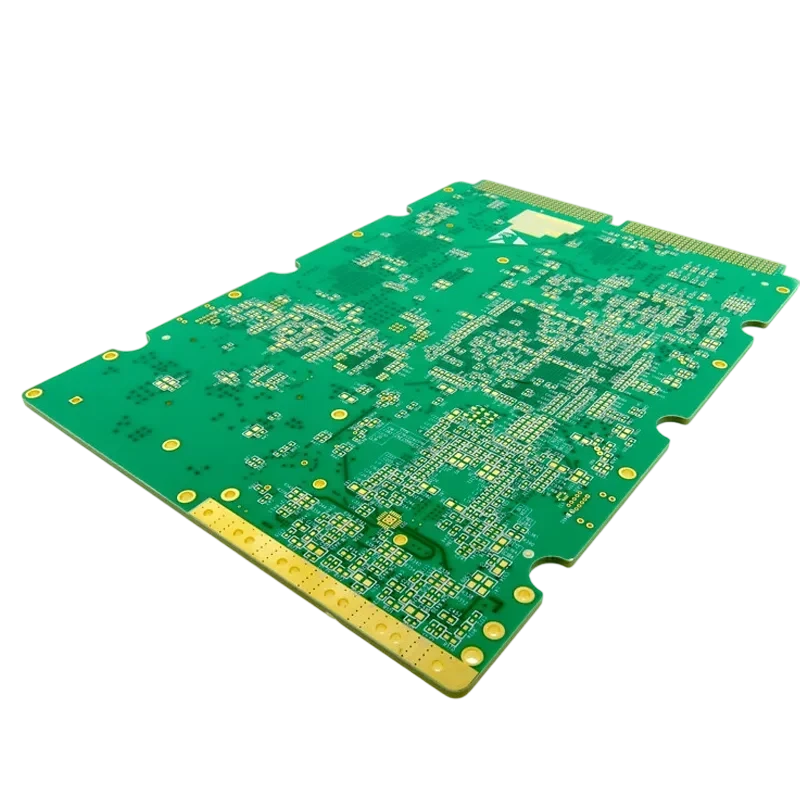
What is a Neonatal Monitor PCB and why does it require specialized design?
A Neonatal Monitor PCB is the electronic foundation of monitoring equipment used to measure and process newborn physiological signals such as ECG, respiration, SpO₂, temperature, and in some systems EEG. Unlike consumer electronics, these boards must handle very small biological signals while maintaining electrical safety, long operating life, and reliable alarm performance.
A neonatal monitor PCB typically integrates:
- Analog front-end circuits for weak physiological signals.
- Patient-side isolation barriers.
- High-resolution ADC interfaces.
- Embedded processors and communication interfaces.
- Power management and battery charging circuits.
- Display, alarm, and networking subsystems.
The main engineering challenge is balancing three competing requirements:
| Requirement | PCB Design Impact |
|---|---|
| Extremely weak bio-signals | Low-noise layout, shielding, controlled grounding |
| Patient safety | Isolation, leakage control, creepage and clearance design |
| Small neonatal devices | HDI, rigid-flex, compact component placement |
| Continuous operation | High reliability materials and manufacturing controls |
This guide is intended for medical device engineers, NPI teams, and procurement managers selecting PCB fabrication and assembly partners for neonatal monitoring equipment.
When should you use a dedicated Neonatal Monitor PCB design?
A specialized neonatal monitor PCB approach is appropriate when the device directly processes patient-connected signals or operates in NICU environments.
Use a neonatal-specific PCB architecture when:
- The analog front end measures low-level ECG, EEG, or respiration signals.
- The device connects directly to neonatal sensors.
- The product requires wearable or compact packaging.
- The PCB must support long-term hospital operation.
- Alarm accuracy and signal stability are safety-critical.
A general medical controller PCB may be sufficient when the board only manages non-patient functions such as remote displays, data storage, or central monitoring stations.
What PCB architecture is best for neonatal monitoring devices?
The correct architecture depends on product size, sensor configuration, and clinical use.
| Application | Recommended PCB Approach | Main Reason |
|---|---|---|
| NICU bedside monitor | Multilayer rigid PCB | Supports multiple interfaces and isolation zones |
| Wearable neonatal patch | Rigid-flex PCB | Reduces connectors and improves mechanical comfort |
| Compact wireless sensor | HDI rigid-flex | Enables miniaturization and fine-pitch routing |
| Central monitoring gateway | Standard multilayer PCB | Lower cost with fewer patient-side constraints |
For most neonatal monitoring products, the PCB architecture separates the design into:
- Patient-side analog sensing area.
- Isolation barrier area.
- Digital processing area.
- Power conversion area.
- Communication interface area.
This separation reduces interference between switching circuits and sensitive biological measurements.
What materials and stackup specifications should a Neonatal Monitor PCB use?
Material selection directly affects reliability, signal integrity, and lifetime performance.
Typical specifications include:
| Parameter | Typical Requirement |
|---|---|
| PCB material | High-Tg FR4 or medical-grade laminate |
| Tg | ≥170°C preferred for reliability |
| Layer count | 6–12 layers for complex monitors |
| Outer copper | 0.5 oz–1 oz plated |
| Inner copper | 1 oz typical; higher weight for power sections |
| Minimum trace/space | Around 4 mil / 4 mil; HDI may reach 3 mil / 3 mil |
| Mechanical drill | Around 0.2 mm minimum |
| Microvia diameter | Around 0.1 mm for HDI structures |
| Surface finish | ENIG for fine-pitch components |
| Impedance tolerance | ±10% controlled impedance |
| Cleanliness | Medical-grade ionic cleanliness control |
Sensitive ECG and EEG routing should use dedicated reference planes and carefully controlled return paths. Power switching nodes should be physically separated from patient signal acquisition circuits.
Should a neonatal monitor use HDI or standard PCB technology?
The choice between HDI and conventional multilayer PCB depends on density requirements.
| Design Need | Preferred Technology |
|---|---|
| Large enclosure with moderate component density | Standard multilayer PCB |
| Small processor module | HDI PCB |
| 0.4 mm pitch BGA devices | HDI with microvias |
| Wearable neonatal sensor | Rigid-flex HDI |
HDI increases routing capability but requires stronger manufacturing controls. Microvia reliability, plating quality, and registration accuracy become critical production factors.
What are the main Neonatal Monitor PCB manufacturing risks?
Signal noise affecting ECG and EEG accuracy
Weak biological signals can be corrupted by:
- Digital switching noise.
- DC/DC converter interference.
- Poor grounding strategy.
- Connector coupling.
Manufacturing and design controls include:
- Analog/digital separation.
- Ground plane planning.
- Shielding layers.
- Patient simulator testing.
Conductive Anodic Filament (CAF)
CAF can create internal shorts caused by moisture, voltage gradients, and material weakness.
Control methods include:
- CAF-resistant laminate selection.
- Proper via spacing.
- Humidity testing.
- High-voltage insulation verification.
HDI microvia reliability problems
Microvia failures may cause intermittent operation.
Control methods include:
- Qualified laser drilling processes.
- Proper copper plating.
- Thermal cycling validation.
- Microsection inspection.
Ionic contamination
Residual chemicals can create corrosion and leakage problems.
Verification methods include:
- ROSE testing.
- Ion chromatography.
- Controlled cleaning processes.
Flex and rigid-flex mechanical failures
Wearable neonatal monitors experience repeated bending and handling stress.
Reliability improvements include:
- Correct bend radius design.
- Proper stiffener placement.
- Flexible copper selection.
- Mechanical cycling tests.
How do you validate a Neonatal Monitor PCB before production release?
A medical PCB supplier should support documented validation before volume manufacturing.
| Test | Purpose | Typical Verification |
|---|---|---|
| Electrical test | Detect opens and shorts | 100% continuity testing |
| TDR impedance test | Confirm high-speed routing | ±10% target impedance |
| Ionic cleanliness test | Verify contamination control | ROSE or ion chromatography |
| Microsection analysis | Check internal construction | Layer registration and plating review |
| Thermal stress test | Validate laminate reliability | No delamination or blistering |
| Hi-Pot test | Verify isolation strength | Leakage within specified limits |
| Flex testing | Validate wearable durability | Mechanical cycling performance |
Patient-connected designs should also include system-level verification with appropriate medical test equipment and patient simulators.
How should you qualify a Neonatal Monitor PCB supplier?
Choosing a supplier requires more than comparing PCB prices. Medical monitoring boards need manufacturing evidence, traceability, and process discipline.
Neonatal Monitor PCB supplier checklist
| Qualification Area | Supplier Evidence |
|---|---|
| Medical quality system | ISO 13485 capability |
| PCB reliability | IPC Class 3 manufacturing experience |
| Traceability | Material batch and production records |
| Testing | Electrical test, AOI, inspection reports |
| HDI capability | Microvia and fine-pitch experience |
| Flex capability | Rigid-flex manufacturing history |
| Process control | CAPA and change notification system |
Before RFQ submission, provide:
- Gerber or ODB++ files.
- Fabrication drawings.
- Stackup requirements.
- Material specifications.
- Controlled impedance requirements.
- Drill information.
- Testing requirements.
- Quantity and production schedule.
How do you choose between rigid PCB and rigid-flex neonatal monitor designs?
| Requirement | Rigid PCB | Rigid-Flex PCB |
|---|---|---|
| Lowest cost | Strong choice | Higher cost |
| Wearable device | Limited | Strong choice |
| Connector reduction | Moderate | Excellent |
| Mechanical flexibility | Poor | Excellent |
| Prototype revision speed | Faster | More complex |
Rigid-flex is generally preferred for skin-contact wearable neonatal monitoring devices because it reduces cable assemblies and improves packaging efficiency.
How does a Neonatal Monitor PCB differ from other medical monitor PCBs?
A neonatal monitor PCB shares technologies with other medical monitoring products but has stricter requirements for weak-signal processing.
| PCB Type | Primary Design Priority |
|---|---|
| Neonatal Monitor PCB | Low-noise sensing and patient safety |
| ECG Monitor PCB | Cardiac signal accuracy |
| EEG Monitor PCB | Extremely low-level signal acquisition |
| Anesthesia Monitor PCB | Multi-parameter integration |
| Bedside Monitor PCB | Multiple sensor and communication channels |
The neonatal application places additional emphasis on compact form factors, gentle wearable designs, and reliable alarm generation.
Neonatal Monitor PCB FAQ
What is the biggest cost driver for a neonatal monitor PCB?
Layer count, HDI technology, rigid-flex construction, and testing requirements usually create the largest cost differences.
Can standard FR4 be used for neonatal monitor PCBs?
High-Tg FR4 is commonly used, but material selection must match reliability, thermal, and signal requirements.
What files are required for a Neonatal Monitor PCB quote?
Typical RFQ packages include Gerber or ODB++ files, fabrication drawings, stackup details, drill files, impedance requirements, and inspection requirements.
Why is impedance control important?
High-speed communication interfaces such as USB, Ethernet, and wireless modules require controlled impedance to maintain signal quality.
What certifications should a supplier demonstrate?
Medical PCB suppliers should demonstrate appropriate quality systems, traceability procedures, and manufacturing controls suitable for medical electronics.
Resources for Neonatal Monitor PCB design and manufacturing
- Medical PCB Manufacturing – An overview of the specific certifications and capabilities required for the medical electronics sector.
- HDI PCB Technology – Deep dive into High-Density Interconnects, essential for miniaturizing neonatal wearable devices.
- Rigid-Flex PCB Solutions – Learn how rigid-flex designs can eliminate connectors and improve reliability in compact monitors.
- PCB Testing and Quality – Details on the validation tests (AOI, X-Ray, ICT) that ensure patient safety.
- Impedance Calculator – A tool to help you estimate trace widths for controlled impedance on your monitor design.
Request a quote for Neonatal Monitor PCB manufacturing
Ready to move from prototype validation to production? A qualified PCB partner should review stackup, signal integrity, manufacturability, and medical reliability requirements before quoting.
Prepare:
- Gerber or ODB++ manufacturing files.
- Fabrication drawing.
- Material requirements.
- Quantity forecast.
- Validation and inspection requirements.
Request a Quote for Neonatal Monitor PCB – Get a response within 24 hours with a full DFM report and pricing options.
Conclusion
A Neonatal Monitor PCB must be engineered around patient safety, signal accuracy, and manufacturing consistency. The best design decisions combine low-noise layout, reliable materials, controlled impedance, isolation protection, and supplier traceability.
For medical device teams, the PCB supplier selection process is as important as the circuit design itself. A manufacturing partner with proven medical electronics capability can reduce validation risk and support reliable NICU monitoring products from prototype through production.