
Off Grid Inverter PCB: what this playbook covers (and who it’s for)
Designing and procuring an Off Grid Inverter PCB is fundamentally different from sourcing standard consumer electronics boards. In an off-grid scenario, there is no utility backup; if the inverter fails, the entire power system goes dark. This places an extreme premium on reliability, thermal management, and high-voltage isolation. This guide is written for engineering leads, procurement managers, and technical buyers who need to move from a prototype design to a scalable, safe manufacturing process.
You will not find generic definitions here. Instead, this playbook focuses on the specific engineering decisions and procurement checks required to ensure your inverter board can handle high currents, harsh environments, and continuous operation. We cover the exact specifications you must define, the hidden manufacturing risks that cause field failures, and the validation steps necessary to approve a supplier.
We also provide a comprehensive checklist for auditing potential manufacturing partners. Whether you are building a small 1kW unit for mobile applications or a massive 10kW system for industrial backup, the principles of heavy copper management and creepage control remain constant. APTPCB (APTPCB PCB Factory) has supported numerous energy projects, and this guide condenses those lessons into actionable steps.
When Off Grid Inverter PCB is the right approach (and when it isn’t)
Understanding the specific operational context of your device is the first step in defining the correct PCB specifications, as off-grid requirements differ significantly from grid-connected systems.
Off Grid Inverter PCB architecture is the correct choice when your system must operate entirely independently of the utility grid. This applies to remote industrial sites, marine applications, RV power systems, and residential backup solutions where battery storage is the primary energy source. The PCB must handle the full load surge of appliances without grid assistance, requiring robust current-carrying traces and substantial thermal mass.
Conversely, if your primary goal is to sell excess solar power back to the utility company, a Grid Tie Inverter PCB is the standard approach. These boards prioritize synchronization logic and anti-islanding safety features over the massive surge capacity required by off-grid standalone units.
For systems that need to do both—store energy and interact with the grid—a Bidirectional Inverter PCB (hybrid) is required. These are the most complex, combining the high-current requirements of off-grid topology with the precise sensing of Grid Analytics PCB logic. If you are designing for massive solar farms rather than individual storage, a Central Inverter PCB architecture is likely more appropriate. However, for pure independence and reliability in remote environments, the dedicated off-grid architecture remains the gold standard.
Specs & requirements (before quoting)
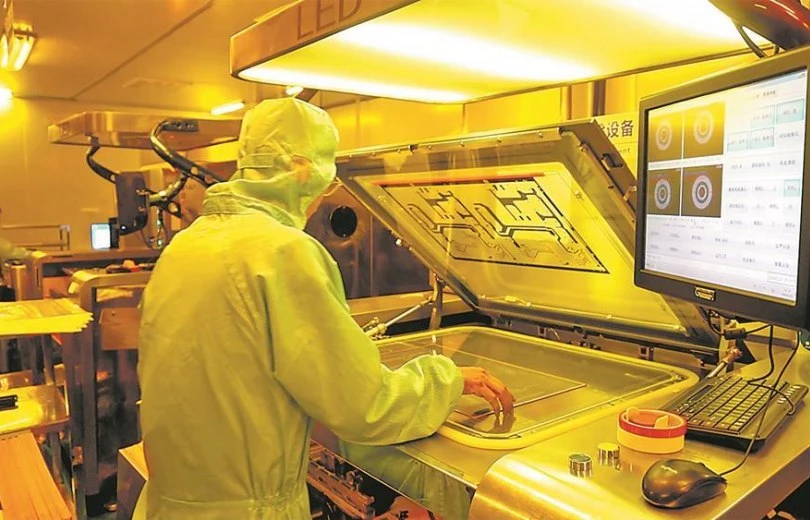
Once you have confirmed the architecture, you must translate performance goals into concrete manufacturing data to avoid ambiguity during the quoting phase.
- Base Material (Laminate): Specify High-Tg FR4 (Tg ≥ 170°C) as a minimum. For high-power density designs, consider Metal Core PCBs (IMS) for the power stage to maximize heat dissipation.
- Copper Weight: Define the finished copper thickness explicitly. Off-grid inverters often require 2oz, 3oz, or even 4oz copper on inner and outer layers to handle high DC currents without excessive voltage drop.
- Dielectric Thickness: Specify the minimum dielectric thickness between layers, particularly between high-voltage AC output traces and low-voltage control logic, to ensure isolation.
- Surface Finish: Request ENIG (Electroless Nickel Immersion Gold) or Lead-Free HASL. ENIG is preferred for flat pads if you have fine-pitch components, while HASL offers excellent shelf life and solderability for through-hole power components.
- Solder Mask Quality: Specify "High-Voltage Grade" solder mask. The mask must be free of pinholes and voids to prevent arcing between traces, especially in high-humidity environments.
- Creepage and Clearance: Explicitly state the required creepage (surface distance) and clearance (air gap) distances in your fabrication notes, referencing standards like IEC 62109.
- Thermal Vias: Define the density and plating requirements for thermal vias. If using "via-in-pad" for heat dissipation, specify if they should be filled and capped (POFV) to prevent solder wicking.
- Heavy Copper Etching Compensation: Require the manufacturer to apply etch compensation factors. Heavy copper spreads sideways during etching; the artwork must be adjusted to ensure the final trace width meets the current-carrying requirement.
- CTI (Comparative Tracking Index): Specify the CTI rating of the laminate (e.g., PLC 0 or 1). This measures the material's resistance to electrical tracking, which is critical for high-voltage safety.
- Cleanliness Standards: Mandate ionic contamination testing. Residues from flux or processing can become conductive in humid environments, causing catastrophic shorts in high-voltage sections.
- Traceability: Require date codes and lot numbers etched onto the copper layer or silkscreened for long-term tracking of field units.
- Documentation Format: Provide ODB++ or Gerber X2 files. These formats contain intelligent data about stackup and netlists that reduce interpretation errors compared to legacy Gerber RS-274X.
Hidden risks (root causes & prevention)
Defining requirements is only half the battle; you must also anticipate the specific manufacturing defects that plague high-power inverter boards.
Under-Etched Heavy Copper:
- Risk: Traces end up narrower than designed because the etchant removes copper from the sides (undercut).
- Why it happens: Thicker copper takes longer to etch, increasing side exposure.
- Detection: Cross-section analysis (micro-sectioning).
- Prevention: Ensure the supplier uses automated optical inspection (AOI) calibrated for heavy copper and applies correct artwork compensation.
Conductive Anodic Filament (CAF) Growth:
- Risk: Copper filaments grow along the glass fibers inside the PCB, causing internal shorts between high-voltage nets.
- Why it happens: High voltage gradients combined with moisture absorption and poor resin-to-glass bonding.
- Detection: High-voltage stress testing (HAST) or temperature-humidity-bias (THB) testing.
- Prevention: Use "CAF-resistant" materials and design sufficient spacing between vias of different potentials.
Solder Mask Voids / Skips:
- Risk: Gaps in the green mask expose copper.
- Why it happens: Heavy copper traces create steep "steps" that liquid mask struggles to cover evenly.
- Detection: Visual inspection and dielectric withstand tests.
- Prevention: Require double-coating or spray-coating methods for solder mask on heavy copper boards to ensure full encapsulation.
Thermal Delamination:
- Risk: Layers separate during soldering or operation.
- Why it happens: Trapped moisture turns to steam during reflow, or mismatched expansion rates (CTE) stress the bond.
- Detection: Scanning Acoustic Microscopy (SAM) or thermal shock testing.
- Prevention: Bake boards before assembly to remove moisture; use high-Tg materials with matched CTE.
Plating Cracks in Vias:
- Risk: The copper barrel inside a hole cracks, breaking the circuit.
- Why it happens: The PCB expands vertically (Z-axis) when hot. If the plating is thin or brittle, it snaps.
- Detection: Resistance changes during thermal cycling.
- Prevention: Specify IPC Class 3 plating thickness (average 25µm) for higher reliability.
Poor Solder Joint Reliability (Large Components):
- Risk: Heavy components (transformers, capacitors) vibrate loose or suffer solder fatigue.
- Why it happens: Thermal mismatch between the large component and the board, or insufficient solder fill in through-holes.
- Detection: Vibration testing and X-ray inspection.
- Prevention: Use proper thermal relief pads to ensure heat allows solder to flow fully through the barrel.
Residue-Induced Leakage:
- Risk: "No-clean" flux residues become conductive over time.
- Why it happens: Inverters often run hot and attract dust/moisture.
- Detection: Surface Insulation Resistance (SIR) testing.
- Prevention: Use aggressive washing processes or specify conformal coating for the final assembly.
Inconsistent Dielectric Thickness:
- Risk: The insulation layer is thinner than calculated, reducing breakdown voltage.
- Why it happens: Prepreg flows and thins out during the lamination press cycle.
- Detection: Micro-section analysis.
- Prevention: Specify a minimum "thickness after pressing" in the stackup documentation.
Validation plan (what to test, when, and what “pass” means)
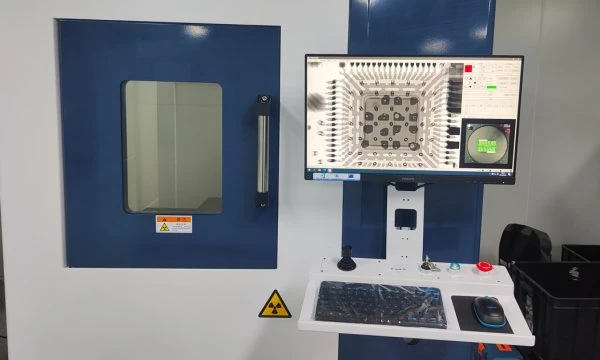
To mitigate the risks identified above, a structured validation plan must be executed before mass production begins.
Micro-Section Analysis (Coupon Test):
- Objective: Verify internal structure integrity.
- Method: Slice a test coupon from the production panel and view under a microscope.
- Acceptance: Copper thickness meets spec (e.g., >105µm for 3oz), plating >25µm, no delamination, proper layer registration.
High Potential (Hi-Pot) Testing:
- Objective: Verify isolation between high-voltage and low-voltage sections.
- Method: Apply high voltage (e.g., 1500V DC or 2x operating voltage + 1000V) across isolation barriers.
- Acceptance: Leakage current < 1mA (or per design spec); no breakdown or arcing.
Thermal Shock Testing:
- Objective: Stress test via plating and material bonds.
- Method: Cycle the bare board between -40°C and +125°C for 100+ cycles.
- Acceptance: Change in resistance < 10%; no visible cracks or delamination.
Current Carrying Capacity Test:
- Objective: Confirm traces can handle the load without overheating.
- Method: Inject rated current into power traces and measure temperature rise with a thermal camera.
- Acceptance: Temperature rise < 20°C (or design limit) at full load.
Solderability Test:
- Objective: Ensure pads will accept solder during assembly.
- Method: Dip and look test or wetting balance test.
- Acceptance: >95% coverage of the pad with a smooth, continuous solder coating.
Ionic Contamination Test (ROSE Test):
- Objective: Check for conductive residues.
- Method: Resistivity of Solvent Extract test.
- Acceptance: Contamination levels < 1.56 µg/cm² NaCl equivalent (standard IPC limit).
Impedance Control Verification (if applicable):
- Objective: Verify signal integrity for communication lines (e.g., CAN bus, Modbus).
- Method: TDR (Time Domain Reflectometry) measurement on test coupons.
- Acceptance: Measured impedance within ±10% of target value.
Dimensional Stability Check:
- Objective: Ensure the board fits the enclosure and mounting points align.
- Method: CMM (Coordinate Measuring Machine) inspection of mounting holes and outline.
- Acceptance: Tolerances within ±0.1mm (or per drawing).
Solder Mask Adhesion Test:
- Objective: Ensure mask won't peel off heavy copper traces.
- Method: Tape test (IPC-TM-650 2.4.28).
- Acceptance: No solder mask removal on the tape.
Interconnect Stress Test (IST):
- Objective: Accelerated life testing of vias.
- Method: Rapid thermal cycling of specific test coupons until failure.
- Acceptance: Survives >500 cycles without barrel fatigue.
Supplier checklist (RFQ + audit questions)
Use this checklist to vet suppliers and ensure they are capable of manufacturing high-reliability Off Grid Inverter PCBs.
RFQ Inputs (What you send):
- Complete Gerber files (RS-274X or X2) or ODB++.
- IPC Netlist (IPC-356) for electrical test verification.
- Fabrication drawing with clear notes on copper weight, material Tg, and tolerances.
- Stackup diagram specifying dielectric thickness between layers.
- Drill chart distinguishing plated vs. non-plated holes.
- Panelization requirements (if you need arrays for assembly).
- Special requirements: "Fill and Cap" vias, edge plating, or controlled depth drilling.
- Estimated annual volume (EAU) and batch sizes.
Capability Proof (What they must show):
- Evidence of manufacturing heavy copper PCBs (3oz - 10oz).
- Experience with high-voltage clearance management (UL/IEC standards familiarity).
- Ability to handle mixed-technology boards (e.g., fine pitch logic + heavy power).
- In-house lamination press capability for custom stackups.
- Availability of specified materials (Isola, Shengyi, Rogers, etc.).
- Maximum board size capability (if your inverter is large).
Quality System & Traceability:
- ISO 9001 certification (mandatory).
- UL certification (ZPMV2) for the specific stackup/material combination.
- IATF 16949 (optional, but indicates high process control).
- Automated Optical Inspection (AOI) used on all layers, not just outer.
- 100% Electrical Testing (Flying Probe or Bed of Nails).
- System for tracking raw material lots to finished PCB batches.
- Regular calibration records for testing equipment (Hi-Pot, CMM).
Change Control & Delivery:
- Formal PCN (Product Change Notification) process: Do they notify you before changing materials?
- DFM (Design for Manufacturing) review process: Do they catch errors before building?
- Packaging standards: Vacuum sealed with desiccant and humidity indicator cards.
- RMA procedure: Clear policy for handling defects and root cause analysis (8D reports).
- Capacity planning: Can they handle a 2x surge in your demand?
Decision guidance (trade-offs you can actually choose)
Engineering is the art of compromise. Here are the common trade-offs when designing an Off Grid Inverter PCB and how to navigate them.
Heavy Copper vs. Fine Pitch Components:
- Trade-off: Thicker copper (3oz+) requires wider spacing between traces due to etching limits, making it hard to route fine-pitch microcontrollers.
- Guidance: If you need both, use a multilayer board where inner layers carry power (heavy copper) and outer layers carry logic (1oz copper). Alternatively, use busbars for power and keep the PCB standard.
FR4 vs. Metal Core (IMS):
- Trade-off: IMS offers superior cooling but is expensive and usually limited to single-layer circuitry. FR4 is cheaper and multilayer-capable but insulates heat.
- Guidance: If your thermal density is extreme (>1W/cm²), choose IMS or a hybrid build. For most standard inverters, high-Tg FR4 with heavy thermal vias is the cost-effective choice.
HASL vs. ENIG Surface Finish:
- Trade-off: HASL is robust and cheap but surfaces are uneven. ENIG is flat and perfect for fine pitch but costs more.
- Guidance: If you have BGA or QFN components, you must use ENIG. If your board is mostly through-hole and large SMT power parts, HASL is sufficient and durable.
Soldermask Thickness vs. Coverage:
- Trade-off: Thick copper creates tall steps. Standard mask application may thin out at the "knee" of the trace.
- Guidance: Prioritize coverage. Specify "double screen printing" or "spray coating" for heavy copper boards to ensure high-voltage isolation, even if it costs slightly more.
Via-in-Pad vs. Dog-Bone Fanout:
- Trade-off: Via-in-pad saves space and improves thermals but requires expensive "fill and cap" processing. Dog-bone is cheap but takes up room.
- Guidance: For power MOSFETs, via-in-pad is often worth the cost for the thermal performance gain. For signal lines, stick to dog-bone to save money.
FAQ
Q: What is the minimum copper thickness for a 3kW off-grid inverter? A: Typically, 2oz to 3oz copper is a starting point for the power stages. However, trace width is equally important; use an IPC-2152 calculator to determine the exact requirement based on current and allowable temperature rise.
Q: Can I use standard FR4 for high-voltage inverters? A: Yes, but you must verify the CTI (Comparative Tracking Index) and dielectric strength. For high reliability, High-Tg FR4 (Tg 170°C+) is recommended to withstand the thermal stress of power conversion.
Q: How do I prevent arcing on the PCB? A: Maintain strict creepage and clearance distances. Milling slots (air gaps) between high-voltage pads is a highly effective way to increase creepage distance without increasing board size.
Q: Why is my heavy copper PCB warping? A: Warpage often occurs due to copper imbalance. Ensure the copper distribution is symmetrical between the top and bottom layers (and internal pairs) to prevent bowing during reflow.
Q: Do I need conformal coating for an off-grid inverter? A: Highly recommended. Off-grid systems are often installed in garages, sheds, or marine environments where humidity and dust can cause corrosion or shorts.
Q: What is the difference between Grid Balancing PCB and Off Grid PCB? A: A Grid Balancing PCB is part of a utility-scale system used to stabilize grid frequency and voltage. An Off Grid PCB is designed for standalone operation and does not interact with the utility grid's control loops.
Q: How does APTPCB handle heavy copper etching? A: We use specialized etching chemistry and automated compensation algorithms to ensure the final trace width matches your design files, preventing the "trapezoidal" effect from reducing current capacity.
Q: Can you manufacture the enclosure and cables too? A: Yes, APTPCB offers full Box Build Assembly services, including cable harnesses and enclosure integration, delivering a ready-to-test unit.
Related pages & tools
- Heavy Copper PCB Manufacturing – Essential reading for understanding the capabilities required for high-current inverter boards.
- Power & Energy Industry Solutions – See how we support the broader energy sector, from solar to wind applications.
- High Tg PCB Material – Learn why thermal reliability is non-negotiable for power electronics.
- PCBA Box Build Assembly – Move beyond the bare board to complete system integration and testing.
- DFM Guidelines – Download our design rules to ensure your inverter layout is manufacturable from day one.
Request a quote
Ready to validate your design? Click here to Request a Quote and get a comprehensive DFM review alongside your pricing.
For the most accurate DFM and quote, please include:
- Gerber Files: RS-274X or ODB++ format.
- Fabrication Drawing: clearly stating copper weight (e.g., 3oz), material Tg, and surface finish.
- Stackup: Desired layer buildup and dielectric thickness.
- Volume: Prototype quantity vs. estimated annual usage.
- Testing Requirements: Specific Hi-Pot or impedance requirements.
Conclusion
The success of an Off Grid Inverter PCB lies in the details of thermal management, insulation coordination, and rigorous quality control. By defining clear specifications for heavy copper and isolation, understanding the manufacturing risks like CAF and under-etching, and enforcing a strict validation plan, you can build a product that survives the harshest remote environments. APTPCB is ready to be your partner in this process, ensuring your power electronics are built to last.