
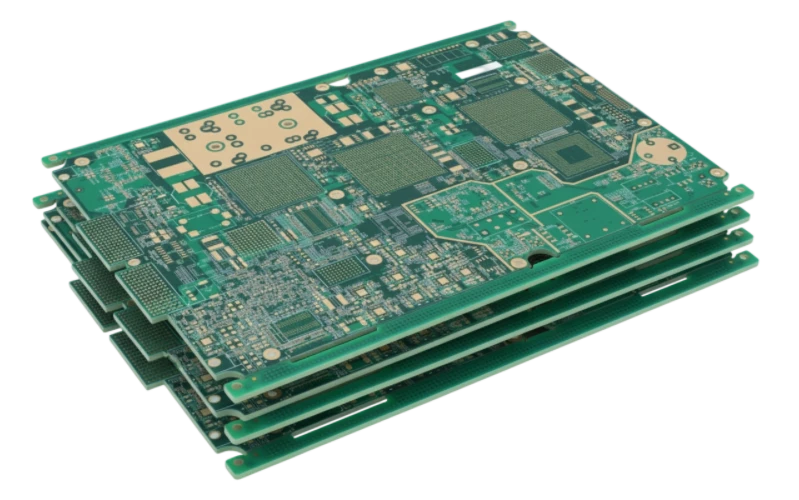
A one stop PCB service gives engineers a single manufacturing partner for PCB fabrication, component sourcing, PCB assembly, inspection, testing, and delivery. Instead of coordinating separate board houses, component suppliers, and assembly vendors, a turnkey provider manages the complete production chain.
The value is not simply convenience. A qualified one stop PCB service reduces supply-chain delays, improves accountability, and creates a clearer path from prototype validation to volume production.
The challenge is choosing the right partner. Many suppliers advertise turnkey capability, but the depth of engineering support, sourcing control, testing coverage, and production reliability can vary significantly.
This guide explains what a complete one stop PCB service should include, which metrics matter, and how to evaluate manufacturers before committing your next NPI or production project.
What does a one stop PCB service include?
A complete one stop PCB service combines several manufacturing stages into one controlled workflow:
- PCB fabrication — Manufacturing bare boards from Gerber, ODB++, or approved production files.
- Component sourcing — Purchasing components according to the approved BOM and manufacturer part numbers.
- PCB assembly (PCBA) — SMT, THT, mixed technology assembly, soldering, and rework support.
- Inspection and testing — AOI, X-ray inspection, electrical testing, and functional validation.
- Final integration — Programming, labeling, packaging, and optional box-build services.
The main advantage is ownership. When PCB fabrication, sourcing, and assembly are handled separately, production problems often require multiple vendors to investigate responsibility. A turnkey partner creates a single engineering communication channel.
However, “one stop” does not remove the need for engineering decisions. Customers still control approved components, product requirements, test specifications, and quality standards.
How do turnkey PCB services compare with traditional manufacturing?
The traditional PCB workflow usually requires coordination between multiple suppliers:
| Manufacturing model | Workflow | Main challenge |
|---|---|---|
| Separate suppliers | PCB fab → component purchasing → assembly → testing | More communication points and unclear responsibility |
| Partial turnkey | Customer supplies some materials while manufacturer manages assembly | Requires stronger internal supply management |
| Full turnkey | Manufacturer manages PCB, sourcing, assembly, and testing | Requires careful supplier qualification |
A full turnkey model is especially valuable during New Product Introduction (NPI), when engineering changes, component availability, and manufacturing feedback can determine whether a product reaches market on schedule.
How do you choose a one stop PCB service provider?
The best supplier depends on your product stage, technical requirements, and risk tolerance.
One stop PCB service selection matrix
| Project requirement | Supplier capability to prioritize | Key evaluation questions |
|---|---|---|
| Prototype and NPI | Fast engineering response, DFM review, low-volume assembly | Can the supplier identify manufacturability issues before production? |
| Mass production | Stable processes, sourcing scale, process documentation | Can the supplier maintain consistency across large batches? |
| Medical or automotive products | Traceability, controlled processes, documentation | Are materials and production records fully traceable? |
| HDI or rigid-flex designs | Advanced fabrication capability, impedance control | Can the supplier support complex stackups and fine-pitch assembly? |
| Cost-sensitive products | Supply-chain optimization and approved alternates | Can savings be achieved without reducing reliability? |
A strong manufacturing partner matches process capability to product requirements rather than offering the same production route for every project.
Which quality metrics should you evaluate before selecting a PCB manufacturer?
Price is only one part of manufacturing cost. A supplier with poor process control can create additional expenses through delays, rework, and field failures.
| Metric | Why it matters | Typical range or influencing factors | How to measure |
|---|---|---|---|
| First Pass Yield (FPY) | Shows process stability and reduces rework | >98% for mature products; >95% for prototypes | (Good units / Total units entering test) × 100 |
| Turnaround Time (TAT) | Determines time-to-market | Depends on complexity, sourcing, and production volume | Days from order confirmation to shipment |
| Sourcing Accuracy | Prevents assembly delays from incorrect parts | Requires approved BOM and alternates | BOM verification and incoming inspection records |
| IPC Class Compliance | Defines manufacturing reliability expectations | IPC Class 2 for general electronics; IPC Class 3 for higher reliability | Inspection records and manufacturing standards |
| DPMO | Measures defect performance | Depends on process complexity and inspection coverage | AOI and quality reports |
| Cost Variance | Reveals quote accuracy | Controlled through clear specifications | Compare purchase order against final invoice |
What files are required for a one stop PCB service quote?
A reliable quote begins with complete manufacturing data. Most suppliers require:
- Gerber files or ODB++ production data
- Drill files
- Bill of Materials (BOM)
- Pick-and-place (Centroid) files
- Assembly drawings
- PCB specifications
- Testing requirements
- Quantity and delivery requirements
A complete BOM should include manufacturer part numbers (MPNs), package information, quantities, and approved substitutions where possible.
Component availability should be reviewed early. A technically correct design can still fail production planning if critical ICs or connectors have long lead times.
What manufacturing checkpoints should a turnkey PCB partner provide?
A dependable one stop PCB service should guide the product through clear validation stages.
1. DFM and engineering review
Before production, engineers should review:
- Trace widths and spacing
- Layer stackup requirements
- Component footprints
- Assembly constraints
- Thermal considerations
- Mechanical dimensions
A DFM review catches problems before tooling and production costs increase. Review DFM Guidelines to understand common manufacturing constraints.
2. PCB fabrication verification
The manufacturer should confirm:
- Material selection
- Board thickness
- Copper weight
- Surface finish
- Controlled impedance requirements
For high-speed designs, specify exact materials and electrical requirements rather than relying on generic PCB specifications.
3. Component sourcing control
A turnkey provider should verify:
- Original manufacturer sources
- Approved alternates
- Incoming inspection results
- Component labeling and traceability
This is especially important for products with long service lives where counterfeit or obsolete parts create significant risks.
4. SMT assembly and inspection
Modern assemblies may include fine-pitch ICs, BGAs, and small passive components. Inspection processes commonly include:
- Solder Paste Inspection (SPI)
- Automated Optical Inspection (AOI)
- X-ray inspection for hidden solder joints
X-ray inspection is particularly important for BGA and QFN packages where solder connections cannot be visually inspected.
5. Functional testing
Electrical testing confirms connectivity, while functional testing verifies that the assembled product performs its intended operation.
Provide:
- Test procedures
- Firmware requirements
- Expected outputs
- Acceptance limits
A board that passes assembly inspection may still fail at the system level without functional validation.
What are the most common one stop PCB service selection mistakes?
Choosing only by PCB price
The lowest quotation may exclude engineering review, testing, sourcing support, or production documentation. Evaluate the complete manufacturing process rather than the bare board price.
Providing an incomplete BOM
A BOM without manufacturer part numbers creates uncertainty during sourcing. Include exact component identifiers and approved alternatives.
Ignoring production constraints during design
A design that works electrically may still create assembly problems. Manufacturer feedback during NPI improves manufacturability before volume production.
Not defining test requirements
Testing should be planned before production begins. A supplier needs clear pass/fail criteria to build the correct validation process.
Selecting a supplier without capability verification
Review manufacturing capabilities for:
- Layer count
- HDI support
- Flex and rigid-flex production
- Fine-pitch assembly
- Inspection equipment
- Functional testing capability
How should engineers prepare before contacting a turnkey PCB manufacturer?
Use this supplier discussion checklist:
| Information | Purpose |
|---|---|
| Gerber or ODB++ files | Defines PCB manufacturing requirements |
| BOM with MPNs | Enables accurate sourcing review |
| Quantity forecast | Determines production strategy |
| Target application | Defines reliability requirements |
| Testing requirements | Establishes acceptance criteria |
| Required certifications | Aligns manufacturing standards |
| Delivery schedule | Determines sourcing and production planning |
Providing complete information allows suppliers to identify risks earlier and provide more accurate quotations.
FAQ
What is the minimum order quantity for a one stop PCB service?
Many turnkey providers support prototype quantities through production batches. MOQ depends on board complexity, component sourcing requirements, and assembly process.
Do I need to supply components?
No. Full turnkey services typically include component procurement. Partial turnkey models allow customers to provide selected parts.
How long does turnkey PCB assembly take?
Lead time depends on PCB complexity, component availability, assembly requirements, and testing scope. Prototype projects may complete faster than volume production programs requiring sourcing and validation.
Can turnkey PCB services handle BGA components?
Yes. Qualified assembly providers use processes such as X-ray inspection and controlled reflow profiles for BGA and other high-density packages.
What is the difference between SMT and THT assembly?
SMT places components directly onto PCB surfaces. THT uses component leads inserted through drilled holes. Many products combine both methods.
How is IP protected during manufacturing?
Professional suppliers typically use confidentiality agreements, controlled file access, and production procedures designed to protect customer designs.
Conclusion: selecting a one stop PCB service partner
A successful one stop PCB service relationship depends on more than combining fabrication and assembly under one supplier. The right partner provides engineering feedback, reliable sourcing, measurable quality control, and transparent communication throughout the product lifecycle.
Before starting a project, prepare complete manufacturing files, define testing requirements, and evaluate suppliers using capability, quality, and risk criteria.
Whether you are developing a prototype, scaling production, or managing a complex electronic product, a qualified turnkey manufacturing partner can reduce manufacturing friction and accelerate the path from design files to finished hardware.
For a streamlined production workflow, prepare your Gerbers, BOM, and test requirements, then Get a Quote to begin the manufacturing review process.