
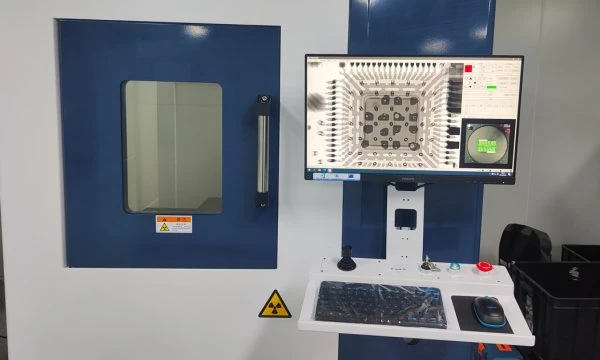
RF front-end overmolding is a packaging decision that changes both the mechanical structure and electromagnetic environment of a module. The polymer compound protects components and interconnects from moisture, vibration and contamination, but it also changes dielectric loading, thermal paths, stress distribution and manufacturing tolerances.
A successful design treats the mold compound, mold geometry and process recipe as part of the RF system—not as a final protective layer added after electrical design is complete.
Is RF front-end overmolding the right packaging approach?
Overmolding is most effective when a product needs compact integration, environmental protection and high-volume repeatability. It is less suitable when the RF design depends on post-production tuning access or when dielectric loading cannot be tolerated.
| Design requirement | Overmolding suitability | Engineering decision |
|---|---|---|
| Mechanical reinforcement and contamination protection | Strong fit | Validate adhesion, moisture performance and environmental reliability |
| Small RF module footprint | Strong fit | Compare against shield cans and enclosure solutions |
| High-volume manufacturing | Strong fit | Confirm tooling strategy and process capability |
| Frequent RF tuning after assembly | Limited fit | Freeze tuning before molding |
| Antenna or resonator inside mold region | Requires redesign validation | Model final dielectric environment |
| Extreme thermal dissipation requirement | Application dependent | Build thermal model before material selection |
Overmolding is difficult to reverse after cure. Confirm RF behavior, thermal limits and mechanical reliability before committing production tooling.
What RF parameters change after overmolding?
The molding compound changes the electromagnetic fields around traces, packages, bond wires, filters and antennas. The impact depends on dielectric constant, loss tangent, moisture absorption, compound thickness and frequency.
Measure material properties near the operating frequency and validate them under expected temperature and humidity conditions.
| RF change | Physical cause | Validation evidence |
|---|---|---|
| Frequency shift | Increased effective dielectric loading | Pre-mold and post-mold VNA or OTA comparison |
| Higher insertion loss | Polymer loss and altered field distribution | De-embedded S-parameter comparison |
| Impedance change | Nonuniform mold thickness or voids | TDR, VNA and cross-section correlation |
| Antenna detuning | Mold compound entering antenna near field | OTA efficiency and matching measurement |
| Isolation degradation | Changed coupling paths and shielding behavior | Spectrum and near-field testing |
How should RF structures be designed around the mold compound?
RF structures with significant electric fields require the strongest control. Antennas, resonators, filters and tuning elements should be modeled with the final mold geometry included.
The design package should include:
- operating frequency bands and bandwidth targets;
- antenna keep-outs or approved mold interaction regions;
- transmission-line stack-up information;
- component height map;
- bond-wire geometry;
- mold thickness targets and tolerance;
- measured dielectric properties of the selected compound.
For mmWave and other high-frequency designs, electromagnetic simulation should use the production compound properties rather than generic epoxy assumptions. The molding compound can introduce measurable losses and dielectric loading that alter final RF performance.
Which overmolding material parameters affect RF and reliability?
Material selection should include electrical, thermal and mechanical data.
| Parameter | Why it matters | Required supplier data |
|---|---|---|
| Dielectric constant (Dk) | Determines RF loading and frequency shift | Frequency-specific Dk measurement |
| Dissipation factor (Df) | Determines added RF loss | Frequency-specific loss data |
| Moisture absorption | Affects dielectric stability and reliability | Humidity exposure data |
| CTE | Controls stress between PCB, die and mold | Temperature-dependent expansion data |
| Glass transition temperature (Tg) | Supports operating and reflow conditions | Material specification |
| Thermal conductivity | Determines heat spreading capability | Thermal conductivity and test method |
| Filler characteristics | Influences flow, stress and RF uniformity | Filler type and particle information |
A datasheet value alone is not enough for critical RF applications. Confirm the measurement method, frequency range and environmental conditions.
What are the major RF overmolding failure modes?
Production failures usually occur when electrical, mechanical and process decisions are separated.
| Failure mode | Root mechanism | Detection method | Design response |
|---|---|---|---|
| RF detuning | Dielectric loading changes impedance or resonance | VNA, OTA and EM correlation | Include mold geometry in simulation |
| Wire sweep | Injection pressure moves bond wires | X-ray, cross-section and RF drift analysis | Control flow direction, viscosity and loop design |
| Warpage | CTE mismatch and cure shrinkage | Coplanarity measurement and shadow Moiré | Match substrate and compound behavior |
| Voids | Poor venting, trapped air or flow imbalance | X-ray, CSAM and cross-section | Optimize gates, vents and process window |
| Delamination | Poor adhesion or moisture expansion | CSAM and environmental testing | Control cleaning, storage and surface preparation |
| Thermal overheating | Encapsulation changes heat path | Thermal imaging and temperature monitoring | Model junction temperature and conduction paths |
How should mold process variables be controlled?
The mold process becomes part of the RF manufacturing process after tooling release.
Control:
- mold gate location and flow direction;
- injection pressure and fill balance;
- compound viscosity and cure profile;
- component support during molding;
- wire-loop clearance;
- mold height tolerance;
- venting strategy;
- post-cure handling;
- moisture exposure before assembly.
Acceptance criteria should identify critical regions. A cosmetic void and a void beside an RF transition or bond pad do not represent the same risk.
How do thermal design requirements change after molding?
Overmolding may improve protection while reducing convection cooling. Thermal evaluation should include the complete heat path:
- active die power;
- mold thickness;
- compound thermal conductivity;
- copper layers;
- substrate material;
- exposed pads;
- thermal vias;
- enclosure conduction.
Do not evaluate thermal performance from compound conductivity alone. Interface resistance and geometry often dominate final temperature behavior.
What validation tests should be completed before production release?
A production qualification plan should correlate physical inspection, RF performance and environmental reliability.
| Validation stage | Purpose | Typical evidence |
|---|---|---|
| Pre-mold RF baseline | Establish reference performance | S-parameters, gain, noise, OTA results |
| Process-window molding builds | Confirm tolerance sensitivity | Multiple pressure, temperature and flow conditions |
| X-ray inspection | Identify internal defects | Wire movement and void inspection |
| CSAM or acoustic inspection | Detect hidden interfaces | Delamination mapping |
| Cross-section analysis | Confirm structure | Fill quality, clearance and interfaces |
| Post-mold RF testing | Measure electrical shift | VNA and OTA comparison |
| Moisture testing | Verify environmental stability | Reflow and humidity conditioning |
| Thermal cycling | Stress interfaces | Electrical and structural checks |
| Vibration/drop testing | Confirm mechanical durability | Product-level reliability results |
What should be included in an RF front-end overmolding RFQ package?
A supplier should receive enough information to evaluate RF, mechanical and manufacturing risks before quotation.
RF requirements
- Frequency bands and bandwidth targets
- RF chain architecture
- Maximum power levels
- Gain, insertion loss, noise and isolation requirements
- Pre-mold and post-mold acceptance limits
Mechanical and manufacturing data
- PCB or substrate stack-up
- Assembly drawings and 3D models
- Component height information
- Wire-bond drawings
- Mold outline and height requirements
- Gate, vent and keep-out requirements
- Thermal boundary conditions
Material and reliability requirements
- Approved compound candidates
- Dielectric and thermal properties
- Moisture requirements
- Environmental test conditions
- Inspection requirements
- Change-control expectations
Use high-frequency PCB, turnkey PCB assembly and testing and quality, then submit the controlled package through the PCB quotation page.
Standards and references
- IPC/JEDEC J-STD-020 — Moisture/reflow sensitivity classification
- IPC/JEDEC J-STD-033 — Handling, packing and use of moisture-sensitive devices
- JEDEC JESD22 series — Semiconductor-device environmental tests
- IPC-A-610 — Acceptability of electronic assemblies
- IPC-9701 — Performance test methods for surface-mount solder attachments
Select exact test conditions based on product risk, operating environment and customer requirements.
RF front-end overmolding FAQ
Does overmolding always improve reliability?
No. It improves protection against mechanical and environmental exposure, but it can introduce dielectric loading, thermal changes and mechanical stress. Qualification must demonstrate a net reliability improvement for the specific module.
Can an antenna be overmolded?
Yes, when the antenna is designed and tuned with the final mold compound, thickness and geometry included. Otherwise, frequency shift and efficiency loss can occur.
Is mold compound Dk from a datasheet sufficient?
Not for sensitive RF designs. Confirm the measurement method, frequency, temperature and moisture condition, then correlate the material with the finished molded module.
How should delamination acceptance be defined?
Define prohibited locations and critical interfaces. A total delamination percentage alone can hide defects near RF paths, bond pads or moisture-sensitive areas.
What should be compared before and after molding?
Compare RF performance, DC behavior, dimensions, coplanarity, thermal performance and inspection results using equivalent fixtures and conditions.
Conclusion
RF front-end overmolding succeeds when the polymer package is designed as part of the electrical system. The compound changes the electromagnetic environment, the cure process changes mechanical stress, and the final package changes thermal behavior.
A reliable production decision combines material characterization, RF simulation, molding process control and evidence-based qualification. When those inputs are controlled together, overmolding can provide compact, durable RF modules without sacrificing signal integrity or manufacturing yield.