
Contents
- Highlights
- PCB Cost Drivers and How to Reduce Them: Definition and Scope
- PCB Cost Drivers and How to Reduce Them Rules and Specifications
- PCB Cost Drivers and How to Reduce Them Implementation Steps
- PCB Cost Drivers and How to Reduce Them Troubleshooting
- 6 Essential Rules for PCB Cost Drivers and How to Reduce Them (Cheat Sheet)
- FAQ
- Request a Quote / DFM Review for PCB Cost Drivers and How to Reduce Them
- Conclusion
Understanding pcb cost drivers and how to reduce them is the difference between a profitable product launch and a budget overrun. In PCB manufacturing, cost is not arbitrary; it is a direct function of material consumption, process complexity (lamination cycles), and yield risk. As a Senior CAM Engineer at APTPCB, I see designs daily where minor adjustments to via structures or stackups could save 30-50% of the unit price without compromising signal integrity.
Quick Answer
To effectively manage pcb cost drivers and how to reduce them, you must balance design complexity with manufacturing capabilities. The most significant cost adders are layer count, via technology (HDI), and material utilization.
- Rule of Thumb: Stick to standard stackups (e.g., 4, 6, or 8 layers) and standard materials (FR4 TG150/170) whenever possible. Custom stackups require special material ordering.
- Common Pitfall: Using blind or buried vias when through-holes would suffice. This triggers sequential lamination, often doubling the cost.
- Verification: Use our Online Gerber Viewer to check your drill table. If you see drill pairs that don't span the full board thickness (e.g., L1-L2), you are inadvertently specifying expensive blind vias.
Highlights
- Layer Count Sensitivity: Moving from 4 to 6 layers increases cost by approx. 30-40%; moving to HDI adds another 40%+.
- Panel Utilization: Designing a board size that fits poorly on a standard working panel (e.g., 18"x24") results in paying for waste material.
- Surface Finish: Hard Gold is significantly more expensive than ENIG or OSP; choose finishes based on assembly needs, not default settings.
- Drill Density: Excessive drill hits (thousands per board) increase machine time and drill bit wear, driving up fabrication costs.
PCB Cost Drivers and How to Reduce Them: Definition and Scope
When we analyze pcb cost drivers and how to reduce them, we categorize expenses into two buckets: Hard Costs (Materials) and Process Costs (Time/Labor).
Hard costs are driven by the laminate selection. Standard FR4 PCB materials are produced in massive volumes, keeping prices low. However, specifying high-frequency materials (like Rogers or Taconic) or extremely high-TG specialized resins can increase the laminate cost by 5x to 10x.
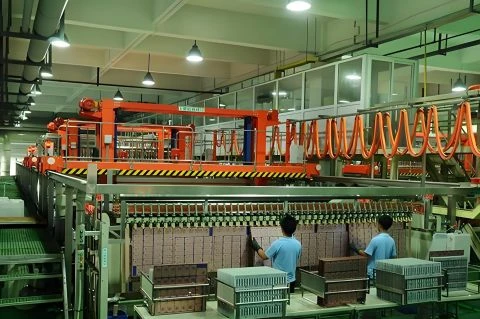
Process costs are driven by "touches." Every time a board must go back through a lamination press (for blind vias) or a plating bath, the cost rises. The most effective way to reduce cost is to design for a "single lamination" process—meaning all layers are pressed together at once.
Tech / Decision Lever → Practical Impact
| Decision Lever / Spec | Practical Impact (Yield/Cost/Reliability) |
|---|---|
| Via Technology | Through-hole is cheapest. Blind/Buried vias require sequential lamination, increasing cost by 30-50% and extending lead time. |
| Trace/Space Width | Standard ≥5mil is low cost. <3.5mil requires advanced etching and AOI inspection, lowering yield and raising price. |
| Board Size & Shape | Irregular shapes reduce panel utilization efficiency. Rectangular boards allow tighter nesting, reducing waste material costs. |
| Surface Finish | HASL/OSP are cheapest. ENIG is standard. Hard Gold or ENEPIG adds significant cost due to precious metal consumption. |
PCB Cost Drivers and How to Reduce Them Rules and Specifications
To keep manufacturing efficient, adhere to these standard specifications. Deviating from these values pushes the board into "Advanced" or "HDI" pricing tiers.
| Rule | Recommended Value | Why it matters | How to verify |
|---|---|---|---|
| Minimum Trace/Space | 5mil / 5mil (0.127mm) | Going below 4mil requires tighter process controls and lowers yield, increasing unit cost. | Run DRC in CAD with 5mil constraints. |
| Minimum Drill Size | 0.2mm - 0.3mm | Drills smaller than 0.2mm break easily and have a shorter life, increasing tooling costs. | Check the Drill Table in your Fab Drawing. |
| Annular Ring | ≥ 4mil (pad vs hole) | Allows for mechanical drill wander without breakout. Tighter rings require expensive X-ray alignment. | Visual check in CAM or Gerber Viewer. |
| Layer Count | Even Numbers (4, 6, 8) | Laminates come in cores (2 layers). Odd layer counts (e.g., 5) require non-standard processing and warp easily. | Check Stackup Manager in CAD. |
PCB Cost Drivers and How to Reduce Them Implementation Steps
Reducing costs isn't just about picking the cheapest material; it's about optimizing the design for the factory floor. Follow this process to strip unnecessary costs from your design.
Implementation Process
Step-by-step execution guide
Review signal requirements. Can you route a 6-layer board on 4 layers by reducing component density slightly? Reducing layer count is the single biggest cost saver.
Unless you have BGA components with <0.5mm pitch, avoid blind/buried vias. Convert them to through-hole vias to remove sequential lamination cycles.
Consult APTPCB engineering for preferred panel sizes. Adjusting your board dimensions by a few millimeters can sometimes allow 20% more boards per panel.
Select ENIG or OSP as your default. Only use Hard Gold for edge connectors or ENEPIG for wire bonding. Avoid mixing finishes if possible.
PCB Cost Drivers and How to Reduce Them Troubleshooting
Even with good intentions, costs can spike unexpectedly. Here are common scenarios and how to fix them.
1. The "Accidental Hdi" Spike
Symptom: The quote comes back 2x higher than expected. Cause: The designer used a "blind via" definition in the CAD tool for a standard via, or placed a via-in-pad without requesting filling/capping. Fix: Check the drill table. Ensure all drills are defined as "Through Hole" (Layer 1 to Layer N). If HDI PCB technology is not strictly required for routing density, remove it.
2. The "Over-Toleranced" Board
Symptom: High scrap rate or "no-bid" from standard shops. Cause: Specifying IPC Class 3 or +/- 5% impedance control on a simple board. Fix: Relax impedance tolerance to +/- 10% (standard). Use IPC Class 2 for general electronics. Tighter tolerances require slower processing and more frequent inspections.
3. Material Lead Time Issues
Symptom: High cost due to "expedited material procurement." Cause: Specifying a specific brand (e.g., "Isola 370HR") when a generic "High-TG FR4 equivalent" would work. Fix: Allow "or equivalent" on your Fab Drawing. This lets the factory use their stocked material (e.g., Shengyi or KB), avoiding special order fees and delays.
6 Essential Rules for PCB Cost Drivers and How to Reduce Them (Cheat Sheet)
| Rule / Guideline | Why It Matters (Physics/Cost) | Target Value / Action |
|---|---|---|
| Minimize Layer Count | Each layer pair adds material and processing steps. | Route on 4 or 6 layers if possible. |
| Avoid Blind/Buried Vias | Requires sequential lamination (press -> drill -> press), doubling cost. | Use Through-Hole Vias only. |
| Standardize Material | Exotic materials have MOQs and shipping fees. | FR4 TG150/170 (Generic). |
| Relax Impedance Specs | Tight tolerances (+/- 5%) increase scrap risk. | +/- 10% Tolerance. |
| Optimize Panelization | You pay for the whole panel, including waste. | >80% Utilization efficiency. |
| Standard Surface Finish | Gold is expensive; HASL is cheap but uneven. | ENIG (Best balance). |
FAQ
Q: Does the shape of the PCB affect the price?
A: Yes. Rectangular or square boards are the most efficient to panelize. Irregular shapes (circles, L-shapes) create "dead space" on the production panel that cannot be used, yet you still pay for that laminate.
Q: Is ENIG always more expensive than HASL?
A: Generally, yes. HASL (Hot Air Solder Leveling) is the cheapest finish. However, for fine-pitch components, HASL's uneven surface can cause assembly defects. In those cases, the "cost" of rework makes PCB Surface Finishes like ENIG the more economical choice overall.
Q: How much does changing from FR4 to Rogers material cost?
A: It varies, but Rogers or Teflon materials can be 3x to 10x the cost of standard FR4. Only use these materials for the specific layers carrying high-frequency signals (Hybrid Stackup) to mitigate costs.
Q: What is the most expensive via type?
A: Filled and capped via-in-pad is expensive, but stacked microvias (used in advanced HDI) are the most costly due to the extreme precision and multiple plating cycles required.
Request a Quote / DFM Review for PCB Cost Drivers and How to Reduce Them
To get an accurate cost assessment and free DFM check, please prepare the following:
- Gerber Files: RS-274X format (all layers, drill files, outline).
- Fabrication Drawing: Specifying material (e.g., FR4 TG170), thickness (e.g., 1.6mm), and finish (e.g., ENIG).
- Quantity: Prototype (5-10 pcs) vs. Mass Production estimates.
- Special Requirements: Impedance control reports or specific stackup requests.
You can submit these directly via our Quote page.
Conclusion
Reducing PCB cost drivers is rarely about sacrificing quality; it is about eliminating over-engineering. By sticking to standard materials, minimizing layer counts, and avoiding unnecessary via complexity, you can significantly lower your unit costs while maintaining high reliability. Always verify your design against standard manufacturing capabilities before freezing the layout.
Signed, The Engineering Team at APTPCB