
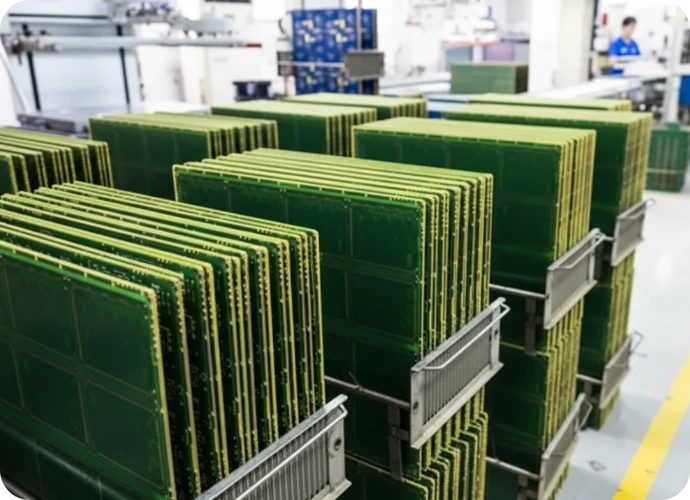
Achieving high-yield assembly for modern electronics hinges almost entirely on the quality of the solder paste printing process. As components shrink to 0201 imperials, 0.4mm pitch BGAs, and uQFNs, the margin for error vanishes, making strict adherence to pcba stencil design rules for fine pitch the primary defense against bridging and insufficient solder. This guide is designed for engineers and procurement leads who need to specify stencils that work on the first run, minimizing the back-and-forth with suppliers like APTPCB (APTPCB PCB Factory) and ensuring production stability.
What this guide covers (and who it’s for)
This playbook moves beyond basic IPC standards to address the practical realities of sourcing and validating stencils for high-density designs. It is written for:
- Hardware Engineers who need to define aperture modifications in their Gerber files to prevent DFM pushback.
- Procurement Leads who need to audit a PCBA supplier’s capability to handle fine pitch printing without excessive rework costs.
- Quality Managers looking for a structured validation plan to approve new stencil vendors or complex PCBA NPIs.
You will find actionable specifications for aperture ratios, foil thickness selection, and surface treatments, along with a risk assessment framework to predict where printing defects are most likely to occur.
When fine-pitch stencil rules matter most (and when they don’t)
Understanding the scope of these rules ensures you apply the right level of engineering rigor to your specific project needs.
This approach is essential when:
- Component Pitch is < 0.5mm: For BGAs, CSPs, or QFNs where standard aperture openings would cause bridging.
- Mixed Technology Exists: You have large connectors requiring heavy paste volume alongside 0201 passives requiring minute deposits.
- High Reliability is Required: Automotive or medical applications where voiding criteria are strict (e.g., IPC Class 3).
- Yield is Critical: You are scaling to volume and cannot afford the downtime associated with frequent under-stencil wiping.
This approach may be overkill when:
- Standard Pitch Only: If the smallest component is 0805 or 1.27mm pitch SOIC, standard IPC-7525 guidelines are sufficient.
- Prototype Hand Assembly: If you are hand-soldering or using a manual prototype printer, tight tolerances might be lost in the manual process noise.
- Low-Cost Consumer Toys: Where minor voiding or rework is acceptable to keep NRE costs absolute minimum.
What to define (before ordering the stencil)
To ensure your manufacturer delivers a stencil capable of fine pitch performance, you must move from general requests to specific engineering requirements.
- Aperture Area Ratio (> 0.66): The area of the aperture opening divided by the area of the aperture walls must exceed 0.66. This ensures the paste releases from the stencil rather than sticking to the walls. For fine pitch, aim for > 0.70 if possible.
- Aspect Ratio (> 1.5): The width of the aperture divided by the foil thickness. This is less critical than Area Ratio but still a vital check for structural integrity of the paste brick.
- Foil Thickness Selection: Specify 3 mil (0.08mm) to 4 mil (0.10mm) for 0.4mm pitch components. If large components are present, you may need a "step-up" or "step-down" stencil design.
- Aperture Reduction (10% - 20%): Global 1:1 openings rarely work for fine pitch. Define a reduction of 10-20% by area to prevent bridging, or specify "supplier to optimize for IPC Class X".
- Corner Rounding (Radius): Square apertures trap paste in corners. Require rounded corners (e.g., 0.06mm radius) to improve paste release and reduce clogging.
- Wall Smoothness (Electropolishing): For pitch below 0.5mm, laser-cut walls are too rough. Mandate electropolishing or nickel-electroforming to smooth the walls and improve release.
- Nanocoating Application: Specify a flux-repellent nanocoating. This reduces the frequency of under-stencil cleaning and prevents paste from bridging on the bottom side of the stencil.
- Fiducial Marks: Ensure half-etch fiducials are included on the stencil that match the PCB fiducials exactly for precise machine alignment.
- Material Type: Request Fine Grain Stainless Steel or Nickel. Standard stainless steel may have grain structures that interfere with very small apertures.
- Frame Tension: Specify a high-tension frame (e.g., > 40N/cm) to prevent the stencil from "coining" or distorting during the separation phase of the print cycle.
- Step-Down Keep-Out Zones: If using a step-down stencil, define a keep-out zone (typically 3-5mm) around the stepped area where no components can be placed to allow the squeegee to conform.
- Gerber Format: Provide paste layers in RS-274X format with clear identification of the component side and any specific panelization requirements.
Common print defects (root causes & prevention)
Even with perfect specs, physical variables in the printing process can introduce defects; understanding these risks allows you to detect them before reflow.
- Paste Bridging (Shorts):
- Why: Apertures are too large or stencil gasket seal is poor.
- Detection: 2D/3D SPI shows paste connecting pads.
- Prevention: Increase aperture reduction and ensure high frame tension.
- Insufficient Paste (Opens):
- Why: Area ratio is too low (< 0.66), causing paste to stick in the aperture.
- Detection: SPI shows low volume/height; visual check shows clogged stencil.
- Prevention: Thinner foil, electropolishing, or larger aperture (if spacing allows).
- Solder Balling (Mid-Chip):
- Why: Paste squeezes under the stencil due to poor gasketing or "sneezing" during separation.
- Detection: X-ray or visual inspection after reflow.
- Prevention: Nanocoating to repel flux; frequent under-stencil cleaning cycles.
- Tombstoning (0402/0201):
- Why: Uneven paste volume on opposing pads creates unequal torque during wetting.
- Detection: Visual inspection post-reflow.
- Prevention: "Home plate" or "U-shape" aperture designs to reduce paste volume and centering force.
- BGA Voiding:
- Why: Volatiles in the flux get trapped under the component body.
- Detection: bga voiding control: stencil, reflow, and x-ray criteria are essential here.
- Prevention: Use window-pane (grid) aperture designs instead of full circles to allow gas escape channels.
- Stencil Stretch/Distortion:
- Why: High squeegee pressure or low-quality mesh degrades tension over time.
- Detection: Misalignment increases over the production run.
- Prevention: Regular tension monitoring; use cast aluminum frames.
- Scooping:
- Why: Squeegee blade dips into large apertures, removing paste.
- Detection: Low paste height in center of large pads.
- Prevention: Grid-pattern large pads to support the squeegee blade.
- Paste Dry-Out:
- Why: Paste sits on stencil too long; viscosity changes.
- Detection: Poor rolling of paste bead; erratic print quality.
- Prevention: Strict process life monitoring; add fresh paste regularly.
Validation & acceptance (print checks and criteria)
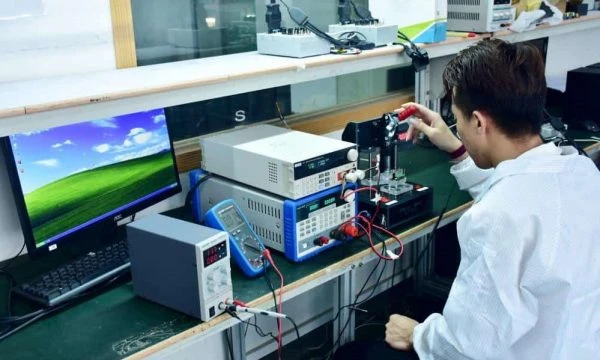
To ensure your pcba stencil design rules for fine pitch are effective, you must implement a rigorous validation plan during the NPI phase.
- Incoming Stencil Inspection:
- Objective: Verify physical manufacturing quality.
- Method: Visual check under microscope; tension gauge measurement.
- Criteria: Walls are smooth (no burrs); tension > 40N/cm; fiducials are clear.
- Solder Paste Inspection (SPI):
- Objective: Quantify print consistency.
- Method: 3D SPI machine measuring volume, area, height, and offset.
- Criteria: Cpk > 1.67 for volume; no bridging; height within ±15% of foil thickness.
- Print Speed/Pressure DOE:
- Objective: Find the process window.
- Method: Run prints at varying speeds (20-100mm/s) and pressures.
- Criteria: Identify the range where SPI pass rate is stable (clean wipe, good release).
- X-Ray Inspection (BGA/QFN):
- Objective: Check for hidden defects under components.
- Method: 2D or 3D X-ray post-reflow.
- Criteria: Voiding < 25% (or per IPC Class 3); consistent ball shape; no shorts.
- Cross-Section Analysis (Optional):
- Objective: Verify intermetallic formation and wetting on fine pitch.
- Method: Destructive testing of a sample board.
- Criteria: Good fillet formation; no "head-in-pillow" defects.
- First Article Inspection (FAI):
- Objective: Verify component placement relative to paste.
- Method: Automated FAI system or high-res optical scan.
- Criteria: 100% match to BOM and polarity; paste alignment is centered.
- Defect Correlation Analysis:
- Objective: Compare inspection methods.
- Method: aoi vs x-ray inspection: what defects each catches.
- Criteria: AOI catches skew/tombstone; X-ray catches bridging/voiding under BGAs. Ensure both are active.
- Stencil Life Cycle Log:
- Objective: Track wear.
- Method: Log number of prints.
- Criteria: Re-tension or replace after 50,000-100,000 prints (depending on material).
Supplier checklist (RFQ + audit questions)

Use this checklist to vet suppliers like APTPCB or others to ensure they can execute your fine pitch requirements.
RFQ Inputs (What you send)
- Gerber files with clear Paste Top/Bottom layers.
- PCB Panelization drawing (array dimensions, rails).
- Component datasheet for the finest pitch part (e.g., BGA footprint).
- Desired foil thickness (e.g., 0.10mm or 0.12mm).
- Requirement for "Step-down" or "Step-up" if applicable.
- Frame size preference (e.g., 29" x 29").
- Fiducial locations and types.
- Text/Labeling requirements (Part number, Date, Thickness).
Capability Proof (What they must have)
- Do they use high-precision laser cutters (e.g., LPKF)?
- Can they perform electropolishing in-house or via certified partner?
- Do they offer nanocoating services?
- Can they manufacture stepped stencils (chemical etch or welding)?
- What is their minimum aperture tolerance (e.g., ±5µm)?
- Do they have DFM engineers to suggest aperture modifications?
Quality System & Traceability
- Do they perform 100% optical scan of the cut stencil?
- Is tension measurement recorded for every frame?
- Can they provide a "Check Plot" overlay for approval before cutting?
- Do they have a cleanroom environment for stencil finishing?
- Is the steel mesh grade certified (e.g., Japanese steel)?
- How do they package stencils to prevent bending during shipping?
Change Control & Delivery
- What is the standard lead time (usually 24-48 hours)?
- Do they archive aperture modification data for re-orders?
- Is there a formal approval process for aperture changes?
- Can they expedite replacement if a stencil is damaged?
- Do they provide a digital report of the modifications made?
- Is there a warranty on frame tension retention?
Decision guidance (trade-offs you can choose)
Engineering is about trade-offs. Here is how to navigate the conflicting constraints in fine pitch stencil design.
- Nanocoating vs. Cost:
- Trade-off: Nanocoating adds 20-30% to the stencil cost.
- Decision: If you have < 0.5mm pitch BGAs or QFNs, choose Nanocoating. The savings in cleaning time and rework justify the cost immediately. For 0805/SOIC only, skip it.
- Step-Down vs. Compromise Thickness:
- Trade-off: Step-down stencils are expensive and fragile. Using a single thinner foil (e.g., 4 mil) compromises solder volume for large connectors.
- Decision: If reliability is paramount, choose Step-Down. If cost is the driver, use the thinner foil and overprint (aperture > pad) the large connectors to regain volume.
- Electroform vs. Laser Cut:
- Trade-off: Electroform (Nickel) offers superior release but costs 3-5x more and has longer lead times.
- Decision: For standard fine pitch (0.4mm), Laser Cut + Electropolish is usually sufficient. Only choose Electroform for ultra-fine pitch (0.3mm) or wafer-level CSPs.
- Oversized Apertures vs. Solder Balling:
- Trade-off: Larger apertures release better but risk solder balls.
- Decision: Prioritize Area Ratio. If the ratio is < 0.66, you must enlarge the aperture or thin the foil. Do not risk insufficient release to prevent solder balls; solve solder balls with gasketing/cleaning.
- Plastic vs. Aluminum Frame:
- Trade-off: Plastic/Eco frames save shipping weight/cost but hold less tension.
- Decision: For fine pitch, always choose Cast Aluminum. Tension stability is non-negotiable for registration accuracy.
FAQ
1. What is the absolute minimum pitch for a standard laser-cut stencil? With electropolishing and high-quality steel, standard laser cutting can handle down to 0.4mm pitch. Below that (0.3mm), electroformed stencils are recommended.
2. How do I calculate the Area Ratio myself? Area Ratio = (Area of Opening) / (Area of Aperture Walls). For a circle: Diameter / (4 * Thickness). For a rectangle: (LW) / (2(L+W)*Thickness). Ensure the result is > 0.66.
3. Can I use the same stencil for leaded and lead-free paste? Technically yes, but it is risky due to cross-contamination. It is best practice to maintain separate stencils clearly labeled to avoid mixing alloy types.
4. Why does my BGA have voids even with a good stencil? bga voiding control: stencil, reflow, and x-ray criteria interact. If the stencil is good, check the reflow profile (soak time too short?) or the paste age (flux exhausted?).
5. How often should the stencil be cleaned during printing? For fine pitch without nanocoating, clean every 3-5 prints. With nanocoating, you can often extend this to every 15-20 prints, improving throughput.
6. What is the difference between chemical etching and laser cutting? Chemical etching is older technology, less precise, and creates an "hourglass" wall profile. Laser cutting is the standard for SMT, providing vertical or slightly tapered walls for better release.
7. Should I use square or circular apertures for BGAs? Square apertures with rounded corners release more paste volume than circles of the same diameter. Use squares (squircles) unless the pads are extremely close, risking bridging.
8. What defects does SPI miss? SPI catches volume/height issues. It cannot detect if the wrong paste alloy was used, or if the board is warped (unless the SPI has warpage compensation). It also doesn't see defects that happen during reflow.
Related pages & tools
- PCB Stencil Services – Explore custom stencil fabrication options including nanocoating and step-down designs.
- BGA & Fine Pitch Assembly – Deep dive into the assembly challenges specific to BGA and QFN components.
- SPI Inspection Capabilities – Learn how Solder Paste Inspection validates your stencil design before components are placed.
- DFM Guidelines – Comprehensive design rules to ensure your PCB layout is ready for mass production.
- X-Ray Inspection – Understand how X-ray verifies voiding and shorts under bottom-terminated components.
Conclusion (next steps)
Mastering pcba stencil design rules for fine pitch is not just about following a formula; it is about balancing physical constraints to ensure repeatable paste release. By defining strict aperture ratios, selecting the right foil thickness, and validating with SPI and X-ray, you can virtually eliminate printing defects.
When you are ready to move from design to production, prepare your data package for DFM review. Ensure you include your Gerber files (specifically the paste layers), fabrication drawing with stackup details, and any specific volume requirements. A thorough review by the engineering team at APTPCB will help catch aperture violations early, ensuring your fine pitch components are soldered correctly the first time.