
Quick Answer (30 seconds)
A Playout Server PCB is the backbone of broadcast automation, requiring 99.999% uptime, low-latency video signal processing (SDI/IP), and robust thermal management. Unlike standard compute nodes, these boards prioritize signal integrity for video streams and redundancy for continuous operation.
- Material Selection: Use Low-Loss materials (Panasonic Megtron 6 or Isola Tachyon) for high-speed serial video interfaces (12G-SDI, 25GbE).
- Impedance Control: Strict ±5% tolerance on differential pairs is non-negotiable to prevent video jitter and signal reflection.
- Thermal Design: In a dense 1U Server PCB configuration, airflow is limited; use heavy copper (2oz+) on inner layers and thermal vias under processors.
- Redundancy: Design dual power inputs and redundant RAID controller paths to prevent single-point failures during live transmission.
- Surface Finish: Electroless Nickel Immersion Gold (ENIG) or Hard Gold is required for corrosion resistance and reliable contact with expansion cards.
- Validation: Automated Optical Inspection (AOI) and Time Domain Reflectometry (TDR) are mandatory to verify physical and electrical integrity before assembly.
When Playout Server PCB applies (and when it doesn’t)
Understanding the specific operational environment of a playout server ensures the PCB is neither over-engineered nor under-spec'd.
When to use Playout Server PCB standards:
- 24/7 Broadcast Centers: Environments where the server runs continuously for years without rebooting.
- High-Bandwidth Video Processing: Systems handling uncompressed 4K/8K video, requiring high-speed PCIe lanes and FPGA integration.
- Compact Rack Environments: Designs fitting into 1U Server PCB or 2U Server PCB chassis where thermal density is critical.
- Hybrid Architectures: Systems integrating AI Server PCB modules for real-time ad insertion or video upscaling.
- Mission-Critical Signaling: Applications requiring Genlock/PTP synchronization where timing jitter causes on-air artifacts.
When standard server PCBs suffice:
- Offline Storage: Cold storage servers (NAS) that do not handle real-time video streams.
- General Office IT: Domain controllers or print servers where 99.9% uptime is acceptable and latency is not critical.
- Development Sandboxes: Non-production environments used for software testing where hardware redundancy adds unnecessary cost.
- Low-Power Edge Nodes: Simple IoT gateways that do not require the thermal dissipation capabilities of a broadcast server.
Rules & specifications
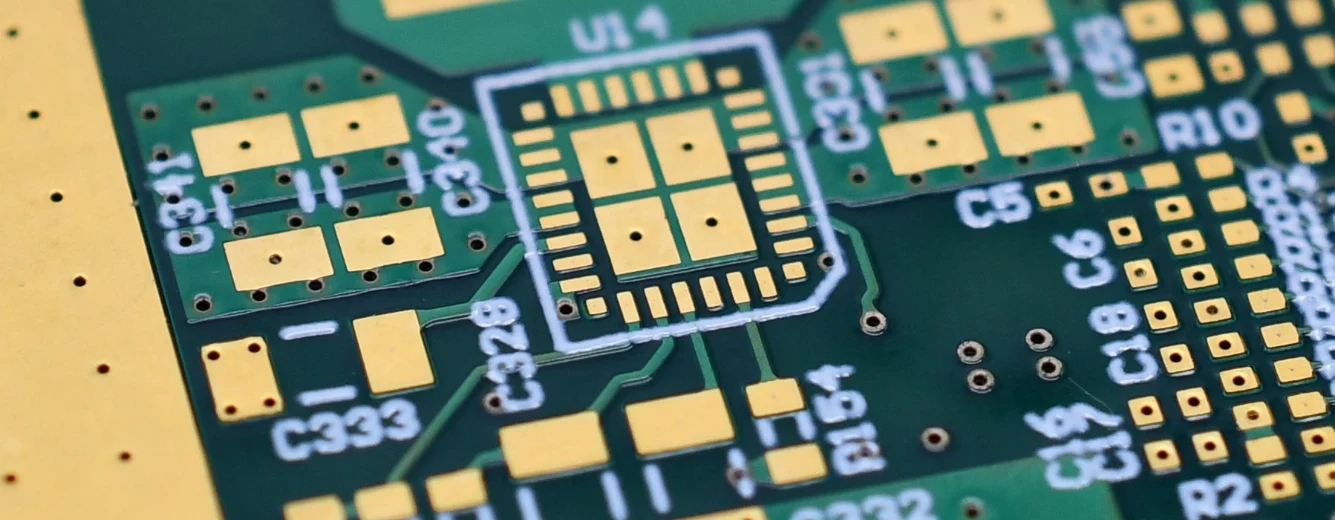
Designing a Playout Server PCB requires adherence to strict parameters to ensure signal integrity and mechanical durability. APTPCB (APTPCB PCB Factory) recommends the following specifications for broadcast-grade hardware.
| Rule | Recommended Value/Range | Why it matters | How to verify | If ignored |
|---|---|---|---|---|
| Base Material | High Tg (>170°C), Low Df (<0.005 @ 10GHz) | Prevents signal attenuation in 12G-SDI/IP streams and withstands continuous heat. | Review datasheet (e.g., Megtron 6) & IPC-4101 check. | Signal loss, video dropouts, and delamination over time. |
| Layer Count | 10 to 22 Layers | Provides sufficient routing space for high-speed signals and solid ground planes for EMI shielding. | Stackup analysis in CAM software. | Crosstalk, EMI failures, and inability to route complex BGAs. |
| Impedance Tolerance | 85Ω / 100Ω ±5% | Matches differential pair standards (PCIe, USB, SDI) to minimize reflections. | TDR (Time Domain Reflectometry) testing coupons. | Data corruption, "sparkles" in video, link training failures. |
| Copper Weight | Outer: 1oz; Inner: 1oz or 2oz | Handles high current for CPUs/GPUs and aids in heat spreading. | Microsection analysis. | Voltage droop on power rails, localized overheating. |
| Via Technology | Blind & Buried, Backdrilling | Reduces signal stubs that act as antennas, degrading high-frequency performance. | X-ray inspection and signal integrity simulation. | High bit error rates (BER) on high-speed links. |
| Surface Finish | ENIG or Hard Gold (fingers) | Ensures flat surface for BGA mounting and durability for insertion slots. | Visual inspection & X-ray Fluorescence (XRF). | Poor solder joints (black pad), contact oxidation. |
| Thermal Vias | 0.3mm hole, 0.6mm pitch | Transfers heat from hot components (FPGA/CPU) to inner ground planes. | Thermal imaging during load testing. | Component throttling or thermal shutdown during live broadcast. |
| Aspect Ratio | Max 10:1 (standard), 12:1 (advanced) | Determines the plating reliability inside deep vias. | Cross-section analysis. | Open circuits in vias, intermittent failures. |
| Solder Mask | Matte Green or Black | Matte finish reduces glare for automated assembly; specific colors aid thermal emission. | Visual check. | Solder bridging during assembly if dam size is insufficient. |
| Cleanliness | <1.56 µg/cm² NaCl equivalent | Prevents electrochemical migration (dendrites) in humid server rooms. | Ionic contamination testing (ROSE test). | Short circuits developing months after deployment. |
Implementation steps
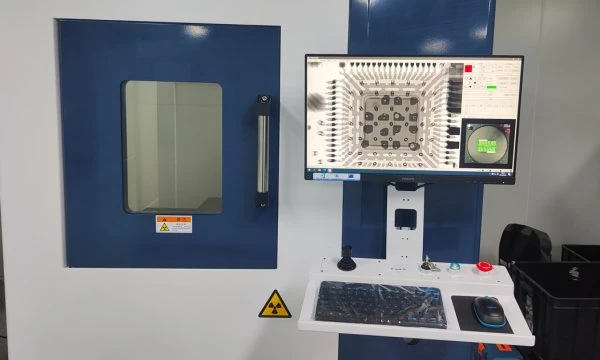
Building a reliable Playout Server PCB involves a systematic approach from schematic to final fabrication.
Requirement Analysis & Architecture Definition
- Action: Define the I/O requirements (e.g., 4x 12G-SDI, 2x 25GbE) and form factor (e.g., 2U Server PCB).
- Key Parameter: Total bandwidth throughput.
- Acceptance Check: Block diagram approved by system architects.
Material Selection & Stackup Design
- Action: Select low-loss materials compatible with lead-free assembly. Consult Megtron PCB materials for high-frequency options.
- Key Parameter: Dielectric Constant (Dk) and Dissipation Factor (Df).
- Acceptance Check: Stackup impedance calculation matches target (e.g., 100Ω diff).
Component Placement & Thermal Planning
- Action: Place high-heat components (CPU, FPGA) to align with chassis airflow.
- Key Parameter: Airflow CFM vs. Component TDP.
- Acceptance Check: 3D thermal simulation shows no hotspots >85°C.
High-Speed Routing & Signal Integrity
- Action: Route critical video and data lanes first. Use backdrilling for signals >10 Gbps.
- Key Parameter: Skew <5ps within differential pairs.
- Acceptance Check: Simulation eye diagrams show open eyes with sufficient margin.
Power Delivery Network (PDN) Design
- Action: Design power planes to handle transient loads from ARM Server PCB or x86 processors.
- Key Parameter: DC IR drop <2%.
- Acceptance Check: PDN simulation confirms voltage stability under load steps.
DFM & DFA Review
- Action: Run Design for Manufacturing checks to ensure the board can be fabricated efficiently. Use DFM Guidelines to identify spacing violations.
- Key Parameter: Min trace/space, aspect ratio.
- Acceptance Check: Zero critical DFM errors reported by the fab house.
Fabrication & Test Coupon Validation
- Action: Manufacture the bare board and test impedance coupons.
- Key Parameter: TDR measurements.
- Acceptance Check: All impedance values within ±5% or ±10% as specified.
Assembly & Functional Burn-in
- Action: Assemble components and run stress tests (temperature cycling).
- Key Parameter: 48-hour burn-in at elevated temp.
- Acceptance Check: No system crashes or video artifacts during burn-in.
Failure modes & troubleshooting
Even with robust design, issues can arise. This table maps common symptoms in Playout Server PCBs to their root causes and fixes.
| Symptom | Potential Causes | Diagnostic Check | Fix / Remediation | Prevention |
|---|---|---|---|---|
| Video Jitter / Dropouts | Impedance mismatch, signal reflection, excessive via stubs. | TDR analysis on signal lines; Eye diagram scope test. | Backdrill vias; re-terminate signals. | Use strict impedance control and low-loss materials. |
| Intermittent Boot Failure | Cold solder joints, BGA warping, or PDN instability. | X-ray inspection of BGA; Oscilloscope on power rails. | Reflow BGA; add decoupling capacitors. | Use high Tg materials to match BGA CTE; improve PDN design. |
| Overheating (Throttling) | Insufficient thermal vias, blocked airflow, poor heatsink contact. | Thermal camera imaging; check fan tachometers. | Add thermal pads; increase fan speed. | Design thermal vias under hot pads; optimize component placement. |
| PCIe Link Training Fail | Skew between lanes, insertion loss too high. | Protocol analyzer; check trace lengths. | Retime signals (if possible); redesign routing. | Length match traces precisely; use lower roughness copper. |
| Corrosion on Contacts | Poor surface finish, high humidity environment. | Visual inspection under microscope. | Clean contacts (temporary); replace board. | Specify Hard Gold for edge connectors; apply conformal coating. |
| Random Resets | EMI interference, ground bounce. | Near-field probe scanning. | Add shielding cans; improve grounding. | Solid ground planes; stitch vias around board edge. |
| Memory Errors (ECC) | Crosstalk between DDR traces. | Signal integrity simulation. | Reduce speed (temp); redesign layout. | Increase spacing between DDR byte lanes (3W rule). |
Design decisions
When configuring a Playout Server PCB, the physical form factor heavily influences the design strategy.
1U Server PCB Constraints In a 1U chassis, vertical height is severely restricted. Components must be low-profile. The PCB often requires a "spread" layout to prevent heat concentration since large heatsinks cannot be used. Airflow is linear from front to back, so memory modules and CPUs must be aligned to not block air to downstream components.
2U and 4U Server PCB Flexibility A 2U Server PCB allows for vertical riser cards, enabling more PCIe expansion slots for capture cards or GPUs. This form factor permits taller heatsinks, reducing the reliance on extremely high-speed fans. 4U Server PCB designs are typically used for massive storage or multi-GPU setups, often requiring thicker PCBs (2.4mm or 3.2mm) to support the mechanical weight of heavy cards.
Architecture: x86 vs. ARM vs. AI
- x86: Standard for compatibility, but runs hot. Requires robust VRMs (Voltage Regulator Modules) on the PCB.
- ARM Server PCB: Increasing in popularity for high density and power efficiency. The PCB power delivery network is often simpler, but signal routing for many-core interconnects can be complex.
- AI Server PCB: These boards integrate dedicated NPU (Neural Processing Unit) modules. They require massive current capabilities (often >100A for the AI cluster) and extremely low-inductance power planes.
FAQ
Q: What is the best PCB material for 12G-SDI playout servers? A: Materials with a low Dissipation Factor (Df) are essential. Panasonic Megtron 6 or Isola Tachyon are industry standards. Standard FR4 is too lossy for 12G-SDI signals over long trace lengths.
Q: How does backdrilling improve Playout Server PCB performance? A: Backdrilling removes the unused portion of a plated through-hole (via stub).
- Reduces signal reflection.
- Improves signal integrity for speeds >10 Gbps.
- Essential for thick PCBs (e.g., 20+ layers).
Q: Can I use standard FR4 for a 1U Server PCB? A: Only for low-speed sections or simple controllers. For the mainboard handling high-speed video or PCIe Gen 4/5, standard FR4 will cause significant signal attenuation and likely fail.
Q: What is the typical lead time for a high-layer count server PCB? A: Due to the complexity (lamination cycles, backdrilling, impedance testing), lead times are typically 10-15 working days. APTPCB offers expedited services for urgent prototyping.
Q: Why is Hard Gold preferred over ENIG for server memory slots? A: Hard Gold is more durable against mechanical wear.
- ENIG: Good for soldering and flat surfaces.
- Hard Gold: Essential for edge connectors (PCIe, RAM) that undergo repeated insertion cycles.
Q: How do I calculate the required impedance for my traces? A: You must consider the dielectric constant, trace width, and distance to the reference plane. Use an Impedance Calculator to get initial values, then refine with the fab house.
Q: What is the impact of copper roughness on signal integrity? A: At high frequencies (like 25Gbps), rough copper acts like a resistor, increasing loss (skin effect). Use VLP (Very Low Profile) or HVLP copper foil for server-grade PCBs.
Q: How many layers are needed for an AI Server PCB? A: AI servers often require 16 to 24 layers. This accommodates the massive number of connections between the GPU/NPU and memory, as well as the heavy power planes required.
Q: What testing is mandatory for server PCBs? A: Beyond standard E-test (Open/Short), server PCBs require TDR (Impedance), IST (Interconnect Stress Test) for via reliability, and often HATS (Highly Accelerated Thermal Shock).
Q: Does APTPCB support blind and buried vias for server boards? A: Yes. Blind and buried vias are necessary for high-density interconnect (HDI) designs found in modern server architectures to save space and improve signal integrity.
Related pages & tools
- PCB Manufacturing Services: Full capabilities for high-layer count and server-grade boards.
- Megtron PCB Materials: Details on low-loss materials required for high-speed video servers.
- Impedance Calculator: Verify your trace width and spacing for 85Ω and 100Ω requirements.
- DFM Guidelines: Design rules to ensure your server PCB is manufacturable without delays.
Glossary (key terms)
| Term | Definition | Relevance to Playout Server PCB |
|---|---|---|
| 12G-SDI | 12 Gigabit Serial Digital Interface. | Standard for 4K video transport; requires strict PCB impedance control. |
| Backdrilling | Process of drilling out via stubs. | Critical for reducing signal distortion in high-speed links (>10Gbps). |
| CTE | Coefficient of Thermal Expansion. | Mismatch causes solder joint cracks; vital for large BGA reliability. |
| Df (Dissipation Factor) | Measure of signal energy lost as heat in the material. | Lower Df is better; crucial for long video signal traces. |
| Genlock | Generator Locking. | Synchronization signal; PCB layout must protect this from noise. |
| HDI | High Density Interconnect. | Uses microvias to fit more connections in smaller spaces (e.g., 1U servers). |
| PCIe Gen 5 | Peripheral Component Interconnect Express (32 GT/s). | Common in modern servers; requires ultra-low loss materials. |
| PDN | Power Delivery Network. | The system of traces/planes delivering power; must be stable for CPUs. |
| Tg (Glass Transition Temp) | Temp where PCB material turns soft. | High Tg (>170°C) prevents warping in hot server chassis. |
| TDR | Time Domain Reflectometry. | Method to measure impedance; used to validate PCB manufacturing quality. |
Conclusion
Designing a Playout Server PCB is a balance of high-speed signal integrity, thermal management, and absolute reliability. Whether you are building a compact 1U Server PCB or a high-performance AI Server PCB, the margin for error is slim. Using the right materials, verifying impedance, and adhering to strict DFM rules are the keys to a successful deployment.
APTPCB specializes in high-reliability PCB fabrication for the broadcast and server industries. From material selection to final impedance validation, we ensure your hardware meets the demands of 24/7 operation. Submit your Gerber files today for a technical review.