
polyimide flex for cryostat: what this playbook covers (and who it’s for)
Engineers and procurement leads designing electronics for deep cryogenic environments face a unique set of failure modes that standard IPC specifications do not fully address. When temperatures drop near absolute zero, materials contract, adhesives shatter, and conductors change resistance. This guide focuses specifically on sourcing polyimide flex for cryostat applications, ensuring that the flexible circuits you procure can survive thermal cycling down to liquid helium temperatures (4K) or below without delamination or continuity loss.
This playbook is designed for technical buyers and hardware engineers who need to move from a prototype concept to a reliable, manufacturable component. We move beyond basic datasheets to discuss the practical realities of manufacturing cryogenic flex circuits. You will find actionable specifications for materials, a breakdown of hidden risks like CTE mismatch, and a validation plan to prove reliability before mass production.
At APTPCB (APTPCB PCB Factory), we understand that cryogenic failures are often silent until the system is cooled, making post-assembly repair impossible. This guide helps you define the right requirements upfront, select the correct polyimide FPC materials selection, and audit your supply chain effectively. Whether you are building quantum computing interfaces, space-flight sensors, or superconducting magnet instrumentation, this document serves as your roadmap to safe procurement.
When polyimide flex for cryostat is the right approach (and when it isn’t)
Understanding the scope of this guide requires knowing exactly when polyimide flex for cryostat is the superior engineering choice compared to rigid cabling or standard PCBs.
It is the right approach when:
- Thermal Isolation is Critical: You need to bridge a temperature gradient (e.g., from 300K room temperature to 4K stages) with minimal thermal conductivity. Thin polyimide flex traces conduct significantly less heat than bulky wire harnesses.
- Space is Constrained: Inside a dilution refrigerator or a satellite dewar, volume is premium. Flex circuits can route high-density signals through narrow feedthroughs where round cables would not fit.
- Vibration Resistance is Needed: In launch environments or cryocooler operation, the low mass of flex circuits reduces the risk of fatigue failure compared to heavy rigid boards or loose wires.
- High-Density Interconnects: You require hundreds of signal lines (e.g., for qubit control) in a small footprint. Flex allows for fine-pitch routing that manual wiring cannot achieve reliably.
It might not be the right approach when:
- Load Bearing is Required: If the circuit must mechanically support heavy components without a stiffener, a rigid-flex or rigid PCB is better.
- Ultra-High Current: While flex can carry current, extremely high amperage might require heavy copper that compromises the flexibility needed for installation, making busbars a better option.
- Simple Point-to-Point: For a single sensor connection where thermal load isn't a major concern, a simple twisted pair wire might be cheaper and faster to prototype than a custom flex circuit.
Specs & requirements (before quoting)
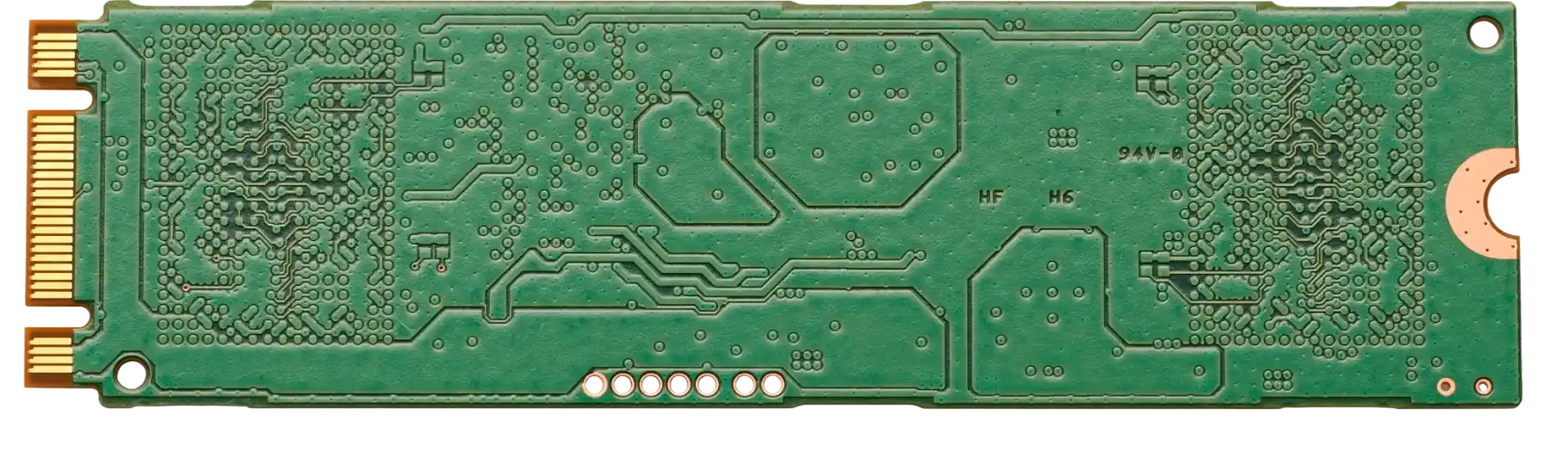
Once you have determined that polyimide flex for cryostat is the correct solution, you must translate performance needs into concrete manufacturing specifications to avoid costly revisions.
- Base Material Type: Specify "Adhesive-less Polyimide" (e.g., DuPont Pyralux AP or Panasonic Felios). Adhesives often become brittle and crack at cryogenic temperatures; adhesive-less laminates rely on direct bonding which is far more stable.
- Polyimide Thickness: Define a range, typically 25µm (1 mil) to 50µm (2 mils). Thinner substrates reduce thermal mass and improve flexibility at low temps, but are harder to handle during assembly.
- Copper Type: Explicitly request RA vs ED copper for flex. Rolled Annealed (RA) copper has a grain structure that maintains better ductility at cryogenic temperatures compared to standard Electro-Deposited (ED) copper, reducing the risk of micro-cracking.
- Copper Weight: Keep copper as thin as electrically possible (e.g., 1/3 oz or 1/2 oz). Thicker copper increases the Coefficient of Thermal Expansion (CTE) mismatch stress against the polyimide.
- Coverlay Strategy: Specify polyimide coverlay rather than flexible solder mask. Solder masks can crack and flake off at extremely low temperatures, creating debris in sensitive vacuum environments.
- Surface Finish: Require ENIG (Electroless Nickel Immersion Gold) or Soft Gold. Tin finishes carry a risk of "tin pest" (transformation to powder) at low temperatures and whisker growth, which are catastrophic in vacuum.
- Outgassing Specs: If the cryostat is also a vacuum chamber, specify ASTM E595 compliance (TML < 1.0%, CVCM < 0.1%) to prevent volatile compounds from condensing on optics or sensors.
- Impedance Control: Define target impedance (e.g., 50Ω ±10%) at room temperature, but ask the supplier to account for the dielectric constant change of polyimide at cryogenic temperatures if data is available.
- Minimum Bend Radius: Define the installation bend radius. At cryogenic temperatures, the "dynamic" bend capability drops; design for "static" install-and-forget bends wherever possible.
- Via Structure: Avoid stacked microvias if possible. Staggered vias or through-holes are generally more robust against the Z-axis expansion/contraction cycles inherent in cooling down and warming up.
- Tear Stops: Mandate copper tear stops at all internal corners and slit terminations to prevent propagation of tears when the material stiffens.
- Documentation: Require a Certificate of Conformance (CoC) that specifically traces the lot number of the base polyimide to ensure no unauthorized material substitution.
Hidden risks (root causes & prevention)
Defining specs is the first step, but understanding where polyimide flex for cryostat projects typically fail allows you to preemptively mitigate these risks during the design and NPI phases.
CTE Mismatch Delamination
- Why: Copper shrinks less than polyimide as temperature drops. This shear force can separate the copper from the substrate.
- Detect: Cross-section analysis after thermal shock testing.
- Prevent: Use adhesive-less base materials and keep copper coverage balanced on both sides of the flex.
Solder Joint Embrittlement
- Why: Standard SAC305 solder can become brittle at 4K.
- Detect: Shear testing at low temperatures (difficult) or thermal cycling followed by electrical continuity checks.
- Prevent: Consider specialized solders (like Indium-based) or reinforce joints with low-stress epoxy underfill approved for cryo use.
Micro-via Barrel Cracks
- Why: Z-axis expansion/contraction during thermal cycling fatigues the copper plating in the via barrel.
- Detect: Intermittent open circuits that appear only when cold.
- Prevent: Use larger via diameters and ensure plating thickness meets Class 3 requirements (min 25µm average).
Coverlay Voiding
- Why: Air trapped under the coverlay expands during cure or contracts during cooling, creating stress points.
- Detect: Visual inspection and acoustic microscopy.
- Prevent: Require vacuum lamination and strict process control on coverlay pressing.
Moisture Absorption
- Why: Polyimide is hygroscopic. Absorbed water freezes and expands, causing delamination or "popcorning" during rapid temperature changes.
- Detect: Bake-out weight loss tests.
- Prevent: Mandate a bake-out process immediately before assembly and shipping; store in moisture barrier bags (MBB).
Work Hardening of Copper
- Why: Repeated bending during installation, followed by cryogenic hardening, snaps traces.
- Detect: Resistance increase in dynamic flex testing.
- Prevent: Design as "static flex" (bend once to install). Use RA copper.
Plating Nodules
- Why: Rough plating can puncture thin insulation layers when compressed.
- Detect: High-magnification optical inspection.
- Prevent: Tighter controls on the plating bath chemistry.
Dimensional Instability
- Why: Polyimide shrinks during processing and further during cooling.
- Detect: Fit-check failures in precision machined housings.
- Prevent: Add tolerance allowances for shrinkage; use fiducials for alignment rather than board edges.
Outgassing Contamination
- Why: Non-compliant adhesives or inks release volatiles in vacuum.
- Detect: TQCM (Thermoelectric Quartz Crystal Microbalance) testing.
- Prevent: Ban marking inks; use laser marking or copper etching for text.
Connector Failure
- Why: The plastic housing of a connector shrinks differently than the PCB, stressing solder joints.
- Detect: Visual inspection of solder fillets after cycling.
- Prevent: Use connectors designed for mil-aero/cryo use or use compliant pin headers.
Tin Whiskers
- Why: Pure tin plating builds stress and extrudes conductive whiskers, shorting pads.
- Detect: SEM (Scanning Electron Microscope) inspection over time.
- Prevent: Strictly forbid pure tin; require leaded solder or ENIG finish.
Handling Damage
- Why: Operators treat flex like rigid boards; creasing creates invisible fractures.
- Detect: Visual inspection for "white lines" (crazing) in the polyimide.
- Prevent: Design stiffeners at handling points; train operators on flex handling.
Validation plan (what to test, when, and what “pass” means)
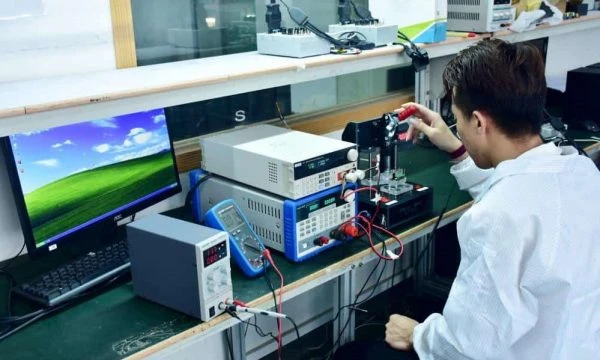
To ensure your polyimide flex for cryostat will perform in the field, you must implement a validation plan that mimics the harsh reality of the operating environment.
Visual Inspection (Pre-Test)
- Objective: Ensure workmanship meets IPC-6013 Class 3.
- Method: 10x-40x microscopy.
- Criteria: No lifting pads, no exposed copper where covered, no blisters.
Dimensional Verification
- Objective: Confirm mechanical fit.
- Method: CMM or optical measurement.
- Criteria: All dimensions within tolerance; hole positions accurate relative to datums.
Initial Electrical Test
- Objective: Baseline performance.
- Method: Flying probe or bed-of-nails (Open/Short).
- Criteria: 100% continuity; isolation resistance > 100MΩ.
Thermal Shock (Cycling)
- Objective: Stress test material interfaces.
- Method: Cycle between liquid nitrogen (-196°C) and room temp (+25°C) for 10-20 cycles.
- Criteria: No physical delamination visible.
Post-Cycling Continuity Monitor
- Objective: Detect intermittent failures.
- Method: Monitor resistance of a daisy-chain test coupon during the cool-down phase.
- Criteria: Resistance change should follow predicted copper resistivity curve; no spikes indicating cracks.
Dielectric Withstanding Voltage (Hi-Pot)
- Objective: Verify insulation integrity after stress.
- Method: Apply voltage (e.g., 500VDC) between adjacent nets.
- Criteria: Leakage current < 1µA; no breakdown.
Microsection Analysis
- Objective: Inspect internal integrity.
- Method: Cross-section vias and layer interfaces.
- Criteria: No barrel cracks, no foil separations, plating thickness within spec.
Solderability Test
- Objective: Ensure pads accept solder reliably.
- Method: Dip and look / wetting balance test.
- Criteria: >95% coverage, smooth wetting.
Peel Strength Test
- Objective: Verify bond strength.
- Method: IPC-TM-650 2.4.9.
- Criteria: Meets datasheet spec for the laminate (e.g., > 1.0 N/mm).
Outgassing Test (if Vacuum)
- Objective: Verify vacuum compatibility.
- Method: ASTM E595 (24hr at 125°C in vacuum).
- Criteria: TML < 1.0%, CVCM < 0.1%.
Flexibility Test (Bend Test)
- Objective: Confirm ductility.
- Method: Mandrel bend test at room temp (and cryo if feasible).
- Criteria: No cracking of conductors after specified bend cycles.
Impedance Verification
- Objective: Signal integrity check.
- Method: TDR (Time Domain Reflectometry).
- Criteria: Within ±10% of design target.
Supplier checklist (RFQ + audit questions)
Use this checklist to vet potential partners for polyimide flex for cryostat manufacturing. A "yes" to these questions indicates a supplier capable of handling high-reliability requirements.
RFQ Inputs (What you send)
- Gerber files (RS-274X or X2) with clear board outline.
- Fabrication drawing specifying "Adhesive-less Polyimide" and "RA Copper".
- Stackup diagram with dielectric thicknesses defined.
- Netlist for electrical verification.
- Specification for ENIG plating thickness.
- Requirement for IPC-6013 Class 3 (or Class 2 with specific add-ons).
- Defined "Static" vs "Dynamic" areas on the drawing.
- Outgassing requirements (if applicable).
- Panelization requirements (if assembly is automated).
- Request for First Article Inspection (FAI) report.
Capability Proof (What they must show)
- Do they have experience with adhesive-less laminates (Pyralux AP/Felios)?
- Can they handle thin core processing (25µm) without handling damage?
- Do they offer laser drilling for microvias?
- Can they provide impedance control reports?
- Do they have in-house cross-sectioning capability?
- Have they manufactured for aerospace, medical, or scientific research sectors?
- Can they perform ionic contamination testing?
- Do they have vacuum lamination presses (critical for void-free flex)?
Quality System & Traceability
- Is the facility ISO 9001 certified? (AS9100 is a bonus).
- Do they track material lot numbers to the finished PCB date code?
- Is there an automated optical inspection (AOI) step for inner layers?
- Do they perform 100% electrical testing (flying probe)?
- Can they provide a Certificate of Conformance (CoC) listing all materials?
- Is there a system to quarantine non-conforming material?
- Do they have a documented calibration schedule for test equipment?
- Are operators trained to IPC-A-600 standards?
Change Control & Delivery
- Do they have a formal PCN (Product Change Notification) process?
- Will they notify you before changing material suppliers?
- Can they support quick-turn prototypes (NPI) and then scale to production?
- Do they offer DFM (Design for Manufacturing) reviews before starting?
- Is packaging suitable for flex (moisture barrier bags, stiffeners)?
- What is their standard lead time for this technology?
- Do they have a disaster recovery plan?
- Are they financially stable (low risk of sudden closure)?
Decision guidance (trade-offs you can actually choose)
Every engineering decision involves compromise. Here is how to navigate the trade-offs in polyimide flex for cryostat design.
- Flexibility vs. Current Capacity: If you prioritize maximum flexibility, choose 1/3 oz copper; otherwise, if you need higher current, choose 1 oz copper but increase the bend radius significantly.
- Signal Integrity vs. Thickness: If you prioritize strict impedance control, choose a thicker dielectric to allow wider traces; otherwise, choose thin dielectrics for better flexibility and lower thermal mass.
- Cost vs. Reliability: If you prioritize absolute reliability (space/quantum), choose adhesive-less polyimide; otherwise, for less critical terrestrial cryogenics, standard modified epoxy adhesives might suffice (but carry higher risk).
- Density vs. Yield: If you prioritize high density, choose microvias and fine lines (3 mil/3 mil); otherwise, choose through-holes and wider lines (5 mil/5 mil) for higher manufacturing yield and lower cost.
- Assembly Ease vs. Profile: If you prioritize easy assembly, add rigid stiffeners at connector areas; otherwise, if space is the ultimate constraint, omit stiffeners but require specialized fixtures for assembly.
- Surface Finish: If you prioritize wire bonding, choose ENEPIG or Soft Gold; otherwise, for standard soldering, ENIG is the standard reliable choice.
FAQ
Q: Can I use standard FR4 for cryogenic applications? A: FR4 can survive down to roughly -40°C or -50°C, but at cryogenic temps (4K), the resin becomes extremely brittle and can shatter. Polyimide is far superior for deep freeze environments.
Q: Why is adhesive-less polyimide recommended? A: Adhesives (acrylic or epoxy) have different CTEs than polyimide and copper, leading to delamination. Adhesive-less laminates bond copper directly to the polyimide, eliminating this weak link.
Q: What is the difference between RA and ED copper? A: RA vs ED copper for flex is about grain structure. RA (Rolled Annealed) has horizontal grains that allow bending; ED (Electro-Deposited) has vertical grains. RA is tougher and better for cryo cycling.
Q: Do I need solder mask on a cryo flex? A: It is better to use a polyimide coverlay. Standard solder mask inks can crack at low temperatures. Coverlay is the same material as the base, ensuring matched thermal expansion.
Q: How do I prevent outgassing in a vacuum cryostat? A: Specify materials that meet ASTM E595. Ensure the PCB is baked out before use to remove moisture. Avoid marking inks and use laser marking instead.
Q: Can APTPCB manufacture these specialized circuits? A: Yes, APTPCB has experience with high-reliability flex and rigid-flex circuits using advanced materials suitable for demanding environments.
Q: What is the minimum bend radius for cryo flex? A: A safe rule of thumb is 10x the thickness of the flex circuit for static bends. Avoid dynamic bending (continuous flexing) at cryogenic temperatures if possible.
Q: How does resistance change at cryogenic temperatures? A: Copper conductivity improves significantly (resistance drops) as temperature decreases. This is beneficial for signal integrity and power loss, but must be accounted for in current calculations.
Related pages & tools
- Flex PCB Capabilities – Explore our full range of flexible circuit manufacturing capabilities, including multi-layer and high-density options.
- PCB Material Selection – Detailed information on various substrate materials, including high-performance polyimides and adhesive-less options.
- PCB Quality Control – Learn about our rigorous testing protocols, including thermal cycling and cross-section analysis, to ensure reliability.
- Turnkey PCB Assembly – We can handle the delicate assembly of your flex circuits, ensuring connectors and components are attached without damage.
- DFM Guidelines – Download our design guide to optimize your flex circuit layout for manufacturability and yield.
- Rigid-Flex PCB – If you need the stability of a rigid board combined with the flexibility of polyimide, check our rigid-flex solutions.
Request a quote
Ready to validate your design? Request a Quote today and our engineering team will perform a comprehensive DFM review to ensure your specs meet cryogenic requirements.
For the fastest and most accurate quote, please provide:
- Gerber Files: RS-274X or ODB++ format.
- Stackup Details: Specify "Adhesive-less Polyimide" and total thickness.
- Fabrication Drawing: Include notes on RA copper, ENIG finish, and Class 3 requirements.
- Volume: Prototype quantity vs. expected production volume.
- Testing Needs: Mention if you require specific thermal shock or impedance testing.
Conclusion
Successfully deploying polyimide flex for cryostat applications requires more than just a good circuit design; it demands a rigorous approach to material selection, risk mitigation, and supplier validation. By prioritizing adhesive-less substrates, specifying RA copper, and enforcing strict quality controls, you can eliminate the most common failure modes associated with deep cryogenic environments. Use the checklists and validation plans in this guide to align your team and your supplier, ensuring that your critical systems perform reliably even at the edge of absolute zero.