
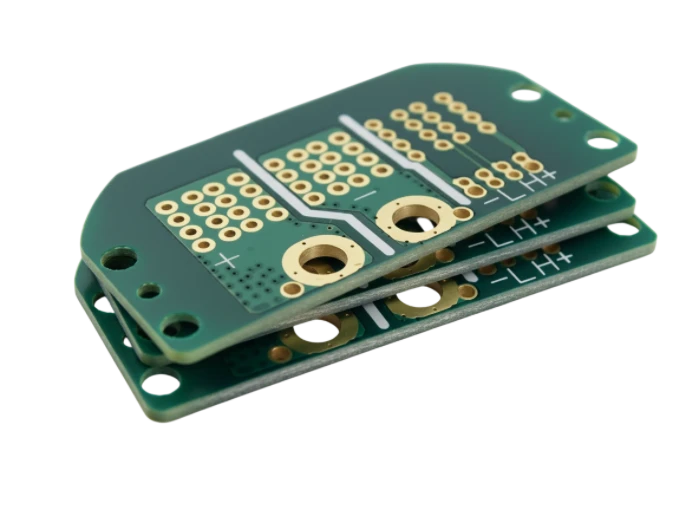
What is a Power Monitor PCB and what applications need one?
A Power Monitor PCB is a specialized circuit board designed to measure and process electrical parameters including voltage, current, power, power factor, and energy consumption.
These boards are used in:
- Industrial energy meters.
- EV charging systems.
- Server rack power distribution units.
- Smart appliances.
- Renewable energy monitoring equipment.
- Laboratory AC power analyzers.
- Industrial control and automation systems.
Unlike a standard control PCB, a Power Monitor PCB is part of the measurement system. PCB material selection, copper resistance, isolation structure, thermal performance, and manufacturing consistency can directly influence measurement accuracy and product reliability.
A laboratory Power Analyzer PCB may require high precision and low measurement drift. An industrial Power Meter PCB may place greater importance on isolation safety, environmental durability, and certification requirements.
Should you use a dedicated Power Monitor PCB instead of a standard PCB?
A dedicated Power Monitor PCB is appropriate when the product requires controlled measurement performance or operates in demanding electrical environments.
| Requirement | Why a specialized Power Monitor PCB is needed |
|---|---|
| High measurement accuracy | Trace resistance, thermal drift, grounding, and sensing layout affect readings |
| High voltage monitoring | Creepage, clearance, insulation materials, and isolation barriers must be controlled |
| Current above 10A | Copper thickness and thermal design become important |
| Switching power measurement | Noise control and return paths affect signal quality |
| Product certification | PCB materials and manufacturing processes must support compliance requirements |
A standard PCB can work for simple applications where the board only detects power presence, operates below 50V, or uses external measurement modules.
What specifications should you define before ordering a Power Monitor PCB?
The quality of a Power Monitor PCB quotation depends on how clearly the engineering requirements are defined.
A complete specification should include:
- Operating voltage range.
- Maximum current.
- Measurement accuracy target.
- Frequency range.
- Isolation requirements.
- Environmental conditions.
- Copper thickness requirements.
- PCB material requirements.
- Required inspection and testing.
- Annual production volume.
A supplier cannot accurately evaluate manufacturing difficulty from Gerber files alone. The electrical operating conditions determine the correct fabrication approach.
How do you select PCB material and stackup for power monitoring?
Industrial Power Monitor PCBs commonly use high-Tg FR4 materials with Tg values around 170°C or higher to improve reliability during thermal cycling.
For high-voltage applications, specify materials based on:
- Dielectric strength.
- Comparative tracking index (CTI).
- Moisture resistance.
- Operating temperature.
- Required insulation system.
A typical stackup separates:
- High-voltage AC routing.
- Analog measurement circuits.
- Digital communication signals.
- Ground reference planes.
Four-layer and six-layer designs are commonly selected when improved grounding, shielding, and noise control are required.
Power Monitor PCB selection matrix: which design approach fits your application?
| Design requirement | Common choice | When this approach fits |
|---|---|---|
| Low-current measurement | 1oz copper PCB | Small sensing circuits with limited heat generation |
| Industrial current monitoring | 2oz–3oz copper PCB | Continuous operation with higher current paths |
| Very high current paths | Heavy copper PCB or busbar integration | Applications where trace resistance and thermal rise become limiting factors |
| Precision current measurement | Shunt resistor with Kelvin sensing | Accurate measurement systems requiring controlled resistance |
| Compact thermal management | Metal Core PCB | Designs where heat spreading is a primary constraint |
| Mixed analog and digital signals | Four-layer or six-layer PCB | Systems requiring improved grounding and noise control |
| High-voltage isolation | Controlled creepage, clearance, and isolation slots | Products operating with hazardous voltage |
Use heavy copper PCB solutions when current paths require lower resistance and improved thermal performance.
How much copper thickness does a Power Monitor PCB need?
Copper thickness affects resistance, voltage drop, current capacity, and heat generation. Before freezing conductor dimensions, the PCB trace width calculator gives a first-pass IPC-2221 check of width and temperature rise.
Typical approaches include:
| Application | Recommended copper approach |
|---|---|
| Low-current sensing | 1oz copper |
| Industrial monitoring | 2oz–3oz copper |
| High-current paths | Heavy copper PCB solutions or busbar integration |
The fabrication drawing should define finished copper thickness, not only starting copper weight.
For example:
- Starting copper: 2oz.
- Finished plated copper: defined minimum thickness.
- Verification: microsection inspection.
For precision measurement, copper resistance variation can introduce measurement errors. Current sensing layouts should use controlled geometry and Kelvin connections where required.
What isolation requirements affect Power Monitor PCB design?
High-voltage Power Monitor PCBs must maintain separation between hazardous voltage domains and low-voltage electronics.
Important design parameters include:
- Working voltage.
- Insulation class.
- Pollution degree.
- Creepage distance.
- Clearance distance.
- Material CTI rating.
- Environmental exposure.
Isolation slots can increase creepage distance without significantly increasing board size.
The PCB supplier should review:
- High-voltage spacing.
- Solder mask effects.
- Slot dimensions.
- Layer-to-layer isolation.
- Dielectric requirements.
What are the biggest Power Monitor PCB manufacturing risks?
| Failure mode | Root cause | Manufacturing control |
|---|---|---|
| Hi-Pot failure | Insufficient dielectric strength or incorrect isolation spacing | Verify stackup, material selection, and electrical testing |
| Incorrect current measurement | Resistance variation in sensing paths | Control copper thickness and inspect critical dimensions |
| Thermal overheating | Insufficient copper area or poor heat spreading | Validate temperature rise under maximum load |
| Electrochemical migration | Ionic contamination and moisture exposure | Perform cleanliness control and contamination testing |
| Delamination | Moisture absorption or thermal stress | Use suitable materials and controlled lamination processes |
| Creepage violation | Layout errors or reduced effective spacing | Perform DRC review and inspect isolation structures |
| Warpage | Uneven copper distribution | Balance copper layers during fabrication |
| Signal instability | Poor grounding or excessive noise coupling | Separate measurement and switching domains |
How do you validate a Power Monitor PCB before mass production?
A reliable validation plan combines electrical testing, material verification, and thermal evaluation.
Dielectric strength testing
Purpose:
Confirm isolation performance between high-voltage and low-voltage regions.
Testing typically includes:
- Hi-Pot testing.
- Leakage current measurement.
- Verification against product requirements.
Acceptance requires no breakdown and leakage current within the defined specification.
Copper thickness verification
Purpose:
Confirm that current-carrying structures meet the fabrication requirement.
Methods include:
- Microsection analysis.
- Production coupon inspection.
Thermal performance testing
Purpose:
Confirm that the PCB remains within operating temperature limits.
Method:
- Operate the PCB at maximum rated current.
- Measure temperature rise using thermal imaging.
Current sensing accuracy testing
Purpose:
Verify that PCB resistance does not introduce unacceptable measurement error.
Methods include:
- Precision resistance measurement.
- Calibration verification.
- Comparison against design tolerance.
Cleanliness testing
Purpose:
Reduce insulation degradation risk.
Methods include:
- Ionic contamination testing.
- Process cleanliness verification.
How should you select a Power Monitor PCB supplier?
A qualified supplier should demonstrate manufacturing capability, not only provide a competitive quotation.
Power Monitor PCB supplier checklist
| Evaluation area | Supplier capability to confirm |
|---|---|
| Engineering support | DFM review, stackup recommendations, isolation review |
| High-current capability | Heavy copper PCB manufacturing experience |
| High-voltage capability | Creepage, clearance, slot machining experience |
| Quality system | ISO 9001 processes and material traceability |
| Inspection | Microsection reports, electrical test records, dimensional inspection |
| Production control | Change notification process and lot traceability |
| Reliability support | Thermal testing and validation assistance |
Before selecting a supplier, request:
- Manufacturing capability statement.
- Sample inspection reports.
- Material certifications.
- Previous high-voltage PCB experience.
- Testing procedures.
- Quality documentation.
What files are required for a Power Monitor PCB RFQ?
A complete RFQ package should include:
- Gerber files.
- Drill files.
- Mechanical drawings.
- Layer stackup.
- Copper thickness requirements.
- Voltage isolation requirements.
- Testing specifications.
- Production quantity.
- Assembly requirements.
For thermal-focused designs, review high thermal conductivity boards.
For production preparation, use DFM Guidelines for Power Electronics.
For reliability verification, reference rigorous testing protocols.
Power Monitor PCB FAQ
Does heavier copper always improve a Power Monitor PCB?
No. Heavy copper reduces resistance and improves current handling, but it also increases fabrication complexity and cost. The correct copper thickness depends on current, allowable temperature rise, board size, and mechanical requirements.
Is a four-layer PCB better than a two-layer Power Monitor PCB?
For many precision measurement applications, yes. Additional layers provide improved grounding, shielding, and separation between noisy power circuits and sensitive analog measurement areas.
Do Power Monitor PCBs require conformal coating?
Many industrial applications use conformal coating to improve protection against moisture, dust, and contamination that may affect insulation reliability.
What accuracy can a Power Monitor PCB achieve?
Accuracy depends on the complete measurement chain, including sensors, ADC resolution, calibration, temperature drift, PCB resistance, and layout quality.
Request a Power Monitor PCB manufacturing review
A reliable Power Monitor PCB requires coordinated decisions across electrical design, PCB fabrication, and validation testing.
Provide:
- Gerber files.
- Stackup information.
- Copper requirements.
- Isolation requirements.
- Testing requirements.
- Production volume.
Conclusion
Selecting a Power Monitor PCB is not only a board fabrication decision. The PCB becomes part of the measurement architecture, affecting accuracy, safety, thermal behavior, and long-term reliability.
The strongest results come from defining isolation requirements, copper structures, thermal limits, validation methods, and supplier capabilities before production begins. A structured engineering review reduces manufacturing risk and helps create accurate, safe, and repeatable power monitoring products.