
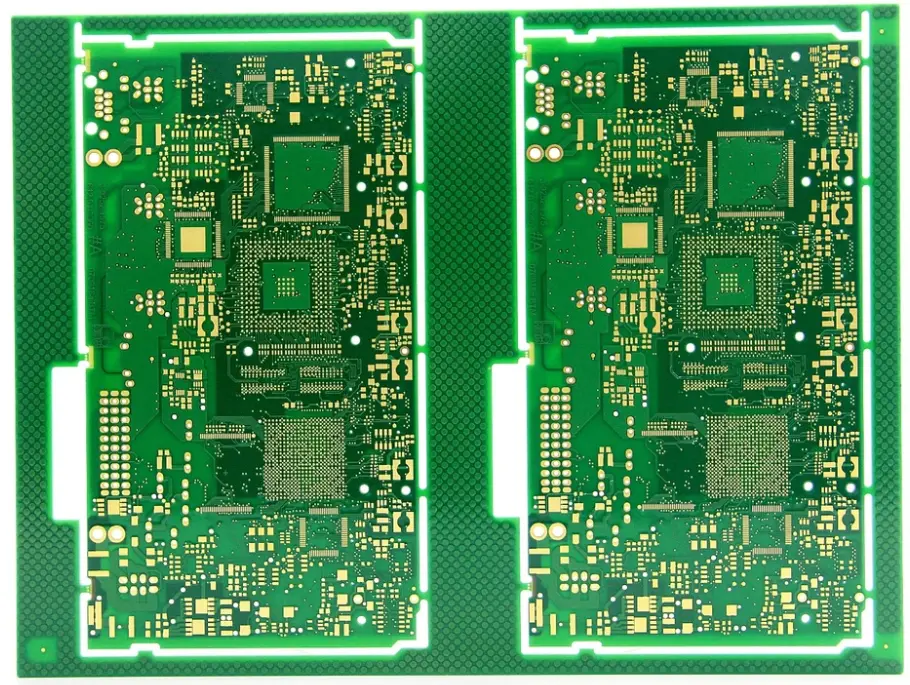
Selecting a Power Quality Analyzer PCB requires more than choosing a multilayer board or routing sensitive signals correctly. The PCB becomes the foundation for measurement accuracy, electrical safety, thermal stability, and production reliability.
A power analyzer must measure real-world electrical systems where noise, transients, harmonics, and high voltages exist at the same time. The PCB must separate these environments while maintaining accurate signal conversion.
For engineers, the key decisions involve measurement requirements, isolation architecture, analog performance, and validation. For procurement teams, the key question is whether a PCB supplier can provide manufacturing evidence before production begins.
APTPCB supports PCB fabrication and PCBA manufacturing for demanding electronic applications. This guide explains the design decisions and supplier requirements that affect Power Quality Analyzer PCB success.
What PCB requirements should be defined before designing a Power Quality Analyzer?
The PCB architecture should begin with the measurement application.
A Power Quality Analyzer PCB normally integrates:
- High-voltage input protection.
- Voltage and current sensing circuits.
- Analog front-end conditioning.
- Precision ADC interfaces.
- MCU, FPGA, or processor control.
- Communication interfaces.
- Power management circuits.
- Data storage and event recording functions.
The required PCB structure depends on whether the product measures AC systems, DC systems, or both.
How do AC, DC, and hybrid Power Analyzer PCBs differ?
| Application | Main measurement challenge | PCB design priority |
|---|---|---|
| AC Power Analyzer | Harmonics, phase accuracy, frequency variation, voltage events | Isolation, low-noise analog routing, waveform accuracy |
| DC Power Analyzer | Ripple, current accuracy, efficiency measurement, battery behavior | Thermal control, current paths, low-resistance connections |
| Hybrid Energy Analyzer | AC/DC conversion systems such as renewable energy and EV platforms | Mixed-signal separation, bandwidth, isolation strategy |
An industrial AC Power Analyzer may require high-voltage isolation and accurate harmonic measurement. A Battery Analyzer PCB generally places more emphasis on current measurement stability and thermal drift.
Which Power Quality parameters affect PCB design decisions?
Measurement specifications directly influence PCB requirements.
| Parameter | PCB design impact | Verification approach |
|---|---|---|
| Voltage sags and swells | Requires correct input protection and sensing range | Functional testing and input protection review |
| Total Harmonic Distortion (THD) | Sensitive to analog noise and grounding problems | Signal validation and calibration |
| Power Factor | Requires accurate voltage/current timing | Phase calibration testing |
| Transients | Requires protection and sufficient bandwidth | Transient testing |
| Frequency stability | Depends on clock and sampling accuracy | Frequency validation |
| Flicker | Requires low-noise measurement paths | ADC and signal review |
| Three-phase unbalance | Requires matched measurement channels | Channel calibration |
How do you select the right PCB structure for a Power Quality Analyzer?
How should high-voltage isolation be designed?
High-voltage measurement sections must remain physically separated from low-voltage processing areas.
Important PCB considerations include:
- Creepage distance.
- Clearance distance.
- Isolation slots.
- Protective barriers.
- Appropriate laminate selection.
The required spacing depends on voltage level, environment, pollution degree, and applicable safety requirements. A PCB manufacturer should review isolation requirements before fabrication.
Which PCB stackup is suitable for a Power Analyzer?
Mixed-signal analyzers require controlled current return paths and stable references.
A suitable multilayer design may include:
- Dedicated ground reference planes.
- Separate analog and digital regions.
- Controlled impedance layers where required.
- Power distribution layers designed for low noise.
A multi-layer laminated structure can improve signal integrity, mechanical stability, and routing flexibility.
How should thermal design be handled for current measurement?
Current sensing components generate heat that can affect measurement accuracy.
Thermal design decisions include:
- Heavy copper layers for high-current paths.
- Thermal vias beneath heat-generating components.
- Component placement away from precision analog circuits.
- Temperature compensation methods.
A Battery Analyzer PCB with high discharge currents requires especially careful thermal evaluation because resistance changes can introduce measurement errors.
What are the major Power Quality Analyzer PCB failure modes?
| Failure mode | Cause | Design and manufacturing response |
|---|---|---|
| False harmonic readings | Noise coupling into measurement circuits | Improve grounding, shielding, and analog separation |
| Measurement drift | Temperature changes affecting components | Use stable components and thermal validation |
| Isolation failure | Incorrect spacing or PCB construction | Review creepage, clearance, and fabrication capability |
| ADC instability | Poor power integrity or grounding | Improve decoupling and power distribution |
| Field failures | Environmental exposure or assembly defects | Apply inspection controls and protection methods |
What supplier evidence should be requested before PCB production?
A Power Quality Analyzer PCB supplier should be evaluated using documented evidence rather than manufacturing claims.
| Requirement | Supplier evidence |
|---|---|
| PCB layer construction | Approved stackup documentation |
| Controlled impedance | Impedance capability and test records |
| High-voltage design support | DFM review and isolation feedback |
| Assembly quality | Inspection process documentation |
| Material selection | Laminate datasheets |
| Production consistency | Quality control records |
Power Quality Analyzer PCB supplier evaluation checklist
Before selecting a manufacturing partner, confirm:
- Can the supplier review isolation requirements before production?
- Can the supplier manufacture the required layer count and materials?
- Are impedance tests available when required?
- Does the supplier provide assembly inspection records?
- Can the supplier support prototype validation and production transition?
- Are material certifications available?
- Can manufacturing feedback be provided during DFM review?
This checklist helps engineering teams identify production risks before ordering volume quantities.
Which PCB materials are used for Power Quality Analyzer applications?
Material selection depends on thermal conditions, frequency requirements, mechanical stability, and reliability targets.
High-performance designs may require High Tg PCB materials to improve resistance to thermal stress.
Important material factors include:
- Glass transition temperature (Tg).
- Dielectric properties.
- Dimensional stability.
- Thermal cycling performance.
- Moisture resistance.
The PCB material must support the analyzer design requirements, but calibration and system validation remain essential.
How should a Power Quality Analyzer PCB be validated?
A production-ready analyzer PCB normally passes through several validation stages.
Design review
Confirm:
- Measurement requirements.
- Isolation strategy.
- Stackup selection.
- Signal routing approach.
Prototype testing
Evaluate:
- Measurement accuracy.
- Thermal behavior.
- Noise performance.
- Communication reliability.
Manufacturing validation
Verify:
- Assembly quality.
- Inspection coverage.
- Material compliance.
- Production repeatability.
System calibration
Compare analyzer measurements against known references before product release.
PCB manufacturing validation supports reliability, but final instrument certification and measurement qualification remain the responsibility of the equipment manufacturer.
APTPCB provides PCB fabrication and assembly support, including manufacturing reviews for complex electronic designs. Related quality processes are described in Testing and Quality.
What information should be included in a Power Quality Analyzer PCB quote request?
A complete manufacturing package should include:
- Gerber or ODB++ files.
- BOM files.
- Assembly drawings.
- Layer stackup requirements.
- Material requirements.
- Controlled impedance requirements.
- Isolation requirements.
- Testing requirements.
Providing complete engineering information allows suppliers to identify fabrication risks before production.
Frequently asked questions
What is the difference between a Power Quality Analyzer and an oscilloscope?
An oscilloscope displays waveform behavior. A Power Quality Analyzer calculates electrical parameters such as power, energy, harmonics, and power factor while being designed for power-system measurement.
Can a Power Quality Analyzer PCB use standard FR4?
Some low-voltage designs can use standard FR4. Higher-temperature or precision applications may require advanced materials depending on electrical and reliability requirements.
How often should a Power Quality Analyzer be calibrated?
Calibration frequency depends on accuracy requirements, operating environment, and manufacturer specifications.
Does APTPCB manufacture complete Power Quality Analyzers?
APTPCB focuses on PCB fabrication and PCBA manufacturing. OEM customers provide the analyzer design, firmware, calibration process, and final product qualification.
What is the difference between an Antenna Analyzer PCB and a Power Analyzer PCB?
An Antenna Analyzer PCB measures RF characteristics such as impedance at radio frequencies. A Power Analyzer PCB measures electrical power characteristics, generally from low-frequency power systems through power-electronics-related measurement ranges.
Conclusion: How do you reduce Power Quality Analyzer PCB manufacturing risk?
A reliable Power Quality Analyzer requires alignment between measurement specifications, PCB architecture, and manufacturing capability.
The most important decisions are:
- Define AC, DC, or hybrid measurement requirements early.
- Design isolation and grounding before PCB routing begins.
- Control thermal effects on precision measurements.
- Select materials based on operating conditions.
- Request supplier evidence before production.
- Validate both PCB manufacturing quality and final analyzer performance.
For energy-related electronic systems, APTPCB supports reliable PCB manufacturing solutions for applications such as Energy Industry PCBs.
Prepare your Gerber files, stackup requirements, and testing specifications to begin a DFM review and production discussion.