
Key Takeaways
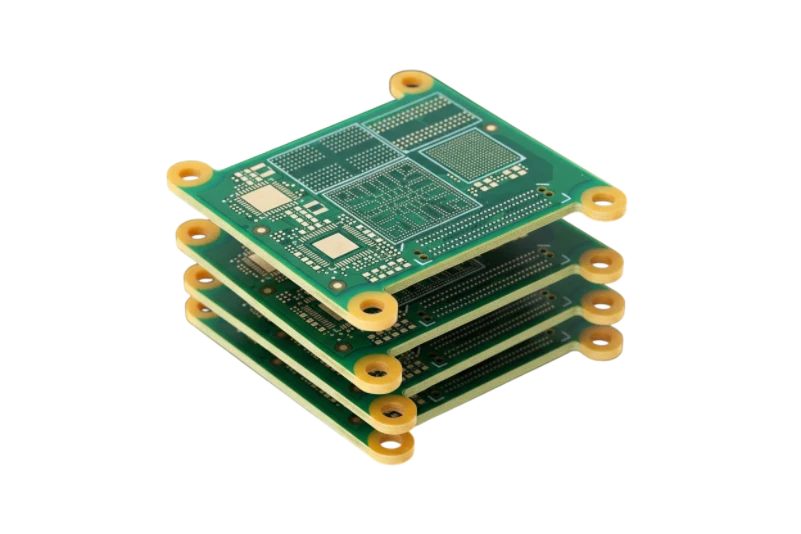
A Protein Analysis PCB is the electrical foundation of instruments that detect, separate, or quantify proteins. Unlike conventional control boards, these PCBs must preserve extremely small biological signals while surviving thermal cycling, chemical exposure, and integration with sensors or fluidic structures.
- Protein analysis PCBs are application-specific boards used in biosensors, mass spectrometry systems, electrophoresis equipment, and lab-on-chip platforms.
- The most important design priorities are signal integrity, low noise, thermal stability, contamination control, and sensor compatibility.
- Material selection depends on the detection method: FR4 for cost-effective systems, ceramic for thermal stability, PTFE/high-frequency laminates for precision signals, and flex materials for wearable devices.
- Surface finish, cleanliness, and assembly processes directly influence measurement accuracy.
- Modern designs increasingly combine PCBs with microfluidics and additive manufacturing for rapid prototyping.
What is a Protein Analysis PCB?
A Protein Analysis PCB is a printed circuit board designed specifically for analytical instruments that measure protein characteristics, concentrations, interactions, or reactions.
The PCB is not the measurement technology itself. Instead, it provides the electrical platform that enables sensors, detectors, heaters, electrodes, and communication systems to operate reliably.
Typical applications include:
Biosensor interface boards
These connect electrochemical, optical, or piezoelectric sensors to low-noise acquisition circuits.Microfluidic control boards
These manage pumps, valves, heaters, and sensors in lab-on-chip systems.Mass spectrometry and analytical instrument boards
These require stable signal acquisition and controlled impedance for high-performance measurement electronics.Electrophoresis control boards
These handle high-voltage generation and precise control of separation processes.
The correct PCB design depends on the measurement method, signal level, operating environment, and required lifetime.
What specifications matter most for a Protein Analysis PCB?
Protein analysis systems often detect weak electrical or optical signals. Small amounts of interference can reduce sensitivity, create false readings, or shorten instrument life.
| Metric | Why it matters | Typical range / Influencing factors | How to measure |
|---|---|---|---|
| Signal-to-Noise Ratio (SNR) | Weak protein signals can be hidden by electrical noise. | >60 dB may be required for high-sensitivity systems depending on architecture. Influenced by grounding, shielding, and layout. | Oscilloscope, spectrum analyzer, low-noise measurement equipment. |
| Thermal Conductivity | Controls heating and cooling stability in analytical instruments. | FR4 is approximately 0.3 W/mK; ceramic and metal-core materials provide higher conductivity. | ASTM D5470 or thermal measurement methods. |
| Surface Roughness | Affects sealing, bonding, and sensor attachment. | Ra <0.5 µm may be required for precision interfaces. | Profilometer or AFM. |
| Ionic Contamination | Residues can affect biological assays and leakage performance. | Values below 0.50 µg/cm² NaCl equivalent are commonly specified for sensitive applications. | ROSE testing or ion chromatography. |
| Dielectric Constant Stability | Maintains impedance accuracy for high-speed signals. | Variation should remain controlled across operating temperature ranges. | Vector network analyzer (VNA). |
| Biocompatibility | Required when materials contact biological samples. | Depends on exposed materials and applicable ISO 10993 testing requirements. | Biological compatibility testing. |
Which PCB material is best for protein analysis applications?
Material selection depends on whether the priority is sensitivity, heat control, mechanical flexibility, cost, or chemical resistance.
Protein Analysis PCB material selection matrix
| Application | Preferred Material | Main Advantage | Main Trade-off |
|---|---|---|---|
| General laboratory analyzer | High-Tg FR4 | Cost-effective and widely available | Lower thermal conductivity |
| Optical protein detection | Metal Core PCB or ceramic | Improved thermal stability for LEDs and detectors | More complex routing |
| Electrochemical biosensor | Ceramic or low-moisture laminate | Low leakage and stable dielectric properties | Higher material cost |
| High-frequency analytical systems | Rogers or PTFE laminate | Low signal loss and controlled impedance | 3–5x higher material cost than standard FR4 |
| Wearable protein monitoring | Polyimide flex or rigid-flex | Compact and mechanically flexible | Higher fabrication complexity |
| Microfluidic prototypes | PCB plus additive manufacturing structures | Fast iteration of fluid paths | Lower scalability for mass production |
How do you choose a Protein Analysis PCB for different instruments?
Optical protein detection
Optical systems rely on stable illumination and accurate sensor readings. Thermal drift from LEDs, lasers, or detectors can change measurement results.
Metal-core PCBs or ceramic substrates are often selected when heat removal is critical. Layout should separate noisy digital circuits from sensitive analog acquisition paths.
Electrochemical protein sensing
Electrochemical sensors require extremely low leakage currents and stable electrical interfaces.
Ceramic substrates and low-moisture materials are useful where insulation resistance and chemical stability are priorities. Surface finishes must also be evaluated because exposed metals can interact with saline or biological solutions.
Lab-on-chip and microfluidic systems
Microfluidic instruments combine electronics with fluid handling. The PCB must provide:
- Sensor connections
- Heater control
- Pump and valve drivers
- Reliable sealing areas
3D Printing PCB approaches and additive manufacturing can create rapid prototype fluidic structures directly above the electrical layer.
Electrophoresis systems
Electrophoresis boards require careful high-voltage design. Clearance, creepage distance, insulation materials, and safety testing must match the operating voltage.
Mass spectrometry and high-frequency detection
High-frequency analytical systems require controlled impedance, low dielectric loss, and stable materials. High-frequency signal integrity approaches using materials such as Rogers or Taconic laminates may be required.
What are the common Protein Analysis PCB failure modes?
| Failure Mode | PCB Cause | Engineering Impact | Design Response |
|---|---|---|---|
| Signal drift | Poor thermal control or unstable materials | Incorrect protein measurement | Match substrate and thermal design to sensor requirements |
| False readings | Noise coupling from digital circuits | Reduced detection accuracy | Use controlled grounding and shielding |
| Sensor corrosion | Incompatible surface finish | Reduced sensor lifetime | Select finishes appropriate for exposed environments |
| Fluid leakage | Poor mechanical integration | Sample contamination or device failure | Reserve sealing zones and review mechanical overlays |
| Delamination | Thermal expansion mismatch | Damaged sensor interfaces | Match CTE between PCB and attached components |
| Assembly damage | Incorrect soldering profile | Sensor failure | Define low-temperature assembly requirements |
How should a Protein Analysis PCB move from design to manufacturing?
A reliable manufacturing process begins with a complete engineering package.
Specify exact materials including laminate grade, thickness, copper weight, and surface finish. For high-frequency applications, define the required dielectric properties and impedance targets.
Key manufacturing checkpoints include:
Stackup validation
Confirm dielectric thickness, copper weight, impedance requirements, and grounding strategy.Surface finish selection
ENEPIG is commonly selected where wire bonding and sensor attachment are required. Finish thickness should be verified using XRF measurement.Cleanliness control
Define ionic cleanliness requirements because residues acceptable in industrial electronics may interfere with biological assays.Fluidic integration review
Keep vias and components away from sealing areas where possible.Electrical testing
Combine standard open/short testing with impedance testing, Hi-Pot testing, and functional testing where required.
What information should engineers provide when requesting a Protein Analysis PCB quote?
A supplier evaluation package should include:
- Gerber files with copper, solder mask, and drill layers.
- Fabrication drawing with stackup requirements.
- Material specifications.
- Sensor datasheets.
- Required voltage ratings.
- Impedance targets.
- Cleanliness requirements.
- Surface finish requirements.
- Assembly limitations for sensitive components.
Protein Analysis PCB FAQ
What is the main cost driver for a Protein Analysis PCB?
The largest cost factors are specialized laminates, ceramic materials, HDI structures, surface finishes, testing requirements, and controlled manufacturing processes.
Can standard FR4 be used for protein analysis equipment?
Yes. High-Tg FR4 is suitable for many laboratory control boards. More specialized materials are selected when thermal, electrical, chemical, or mechanical requirements exceed standard performance.
What surface finish is suitable for biosensor PCBs?
The correct finish depends on the sensor interface. ENEPIG is frequently selected for applications requiring wire bonding or reliable contact surfaces.
Does PCB manufacturing require a cleanroom?
PCB fabrication does not always require cleanroom production, but sensitive biological applications often require enhanced cleaning, packaging, and contamination control procedures.
How does additive manufacturing support Protein Analysis PCB development?
Additive manufacturing enables rapid prototyping of microfluidic structures and complex physical interfaces. It is especially useful during research and development before high-volume production.
Can APTPCB manufacture complete bioinstrumentation boards?
APTPCB provides PCB fabrication and assembly support for high-reliability applications, including specialized materials, testing requirements, and turnkey production workflows.
Resources for Protein Analysis PCB
- Medical PCB Manufacturing: Explore PCB solutions for healthcare and diagnostic equipment.
- High-Frequency PCB: Learn about controlled impedance materials for advanced detection systems.
- Ceramic PCB: Review ceramic substrate applications for thermal and stability requirements.
- Turnkey Assembly: Understand complete PCB assembly workflows.
Protein Analysis PCB glossary
| Term | Definition |
|---|---|
| Microfluidics | Technology for controlling very small fluid volumes, commonly used in lab-on-chip systems. |
| SNR | Signal-to-noise ratio, measuring useful signal strength compared with background noise. |
| Electrophoresis | A separation method using electric fields to analyze biological molecules. |
| Impedance Control | Maintaining electrical characteristics to preserve signal quality. |
| ENEPIG | Electroless Nickel Electroless Palladium Immersion Gold surface finish used for demanding applications. |
| CTE | Coefficient of thermal expansion describing material expansion with temperature changes. |
| Biosensor | A device combining biological recognition elements with electronic detection. |
| Additive Manufacturing | A production method using deposited materials to create structures, including prototype microfluidic features. |
Conclusion
A successful Protein Analysis PCB design balances electrical performance, material compatibility, thermal behavior, and biological requirements.
The strongest designs begin with the measurement method, define the required electrical performance, select the correct substrate and manufacturing process, and validate the finished board through appropriate testing.
For a DFM review or quotation, prepare the complete engineering package including Gerbers, stackup details, sensor specifications, and testing requirements. A structured PCB selection process reduces development risk and improves the reliability of protein analysis instruments.