
Definition, scope, and who this guide is for
A Railway Signal PCB is not merely a standard circuit board; it is a safety-critical component designed to operate within the harsh environment of trackside infrastructure, interlocking systems, and onboard train control units. Unlike consumer electronics that are replaced every few years, these boards must endure extreme temperature cycling, constant vibration, and high-voltage transients for lifecycles often exceeding 20 years. The failure of a single node in a signaling network can lead to catastrophic safety incidents or massive logistical delays.
This guide is written for systems engineers, procurement managers, and quality leads responsible for sourcing PCBs for rail transport and heavy transit infrastructure. It moves beyond basic fabrication notes to cover the specific engineering decisions required to achieve IPC Class 3 reliability. Whether you are designing a wayside controller or an Adaptive Signal PCB for smart rail traffic management, the goal is to bridge the gap between your design files and the manufacturing floor.
At APTPCB (APTPCB PCB Factory), we understand that the cost of a PCB in the railway sector is negligible compared to the cost of failure. This playbook outlines how to define specifications upfront, identify scale-up risks, validate performance, and audit suppliers to ensure your signaling hardware meets the rigorous demands of modern rail networks.
When to use Railway Signal PCB (and when a standard approach is better)
Understanding the operational environment defined in the previous section dictates whether you need a specialized railway-grade board or a standard industrial solution.
Use a dedicated Railway Signal PCB approach when:
- Safety Integrity Level (SIL) is involved: If the system is rated SIL 2, 3, or 4, standard commercial specs are insufficient.
- Vibration is constant: Trackside equipment and onboard systems experience continuous mechanical stress that fractures standard solder joints.
- Temperature swings are extreme: Equipment in unconditioned outdoor cabinets must survive -40°C to +85°C (or higher) without delamination.
- Longevity is required: The product lifecycle is 15–25 years, requiring materials that resist aging and suppliers who manage obsolescence.
- High Voltage/Current: Signaling relays and track circuits often handle higher power loads requiring heavy copper.
Use a standard industrial approach when:
- The PCB is for a non-critical station amenity (e.g., ticket kiosk display, breakroom HVAC control).
- The equipment is located in a climate-controlled server room with no vibration exposure.
- The system is redundant, non-safety-critical, and easily accessible for maintenance.
Railway Signal PCB specifications (materials, stackup, tolerances)
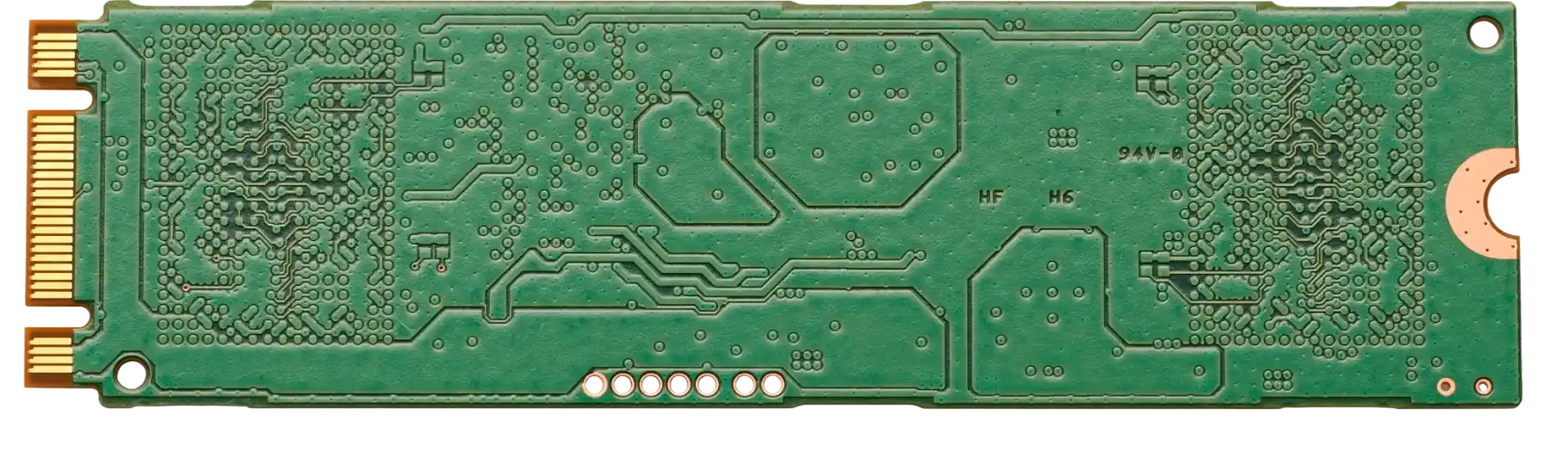
Once you determine that a specialized Railway Signal PCB is necessary, you must lock in specifications that exceed standard IPC Class 2 defaults. Ambiguity here leads to field failures.
- Base Material (Laminate): Specify High-Tg FR4 (Tg ≥ 170°C) or Polyimide. Standard FR4 (Tg 130-140°C) is prone to Z-axis expansion failures during thermal cycling.
- Material Brand: Do not allow "generic equivalents" without approval. Specify proven substrates like Isola PCB (e.g., 370HR) or Panasonic Megtron for high-speed signaling.
- Copper Weight: For power distribution in signaling relays, specify 2 oz (70µm) or 3 oz (105µm) copper.
- IPC Class: Mandate IPC-6012 Class 3. This ensures stricter plating thickness in via holes (average 25µm) and tighter annular rings, essential for reliability.
- Surface Finish: Prefer ENIG (Electroless Nickel Immersion Gold) for flatness and corrosion resistance, or Hard Gold for edge connectors. Avoid HASL for fine-pitch components due to unevenness.
- Solder Mask: Use Matte Green. Glossy masks can cause eye fatigue during manual inspection and reflect light during automated optical inspection (AOI).
- Cleanliness: Specify ionic contamination limits (e.g., < 1.56 µg/cm² NaCl equivalent) to prevent electrochemical migration (dendrite growth).
- Conformal Coating: Define the requirement for coating (Acrylic, Silicone, or Urethane) to protect against moisture and conductive dust (brake dust).
- Traceability: Require date codes, lot numbers, and UL markings on the silkscreen or copper layer for every board.
- Via Protection: Tented vias are often insufficient. Consider plugged and capped vias (IPC-4761 Type VII) for outdoor units to prevent moisture entrapment.
Railway Signal PCB manufacturing risks (root causes and prevention)
Even with perfect specifications, manufacturing variations can introduce latent defects. Here are the specific risks associated with Railway Signal PCB production and how to mitigate them.
- Conductive Anodic Filament (CAF) Growth:
- Risk: High voltage combined with humidity causes copper filaments to grow along glass fibers, creating shorts.
- Prevention: Use CAF-resistant materials and design with sufficient clearance between voltage nodes.
- Plated Through Hole (PTH) Fatigue:
- Risk: Thermal cycling causes the copper barrel to crack due to Z-axis expansion of the laminate.
- Prevention: Use High-Tg materials and ensure strictly enforced Class 3 plating thickness (min 20µm, avg 25µm).
- Solder Joint Fracture (Vibration):
- Risk: Constant track vibration cracks solder joints, especially on heavy components like capacitors or inductors.
- Prevention: Use underfill for large BGAs, additional staking (glue) for heavy components, and consider Rigid-Flex PCB designs to decouple vibration.
- Black Pad (ENIG):
- Risk: Hyper-corrosion of the nickel layer leads to brittle solder joints that fail under stress.
- Prevention: Audit the supplier’s gold immersion process control and request phosphorus content analysis.
- Copper Erosion:
- Risk: Multiple rework cycles or aggressive cleaning erodes thin copper traces.
- Prevention: Design with wider traces where possible and strictly limit rework attempts.
- Obsolescence:
- Risk: A specific laminate or component becomes unavailable after 5 years.
- Prevention: Choose widely used, standard materials and require suppliers to provide 12-month End-of-Life (EOL) notices.
- Moisture Ingress:
- Risk: Delamination during reflow or operation due to trapped moisture.
- Prevention: Mandate baking of PCBs before assembly and store in vacuum-sealed bags with humidity indicator cards.
- Impedance Mismatch:
- Risk: Signal integrity loss in Adaptive Signal PCB systems using high-speed data.
- Prevention: Request TDR (Time Domain Reflectometry) testing coupons and reports for every batch.
Railway Signal PCB validation and acceptance (tests and pass criteria)
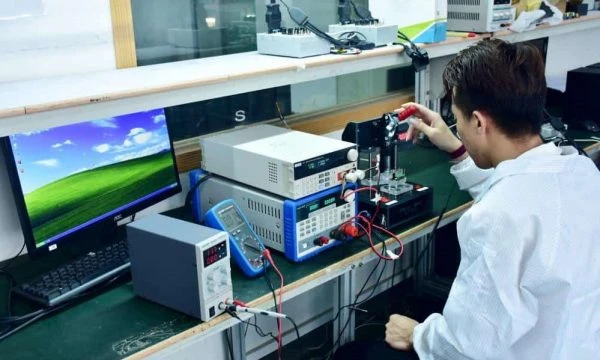
To ensure the risks identified above are controlled, a robust validation plan is required before mass production.
- Electrical Continuity & Isolation:
- Method: Flying probe (prototype) or Bed of Nails (production).
- Criteria: 100% pass. No opens/shorts.
- Microsection Analysis (Coupons):
- Method: Cross-sectioning of test coupons from the panel edge.
- Criteria: Verify plating thickness, layer registration, and absence of resin recession. IPC-6012 Class 3 compliance.
- Thermal Shock Testing:
- Method: Cycle between -40°C and +125°C (typically 100+ cycles).
- Criteria: Change in resistance < 10%. No delamination or cracking.
- Solderability Test:
- Method: Dip and look / Wetting balance test.
- Criteria: > 95% coverage of the pad.
- Ionic Contamination Test:
- Method: ROSE test (Resistivity of Solvent Extract).
- Criteria: < 1.56 µg/cm² NaCl equivalent (or stricter per design).
- Impedance Verification:
- Method: TDR measurement on controlled impedance traces.
- Criteria: Within ±10% (or ±5% for critical high-speed lines) of target.
- Vibration Testing (Assembly Level):
- Method: Random vibration profiles simulating rail environments (IEC 61373).
- Criteria: No intermittent signal loss or component detachment.
- Interconnect Stress Test (IST):
- Method: Accelerated thermal cycling of vias.
- Criteria: Survive 500 cycles without barrel fatigue failure.
Railway Signal PCB supplier qualification checklist (RFQ, audit, traceability)
When evaluating a partner like APTPCB, use this checklist to ensure they are equipped for railway-grade manufacturing.
Group 1: RFQ Inputs (What you must provide)
- Gerber files (RS-274X or X2) with clear layer stackup.
- IPC Netlist (IPC-356) for electrical test verification.
- Fabrication drawing specifying IPC Class 3, material Tg, and tolerances.
- Drill chart distinguishing plated vs. non-plated holes.
- Panelization requirements (if assembly is automated).
- Impedance requirements and layer constraints.
- Special finish requirements (e.g., hard gold thickness for edge fingers).
- Volume projections (EAU) and batch sizes.
Group 2: Capability Proof
- Can the supplier demonstrate experience with Heavy Copper PCB manufacturing (3oz+)?
- Do they have in-house cross-sectioning and TDR equipment?
- What is their maximum aspect ratio for plating (to ensure barrel copper thickness)?
- Can they handle the specific laminate requested (e.g., Rogers/Isola hybrid)?
- Do they offer automated optical inspection (AOI) for inner layers?
- Can they provide First Article Inspection (FAI) reports?
Group 3: Quality System & Traceability
- Is the facility ISO 9001 certified? (IRIS / ISO 22163 is a bonus for rail).
- Do they have a UL file number for the specific stackup/material?
- How do they trace raw material lots to finished PCBs?
- What is their procedure for quarantining non-conforming material?
- Do they perform 100% electrical testing on all shipped boards?
- Can they provide a Certificate of Conformance (CoC) with every shipment?
Group 4: Change Control & Delivery
- Do they have a formal PCN (Process Change Notification) system?
- What is their disaster recovery plan?
- Can they support buffer stock or consignment inventory?
- How do they package boards to prevent moisture and physical damage?
How to choose Railway Signal PCB (trade-offs and decision rules)
Engineering a Railway Signal PCB involves balancing performance, longevity, and cost.
- Class 2 vs. Class 3:
- Guidance: Always choose Class 3 for main signaling and control units. The cost increase (15-20%) is insurance against via failure. Use Class 2 only for non-critical, easily replaceable peripheral displays.
- ENIG vs. HASL:
- Guidance: Choose ENIG for fine-pitch components and flat pads. Choose HASL (Lead-Free) only for simple through-hole boards where shelf life and cost are the primary drivers.
- Standard FR4 vs. High-Tg FR4:
- Guidance: If the board sees temperatures above 80°C or undergoes multiple soldering steps (reflow + wave + hand), choose High-Tg. Standard FR4 is too risky for rail reliability.
- Rigid vs. Rigid-Flex:
- Guidance: If the design involves connectors that can loosen under vibration, replace the cable harness with a Rigid-Flex PCB. It eliminates connector points of failure, though it increases initial board cost.
- Heavy Copper vs. Busbars:
- Guidance: For currents < 50A, heavy copper (3-4oz) is usually more compact and reliable. For > 50A, external busbars or mechanical interconnects may be more cost-effective.
Railway Signal PCB FAQ (cost, lead time, Design for Manufacturability (DFM) files, stackup, impedance, gue during manual inspection and reflect light during automated optical inspection (AOI) inspection)
Q: What is the typical lifespan of a Railway Signal PCB? A: These boards are typically designed for a service life of 20 to 25 years. This requires high-quality materials that resist thermal aging and CAF growth over decades.
Q: How does a Traffic Signal PCB differ from a Railway Signal PCB? A: While both require durability, Traffic Signal PCB units (road intersections) often operate at lower safety integrity levels (SIL) than railway main lines. However, the environmental protection requirements (moisture, heat) are very similar.
Q: Can I use standard FR4 for railway applications? A: Generally, no. Standard FR4 often lacks the thermal stability (Tg) and CAF resistance required for the high-voltage and outdoor environments typical of rail infrastructure.
Q: Why is IPC Class 3 mandatory for rail? A: Class 3 ensures a continuous copper path through vias even after thermal stress. In rail signaling, a "glitch" or open circuit can trigger a "stop" signal, causing network-wide delays.
Q: What is the biggest cause of failure in railway PCBs? A: Vibration-induced fatigue (solder joints cracking) and moisture ingress causing corrosion or shorts are the top two causes.
Q: Does APTPCB support low-volume maintenance orders? A: Yes, we support high-mix, low-volume production, which is essential for maintaining legacy rail systems that need replacement spares.
Q: How do you handle obsolescence management? A: We recommend using standard, widely available laminates from major brands (Isola, Nanya, Rogers) and can assist in selecting alternatives if a specific material is phased out.
Q: Is conformal coating always required? A: For any trackside or non-climate-controlled equipment, conformal coating is highly recommended to protect against condensation, conductive dust, and insects.
Resources for Railway Signal PCB (related pages and tools)
- High Tg PCB Manufacturing: Deep dive into why thermal properties matter for reliability in harsh environments.
- PCB Quality Control System: Understand the specific inspection steps (AOI, X-Ray, E-Test) that prevent defects from leaving the factory.
- Heavy Copper PCB Capabilities: Learn about the design rules and current-carrying capacities for power signaling boards.
- Rigid-Flex PCB Technology: Explore how to eliminate cabling and connectors to improve vibration resistance.
- DFM Guidelines: Technical design rules to ensure your railway PCB is manufacturable at scale.
Request a quote for Railway Signal PCB (Design for Manufacturability (DFM) review + pricing)
Getting a reliable Railway Signal PCB starts with a thorough engineering review. At APTPCB, we don't just price your board; we review your Gerbers against Class 3 rules to catch potential reliability issues before production begins.
To get an accurate quote and DFM report, please prepare:
- Gerber Files: RS-274X or X2 format.
- Fabrication Drawing: PDF specifying materials, stackup, and IPC Class.
- Quantity: Prototype count and estimated annual volume.
- Special Requirements: Impedance control, heavy copper, or specific testing needs.
Click here to upload your files and request a quote. Our engineering team will analyze your data and provide a detailed cost estimation and lead time within 24 hours.
Conclusion (next steps)
Sourcing a Railway Signal PCB is an exercise in risk management. By defining rigorous specifications (IPC Class 3, High-Tg), validating against environmental stressors (vibration, thermal shock), and partnering with a capable manufacturer, you ensure the safety and continuity of rail operations. Whether you are building legacy replacement parts or next-generation Adaptive Signal PCB systems, the focus must remain on reliability, traceability, and long-term support.