
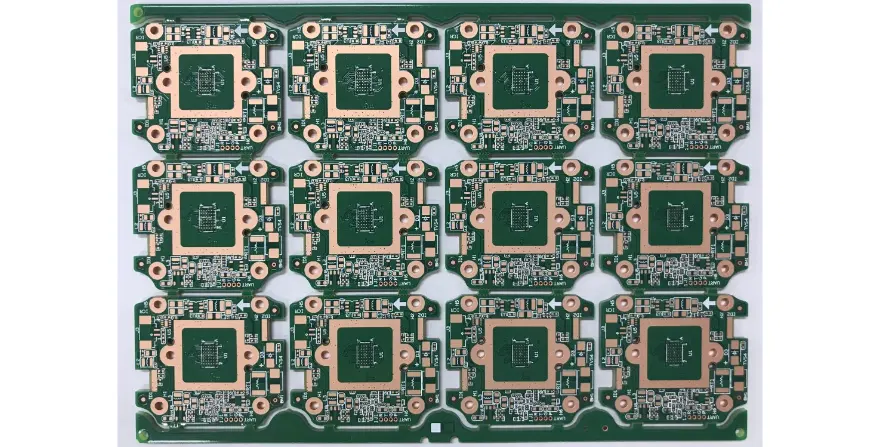
What is a Real-Time PCR PCB and why does it require specialized manufacturing?
A Real-Time PCR PCB is the electronic platform that controls thermal cycling, captures fluorescence signals, manages power delivery, and connects sensors and communication interfaces inside molecular diagnostic equipment.
Unlike a general-purpose control board, a PCR PCB must operate through repeated temperature transitions, support low-noise analog measurement, and maintain mechanical accuracy between the thermal block and reaction vessels. A small PCB design weakness can become inaccurate temperature control, elevated fluorescence background, or inconsistent amplification results.
This guide is intended for medical device engineers, NPI teams, and procurement specialists selecting PCB technologies for laboratory analyzers, portable PCR instruments, and point-of-care diagnostic systems.
Which PCB architecture is suitable for a Real-Time PCR system?
The correct PCB structure depends on the function being performed. Thermal sections, optical sections, and digital control sections often have different requirements.
| PCR PCB Function | Recommended PCB Approach | Key Requirements |
|---|---|---|
| Heater or Peltier driver section | Heavy copper PCB or MCPCB | High current capacity, thermal spreading, low resistance paths |
| Fluorescence sensor section | High-quality FR4, HDI, or rigid-flex | Low noise, impedance control, contamination control |
| Portable PCR device | HDI or rigid-flex | Space efficiency and mechanical integration |
| Disposable PCB-based PCR cartridge | Cost-optimized FR4 with integrated heater patterns | Repeatable thermal performance and low unit cost |
A portable PCR platform may use a PCB-integrated heater and thermistor approach, while higher-performance laboratory systems often separate thermal power electronics from sensitive optical acquisition circuits. Research platforms have demonstrated PCB-based PCR systems with rapid thermal cycling and fluorescence detection, including heating rates around 8 °C/s and thermal accuracy within ±0.1 °C.
What specifications should be included before requesting a PCR PCB quote?
A complete RFQ package should define electrical, thermal, mechanical, and quality requirements.
Material and thermal requirements
Specify high-Tg materials for repeated thermal cycling. Typical requirements include:
- High-Tg FR4 with Tg above 170°C for control boards.
- Metal Core PCB (MCPCB) structures for sections requiring direct heat spreading.
- Thermal conductivity targets of approximately 2.0 W/mK to 3.0 W/mK for thermally optimized dielectric layers.
- Aluminum or copper base materials where thermal transfer is critical.
Copper weight and current handling
PCR thermal modules frequently drive heaters or Peltier devices that require high current.
Specify:
- 2 oz to 4 oz copper for high-current power areas.
- Dedicated power routing separated from sensitive analog circuits.
- Wide traces or copper planes for thermal driver sections.
- Thermal vias where heat transfer through layers is required.
Optical signal requirements
Fluorescence detection requires careful PCB material selection.
Define:
- Low-noise analog routing.
- Controlled impedance where high-speed communication exists.
- Solder mask requirements based on optical design.
- Material fluorescence characteristics near optical sensor regions.
Matte black solder mask is frequently selected around optical areas because it can reduce unwanted reflections and stray light.
Manufacturing quality requirements
A medical PCR PCB RFQ should include:
- IPC Class 3 requirements where applicable.
- Individual board traceability.
- AOI inspection.
- Electrical testing.
- Microsection analysis.
- Cleanliness verification.
What are the major Real-Time PCR PCB failure modes?
The following table connects failure mechanisms with engineering controls and verification methods.
| Failure Mode | Cause | Design or Manufacturing Control | Verification |
|---|---|---|---|
| Via fatigue | Repeated heating and cooling cycles stress copper barrels | Low Z-axis CTE materials and reliable plating thickness | Thermal cycling and IST testing |
| CAF growth | Humidity, voltage gradients, material structure | CAF-resistant laminates and controlled spacing | Environmental testing |
| Fluorescence interference | PCB materials or solder mask create background signal | Optical material qualification | Optical background measurement |
| Board warpage | Uneven copper distribution or material mismatch | Balanced stackup and controlled lamination | Flatness inspection |
| Sensor drift | Residue or contamination affecting analog circuits | Cleaning process control | Ionic contamination testing |
| MCPCB delamination | Poor bonding during thermal stress | Qualified laminate systems | Thermal stress inspection |
| Component cracking | Mechanical stress during assembly or cycling | Layout optimization and component selection | Reliability testing |
How should a Real-Time PCR PCB be validated before production?
A production-ready PCR PCB requires electrical, thermal, optical, and mechanical validation.
Thermal cycling validation
Thermal shock testing verifies material and interconnect reliability.
Typical evaluation:
- Temperature cycling from approximately -40°C to +125°C.
- Hundreds of thermal cycles.
- Inspection for delamination, cracking, and resistance changes.
Interconnect reliability testing
Interconnect Stress Testing (IST) evaluates plated through-hole and via reliability.
Verification should confirm:
- Stable electrical resistance after accelerated cycling.
- No copper barrel failures.
- Reliable microvia structures where HDI technology is used.
Cleanliness testing
PCR sensor electronics require controlled contamination levels.
Validation methods include:
- Ion chromatography.
- ROSE testing.
- Process cleanliness documentation.
A common target for medical-class cleanliness evaluation is below 1.56 µg/cm² NaCl equivalent.
Signal integrity verification
For communication and sensor interfaces:
- Use TDR testing for impedance verification.
- Maintain approximately ±10% impedance tolerance for specified controlled impedance lines.
- Verify differential pairs according to design requirements.
Optical validation
The PCB should be tested with the actual optical engine.
Confirm:
- Background fluorescence remains below system limits.
- PCB materials do not introduce optical noise.
- Mechanical alignment remains stable.
How should engineers compare PCR PCB manufacturing options?
| Decision Area | Option A | Option B | Selection Consideration |
|---|---|---|---|
| Thermal management | Aluminum MCPCB | Copper MCPCB | Copper provides higher thermal conductivity but increases cost and weight |
| Signal routing | Standard multilayer FR4 | HDI PCB | HDI supports compact portable designs |
| Mechanical flexibility | Rigid PCB | Rigid-flex PCB | Rigid-flex saves space but increases manufacturing complexity |
| Prototype speed | Additive manufacturing approaches | Traditional PCB fabrication | Additive methods support experimentation; production PCR electronics require validated PCB processes |
What should a PCR PCB supplier provide during qualification?
A qualified supplier should demonstrate both manufacturing capability and medical-quality discipline.
RFQ package requirements
Provide:
- Gerber or ODB++ files.
- Fabrication drawings.
- Stackup information.
- Material specifications.
- Copper thickness requirements.
- Controlled impedance requirements.
- Surface finish requirements.
- Annual volume estimates.
Supplier capability checklist
Confirm:
- Experience with MCPCB and heavy copper fabrication.
- Ability to manufacture HDI structures.
- Filled and capped via capability.
- Controlled impedance testing.
- AOI inspection.
- Reliability laboratory access.
- Medical documentation support.
Quality system checklist
Verify:
- ISO 13485 capability or alignment with medical manufacturing processes.
- ISO 9001 quality systems.
- Material traceability.
- Serial number tracking.
- Certificate of Conformance availability.
- Change notification procedures.
Can 3D Printing PCB technology replace traditional PCR boards?
3D printing PCB and additive manufacturing technologies can support rapid prototyping, complex shapes, and experimental conductive structures.
However, Real-Time PCR production electronics usually require the reliability, copper conductivity, thermal performance, and repeatability of conventional PCB manufacturing.
For early mechanical experiments or integrated prototypes, additive approaches may accelerate development. For diagnostic products requiring repeatable thermal cycling and regulatory documentation, engineered PCB fabrication remains the preferred production route.
FAQ: Real-Time PCR PCB engineering decisions
Can standard FR4 be used for PCR heater sections?
Standard FR4 has limited thermal conductivity. Heater and cooling sections typically require MCPCB structures, heavy copper designs, or dedicated thermal solutions.
Why is IPC Class 3 important for PCR devices?
IPC Class 3 requirements support higher reliability expectations through stricter manufacturing controls, inspection criteria, and material performance requirements.
How does solder mask affect PCR fluorescence performance?
Solder mask selection can influence optical reflections and background noise. Optical regions should be qualified with the actual fluorescence detection system.
How should Peltier power circuits be designed?
Use appropriate copper thickness, wide power traces, thermal management features, and physical separation between high-current switching circuits and sensitive analog measurement paths.
Can thermal and sensor circuits share one PCB?
Yes, but the layout must isolate noisy power sections from low-level fluorescence and temperature measurement signals.
Related pages & tools
- Medical PCB Manufacturing – Understand the specific quality and regulatory standards required for diagnostic medical devices.
- Metal Core PCB (MCPCB) – Explore the thermal management solutions essential for PCR heater and cooler blocks.
- Heavy Copper PCB – Learn how to handle the high currents required to drive Peltier elements rapidly.
- HDI PCB Technology – See how high-density interconnects enable the miniaturization of portable Point-of-Care PCR devices.
- Turnkey PCB Assembly – Discover how integrated assembly services can streamline your medical device supply chain.
Request a quote
Ready to move your Real-Time PCR PCB design from prototype to production? Request a Quote with your Gerber files, stackup requirements, thermal specifications, testing needs, and expected production volume for a complete DFM review.
Conclusion
A Real-Time PCR PCB is a precision medical electronics platform that combines thermal control, optical signal integrity, mechanical alignment, and long-term reliability.
Successful designs begin with the right architecture: selecting suitable materials, separating power and measurement functions, validating thermal performance, and qualifying a supplier with documented manufacturing controls.
By treating the PCB as a critical diagnostic subsystem rather than a commodity component, engineering teams can reduce validation delays and build PCR systems that scale reliably from prototype development to production.