
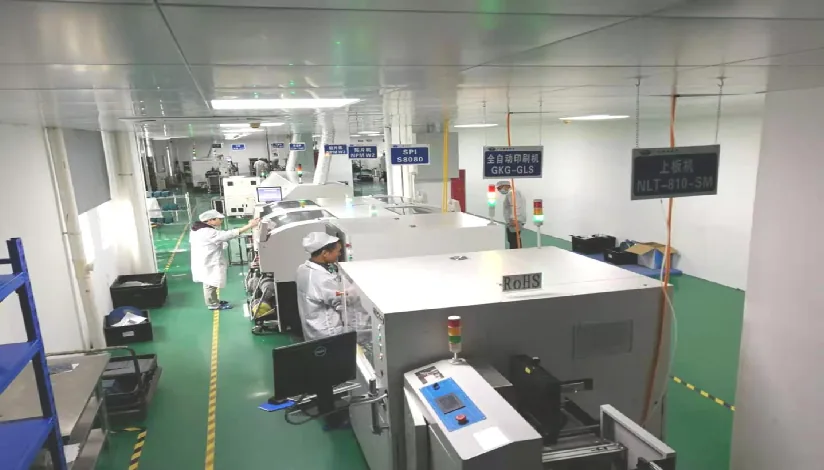
Understanding reflow profile basics is the single most critical factor in Surface Mount Technology (SMT) assembly yield. A reflow profile is not just a temperature setting; it is a precise thermal recipe that dictates how a PCB heats up, soaks, reflows, and cools down to form reliable solder joints. If the profile deviates even slightly from the solder paste manufacturer's specifications or the component's thermal limits, the result is often invisible defects like cold solder joints, head-in-pillow failures, or damaged silicon.
At APTPCB (APTPCB PCB Factory), we emphasize that a robust profile prevents costly rework and ensures long-term reliability. This guide breaks down the four essential zones, provides a specification checklist, and offers a troubleshooting framework for engineers optimizing their thermal processes.
Quick Answer (30 seconds)
A correct reflow profile consists of four distinct zones: Preheat, Soak, Reflow, and Cooling. Each zone has specific time and temperature targets based on the solder alloy (usually SAC305 or SnPb) and the thermal mass of the board.
- Ramp Rate: Keep the initial temperature rise between 1°C/s and 3°C/s to prevent thermal shock and component cracking.
- Soak Zone: Maintain equilibrium (typically 150°C–200°C for 60–120 seconds) to activate flux and drive off volatiles before reflow.
- Time Above Liquidus (TAL): Ensure solder stays molten for 45–90 seconds (depending on alloy) to form a proper intermetallic bond without burning the FR4.
- Peak Temperature: Target 235°C–250°C for lead-free processes; never exceed component maximum ratings (usually 260°C).
- Cooling Rate: Cool rapidly (< 4°C/s) to create a fine grain structure, but not so fast that it causes warpage or stress fractures.
- Validation: Always use a thermal profiler with thermocouples attached to the actual PCB, not just the oven air sensors.
When reflow profile basics applies (and when it doesn’t)
Understanding the scope of reflow profile basics ensures you apply these rules to the correct manufacturing processes.
When it applies:
- SMT Assembly: Standard surface mount processes involving solder paste printing and pick-and-place machines.
- BGA/QFN Soldering: Complex packages where the solder joints are hidden underneath the component body require precise profiling to ensure heat penetrates fully.
- Paste Evaluation: When qualifying a new solder paste brand or alloy, a specific profile must be developed to match its flux chemistry.
- Defect Reduction: When troubleshooting issues like tombstoning, voiding, or solder balls, the profile is the first variable to audit.
- Double-Sided Assembly: Managing the thermal hierarchy so components on the bottom side do not fall off during the second pass.
When it doesn’t apply:
- Wave Soldering: This process uses a molten solder wave and requires a completely different thermal profile (preheat + contact time) compared to reflow ovens.
- Hand Soldering: Manual soldering relies on iron tip temperature and operator skill, not a conveyorized thermal profile.
- Press-Fit Connectors: These rely on mechanical interference fits rather than thermal bonding, although the board might see reflow for other components.
- Selective Soldering: While it involves heat, the localized nature of selective soldering follows different dwell time and temperature rules than a full oven reflow.
Rules & specifications
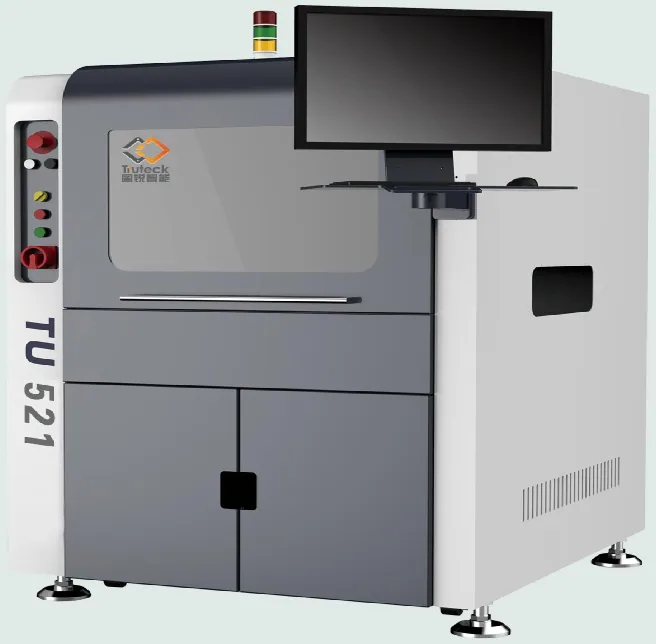
The following table outlines the critical parameters for a standard Lead-Free (SAC305) reflow profile. These values serve as a baseline; always cross-reference with your specific solder paste datasheet.
| Rule | Recommended value/range | Why it matters | How to verify | If ignored |
|---|---|---|---|---|
| Max Rising Slope (Ramp-Up) | 1°C/s to 3°C/s | Prevents thermal shock to ceramic capacitors and minimizes solder paste slump. | Measure slope from ambient to soak start on the profiler graph. | Component cracking, solder balling, or paste bridging. |
| Soak Temperature Range | 150°C to 200°C | Allows flux to activate, removes oxides, and equalizes board temperature (Delta T). | Check the flat(ter) section of the graph before the spike. | Solder balls (if too fast) or poor wetting (if flux exhausts early). |
| Soak Time | 60 to 120 seconds | Ensures the entire assembly reaches equilibrium so small and large parts reflow simultaneously. | Measure time elapsed between soak start and soak end temps. | Tombstoning (uneven heating) or "graping" (dried out flux). |
| Time Above Liquidus (TAL) | 45 to 90 seconds | Critical for forming the Intermetallic Compound (IMC) layer. | Measure total time the thermocouple reads >217°C (for SAC305). | Cold joints (too short) or board delamination/charring (too long). |
| Peak Temperature | 235°C to 250°C | Ensures full wetting and accounts for thermal mass variations across the PCB. | Identify the highest point on the thermal graph for all channels. | Non-wetting/Open joints (too low) or component damage (too high). |
| Cooling Rate | 2°C/s to 4°C/s | Freezes the solder structure quickly to form a strong, fine-grain joint. | Measure slope from peak down to solidification point (<217°C). | Coarse grain structure (weak joints) or board warpage (if too fast). |
| Delta T (ΔT) at Peak | < 10°C | Indicates thermal uniformity across the board (difference between hottest and coldest spot). | Compare peak temps of the component with lowest mass vs. highest mass. | Some parts overheat while others fail to reflow. |
| Nitrogen (N2) Level | < 1000 ppm O2 (Optional) | Reduces oxidation during reflow, improving wetting for difficult surfaces (OSP, NiPdAu). | Oxygen sensor reading on the reflow oven controller. | Poor wetting on oxidized pads or increased voiding in BGAs. |
| Conveyor Speed | Calculated based on oven length | Determines the total duration of the profile; faster speed = shorter time. | Verify speed setting matches the recipe (e.g., 80 cm/min). | The entire profile shifts; TAL and soak times will be incorrect. |
| Paste Expiration | < 8 hours on stencil | Paste rheology changes over time, affecting how it responds to the profile. | Check jar label and time-log of when paste was opened. | Poor print definition leading to bridges or insufficient solder volume. |
Implementation steps
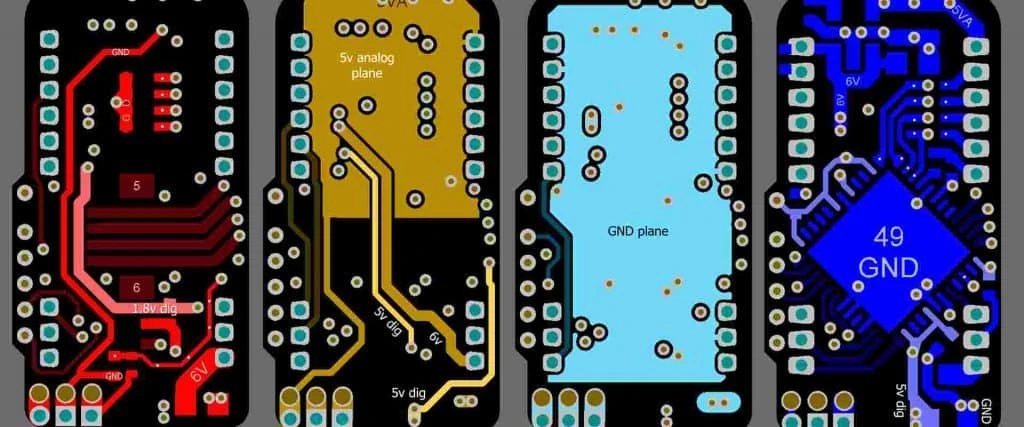
Establishing a robust profile requires a systematic approach. Following these steps ensures that your reflow profile basics are translated into a production-ready process.
Gather Data & Requirements
- Action: Collect the datasheet for the specific solder paste being used and the maximum thermal ratings for the most sensitive components (e.g., LEDs, connectors).
- Key Parameter: Look for the "Process Window" graph in the paste datasheet.
- Acceptance Check: Confirm that the component max temp is higher than the paste's minimum reflow temp.
Select & Attach Thermocouples
- Action: Select Type K thermocouples. Attach them to a "Golden Board" (a sacrificial production PCB). Use high-temperature solder or aluminum tape to secure sensors to the solder joints of critical components (e.g., large BGA, small capacitor, center of board, edge of board).
- Key Parameter: Sensor location diversity (high mass vs. low mass).
- Acceptance Check: Ensure thermocouples are in firm contact with the solder joint, not floating in the air.
Configure Initial Oven Settings
- Action: Input the zone temperatures and conveyor speed into the oven software. A common starting point is a "flat" profile where zones gradually increase.
- Key Parameter: Conveyor speed (often the primary variable for total time).
- Acceptance Check: Oven indicators show all zones have reached the set point and stabilized.
Run the Profiler
- Action: Connect the profiler data logger to the thermocouples. Send the Golden Board through the oven. Ensure the logger is thermally insulated.
- Key Parameter: Sampling interval (0.5s or 1.0s is standard).
- Acceptance Check: Data logger successfully records temperature vs. time for the entire duration of the pass.
Analyze the Thermal Graph
- Action: Download the data. Compare the resulting curves against the "Rules & specifications" table above. Look specifically at TAL and Peak Temp.
- Key Parameter: Process Window Index (PWI). A PWI < 100% means the profile is within spec; lower is better.
- Acceptance Check: All channels (thermocouples) must fall within the process window limits.
Adjust Zone Temperatures
- Action: If the peak is too low, increase the reflow zone temps. If the soak is too short, slow the conveyor or adjust soak zone temps.
- Key Parameter: Zone-to-zone thermal interaction.
- Acceptance Check: Re-run the profile after adjustments to verify the new curve.
Verify Delta T (Thermal Uniformity)
- Action: Check the temperature difference between the hottest and coldest thermocouple at the moment of peak reflow.
- Key Parameter: ΔT < 10°C.
- Acceptance Check: If ΔT is high, increase the soak time to allow the board to reach equilibrium before the reflow spike.
Cool Down Verification
- Action: Examine the cooling slope. Ensure the board exits the oven below the solidification temperature to prevent handling damage.
- Key Parameter: Exit temperature < 60°C (safe to touch/handle).
- Acceptance Check: Solder joints are solid and shiny (or satin for lead-free) immediately upon exit.
Post-Reflow Inspection
- Action: Inspect the Golden Board under a microscope or X-ray. Look for wetting, voiding, and fillet shape.
- Key Parameter: IPC-A-610 acceptance criteria.
- Acceptance Check: No visible defects; X-ray shows voiding percentage within limits.
Final Recipe Lock
- Action: Save the oven recipe with a unique ID. Document the specific conveyor speed and zone settings.
- Key Parameter: Version control.
- Acceptance Check: The recipe is locked and accessible only to authorized process engineers.
Failure modes & troubleshooting
When reflow profile basics are ignored, specific defects arise. This troubleshooting guide maps symptoms to thermal causes.
Tombstoning (Component standing on end)
- Causes: Uneven heating between the two pads of a chip component. One side melts and pulls before the other.
- Checks: Check the ramp rate entering the reflow zone. Check for large copper imbalance on the PCB layout.
- Fix: Slow down the ramp rate just before liquidus to equalize temperatures.
- Prevention: Use DFM guidelines to ensure thermal relief on pads connected to ground planes.
Solder Balls (Tiny spheres of solder)
- Causes: Paste "exploding" due to rapid moisture outgassing, or flux exhausting too early.
- Checks: Is the ramp-up rate > 3°C/s? Is the soak time too long?
- Fix: Reduce the initial ramp rate. Ensure the soak profile matches the paste type (water-soluble vs. no-clean).
- Prevention: Store paste correctly and avoid excessive stencil life.
Voiding (Air pockets inside the joint)
- Causes: Volatiles trapped in the solder because they couldn't escape before solidification.
- Checks: Is the peak temperature high enough? Is the TAL long enough?
- Fix: Increase TAL slightly to allow gas to escape. Try a "soak" profile rather than a "ramp-to-spike" profile.
- Prevention: Consider vacuum reflow ovens for critical high-power applications.
Cold Solder Joints (Dull, grainy, poor connection)
- Causes: Insufficient heat; the solder didn't fully reflow or wet the pad.
- Checks: Did the thermocouple reach peak temp? Was TAL < 45s?
- Fix: Increase peak zone temperature or slow conveyor speed.
- Prevention: Verify oven convection fans are functioning; ensure heavy components are profiled.
Head-in-Pillow (HiP) on BGAs
- Causes: BGA ball warps away from paste during soak, paste oxidizes, then ball drops back into "dried" paste.
- Checks: Is the soak time too long? Is the package warping?
- Fix: Use a "ramp-to-spike" profile to minimize total heat exposure and reduce flux exhaustion.
- Prevention: Use high-activity paste or nitrogen reflow.
Board Warpage / Delamination
- Causes: Excessive heat or uneven cooling causing stress in the FR4 laminate.
- Checks: Is the peak temp > 250°C? Is cooling rate > 4°C/s?
- Fix: Lower peak temperature. Support the board with a center support or carrier.
- Prevention: Select high-Tg materials for lead-free assemblies.
De-wetting (Solder pulls back from pad)
- Causes: Pad oxidation or flux burned off before reflow.
- Checks: Is the profile too long? Is the soak temperature too high?
- Fix: Shorten the profile. Check PCB storage conditions (moisture/oxidation).
- Prevention: Ensure pads are clean; check surface finish quality (ENIG vs. OSP).
Charred Flux Residue
- Causes: Temperature too high or time too long, degrading the flux vehicle.
- Checks: Peak temperature and TAL.
- Fix: Lower the peak temperature.
- Prevention: This is critical for the cleanliness testing pcb process; charred flux is hard to clean and can cause leakage.
Design decisions
While the process engineer controls the oven, the PCB designer controls the thermal mass. Decisions made during layout directly impact the success of reflow profile basics.
- Thermal Balance: If a small 0402 resistor is connected to a large ground plane on one side and a thin trace on the other, the ground side acts as a heat sink. This causes the "trace side" to reflow first, pulling the component upright (tombstoning). Designers must use thermal relief spokes on ground pads to restrict heat flow.
- Component Density: Placing large components (like inductors or BGAs) right next to small passive components creates "thermal shadowing." The large body blocks the convective airflow, preventing the small part from heating up properly. Adequate spacing allows hot air to circulate freely.
- Material Selection: Lead-free reflow reaches 250°C. Standard FR4 materials may delaminate or soften (lowering peel strength). For high-reliability boards, selecting materials with a high Glass Transition Temperature (Tg) is essential.
- Surface Finish: The choice of finish (ENIG, HASL, OSP) affects wetting speed. OSP (Organic Solderability Preservative) degrades if exposed to multiple heat cycles, so double-sided reflow profiles must be managed carefully to avoid oxidizing the second side before it is soldered.
FAQ
1. What is the difference between "Ramp-to-Spike" and "Soak" profiles? A "Soak" profile has a distinct plateau to equalize temperatures, ideal for complex boards with varying thermal masses. A "Ramp-to-Spike" (linear) profile rises continuously, which is better for preserving flux activity and reducing defects like Head-in-Pillow, but requires a more thermally uniform board.
2. How often should I run a profile verification? At APTPCB, we recommend profiling for every new product introduction (NPI). For continuous production, verify the profile once per shift or whenever the oven is power-cycled to ensure drift hasn't occurred.
3. Can I use the same profile for SnPb and Lead-Free solder? No. SnPb (Tin-Lead) melts at 183°C and peaks around 215°C. Lead-free (SAC305) melts at 217°C and peaks around 245°C. Using a lead-free profile on SnPb will overheat the parts; using a SnPb profile on lead-free will result in cold joints.
4. Why is Nitrogen (N2) used in reflow? Nitrogen displaces oxygen, preventing oxidation on the pads and solder powder during the heating process. This improves wetting, reduces voiding, and leaves a shinier joint, but adds significant cost to the process.
5. How does the reflow profile affect the conformal coating process? If the profile burns the flux (charring), the residue becomes hard and non-conductive but may prevent the coating from adhering. Furthermore, unreacted flux residues can be hygroscopic. Proper profiling ensures flux is fully activated and residues are benign or easily removed.
6. What is the "Process Window Index" (PWI)? PWI is a statistical measure that ranks how well a profile fits within the specification limits. A PWI of less than 100% means the profile is in spec. A lower number (e.g., 60%) indicates a more robust process centered in the window.
7. Why do I see "graping" on the solder joints? Graping looks like un-melted solder powder on the joint surface. It happens when the flux dries out during a long soak or ramp, leaving the powder unprotected from oxidation. Shortening the soak time usually fixes this.
8. How many thermocouples should I use for profiling? Use at least 3, but preferably 5-7 for complex boards. Place them on the coolest spot (heavy component), hottest spot (edge/small component), and sensitive areas (BGA center) to capture the full thermal range (Delta T).
9. Does board thickness change the profile settings? Yes. A thick backplane (e.g., 3mm, 12 layers) has high thermal mass and absorbs more heat. It requires a slower conveyor speed or higher zone temperatures compared to a thin 1mm board to reach the same TAL.
10. What happens if the cooling rate is too slow? Slow cooling allows the solder grain structure to grow large and coarse. This results in a dull appearance and, more importantly, a mechanically weaker joint that is prone to fatigue failure under vibration.
11. Can I rely on the oven's internal temperature sensors? No. Oven sensors measure the air temperature in the tunnel, not the PCB temperature. The PCB temperature lags behind the air temperature due to thermal mass. You must profile with thermocouples on the board.
12. How does reflow affect cleanliness testing PCB results? If the reflow profile is too cool, flux activators may not fully decompose, leaving active, corrosive residues. If too hot, residues bake on. Both scenarios can cause failures in Resistivity of Solvent Extract (ROSE) or Ion Chromatography (IC) testing.
Related pages & tools
- PCB Manufacturing Capabilities – Explore our SMT and assembly capabilities tailored for high-reliability boards.
- SMT & THT Assembly – Overview of the core assembly process steps that your reflow profile supports.
- Get a Quote – Upload your Gerber and BOM files for a quick DFM review and pricing.
- Megtron PCB Materials – Learn about high-speed, high-thermal-resistance materials suitable for lead-free reflow.
Glossary (key terms)
| Term | Definition |
|---|---|
| Liquidus | The temperature at which the solder alloy becomes completely liquid (217°C for SAC305). |
| Solidus | The temperature at which the solder alloy is completely solid. |
| Eutectic | An alloy composition where the liquidus and solidus temperatures are the same (e.g., Sn63Pb37 melts/freezes instantly at 183°C). |
| TAL (Time Above Liquidus) | The duration the solder joint remains molten. Critical for IMC formation. |
| Soak Zone | The portion of the profile where temperature is held relatively steady to equalize heat across the PCB. |
| Ramp Rate | The speed at which temperature changes, measured in degrees Celsius per second (°C/s). |
| Delta T (ΔT) | The maximum temperature difference between any two points on the PCB at a given moment. |
| Thermocouple | A sensor consisting of two dissimilar metals joined at one end, used to measure temperature. Type K is standard for reflow. |
| Flux | A chemical agent in solder paste that removes oxides and promotes wetting. |
| IMC (Intermetallic Compound) | The boundary layer formed between the solder and the copper pad; essential for electrical and mechanical connection. |
| Slump | The spreading of solder paste before reflow, which can cause bridging if the ramp rate is too slow or viscosity is low. |
| Reflow Oven | A machine with multiple heating zones (convection or IR) and a conveyor belt used to solder SMT components. |
Conclusion
Mastering reflow profile basics is the difference between a robust, reliable product and a production line plagued by intermittent failures. By strictly adhering to the four-zone structure—Preheat, Soak, Reflow, and Cooling—and validating your process with live profiling, you ensure that every solder joint meets IPC standards.
Whether you are prototyping a complex BGA design or scaling up production, the thermal recipe must be precise. At APTPCB, we apply these rigorous profiling standards to every assembly project we handle. If you need assistance with DFM or want to ensure your next build is optimized for manufacturing, our engineering team is ready to help.
Ready to validate your design? Submit your files today for a comprehensive review.