
A reflow profile for a thin PCB is the measured temperature-versus-time process developed for the actual board, solder paste, components, panel, and support tooling. Thin boards heat quickly but can lose flatness, so a reliable process controls both solder formation and mechanical behavior.
Key takeaways
- There is no universal thickness at which every PCB needs a carrier. Panel size, copper balance, cutouts, material, component mass, and conveyor support all affect stiffness.
- Start with the solder-paste technical data sheet and component limits, then verify the real assembly with thermocouples. Do not copy a generic SAC305 curve into production.
- A carrier can reduce sag while adding thermal mass and temperature gradients. Profile the loaded carrier, not a bare board.
- Warpage, tombstoning, head-in-pillow, and opens can share a thermal-mechanical root cause; inspect the defect pattern before changing oven zones.
What makes thin-board reflow different?
As laminate stiffness falls, small differences in copper distribution, component mass, fixture contact, and heating can move the board relative to the components. The PCB may bow upward, sag into a carrier pocket, or twist while solder is molten.
That movement changes more than final flatness. It can separate a BGA ball from paste, tilt a small passive as the two pads wet at different times, or disturb a connector before the joints solidify. The correct profile therefore cannot be judged by peak temperature alone.
Does your PCB need a carrier?
Use a carrier when the unsupported panel cannot stay stable through printing, placement, conveyor transport, and reflow. Confirm the need by measurement and trial rather than a single thickness rule.
| Condition | Carrier value | Design caution |
|---|---|---|
| Large, thin panel | Supports conveyor transport and limits sag | Avoid blocking airflow or creating hot/cold pockets |
| Flex or irregular outline | Provides a repeatable datum and flat print surface | Allow controlled material movement |
| Heavy components on a light board | Supports local mass | Put support near the load without contacting solder joints |
| Double-sided assembly | Protects bottom-side parts during the second pass | Pocket depth and tolerance stack must be verified |
| Small, balanced rigid PCB | Carrier may add cost without benefit | Test a rail-supported panel first |
For design-side controls, see warpage control during assembly and SMT and THT assembly.
How to develop the reflow profile
1. Freeze the process inputs
Record the solder alloy and paste product, component temperature limits, moisture-sensitive-device handling, board material, surface finish, panel, carrier, and oven. SAC305 has a liquidus temperature near 217°C, but the allowed ramp, soak, time above liquidus, and peak must come from the paste and component suppliers for the actual build.
2. Choose representative thermocouple locations
Place sensors where the assembly is expected to be coldest, hottest, and most mechanically sensitive:
- a high-thermal-mass connector or shield area
- a small passive or fine-pitch area
- the center and edge of the thin panel
- beneath or beside a BGA/QFN where warpage matters
- the carrier, if it significantly affects heat flow
Secure each thermocouple so it measures the joint or defined board location rather than oven air.
3. Run the loaded production configuration
Use the same carrier, panel orientation, conveyor support, and loading method planned for production. An empty pallet or unpopulated coupon may not represent the real thermal response.
4. Adjust the narrowest constraint first
Compare measured temperatures with paste and component limits. A cold heavy part may need more energy while a light edge component is already near its maximum. Adjust zone temperatures and conveyor speed to bring both into a shared process window.
5. Validate solder joints and flatness together
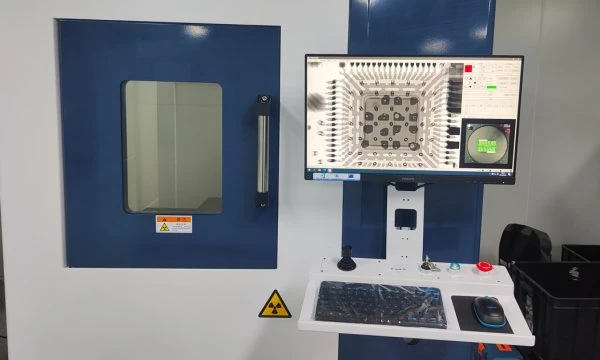
Use SPI before reflow, AOI afterward, and X-ray where joints are hidden. Measure board shape in the condition that matters: after cooling, during assembly if available, and at the mechanical interface if the product housing is sensitive.
Carrier design rules that protect the profile
- Support the board near heavy parts and fine-pitch packages without creating sharp pressure points.
- Keep pockets and hold-downs clear of solder joints, bottom-side components, and paste-release areas.
- Use materials qualified for the reflow temperature, cleaning chemistry, ESD environment, and expected reuse.
- Vent broad pockets if trapped air creates uneven heating.
- Track carrier flatness and contamination over time; tooling drift can look like an oven-profile drift.
Thin-board reflow defect diagnosis
| Defect | Possible thin-board mechanism | What to check before changing the profile |
|---|---|---|
| Board bow or twist | Copper imbalance, uneven support, asymmetric heating or cooling | Bare-board flatness, carrier contact, panel design, thermal map |
| Tombstoning | Unequal paste, pad thermal imbalance, placement offset, different wetting time | SPI, pad geometry, local temperature traces |
| Head-in-pillow or BGA open | Package/board warpage separates solder surfaces during reflow | X-ray, package warpage data, support beneath the package, flux window |
| Solder balls | Paste slump, moisture, excessive ramp, contamination | Paste storage, print quality, humidity exposure, ramp data |
| Shifted heavy component | Molten-solder forces plus local board movement | Placement force, paste volume, support and cooling stability |
| Delamination or blistering | Moisture, material condition, excessive thermal exposure | Storage/bake history, material limits, thermal profile |
Changing peak temperature without this evidence can move the defect rather than solve it. For example, adding heat to fix a cold connector may increase warpage at a nearby BGA.
What should the qualification record include?
A reusable profile record should contain:
- oven, line, conveyor direction, speed, and zone settings
- board revision, panel, carrier revision, and loading method
- solder paste and component restrictions
- thermocouple map and measured curves
- SPI, AOI, X-ray, joint-acceptance, and flatness results
- approved operating window and requalification triggers
Reprofile after changes that materially alter thermal mass or support: a new carrier, panel revision, large component substitution, solder paste change, oven change, or major copper/stackup revision.
RFQ checklist for thin-PCB assembly
Provide:
- Gerber/ODB++, stackup, panel drawing, BOM, centroid, and assembly drawings
- finished thickness and tolerances, material, copper weights, and surface finish
- solder paste or alloy requirement and component reflow limits
- 3D model and bottom-side component heights for carrier pockets
- known warpage, BGA, QFN, connector, or housing-fit risks
- required SPI, AOI, X-ray, flatness, electrical, and functional-test evidence
APTPCB can review the board, panel, and carrier as one assembly system. The PCB stencil and testing and quality pages define the supporting process scope.
Reference standards and documents
- IPC J-STD-020 — Moisture/Reflow Sensitivity Classification for Nonhermetic Surface-Mount Devices
- IPC/JEDEC J-STD-033 — Handling, Packing, Shipping and Use of Moisture/Reflow Sensitive Devices
- IPC-A-610 — Acceptability of Electronic Assemblies
- Solder-paste manufacturer technical data sheet
- Component and laminate supplier reflow limits
FAQ
What is the best SAC305 reflow profile for a thin PCB?
There is no single best curve. Use the paste supplier's window and verify the actual board, components, panel, and carrier with thermocouples.
Does every PCB below 0.8 mm require a carrier?
No. Thickness is only one factor. Small balanced boards may run without one, while a thicker but highly cut-out panel may still need support.
Why does adding a carrier make a previously good profile fail?
The carrier changes heat capacity, airflow, board contact, and sometimes conveyor height. The loaded assembly must be reprofiled.
Can slower cooling eliminate warpage?
Cooling rate can influence stress and final shape, but it cannot correct copper imbalance, poor support, or an unstable panel by itself.
What proves that the profile is qualified?
Measured curves within the agreed material limits plus acceptable print, solder-joint, hidden-joint, and flatness results on representative assemblies.
Profile the assembly you will actually build
Thin-PCB reflow becomes predictable when thermal data and mechanical support are developed together. Send the production panel, component constraints, and inspection requirements for a carrier-aware assembly review.