
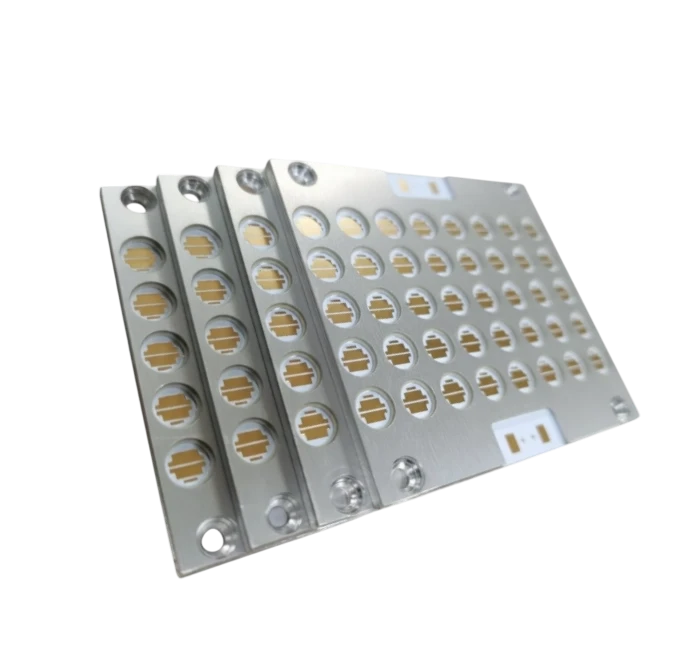
Sourcing Printed Circuit Boards (PCBs) for automotive reverse lights requires balancing high-intensity thermal management with strict mechanical reliability standards. Buyers must define precise material specifications and validation protocols to prevent field failures caused by vibration, moisture, or thermal runaway. This guide provides the technical criteria and decision frameworks necessary to procure zero-defect lighting electronics.
Key Takeaways
- Thermal Conductivity is Critical: For high-power LED reverse lights, specify a dielectric thermal conductivity of ≥ 2.0 W/mK to ensure rapid heat transfer from the LED junction to the heatsink.
- Reliability Standards: Mandate compliance with IPC-6012 Class 3 for automotive applications to ensure durability under harsh conditions.
- Dielectric Breakdown: The insulation layer on Metal Core PCBs (MCPCB) must withstand a breakdown voltage of > 3000V (3kV) to prevent shorting to the aluminum chassis.
- Solder Voiding Limits: Set a strict acceptance criterion for solder voiding under power LEDs at < 25% of the thermal pad area to prevent hotspots.
- Reflectivity Matters: Specify a "Super White" solder mask with > 85% reflectivity to maximize lumen output and reduce light absorption heat.
- Validation Tip: Always require Thermal Shock Testing (typically -40°C to +125°C for 1000 cycles) during the First Article Inspection (FAI) phase.
- Material Traceability: Ensure the supplier uses an automated system to trace raw materials (laminate, copper, solder mask) back to the specific batch for every board produced.
Contents
- Scope, Decision Context, and Success Criteria
- Specifications to Define Upfront (Before You Commit)
- Key Risks (Root Causes, Early Detection, Prevention)
- Validation & Acceptance (Tests and Pass Criteria)
- Supplier qualification checklist (RFQ, audit, traceability)
- How to Choose (Trade-Offs and Decision Rules)
- FAQ (cost, lead time, DFM files, materials, testing)
- Glossary (Key Terms)
Scope, Decision Context, and Success Criteria
Reverse lights (backup lights) are safety-critical components that alert other drivers and illuminate the path for the vehicle operator. Unlike static Ambient Light PCB applications inside the cabin, reverse lights face external environmental stress and high current pulses.
Measurable Success Metrics
- Lumen Maintenance: The LED assembly must maintain > 90% of initial brightness after 1000 hours of accelerated aging at 85°C.
- Thermal Resistance (Rth): The total thermal resistance from the LED junction to the back of the PCB must be < 1.5°C/W for high-power designs.
- Color Stability: Light output color shift must remain within 3 SDCM (Standard Deviation of Color Matching) over the product lifespan.
Boundary Cases (What Is Out of Scope)
- Headlamp Systems: While similar, headlamps require even higher thermal dissipation and active cooling strategies not covered here.
- Low-Power Indicators: Dashboard indicators or side markers using low-current LEDs (< 20mA) do not require the heavy copper or metal core specifications detailed in this guide.
Specifications to Define Upfront (Before You Commit)
Vague specifications lead to manufacturing deviations. You must define the stack-up and material properties explicitly in your RFQ and engineering drawings.
Critical Specification List
- Base Material: Specify Aluminum IMS (Insulated Metal Substrate) for thermal loads > 1W/cm². Use FR4 with thermal vias only for low-power arrays.
- Aluminum Alloy: Use 5052 or 6061 aluminum alloy for the base plate. 5052 offers better corrosion resistance; 6061 is harder and more rigid.
- Dielectric Layer Thickness: Typically 75µm to 100µm. Thinner layers transfer heat better but have lower voltage breakdown thresholds.
- Copper Weight: Minimum 2 oz (70µm) is often required to handle the current density of high-brightness LEDs without voltage drop.
- Surface Finish: ENIG (Electroless Nickel Immersion Gold) is preferred for wire bonding and flatness. HASL (Lead-Free) is acceptable for standard SMT but less flat.
- Solder Mask: Liquid Photoimageable (LPI) White. Specify "Non-yellowing" formulations to maintain reflectivity over time.
- Silkscreen: Black is standard for contrast against white mask, but ensure it does not overlap solder pads.
- Panelization: V-score is standard for metal core boards. Ensure the web thickness is sufficient (> 0.4mm) to prevent premature snapping during assembly.
- Glass Transition Temperature (Tg): For FR4 portions (if rigid-flex), specify Tg ≥ 150°C (High-Tg) to withstand automotive operating temperatures.
- Peel Strength: Minimum 1.0 N/mm (after thermal stress) to ensure copper tracks do not lift under vibration.
- Bow and Twist: Maximum 0.75% to ensure the PCB sits flat against the housing heatsink.
- Cleanliness: Ionic contamination must be < 1.56 µg/cm² NaCl equivalent to prevent electrochemical migration.
Key Parameter Table
| Parameter | Standard Spec | High-Performance Spec | Why it Matters |
|---|---|---|---|
| Substrate Material | FR4 (High Tg) | Aluminum IMS (MCPCB) | Heat dissipation for power LEDs. |
| Thermal Conductivity | 0.3 W/mK (FR4) | 2.0 – 4.0 W/mK | Speed of heat transfer away from LED. |
| Copper Thickness | 1 oz (35µm) | 3 oz (105µm) | Current carrying capacity; reduces IR drop. |
| Breakdown Voltage | N/A (FR4) | > 3000 Volts (AC) | Prevents arcing through dielectric to chassis. |
| Solder Mask Color | Green | Super White | Reflectivity increases light output efficiency. |
| Surface Finish | LF-HASL | ENIG / Immersion Silver | Flatness for fine-pitch LEDs; corrosion resistance. |
| Min. Hole Size | 0.3mm | N/A (Single sided IMS) | IMS usually does not have plated through holes. |
| Flammability | UL 94V-0 | UL 94V-0 | Safety requirement for automotive electronics. |
Key Risks (Root Causes, Early Detection, Prevention)
Automotive lighting failures are often traced back to PCB fabrication defects. Understanding these risks allows you to implement specific prevention strategies.
1. Thermal Runaway (Led Overheating)
- Root Cause: Insufficient thermal conductivity of the dielectric layer or poor bonding between the dielectric and aluminum base.
- Early Detection: IR Thermography during prototype testing shows hotspots > 85°C.
- Prevention: Specify a dielectric with ≥ 2.0 W/mK and verify with ASTM D5470 testing.
2. Solder Joint Fatigue (Cracking)
- Root Cause: Coefficient of Thermal Expansion (CTE) mismatch between the ceramic LED package and the aluminum substrate.
- Early Detection: Shear strength testing drops below 1 kgf after thermal cycling.
- Prevention: Use a dielectric layer with a CTE matched closer to copper, or use flexible leads for larger components.
3. Dielectric Breakdown (Short to Chassis)
- Root Cause: Dielectric layer is too thin (< 50µm) or contains conductive impurities/voids.
- Early Detection: Hi-Pot testing fails at 1000V.
- Prevention: Set minimum dielectric thickness to 75µm and require 100% electrical testing at 500V DC minimum.
4. Led Color Shift
- Root Cause: Chemical reaction between solder mask outgassing and the LED silicone lens (sulfur contamination).
- Early Detection: Chromaticity coordinates (x, y) drift beyond 0.01 delta.
- Prevention: Use halogen-free, low-outgassing solder masks and cure fully.
5. Electrochemical Migration (Dendrites)
- Root Cause: Ionic residues (flux, salts) left on the board combined with moisture ingress.
- Early Detection: Surface Insulation Resistance (SIR) test failure.
- Prevention: Enforce strict cleanliness standards (< 1.56 µg/cm²) and consider conformal coating.
6. Vibration-Induced Trace Fracture
- Root Cause: Heavy components (connectors) unsupported on a rigid board subject to road vibration.
- Early Detection: Intermittent open circuits during random vibration testing (10-2000Hz).
- Prevention: Add strain relief holes, use adhesive staking for large components, or switch to Rigid-Flex PCB for decoupling.
7. Delamination (Layer Separation)
- Root Cause: Moisture trapped in the PCB expands during reflow soldering ("popcorning").
- Early Detection: Visible blistering or acoustic microscopy scanning.
- Prevention: Bake PCBs at 120°C for 4 hours before assembly if stored > 3 months; use high-bond strength prepregs.
8. Voltage Drop (Dimming)
- Root Cause: Copper traces are too narrow or thin for the drive current, causing resistance.
- Early Detection: Voltage measured at the LED is > 5% lower than the source voltage.
- Prevention: Calculate trace width for a maximum 10°C rise; use 2oz or 3oz copper for power rails.
Validation & Acceptance (Tests and Pass Criteria)
You cannot rely solely on the supplier's internal QC. Define a validation plan that mimics the automotive environment.
Acceptance Criteria Table
| Test Item | Method / Standard | Pass Criteria | Sampling |
|---|---|---|---|
| Thermal Shock | -40°C to +125°C, 30 min dwell | No cracks, R < 10% change | 5 pcs / lot |
| Dielectric Withstand | Hi-Pot Tester (AC/DC) | No breakdown at 2kV DC | 100% |
| Solderability | IPC-J-STD-003 | > 95% wetting coverage | 3 pcs / lot |
| Peel Strength | IPC-TM-650 2.4.8 | > 1.0 N/mm (after stress) | 2 pcs / lot |
| Ionic Cleanliness | IPC-TM-650 2.3.25 | < 1.56 µg/cm² NaCl eq. | 1 panel / batch |
| Dimensional Check | CMM / Caliper | Within ±0.1mm tolerance | AQL 0.65 |
Validation Procedures
- Cross-Section Analysis (Microsection): Perform on every production batch to verify copper thickness, dielectric thickness, and hole wall quality (if applicable).
- X-Ray Inspection: Mandatory for checking voiding percentages under the thermal pads of high-power LEDs. Reject any board with a single void > 10% of pad area or total voiding > 25%.
- Vibration Testing: Subject the assembly to random vibration profiles consistent with the vehicle mounting location (e.g., trunk lid vs. bumper).
- Salt Spray Test: For exposed connectors or edges, perform ASTM B117 salt fog testing for 96 hours to check for corrosion resistance.
- Photometric Verification: Measure total luminous flux and beam pattern to ensure the PCB flatness and LED positioning meet optical requirements.
- Burn-In Test: Run the PCBA at nominal voltage for 24 to 48 hours to screen for infant mortality defects.
Supplier Qualification Checklist (RFQ, Audit, Traceability)
Before awarding business, audit the supplier against these specific capabilities relevant to Automotive Electronics PCB manufacturing.
- Certifications: Must hold valid IATF 16949 certification (specific to automotive quality), not just ISO 9001.
- Traceability: System must support QR code/Data Matrix laser marking on individual boards, linking to material batches and process parameters.
- PPAP Capability: Supplier must be able to submit a full Production Part Approval Process (PPAP) Level 3 package.
- Thermal Testing: In-house capability to measure thermal conductivity and thermal impedance (e.g., Hot Disk or Laser Flash method).
- Clean Room: Solder mask and lamination processes should occur in a class 10,000 or better clean room to prevent foreign object debris (FOD).
- Automated Optical Inspection (AOI): 100% AOI required for inner layers (if multilayer) and outer layers after etching.
- Electrical Test: 100% Flying Probe or Bed of Nails testing capability, including high-voltage isolation testing.
- Material Stock: Stocking programs for automotive-grade laminates (e.g., Rogers, Isola, Bergquist) to minimize lead time risks.
- Change Control: Strict PCN (Product Change Notification) system; no material or process changes allowed without prior customer approval.
- Failure Analysis: In-house lab with SEM (Scanning Electron Microscope) and EDX for analyzing root causes of failures.
- Capacity Planning: Demonstrated capacity to handle surge demand without compromising quality (check equipment utilization rates).
- DFM Support: Engineering team capable of providing detailed Design for Manufacturability feedback on thermal management and panelization.
How to Choose (Trade-Offs and Decision Rules)
Use these decision rules to select the right PCB technology for your specific reverse light application.
- If the total power dissipation is > 3 Watts, choose an Aluminum Metal Core PCB (MCPCB) over FR4.
- If the design requires complex 3D geometry (e.g., wrapping around a corner), choose a Rigid-Flex PCB or a Flex PCB with stiffeners.
- If the LED driver circuitry is complex and requires multiple layers, choose a hybrid stack-up (FR4 multilayer bonded to an aluminum carrier) or a double-sided MCPCB.
- If cost is the primary driver and power is low (< 1W), choose FR4 with heavy copper and dense thermal via stitching.
- If the operating environment involves high humidity or salt exposure, choose ENIG surface finish and apply conformal coating.
- If the application is a combined Brake/Reverse/Turn light, choose a segmented MCPCB or a single large board with isolated thermal zones.
- If the warranty period is > 5 years, choose ceramic-filled dielectric materials for long-term thermal stability.
- If mechanical mounting relies on screws through the PCB, choose non-plated holes with adequate clearance to prevent shorting to the metal core.
- If the LEDs are extremely small (CSP or Mini-LED), choose a high-precision solder mask registration tolerance (±35µm
Glossary (key terms)
| Term | Meaning | Why it matters in practice |
|---|---|---|
| DFM | Design for Manufacturability: layout rules that reduce defects. | Prevents rework, delays, and hidden cost. |
| AOI | Automated Optical Inspection used to find solder/assembly defects. | Improves coverage and catches early escapes. |
| ICT | In-Circuit Test that probes nets to verify opens/shorts/values. | Fast structural test for volume builds. |
| FCT | Functional Circuit Test that powers the board and checks behavior. | Validates real function under load. |
| Flying Probe | Fixtureless electrical test using moving probes on pads. | Good for prototypes and low/medium volume. |
| Netlist | Connectivity definition used to compare design vs manufactured PCB. | Catches opens/shorts before assembly. |
| Stackup | Layer build with cores/prepreg, copper weights, and thickness. | Drives impedance, warpage, and reliability. |
| Impedance | Controlled trace behavior for high-speed/RF signals (e.g., 50Ω). | Avoids reflections and signal integrity failures. |
| ENIG | Electroless Nickel Immersion Gold surface finish. | Balances solderability and flatness; watch nickel thickness. |
| OSP | Organic Solderability Preservative surface finish. | Low cost; sensitive to handling and multiple reflows. |
Reverse Light PCB FAQ
What is Reverse Light PCB (in one sentence)?
It’s a practical set of requirements and checks that defines how you will build, verify, and accept the product.
- Clarify scope and boundaries.
- Define pass/fail criteria.
- Align DFM + test coverage.
How much does Reverse Light PCB typically cost?
Cost depends on layer count, materials, finish, test method, and engineering review effort.
- Provide quantities and stackup early.
- Call out impedance, via-in-pad, microvias.
- Ask for DFM notes before quoting.
What drives lead time for Reverse Light PCB?
Lead time is driven by data completeness, material availability, and test/inspection requirements.
- Avoid missing drill/stackup.
- Confirm material substitutions.
- Lock panelization early.
What files should I send for Reverse Light PCB?
Send Gerbers/ODB++, NC drill, stackup notes, fab drawing, and test requirements.
- Include version + date.
- Provide impedance targets and tolerances.
- Attach BOM if PCBA.
How do I define acceptance criteria for Reverse Light PCB?
Use measurable criteria tied to IPC class, electrical test coverage, and functional validation.
- State IPC class.
- Specify E-test/netlist.
- List functional test cases.
Which surface finish is best for Reverse Light PCB?
Choose based on pitch/flatness needs, cost targets, and reliability requirements.
- ENIG for fine pitch/BGA.
- OSP for low-cost builds.
- Avoid HASL for very fine pitch.
How many test points do I need for Reverse Light PCB?
Enough to support the test strategy (flying probe/ICT/FCT) with margin.
- Plan early in layout.
- Keep access away from tall parts.
- Document probe pad size.
What are the most common failures in Reverse Light PCB?
Data issues, insufficient test coverage, and uncontrolled process limits are the most common causes.
- Watch annular ring/registration.
- Control solder mask openings.
- Verify impedance and warpage.
Conclusion
Reverse Light PCB is easiest to get right when you define the specifications and verification plan early, then confirm them through DFM and test coverage.
Use the rules, checkpoints, and troubleshooting patterns above to reduce iteration loops and protect yield as volumes increase.
If you’re unsure about a constraint, validate it with a small pilot build before locking the production release.