
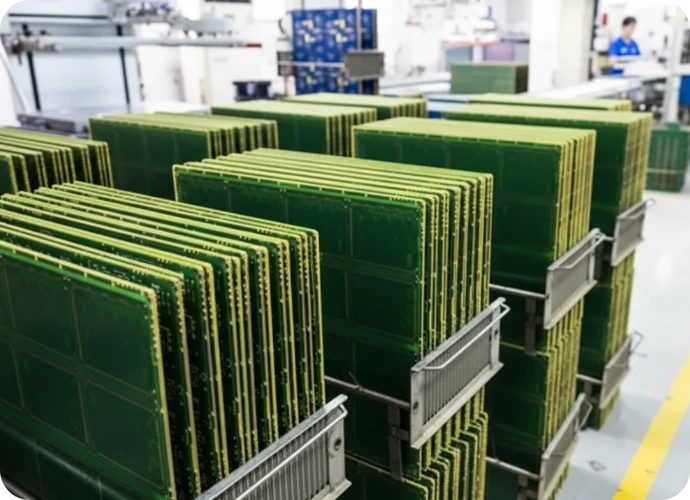
A Sample Storage PCB should be designed around the environment the board actually experiences and the consequence of failure. Automated biobanks, diagnostic storage systems, chemical libraries, and laboratory automation platforms may combine low temperatures, condensation risk, robotic movement, precision positioning, and safety-related electrical functions.
The right specification depends on four questions:
- Where is the PCB installed?
- What environmental stresses does it experience?
- What happens if the board fails?
- What evidence proves the supplier can repeatedly build it?
A PCB manufacturer is responsible for manufacturing the released board specification, including materials, stackup, dimensions, plating, finish, electrical testing, and agreed inspection records. The equipment manufacturer remains responsible for system-level qualification, environmental validation, and regulatory compliance.
When does a Sample Storage PCB need special construction?
Not every PCB inside a storage system requires specialized materials or high-reliability construction. Start with the board's actual exposure and failure consequence.
| Board condition | Primary design concern | What to verify |
|---|---|---|
| Electronics remain in a controlled ambient compartment | Industrial reliability | Material suitability, electrical test, dimensional compliance |
| Board experiences repeated cold-to-warm transitions | Thermal-mechanical stress and condensation | Laminate qualification, via reliability, coating strategy, thermal-cycle validation |
| PCB operates inside an ultra-low-temperature zone | Material and component behavior at minimum temperature | Laminate, assembly, connector, and test qualification at operating conditions |
| Board moves with robotic handling equipment | Flex fatigue and connector reliability | Flex construction, bend geometry, cycle requirement |
| PCB carries sensitive sensor or high-speed data | Signal integrity | Stackup, impedance requirements, coupons, TDR verification |
| PCB forms part of an operator safety insulation boundary | Creepage, clearance, dielectric integrity | Working voltage, insulation classification, applicable safety standard |
A standard industrial PCB can be appropriate when electronics remain near room temperature, are protected from condensation, and do not perform safety-critical functions.
The PCB's actual local temperature profile matters more than the temperature rating of the complete storage machine. A -80°C freezer does not automatically mean every internal PCB requires cryogenic construction.
For systems classified as medical electrical equipment, coordinate PCB requirements with the applicable product safety process. Medical PCB Manufacturing provides additional context for medical electronics manufacturing workflows.
What are the main Sample Storage PCB reliability failure modes?
A reliable design begins with failure mechanisms rather than material labels.
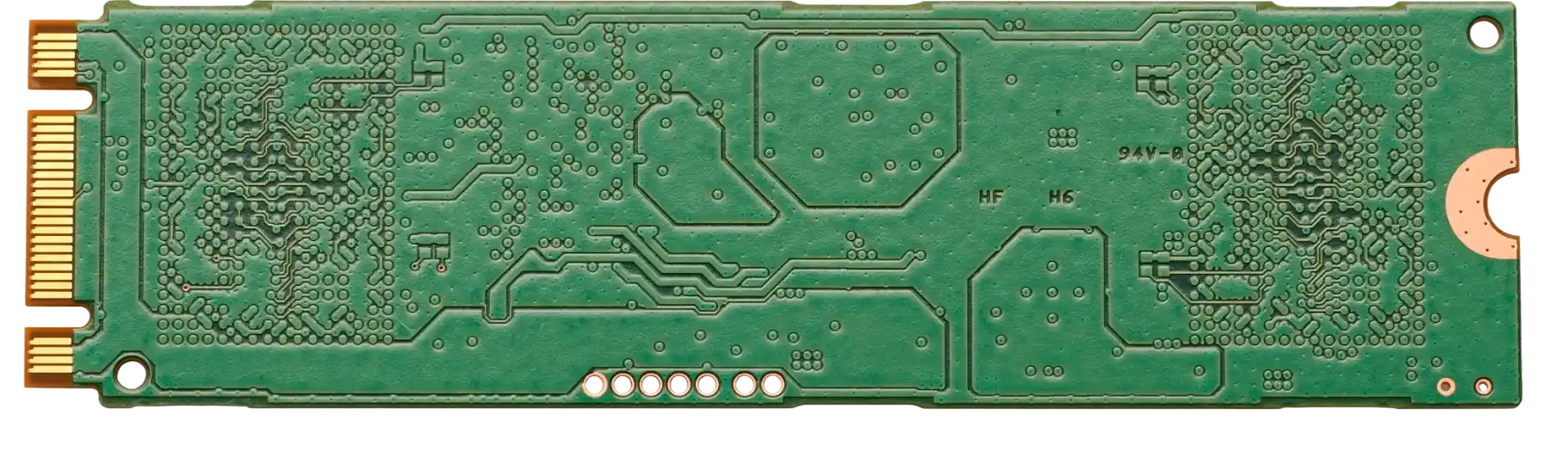
| Failure mode | Design driver | Verification evidence |
|---|---|---|
| Via or plated-through-hole fatigue | Thermal expansion mismatch between copper and laminate | Microsection analysis, thermal-cycle validation, plating verification |
| Moisture-related corrosion or migration | Humidity exposure, ionic residue, electrical bias | Cleaning controls, ionic testing where justified, environmental evaluation |
| Dynamic flex failure | Repeated bending during robotic motion | Flex construction review, bend radius, cycle validation |
| Mechanical mismatch | Tight integration with sensors, connectors, and mechanisms | Dimensional inspection of critical features |
| Signal integrity degradation | Controlled impedance requirements | Stackup review, impedance coupon and TDR data |
| Insulation failure | Safety barrier requirements | Dielectric and insulation verification |
How should via and plating reliability be specified?
Copper and laminate expand differently during temperature changes. Repeated thermal cycling can stress via barrels, pads, and internal connections.
Specify the construction that matches the application:
- Finished board thickness.
- Hole size and aspect ratio.
- Copper plating requirements.
- Applicable IPC performance class.
- Required reliability testing.
High-Tg material may support thermal robustness, but Tg alone does not prove suitability for repeated cold exposure. Review the complete material system, including Z-axis expansion, moisture behavior, thickness, and assembly process.
How should condensation risk be controlled?
Cold-to-warm transitions can create moisture conditions that accelerate corrosion or electrochemical migration.
The design approach can include:
- Adequate spacing between conductors.
- Controlled fabrication cleanliness.
- Suitable enclosure design.
- Assembly-level conformal coating when required.
ROSE testing under IPC-TM-650 2.3.25 can support process monitoring, but it does not independently prove reliability in a specific storage environment.
Review Conformal Coating Services when moisture protection is part of the assembly strategy.
When should a Sample Handling PCB use rigid-flex?
Rigid-flex construction is useful when it replaces unreliable cable assemblies or supports repeated movement.
Define:
- Dynamic bend zones.
- Bend direction.
- Minimum radius.
- Copper construction.
- Required cycle life.
A flex section used only during installation has different requirements from a robotic mechanism that moves continuously.
Review Rigid-Flex PCB Technology when evaluating moving interconnect designs.
How do you choose PCB materials, copper, finish, and stackup?
There is no universal Sample Storage PCB stackup. Each construction choice should connect to a specific requirement.
Laminate selection
High-Tg FR-4 may be suitable for many demanding applications. The selected material should be reviewed against:
- Operating temperature range.
- Thermal cycling profile.
- Moisture exposure.
- Z-axis expansion.
- Board thickness.
- Via structure.
For true cryogenic operation, validate production-representative samples under the intended conditions.
See High-Tg PCB Materials for material selection considerations.
Copper and plated holes
Copper thickness should follow current requirements and reliability needs.
Motor drivers and power circuits may require heavier copper, while sensor circuits may not. Define copper weight and plating requirements on the fabrication drawing rather than relying on terms such as "medical grade."
Surface finish selection
Choose surface finish based on assembly requirements, corrosion resistance, shelf life, and interconnect technology.
ENIG supports many fine-pitch SMT applications. ENEPIG may be appropriate for specialized interconnect requirements.
Controlled impedance
Controlled impedance applies when the circuit requires defined electrical behavior, such as:
- High-speed serial links.
- Camera interfaces.
- Memory buses.
- Sensitive communication paths.
Include impedance targets and tolerances in fabrication documentation.
Does a Sample Storage PCB need 2 MOOP?
A Sample Storage PCB does not automatically require 2 MOOP.
MOOP describes Means of Operator Protection within IEC 60601-1. Whether one or two means of protection are required depends on the finished equipment architecture and the safety analysis.
Required creepage, clearance, insulation construction, and dielectric testing depend on:
- Working voltage.
- Insulation type.
- Pollution degree.
- Altitude.
- Applicable standard requirements.
Medical electrical equipment may require evaluation under IEC 60601-1:2005+A1:2012+A2:2020. Laboratory equipment outside that scope may follow standards such as IEC 61010-1.
A PCB supplier can manufacture an approved isolation design and provide agreed evidence. The PCB alone does not certify the finished medical or laboratory system.
What validation tests should be completed before production release?
Validation should reproduce the stresses relevant to the product.
| Risk to control | Production or qualification evidence | Release question |
|---|---|---|
| Opens and shorts | 100% electrical test to agreed netlist | Did every board pass continuity and isolation testing? |
| Internal construction defects | Microsection or coupon inspection when specified | Does construction match the released drawing? |
| Thermal fatigue | Application-derived thermal cycling | Did representative boards survive required cycles? |
| Moisture and contamination | Cleaning controls and appropriate contamination evaluation | Is residue controlled for the environment? |
| Impedance variation | TDR coupon report when required | Are measured values within tolerance? |
| Mechanical fit | Dimensional inspection | Will the board integrate correctly? |
| Safety insulation failure | Product-specific dielectric verification | Does the insulation system pass requirements? |
| Manufacturing changes | Traceability and change-control records | Can changes be identified before use? |
APTPCB's broader inspection approach is described in the PCB Quality Control System, but each project should define its own acceptance package.
What should be included in a Sample Storage PCB supplier qualification checklist?
Supplier qualification should prove that the factory can repeatedly manufacture the released design.
RFQ inputs
Provide:
- Gerber or ODB++ manufacturing data.
- Fabrication drawing.
- Stackup and material requirements.
- Copper weights.
- Surface finish.
- IPC class requirements.
- Impedance requirements.
- Mechanical tolerances.
- Expected annual volume.
- Environmental requirements.
- Safety insulation requirements.
Supplier evidence package
Request:
- Material identification or certificates.
- Electrical test records.
- Dimensional inspection data.
- Impedance reports when required.
- Microsection records when required.
- Certificate of conformance.
- Traceability information.
- Approved change-control process.
Production release checklist
| Qualification item | Approval evidence |
|---|---|
| Manufacturing capability | Supplier confirms stackup, materials, and process capability |
| First production build | Inspection and test records completed |
| Quality system | Applicable certifications and procedures reviewed |
| Traceability | Lot and material records available |
| Change control | Substitutions and process changes require approval |
Certification supports supplier evaluation, but it does not replace verifying capability against the actual PCB design.
What should be submitted in a Sample Storage PCB RFQ?
A complete RFQ allows engineering teams to compare suppliers using the same technical requirements.
Submit:
- Gerber or ODB++ files.
- NC drill files.
- Fabrication drawing.
- Stackup information.
- Material requirements.
- IPC class.
- Electrical test requirements.
- Mechanical interface requirements.
- Thermal and environmental profile.
- Flex requirements.
- Inspection and traceability expectations.
Do not specify only "cryogenic PCB," "medical grade," or "2 MOOP PCB." Those descriptions identify an application but do not define manufacturing requirements.
When the package is ready, submit it through the Get a Quote page for manufacturability review and pricing.
Who owns Sample Storage PCB qualification?
The PCB manufacturer owns conformity to the released fabrication specification.
This includes:
- Material selection according to approved requirements.
- Stackup implementation.
- Dimensions.
- Plating.
- Surface finish.
- Electrical testing.
- Manufacturing records.
The equipment manufacturer owns product-level qualification, including:
- Storage performance.
- Robotic lifecycle.
- Electrical safety approval.
- EMC.
- Software behavior.
- Sample protection.
Keeping these responsibilities separate prevents qualification gaps.
Sample Storage PCB FAQ
Should a supplier be allowed to substitute laminate materials?
Only when the procurement specification allows substitution and defines equivalent properties. Thermal, impedance, safety, or reliability-critical designs should require approval before changes.
Is conformal coating part of PCB fabrication?
Conformal coating is generally an assembly-level process. If supplied as PCBA, define coating material, masking, inspection, thickness, and qualification requirements.
When is rigid-flex worth the additional cost?
Rigid-flex is valuable when movement reliability or packaging benefits justify the added complexity. Static cable connections may remain the better option for installation-only movement.
Can a prototype qualify production reliability?
Only when the prototype uses production-representative materials, construction, processes, and validation methods.
Production decision: release only what can be verified
A reliable Sample Storage PCB comes from connecting every important requirement to measurable evidence.
The final release package should allow engineering and quality teams to trace requirements to:
- A fabrication drawing.
- A manufacturing record.
- An inspection result.
- A product validation result.
When environmental risks, material choices, supplier controls, and acceptance evidence are aligned, the PCB becomes a controlled production component rather than an unverified reliability risk.