
Side Light PCB quick answer (30 seconds)
Designing a Side Light PCB requires strict control over mechanical tolerances and thermal management to ensure side-emitting LEDs align perfectly with light guides or enclosures.
- Edge Clearance: Maintain a minimum of 0.5mm (prefer 1.0mm) from the LED body to the PCB edge to prevent damage during V-cut or routing.
- Thermal Management: Use thermal vias directly under the thermal pad of the LED; for high-power applications (like Brake Light PCB), consider Metal Core PCBs (MCPCB).
- Solder Mask Dams: Implement a 4mil (0.1mm) solder dam between pads to prevent solder bridging, which is common with fine-pitch side-view LEDs.
- Pad Geometry: Extend the toe of the solder pad by 0.2mm–0.4mm beyond the component lead to improve self-alignment during reflow.
- Panelization: Use tab-routing with mouse bites rather than V-scoring near the LEDs to reduce mechanical stress that could crack ceramic LED bodies.
- Validation: Verify luminous flux and color temperature consistency after reflow, as thermal stress can shift LED characteristics.
When Side Light PCB applies (and when it doesn’t)
Side Light PCB solutions are specific to applications requiring low-profile illumination or edge-lighting.
When to use Side Light PCB:
- Space-constrained backlighting: When the device thickness prevents placing LEDs behind the display (e.g., LCD monitors, thin instrument clusters).
- Automotive exterior lighting: Specifically for Cornering Light PCB or Accent Light PCB designs where light must be directed laterally without complex optics.
- Light Guide coupling: When coupling light into a PMMA or polycarbonate light guide plate (LGP) for uniform Ambient Light PCB applications.
- Status indicators: Edge-mounted indicators on server blades or consumer electronics where visibility is required from the side profile.
When NOT to use Side Light PCB:
- High-intensity floodlighting: Top-view LEDs on a standard MCPCB are more efficient for general area lighting due to better thermal paths.
- Direct-view matrix displays: If the viewer looks directly at the board face, top-view LEDs offer better viewing angles and easier assembly.
- Extreme vibration environments: Side-view LEDs rely heavily on solder joints for mechanical stability; heavy vibration may require through-hole right-angle LEDs or additional adhesive reinforcement.
- Low-cost, non-critical indicators: If space permits, bending a standard through-hole LED is cheaper than sourcing specialized side-view SMT components.
Side Light PCB rules and specifications (key parameters and limits)
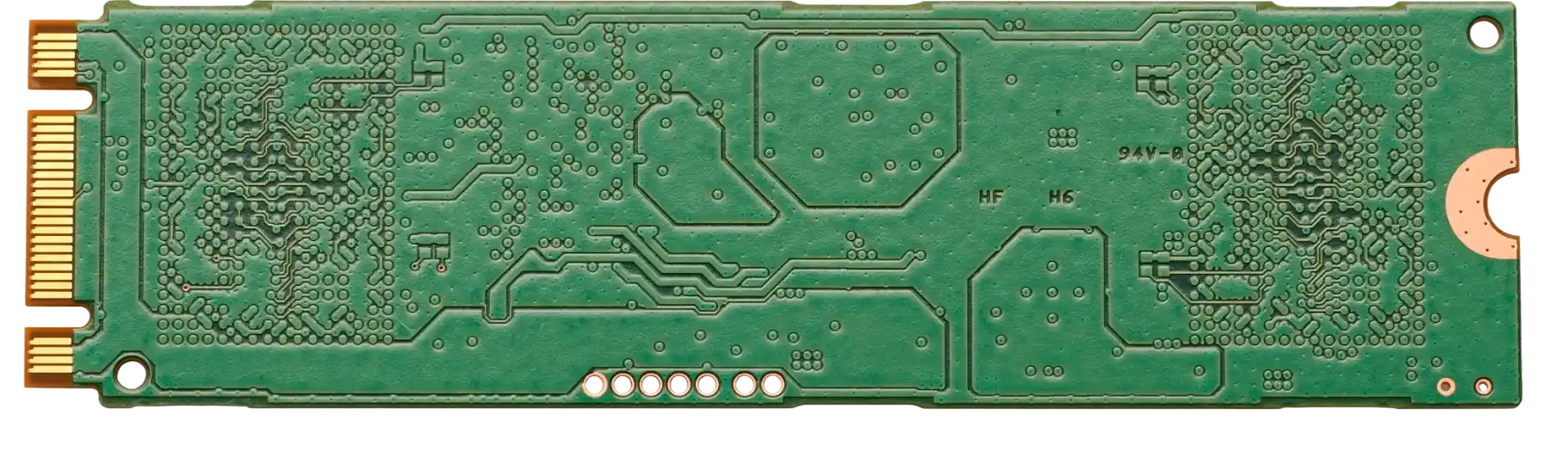
APTPCB (APTPCB PCB Factory) recommends adhering to these specifications to minimize yield loss during assembly.
| Rule | Recommended Value/Range | Why it matters | How to verify | If ignored |
|---|---|---|---|---|
| PCB Edge Clearance | > 0.8mm (from LED body) | Prevents depanelization stress from cracking the LED lens or body. | Gerber Viewer (Mechanical Layer) | Cracked LEDs, open circuits. |
| Copper Weight | 1 oz or 2 oz | Improves lateral heat spreading for edge-mounted components. | Stackup Drawing | Overheating, reduced LED lifespan. |
| Solder Mask Dam | Min 4 mil (0.1mm) | Prevents solder bridging between anode, cathode, and thermal pads. | DFM Check / CAM | Short circuits during reflow. |
| Thermal Vias | 0.3mm hole, 0.6mm pitch | Conducts heat from the LED thermal pad to the bottom layer or core. | Drill File / Drill Drawing | Thermal shutdown, color shift. |
| Surface Finish | ENIG or OSP | Provides a flat surface for fine-pitch side-view LEDs. | Fab Note Specification | Poor coplanarity, tombstoning. |
| Aspect Ratio (Vias) | < 8:1 | Ensures reliable plating in thermal vias. | Cross-section analysis | Open vias, poor thermal transfer. |
| Dielectric Thickness | < 100µm (for MCPCB) | Minimizes thermal resistance between copper and metal core. | Material Datasheet | High junction temperature (Tj). |
| Pad Extension (Toe) | +0.3mm vs datasheet | Increases meniscus force for self-alignment. | Footprint Library Check | Skewed LEDs, poor optical coupling. |
| Panelization Gap | > 5mm between boards | Allows space for router bit without touching edge-mounted LEDs. | Panel Drawing | Damaged components during routing. |
| Solder Paste Type | Type 4 (SAC305) | Smaller particle size improves release for small pads. | SPI (Solder Paste Inspection) | Insufficient solder, dry joints. |
Side Light PCB implementation steps (process checkpoints)
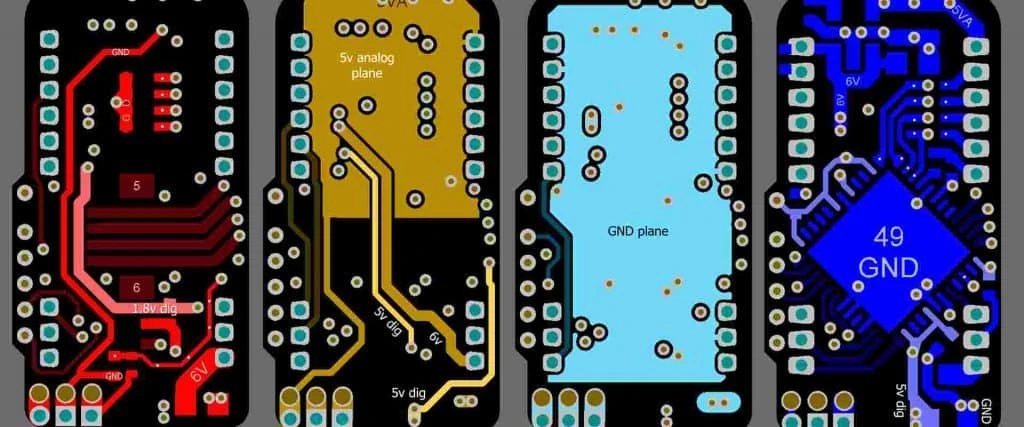
Follow these steps to ensure your Side Light PCB moves from design to production without engineering holds.
Component Selection & Thermal Analysis Select the side-view LED based on luminous intensity and thermal resistance. Calculate the total power density. If the density exceeds 0.5W/cm², switch from FR4 to Metal Core PCB (Aluminum or Copper).
Stackup & Material Definition Define the layer stackup. For FR4, maximize the ground pour on top and bottom layers connected by vias. For Beacon Light PCB applications requiring high reliability, specify high-Tg material (Tg > 170°C) to withstand thermal cycling.
Footprint Design & DFM Create the footprint with "toe" extensions on the pads. Ensure the thermal pad is segmented (window-pane design) in the stencil layer to prevent solder voiding, which causes hot spots.
Placement & Routing Place LEDs along the board edge. Route traces away from the board edge before connecting to the LED to avoid stress concentration. Ensure no vias are placed on the pad unless they are filled and capped (VIPPO), though standard tented vias near the pad are preferred for cost.
Panelization Strategy Design the panel with "tab routing" rather than V-cut for the edges housing the LEDs. V-cutting induces bending stress. Place mouse bites at least 5mm away from the nearest LED.
Solder Paste Stencil Design Request a stencil thickness of 0.10mm to 0.12mm. Use electro-polished stencils for apertures smaller than 0603 sizes to ensure good paste release.
Reflow Profiling Set a reflow profile with a soak zone (150-180°C for 60-90s) to allow flux activation and minimize thermal shock. Side-view LEDs are sensitive to moisture; ensure MSL control (baking) is performed if parts have been exposed.
Depanelization & Testing Use a router or laser depaneling machine. Never break tabs manually. Perform a functional test to verify all LEDs light up and check for "dead" LEDs caused by micro-cracks.
Side Light PCB troubleshooting (failure modes and fixes)
Common defects in Side Light PCB production and how to resolve them.
1. LED Tombstoning (lifting on one end)
- Cause: Uneven heating or unbalanced pad sizes causing unequal surface tension.
- Check: Verify if the trace width connecting to the anode and cathode is symmetrical.
- Fix: Add thermal relief to pads connected to large copper pours.
- Prevention: Use high-precision pick-and-place machines with slow placement speed.
2. Solder Bridging
- Cause: Excessive solder paste or lack of solder mask dam.
- Check: Inspect the gap between pads in the Gerber file.
- Fix: Reduce stencil aperture size by 10-15%.
- Prevention: Ensure solder mask web is at least 4mil wide.
3. Dim or Flickering LEDs (Thermal Sag)
- Cause: Overheating due to poor thermal path.
- Check: Measure the case temperature (Tc) during operation.
- Fix: Increase the number of thermal vias or switch to a heavier copper weight.
- Prevention: Simulate thermal performance during the design phase.
4. Cracked LED Body
- Cause: Mechanical stress during depaneling or connector insertion.
- Check: Inspect the distance from the LED to the V-cut/break-away tab.
- Fix: Move LEDs further from the edge or change to router depaneling.
- Prevention: Enforce strict handling rules; do not flex the panel after assembly.
5. Color Shift (Yellowing)
- Cause: Reflow temperature too high or flux contamination on the lens.
- Check: Review the reflow profile against the LED manufacturer's datasheet.
- Fix: Lower peak temperature or use a low-outgassing flux.
- Prevention: Use "no-clean" flux and avoid cleaning solvents that react with silicone lenses.
6. Misalignment with Light Guide
- Cause: PCB mounting hole tolerance or LED placement skew.
- Check: Verify the XY coordinates of the LED center relative to the mounting holes.
- Fix: Tighten the pick-and-place tolerance to ±0.05mm.
- Prevention: Add fiducial marks near the LED array for local alignment correction.
How to choose Side Light PCB (design decisions and trade-offs)
When designing for Accent Light PCB or Brake Light PCB applications, engineers must choose between different substrate and assembly technologies.
1. Rigid FR4 vs. Metal Core (MCPCB)
- Rigid FR4: Best for low-power indicators and complex routing (multi-layer). Lower cost. Poor thermal conductivity (~0.3 W/mK).
- MCPCB: Essential for high-brightness side LEDs (>1W). Excellent thermal conductivity (1.0–3.0 W/mK). Limited to single-layer routing usually. Choose MCPCB if LED junction temperature exceeds 85°C on FR4.
2. Side-View LED vs. Top-View LED with Light Pipe
- Side-View LED: Enables thinner device profiles. Direct coupling into the edge. Harder to solder; lower power limits.
- Top-View + Light Pipe: Allows higher power LEDs. Easier assembly. Requires more vertical space and custom plastic light pipes. Choose Side-View for ultra-thin designs (<5mm).
3. Rigid vs. Flex PCB
- Rigid: Standard for straight edges.
- Flex PCB: Required for curved surfaces (e.g., automotive tail lights wrapping around a corner). Allows LEDs to be mounted on a flexible strip that conforms to the housing. See Flex PCB capabilities for bend radius rules.
Side Light PCB FAQ (cost, lead time, common defects, acceptance criteria, Design for Manufacturability (DFM) files)
1. What is the typical lead time for a Side Light PCB prototype? Standard lead time is 3–5 days for FR4 and 5–7 days for Metal Core PCBs. Expedited services (24–48 hours) are available for urgent validation builds.
2. How does the cost of Side Light PCB compare to standard PCBs? The bare PCB cost is similar to standard boards. However, assembly costs may be slightly higher due to the slower pick-and-place speed required for high-precision side-view LEDs and the need for specialized inspection (AOI).
3. Can I use standard FR4 for automotive Brake Light PCBs? Generally, no. Brake lights generate significant heat and require high reliability. An Aluminum MCPCB or a high-Tg FR4 with heavy copper and thermal vias is recommended to manage the thermal load.
4. What are the acceptance criteria for side-view LED soldering? According to IPC-A-610, the solder fillet must wet at least 50% of the component lead height. The LED body must sit flat on the PCB surface with no tilt exceeding 5 degrees, as tilt affects light coupling.
5. What files are needed for a DFM review of a Side Light PCB? Send Gerber files (RS-274X), a Centroid/Pick-and-Place file, an Assembly Drawing showing LED orientation, and the LED datasheet. The datasheet is critical for verifying footprint geometry.
6. How do you test Side Light PCBs in mass production? We use Automated Optical Inspection (AOI) to check solder joints and component presence. For functional testing, we use a test fixture that powers the board and uses color sensors to verify brightness and color coordinates.
7. Why do my side-view LEDs fail during the V-cut process? V-cutting applies mechanical stress. If the LEDs are too close to the cut line (<3mm) or parallel to the cut, the ceramic body can crack. Switch to tab routing or laser depaneling.
8. Can APTPCB assemble double-sided Side Light PCBs? Yes, but this requires a carrier fixture for the second pass reflow to prevent components on the bottom side from falling off or shifting.
9. What is the minimum board thickness for edge-mounted LEDs? The PCB thickness should match the LED mechanical center if possible. Typically, 0.8mm to 1.6mm is standard. Thinner boards (0.4mm) may warp during reflow, causing misalignment.
10. How do I prevent light leakage in Side Light PCBs? Use black solder mask or white silkscreen to reflect/absorb light as needed. Ensure the mechanical enclosure fits tightly against the PCB edge.
11. Do you support "Side-plating" (Castellated holes) for modular Side Light PCBs? Yes, we can produce castellated holes (half-cut vias) on the edge, allowing the Side Light PCB to be soldered vertically onto a main motherboard.
12. What is the best surface finish for Side Light PCBs? ENIG (Electroless Nickel Immersion Gold) is preferred because it offers the flattest surface for fine-pitch placement and excellent corrosion resistance for automotive applications.
Resources for Side Light PCB (related pages and tools)
- Automotive Electronics PCB: Explore reliability standards for vehicle lighting.
- SMT Assembly Services: Details on our precision placement capabilities for 0201 and side-view components.
- DFM Guidelines: Comprehensive design rules to ensure your board is manufacturable.
Side Light PCB glossary (key terms)
| Term | Definition |
|---|---|
| Side-View LED | An LED package designed to emit light parallel to the PCB surface (e.g., 4008, 020 side-view). |
| Luminous Flux | The total amount of light energy emitted, measured in Lumens (lm). |
| Thermal Resistance (Rth) | A measure of how difficult it is for heat to flow from the LED junction to the PCB. |
| Light Guide Plate (LGP) | An acrylic or polycarbonate panel that transports light from the edge to the face of a display. |
| Tombstoning | A soldering defect where a component stands up on one end due to unbalanced wetting forces. |
| MCPCB | Metal Core Printed Circuit Board; uses a metal base (Al/Cu) for heat dissipation. |
| Solder Dam | A bridge of solder mask between pads to prevent solder from flowing between them. |
| Binning | Sorting LEDs by color (chromaticity), voltage, and brightness to ensure uniformity. |
| Depanelization | The process of separating individual PCBs from a manufacturing panel. |
| Fiducial Mark | A copper marker used by assembly machines to align the PCB optically. |
| Junction Temperature (Tj) | The internal temperature of the LED die; exceeding the limit causes failure. |
Request a quote for Side Light PCB (Design for Manufacturability (DFM) review + pricing)
APTPCB provides specialized manufacturing for Side Light PCB projects, including Accent Light PCB and Cornering Light PCB designs. We offer a complimentary DFM review to catch thermal and mechanical issues before production.
To get an accurate quote, please provide:
- Gerber Files: Including all copper, drill, and solder mask layers.
- BOM (Bill of Materials): Specifically the MPN for the side-view LEDs.
- Quantity: Prototype (5-10 pcs) or Mass Production volume.
- Special Requirements: E.g., "Must match automotive reliability standards" or "Strict color binning required."
Conclusion (next steps)
Successfully deploying a Side Light PCB requires balancing thermal dissipation with precise mechanical alignment. By following the rules for edge clearance, pad geometry, and reflow profiling, you can eliminate common defects like tombstoning and cracking. APTPCB is ready to support your project with high-precision fabrication and assembly services tailored for edge-lit applications.