ent Managers who are transitioning designs from standard HDI to Substrate-like PCB (SLP) SMT for micro pitch Ball Grid Array (BGA): what this playbook covers (and who it’s for)
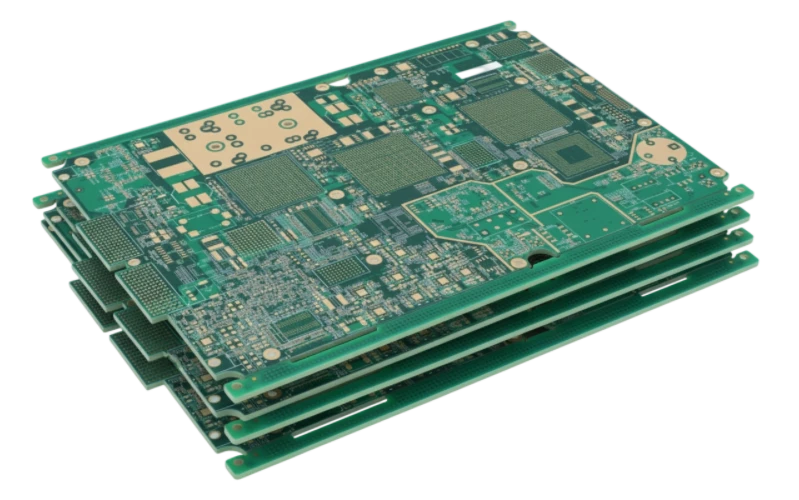
This guide is designed for Hardware Engineers, NPI Leads, and Procurement Managers who are transitioning designs from standard HDI to Substrate-like PCB (SLP) technology. Specifically, it addresses the assembly challenges of SLP SMT for micro pitch BGA components—typically defined as Ball Grid Arrays with a pitch of 0.35mm or tighter. As consumer electronics and 5G modules shrink, the convergence of PCB manufacturing and IC packaging creates a new set of rules for assembly yield and reliability.
In this playbook, we move beyond basic datasheet specifications to the practical realities of manufacturing. You will find a structured approach to defining requirements, identifying the hidden risks that cause line-down situations during ramp-up, and a validation plan to prove reliability before mass production. We focus on the specific constraints of SLP—thinner cores, finer lines, and higher thermal sensitivity—and how they interact with the SMT process for micro-components.
At APTPCB (APTPCB PCB Factory), we see many teams struggle not with the design itself, but with the translation of that design into a repeatable manufacturing process. This guide bridges that gap. It helps you ask the right questions during the RFQ phase and provides a checklist to audit your supplier’s capability to handle the precision required for next-generation interconnects.
When ent Managers who are transitioning designs from standard HDI to Substrate-like PCB (SLP) SMT for micro pitch Ball Grid Array (BGA) is the right approach (and when it isn’t)
Adopting SLP technology is a significant cost and complexity driver. It is crucial to verify that your product requirements justify the transition from standard Anylayer HDI to SLP before locking in the architecture.
It is the right approach when:
- I/O Density exceeds HDI limits: You have high-pin-count ICs (processors, modems) with pitches < 0.35mm where standard laser vias cannot escape the signal routing layers.
- Signal Integrity is paramount: You are designing 5G mmWave modules or high-speed SerDes links where the smoother copper profile of the mSAP (modified Semi-Additive Process) used in SLP offers lower insertion loss than traditional subtractive etching.
- Z-Height constraints are critical: You need to reduce the overall stackup thickness significantly (e.g., < 0.6mm for a 10-layer board) to fit into ultra-slim enclosures like smartphones or AR glasses.
- Component density is extreme: You require passive component sizes of 01005 or 008004 placed directly under or immediately adjacent to large BGAs.
It is NOT the right approach when:
- Standard HDI suffices: If your tightest BGA pitch is 0.4mm or 0.5mm, standard Type 3 or Type 4 HDI is significantly cheaper and has a wider supply chain.
- Cost is the primary driver: SLP manufacturing yields are lower and material costs are higher than conventional PCBs. If the budget is tight, optimize the layout for standard HDI.
- Thermal loads are extreme without management: SLP materials are thin. If your device dissipates high wattage without a robust thermal solution (like vapor chambers or heavy copper coins), the thin dielectric may not spread heat effectively, leading to hotspots.
Specs & requirements (before quoting)

To ensure a successful SLP SMT for micro pitch BGA process, you must provide your manufacturing partner with specific, quantifiable requirements. Vague notes like "IPC Class 2" are insufficient for this level of technology.
- BGA Pitch and Ball Diameter: Explicitly state the minimum pitch (e.g., 0.3mm) and the nominal ball diameter. This dictates the stencil aperture design and solder paste type.
- Pad Definition (NSMD vs. SMD): Define Non-Solder Mask Defined (NSMD) pads for better BGA registration on micro pitches, but specify the mask web capability (typically < 50µm for SLP).
- Solder Paste Specification: Mandate Type 5 (15-25µm particle size) or Type 6 (5-15µm) solder paste. Standard Type 4 is often too coarse for apertures required by < 0.35mm pitch components.
- Stencil Technology: Require electroformed or fine-grain laser-cut stencils with nano-coating. Specify the area ratio (> 0.66) to ensure consistent paste release.
- Placement Accuracy (Cpk): Specify a Cpk > 1.33 for placement accuracy of ±15µm or better. Micro pitch BGAs have virtually no self-alignment capability if placed significantly off-pad.
- Warpage Tolerance: Define maximum allowable warpage at room temperature and at reflow peak temperature (e.g., < 0.5% of diagonal length). SLP cores are thin and prone to "smiling" or "frowning" during reflow.
- Reflow Profile Constraints: Specify the maximum peak temperature (usually 245°C-250°C for SAC305) and Time Above Liquidus (TAL). Tighter windows are needed to prevent thermal damage to the thin SLP substrate.
- Underfill Requirements: Clearly state if capillary underfill (CUF) or corner bonding is required. If yes, define the "keep-out zone" around the BGA to allow the dispensing nozzle access.
- Voiding Criteria: Set a stricter voiding limit than IPC standard. For micro pitch BGA, < 15% voiding area is a common target to ensure joint reliability and thermal transfer.
- Cleanliness / Flux Residue: If using No-Clean flux, specify the allowable residue levels. For RF applications, flux residue can affect dielectric properties; low-residue or water-soluble options might be needed.
- Inspection Coverage: Mandate 100% 3D SPI (Solder Paste Inspection) and 100% 2D/3D X-Ray for all BGA components.
- Traceability Level: Require component-level traceability (linking specific reel batches to specific PCB serial numbers) to trace defects back to raw materials.
Hidden risks (root causes & prevention)
Scaling from a few prototypes to mass production introduces variables that can drastically reduce yield. Understanding these risks allows you to implement detection methods early in the SLP SMT for micro pitch BGA process.
Risk: Head-in-Pillow (HiP) Defects
- Why it happens: The thin SLP substrate warps during the reflow cycle. As the board curves, the BGA balls lift off the solder paste. The paste reflows, and the ball reflows, but they never coalesce, creating an open circuit that often passes DC continuity tests but fails under stress.
- Detection: 3D X-Ray (laminography) or Dye & Pry testing on sample failures.
- Prevention: Use high-Tg SLP materials, optimize the reflow profile (soak time) to equalize temperatures, and use solder pastes with specific anti-HiP flux chemistry.
Risk: Solder Bridging under Micro Pitch
- Why it happens: On 0.3mm pitch, the gap between pads is microscopic. Slight stencil misalignment, excessive paste volume, or paste "slump" during pre-heat can cause paste to bridge.
- Detection: 3D SPI is the primary defense. Post-reflow X-Ray can catch it, but rework is difficult.
- Prevention: Strict stencil aperture reduction (e.g., 10-15% reduction), frequent underside stencil cleaning, and strict control of the print environment (temperature/humidity).
Risk: Underfill Voiding and Delamination
- Why it happens: If the dispensing process is too fast or the board isn't pre-heated correctly, air gets trapped under the BGA. Moisture in the PCB can also outgas, causing delamination.
- Detection: Scanning Acoustic Microscopy (C-SAM) or flat-sectioning.
- Prevention: Bake boards before assembly to remove moisture. Optimize dispensing flow patterns (L-shape or I-shape) and flow speed.
Risk: Pad Cratering
- Why it happens: SLP materials can be brittle. Mechanical stress from ICT (In-Circuit Test) fixtures or drop events can rip the copper pad out of the resin.
- Detection: Cross-section analysis or Dye & Pry.
- Prevention: Use resin-reinforced copper foil if available. Limit probe pressure during ICT. Ensure strict strain gauge testing during fixture verification.
Risk: Non-Wet Open (NWO)
- Why it happens: The OSP (Organic Solderability Preservative) surface finish on the SLP degrades due to multiple reflow cycles or oxidation before assembly.
- Detection: X-Ray shows the ball shape is spherical but not wetted to the pad.
- Prevention: Strict shelf-life control of PCBs. Nitrogen (N2) reflow environment to prevent oxidation during the soldering process.
Risk: Solder Ball Splashing
- Why it happens: Volatiles in the flux explode during rapid heating, or moisture in the board turns to steam, spitting solder balls onto adjacent fine-pitch circuitry.
- Detection: AOI (Automated Optical Inspection) and visual inspection.
- Prevention: Optimize the reflow ramp rate (keep it < 2°C/sec). Ensure proper baking of PCBs and moisture-sensitive components (MSL control).
Risk: RF Performance Shift
- Why it happens: In mmWave module SMT process flows, variations in solder volume or flux residue can detune the antenna or change the impedance of the interconnect.
- Detection: Functional RF testing and antenna tuning and trimming verification.
- Prevention: extremely tight tolerance on solder paste volume (SPI control limits) and strict cleanliness standards.
Risk: Component Tiling/Tombstoning
- Why it happens: Uneven heating or uneven pad sizes on 01005 passives surrounding the BGA cause the component to stand up.
- Detection: AOI.
- Prevention: DFM checks for thermal balance on pads. High-precision placement equipment.
Validation plan (what to test, when, and what “pass” means)

You cannot rely on "visual inspection" for SLP SMT. A robust validation plan uses destructive and non-destructive testing to prove the process window is stable.
Solder Paste Inspection (SPI) Correlation
- Objective: Verify print consistency.
- Method: Measure volume, area, and height of paste deposits for 50+ panels.
- Pass Criteria: Cpk > 1.67 for volume; no bridges or insufficient paste defects.
First Article Inspection (FAI) with X-Ray
- Objective: Confirm BGA alignment and joint quality.
- Method: 2D and 3D X-Ray of the first 5-10 boards.
- Pass Criteria: < 15% voiding; concentric alignment; no shorts/opens; consistent ball shape.
Cross-Section Analysis (Micro-sectioning)
- Objective: Verify Intermetallic Compound (IMC) formation and via integrity.
- Method: Slice through critical BGA rows and micro-vias. Polish and inspect under microscope.
- Pass Criteria: Continuous IMC layer (1-3µm thick); no cracks in vias; good wetting angles.
Dye & Pry Test
- Objective: Detect "Head-in-Pillow" and pad cratering that X-Ray might miss.
- Method: Inject red dye under the BGA, cure, pry the component off, and inspect interfaces.
- Pass Criteria: No dye penetration into the solder joint interface or pad crater.
Thermal Cycling Test (TCT)
- Objective: Validate reliability under thermal stress (CTE mismatch).
- Method: Cycle boards from -40°C to +125°C for 500-1000 cycles. Monitor resistance.
- Pass Criteria: Resistance change < 10% from baseline; no joint fractures.
Drop Testing
- Objective: Simulate mechanical shock (handheld devices).
- Method: JEDEC standard drop test (e.g., 1500G, 0.5ms).
- Pass Criteria: No electrical failures after specified number of drops (e.g., 30 drops).
Shear and Pull Testing
- Objective: Verify mechanical bond strength of surrounding passives.
- Method: Apply force to shear off components.
- Pass Criteria: Failure mode should be in the bulk solder or component, not the pad interface (pad lift).
Ionic Contamination Testing
- Objective: Ensure cleanliness for reliability and RF performance.
- Method: ROSE test or Ion Chromatography.
- Pass Criteria: Contamination levels below IPC limits (e.g., < 1.56 µg/cm² NaCl equivalent).
RF Functional Verification
- Objective: Confirm antenna tuning and trimming success.
- Method: Conducted and radiated RF measurements.
- Pass Criteria: RF parameters (Gain, TRP, TIS) within spec; no frequency shifts due to assembly.
Supplier checklist (RFQ + audit questions)
Use this checklist to vet potential partners for SLP SMT for micro pitch BGA. If they cannot answer these detailed questions, they may not be ready for your project.
RFQ Inputs (What you send)
- Gerber Files & ODB++: Full dataset including all copper layers, mask, and paste.
- Stackup Drawing: Detailed material specs (dielectric constant, Tg) and thickness tolerances.
- BOM with MPNs: Approved Manufacturer List (AML) is critical for micro components.
- XY Pick & Place Data: Centroid file with rotation and side information.
- Assembly Drawing: Showing critical component orientations, special instructions, and label locations.
- Panelization Drawing: If you have specific panel requirements for your fixtures.
- Test Specification: Defining ICT, FCT, and RF test requirements.
- Acceptance Criteria: Reference to IPC-A-610 Class 2 or 3, plus any custom voiding/alignment rules.
Capability Proof (What they must show)
- Minimum Pitch Capability: Can they demonstrate successful mass production of 0.3mm or 0.35mm pitch BGAs?
- Placement Equipment: Do they have high-precision mounters (e.g., Fuji, Panasonic, ASM) capable of ±15µm accuracy?
- SPI & AOI: Do they have 3D SPI and 3D AOI inline? (2D is insufficient for SLP).
- X-Ray Capacity: Do they have inline or offline 3D X-Ray/CT scan capability for BGA analysis?
- Reflow Ovens: Do they use ovens with 10+ zones and Nitrogen (N2) capability?
- Underfill Process: Do they have automated dispensing systems with weight control and vision alignment?
- Stencil Fabrication: Do they source stencils from top-tier vendors using electroforming or fine-grain laser cutting?
- Cleanroom Environment: Is the SMT area Class 100,000 or better to prevent dust contamination on micro pads?
Quality System & Traceability
- Certifications: ISO 9001, ISO 13485 (medical), or IATF 16949 (automotive) as applicable.
- MES System: Do they have a Manufacturing Execution System that enforces process steps?
- Traceability: Can they link a specific PCB serial number to the solder paste lot, reflow profile, and component reels used?
- MSD Control: Do they have a robust Moisture Sensitive Device control program (dry cabinets, baking logs)?
- ESD Control: Is ESD compliance audited regularly (floors, wrist straps, ionizers)?
- Yield Management: How do they track and report First Pass Yield (FPY)? What is their target?
Change Control & Delivery
- PCN Process: Do they have a formal Product Change Notification process for any material or machine changes?
- Capacity Planning: Do they have sufficient line capacity to meet your ramp-up schedule without bottlenecks?
- DFA Feedback: Will they provide a detailed Design for Assembly report before starting production?
- Rework Capability: Do they have a controlled process and equipment for BGA rework (if permitted)?
- Logistics: Can they handle vacuum packaging and humidity indicator cards for finished PCBA shipment?
- Buffer Stock: Are they willing to hold buffer stock of long-lead components?
Decision guidance (trade-offs you can actually choose)
Engineering is about compromise. Here are the common trade-offs in SLP SMT for micro pitch BGA projects and how to navigate them.
Trade-off: Type 4 vs. Type 5 Solder Paste
- Decision: If your finest pitch is 0.4mm, Type 4 is cheaper and more stable. If you have 0.35mm or 0.3mm pitch, you must choose Type 5 (or Type 6) to ensure proper aperture release, even though it is more expensive and has a shorter stencil life.
Trade-off: Underfill vs. No Underfill
- Decision: If your device will survive drop tests without it (verified by testing), skip underfill to save cost and reworkability. If you have a large BGA (>10x10mm) on a thin SLP in a handheld device, choose Underfill (or corner bonding) to prevent joint fracture, accepting that rework becomes impossible or very difficult.
Trade-off: Nitrogen Reflow vs. Air Reflow
- Decision: If you use OSP finish and micro pitch BGAs, choose Nitrogen. It widens the process window and improves wetting. If you use ENIG and standard pitch, Air reflow is sufficient and saves operational cost.
Trade-off: 100% X-Ray vs. Sampling
- Decision: During NPI and ramp-up, prioritize 100% X-Ray to catch process drift. Once the process is stable (Cpk > 1.33) and yield is high, switch to AQL sampling to increase throughput and reduce cost.
Trade-off: NSMD vs. SMD Pads
- Decision: Prioritize NSMD for micro pitch BGAs to maximize the copper landing area for the ball. Choose SMD only if pad cratering is a proven failure mode in your specific drop tests, as SMD offers better mechanical anchoring.
Trade-off: Stencil Thickness (80µm vs 100µm)
- Decision: If you have 0.3mm pitch components, you likely need an 80µm (or even 70µm) stencil to get the right aspect ratio. This reduces solder volume for larger components. You may need a "step-up" stencil (thicker in some areas) to give larger parts enough paste, which adds tooling cost but solves the volume conflict.
FAQ
Q: What is the minimum BGA pitch APTPCB can handle for SLP? A: We routinely handle 0.35mm pitch in mass production and can support 0.3mm pitch with advanced engineering engagement and Type 5/6 paste.
Q: Can you rework micro pitch BGAs on SLP? A: It is possible but risky due to the thin substrate and potential for pad damage. We recommend minimizing rework reliance; if underfill is used, rework is generally not recommended.
Q: How does the mmWave module SMT process differ from standard SMT? A: It requires stricter control over solder volume and flux residue, as these can detune the antenna. We often use specialized low-loss solders and rigorous cleaning processes.
Q: Is underfill always required for SLP assemblies? A: Not always, but it is highly recommended for handheld devices where the thin SLP core offers less mechanical support against drop-shock than a rigid HDI board.
Q: What is the impact of "antenna tuning and trimming" on the assembly line? A: This usually involves post-assembly testing where laser trimming or component selection is done to fine-tune frequency. The SMT line must support these "select-on-test" operations.
Q: Why is warpage such a big issue with SLP? A: SLP eliminates the thick glass-reinforced core of standard PCBs. Without this "backbone," the material expands and contracts more dramatically during thermal excursions.
Q: Do I need a special surface finish for SLP? A: OSP is common for copper-pillar flip-chip, but ENIG or ENEPIG is often preferred for SMT to ensure flat, oxidation-resistant pads for fine-pitch placement.
Q: How do you handle 01005 passives next to large BGAs? A: We use high-precision nozzles and potentially step stencils to manage the disparate paste volume requirements, ensuring the small parts don't float or tombstone.
Related pages & tools
- HDI PCB Manufacturing – Understand the foundational technology that SLP evolves from, including micro-via structures.
- BGA & QFN Fine Pitch Assembly – Deep dive into the specific assembly challenges of fine-pitch components, applicable to SLP.
- X-Ray Inspection Services – Learn about the non-destructive testing methods essential for validating hidden BGA solder joints.
- NPI Assembly Services – See how we handle the critical prototyping phase to validate your SLP design before scaling.
- DFM Guidelines – Access design rules that help you optimize your layout for manufacturing yield.
- SMT & THT Assembly – Overview of our general assembly capabilities and quality standards.
Request a quote
Ready to validate your design? Request a Quote today for a comprehensive DFM review and pricing analysis.
To get the most accurate DFM and quote, please provide:
- Gerber Files (RS-274X or ODB++)
- Bill of Materials (BOM) with approved vendors
- Pick & Place (XY) File
- Stackup & Impedance Requirements
- Test Requirements (ICT/FCT/RF)
- Estimated Annual Volume (EAU)
Conclusion
Mastering SLP SMT for micro pitch BGA is not just about buying the newest equipment; it is about rigorous process control and understanding the material science of thin substrates. By defining clear requirements for paste, stencil, and inspection, and by proactively managing risks like warpage and voiding, you can leverage the density benefits of SLP without sacrificing reliability. APTPCB is ready to be your partner in this advanced manufacturing landscape, guiding you from the first prototype to stable mass production.