
Key Takeaways
- Definition: A Smart Dishwasher PCB is a hybrid control unit managing high-voltage electromechanics (pumps, heaters) and low-voltage IoT connectivity (Wi-Fi, sensors).
- Critical Metric: The Comparative Tracking Index (CTI) is vital for preventing electrical breakdown in humid environments.
- Common Misconception: Believing that standard consumer electronics standards apply; dishwashers require industrial-grade moisture protection like conformal coating.
- Pro Tip: Always separate high-voltage AC lines from low-voltage DC logic by at least 8mm (creepage) to ensure safety and signal integrity.
- Validation: Accelerated Life Testing (ALT) under high humidity is non-negotiable for long-term reliability.
- Sourcing: Partner with a manufacturer experienced in Smart Appliance PCB production to handle mixed-signal complexities.
What Smart Dishwasher PCB really means (scope & boundaries)
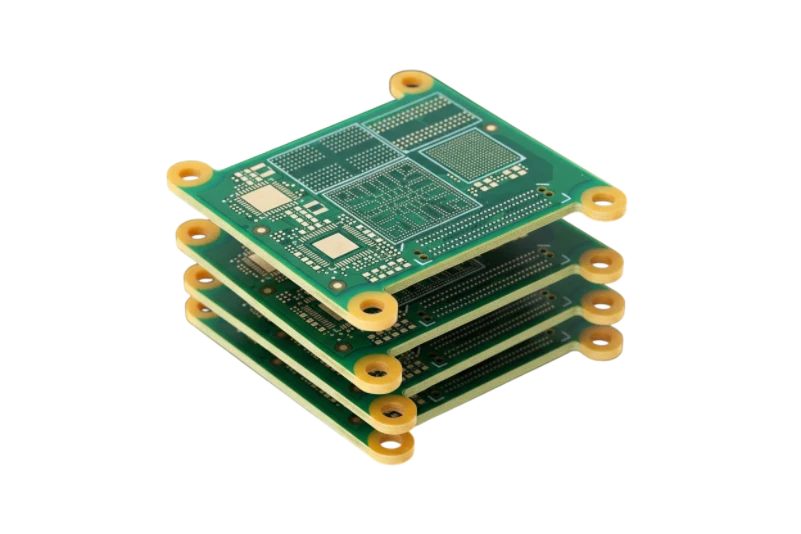
Understanding the core definition sets the stage for evaluating technical requirements and manufacturing standards. A Smart Dishwasher PCB is the central nervous system of modern kitchen automation. Unlike legacy mechanical timers, this board integrates a microcontroller (MCU) with power relays and wireless communication modules.
The scope of this PCB usually covers three distinct functional areas:
- Power Supply & Driver Stage: Converts AC mains to DC voltages and drives high-current loads like the circulation pump, drain pump, and heating element.
- Sensor Interface: Processes data from turbidity sensors (water cleanliness), NTC thermistors (temperature), and flow meters.
- Connectivity & UI: Manages Wi-Fi/Bluetooth for app control, displays error codes, and handles capacitive touch inputs.
At APTPCB (APTPCB PCB Factory), we categorize these boards as "harsh environment electronics." They must survive inside a chassis that experiences rapid thermal cycling and high humidity, distinguishing them from a standard Smart Band PCB or Smart Clothing PCB which face different environmental stressors.
Smart Dishwasher PCB metrics that matter (how to evaluate quality)
Once the scope is defined, we must quantify performance using specific metrics to ensure the board survives its operating environment. The following metrics determine if a PCB is suitable for the hot, wet environment of a dishwasher.
| Metric | Why it matters | Typical Range / Factor | How to measure |
|---|---|---|---|
| CTI (Comparative Tracking Index) | Prevents short circuits caused by moisture and contamination on the board surface. | Grade 0 (>600V) or Grade 1 (400V-599V). | IEC 60112 Standard Test. |
| Tg (Glass Transition Temp) | Ensures the PCB does not soften or deform during the drying cycle's high heat. | High Tg (>150°C or >170°C) is recommended. | DSC (Differential Scanning Calorimetry). |
| CAF Resistance | Prevents Conductive Anodic Filament growth (internal shorts) in humid conditions. | Must be "CAF Resistant" grade laminate. | Temperature-Humidity-Bias (THB) testing. |
| Solder Mask Dam | Prevents solder bridging on fine-pitch components like the MCU. | Minimum 4 mil (0.1mm) between pads. | Optical inspection during fabrication. |
| Dielectric Breakdown | Critical for safety between high-voltage AC and user-touchable UI circuits. | >1.5kV isolation required. | Hi-Pot (High Potential) Testing. |
How to choose Smart Dishwasher PCB: selection guidance by scenario (trade-offs)
Knowing the metrics allows engineers to select the right board architecture for specific user scenarios and price points. Not all smart dishwashers require the same PCB complexity.
1. The "Entry-Level Smart" Scenario
- Requirement: Basic Wi-Fi monitoring, physical buttons, standard drying.
- Selection: 2-layer FR4 PCB with standard Tg (130°C-140°C).
- Trade-off: Lower cost, but less thermal headroom for advanced drying features.
2. The "Premium Silent" Scenario
- Requirement: BLDC motor control (variable speed), TFT display, steam functions.
- Selection: 4-layer PCB to handle complex routing and noise suppression. Requires High Tg PCB material.
- Trade-off: Higher manufacturing cost; requires strict impedance control for the display interface.
3. The "Compact/Countertop" Scenario
- Requirement: Extreme space constraints, high power density.
- Selection: Thicker copper (2oz or 3oz) to handle current in narrow traces.
- Trade-off: Higher thermal management challenges; may need additional heat sinks.
4. The "Hygiene/Sanitize" Scenario
- Requirement: Extra-high water temperatures (>75°C) for long durations.
- Selection: Material with high thermal decomposition (Td) rating.
- Trade-off: Limited laminate options; higher raw material lead time.
5. The "Integrated UI" Scenario
- Requirement: The main control board is mounted directly behind the door skin (capacitive touch).
- Selection: Rigid-Flex or board-to-board connectors. High sensitivity to dielectric thickness.
- Trade-off: Mechanical mounting is complex; touch sensitivity varies with panel thickness.
6. The "Retrofit Module" Scenario
- Requirement: Adding smarts to an existing mechanical design.
- Selection: Small module PCB that plugs into a legacy header.
- Trade-off: Limited by the power supply of the host machine.
Smart Dishwasher PCB implementation checkpoints (design to manufacturing)

After selecting the architecture, the focus shifts to the rigorous design and manufacturing process to ensure yield and reliability.
- Schematic Validation: Verify isolation between the AC mains (High Voltage) and the MCU/Wi-Fi logic (Low Voltage).
- Risk: User shock hazard.
- Acceptance: Schematic review against UL/IEC safety standards.
- Layout - Creepage & Clearance: Maintain >8mm gap between primary and secondary circuits.
- Risk: Arcing during humidity spikes.
- Acceptance: DRC (Design Rule Check) in CAD software.
- Thermal Relief Design: Ensure heavy copper pads for relays have thermal relief spokes.
- Risk: Cold solder joints due to heat dissipation during soldering.
- Acceptance: Visual inspection of Gerber files.
- Solder Mask Selection: Use high-quality, matte green or blue mask.
- Risk: Glossy masks can cause eye fatigue during manual inspection and may have lower adhesion.
- Acceptance: Adhesion tape test (IPC-TM-650).
- Surface Finish: Choose HASL (Lead-Free) for cost or ENIG for flat pads (fine-pitch MCUs).
- Risk: HASL surfaces can be uneven for small QFN packages.
- Acceptance: Flatness measurement.
- Conformal Coating Application: This is the most critical step for a Smart Dishwasher PCB.
- Risk: Corrosion from steam and detergent fumes.
- Acceptance: UV light inspection to ensure full coverage (coating usually contains UV tracer).
- Recommendation: Review PCB Conformal Coating options early.
- In-Circuit Testing (ICT): Test all passive components and open/shorts before firmware loading.
- Risk: Dead-on-arrival boards reaching the assembly line.
- Acceptance: >98% test coverage.
- Burn-In Testing: Run the PCB at elevated voltage and temperature for 4-8 hours.
- Risk: Early infant mortality of power components.
- Acceptance: Zero failures allowed in the sample batch.
Smart Dishwasher PCB common mistakes (and the correct approach)
Even with a solid plan, developers often stumble upon specific pitfalls during the prototype phase.
- Mistake 1: Ignoring the "Stack Effect."
- Issue: Placing the PCB vertically without considering that heat rises, cooking the top components (often the Wi-Fi module).
- Correction: Place heat-generating power resistors and relays at the top, or ensure aggressive venting.
- Mistake 2: Using standard FR4 for High Voltage.
- Issue: Standard FR4 has a lower CTI (175V-250V), leading to carbon tracking over time.
- Correction: Specify "High CTI" laminate (PLC 0 or 1) specifically for appliance applications.
- Mistake 3: Underestimating Vibration.
- Issue: Heavy components (transformers, large capacitors) snap off during shipping or pump operation.
- Correction: Use bonding adhesive (RTV silicone) to secure heavy parts, similar to a Smart Blender PCB.
- Mistake 4: Forgetting OTA (Over-the-Air) Memory.
- Issue: The MCU has enough flash for the code, but not enough to buffer a download for an update.
- Correction: Select an MCU with dual-bank flash or add external SPI flash.
- Mistake 5: Weak Grounding.
- Issue: The switching noise from the motor interferes with the Wi-Fi signal.
- Correction: Use a solid ground plane and separate analog/digital grounds, connecting them at a single point (star ground).
- Mistake 6: Inadequate Test Points.
- Issue: Production line cannot program or test the board efficiently.
- Correction: Place test points on the bottom side for easy bed-of-nails fixture access.
Smart Dishwasher PCB FAQ (cost, lead time, materials, testing, acceptance criteria)
To address lingering uncertainties, we have compiled answers to the most frequent inquiries we receive at APTPCB.
Q: How does the cost of a Smart Dishwasher PCB compare to a standard appliance PCB? A: It is typically 30-50% higher due to the addition of the Wi-Fi module, higher CTI materials, and the requirement for conformal coating.
Q: What is the typical lead time for these boards? A: Standard prototypes take 5-7 days. Mass production Turnkey Assembly typically takes 3-4 weeks, depending on component availability (especially specific MCUs).
Q: Can we use CEM-1 or CEM-3 materials to save money? A: For simple single-sided boards, yes. However, for a Smart Dishwasher PCB with double-sided SMT and Wi-Fi, FR4 is strongly recommended for structural stability and thermal performance.
Q: What specific testing is required for the "Smart" features? A: Beyond standard electrical tests, you need RF testing (signal strength) and functional testing to ensure the board pairs correctly with the mobile app.
Q: What are the acceptance criteria for conformal coating? A: The coating must be free of bubbles, voids, and de-wetting. Thickness usually needs to be between 25μm and 75μm.
Q: How do we handle the "vs" choice: Integrated Wi-Fi Chip vs. Modular Wi-Fi Board? A: Choose a module for lower volume (pre-certified, easier design). Choose chip-down design for high volume (>100k units) to reduce unit cost, though certification costs are higher.
Q: Is a Smart Dishwasher PCB similar to a Smart Cooker PCB? A: They share high-voltage control, but the Smart Cooker PCB deals with higher ambient heat, while the Dishwasher PCB deals with higher humidity. The coating requirements differ.
Resources for Smart Dishwasher PCB (related pages and tools)
- Material Data: Check our FR4 PCB page for CTI and Tg specs.
- Protection: Learn about moisture barriers on the PCB Conformal Coating page.
- Assembly: Explore our Turnkey Assembly capabilities for complex IoT boards.
Smart Dishwasher PCB glossary (key terms)
Finally, clear communication requires a shared understanding of technical terminology used in appliance electronics.
| Term | Definition |
|---|---|
| CTI | Comparative Tracking Index; measures the voltage at which the PCB substrate breaks down. |
| Conformal Coating | A protective chemical film applied to the PCBA to resist moisture and dust. |
| Creepage | The shortest distance between two conductive parts along the surface of the insulation. |
| Clearance | The shortest distance between two conductive parts through the air. |
| Triac | A semiconductor switch used to control AC power to pumps and valves. |
| Relay | An electromechanical switch used for high-current loads like heaters. |
| Zero-Crossing | Switching AC power when the voltage is at zero to reduce electrical noise (EMI). |
| EMI/EMC | Electromagnetic Interference/Compatibility; ensuring the board doesn't disrupt Wi-Fi. |
| NTC | Negative Temperature Coefficient; a sensor used to measure water temperature. |
| OTA | Over-The-Air; the ability to update the dishwasher's firmware via Wi-Fi. |
| IPC-A-610 | The industry standard for PCB assembly acceptability (Class 2 is standard for appliances). |
| Potting | Encapsulating the entire PCB in resin for maximum water protection (more extreme than coating). |
Conclusion (next steps)
A Smart Dishwasher PCB is more than just a circuit board; it is a reliability-critical component that defines the user experience of a modern appliance. By focusing on high-CTI materials, proper isolation distances, and rigorous moisture protection, you can build a product that lasts for a decade in a harsh kitchen environment.
If you are ready to move from concept to production, APTPCB is ready to assist. For a comprehensive DFM review and accurate quote, please provide:
- Gerber Files: Including all copper layers, solder mask, and drill files.
- BOM (Bill of Materials): Highlighting critical components like relays and the MCU.
- Stackup Requirements: Specifying copper weight and finished thickness.
- Coating Specs: Defining which areas must be coated and which must be masked.
- Test Protocol: Instructions for functional testing of the smart features.