
Solar Analyzer PCB: what this playbook covers (and who it’s for)
This guide is designed for hardware engineers, product managers, and procurement leads tasked with sourcing a Solar Analyzer PCB. These boards are the heart of photovoltaic (PV) testing equipment, responsible for characterizing IV curves, measuring irradiance, and ensuring solar installation efficiency. Unlike standard consumer electronics, these PCBs must handle a unique combination of high-voltage power switching and precision analog signal acquisition, often in harsh outdoor environments.
In this playbook, we move beyond generic manufacturing advice to address the specific challenges of PV instrumentation. You will find a breakdown of critical specifications, a detailed risk assessment for scaling production, and a validation plan to ensure your device survives field conditions. We also provide a "copy-paste" ready supplier checklist to help you audit potential partners.
Whether you are building a handheld portable unit or a high-precision Benchtop Analyzer for laboratory certification, the reliability of the PCB dictates the accuracy of the data. APTPCB (APTPCB PCB Factory) has supported numerous instrumentation clients through this process, and this guide consolidates those lessons into actionable steps to help you make a safe, data-driven purchasing decision.
When Solar Analyzer PCB is the right approach (and when it isn’t)
Understanding the specific operational context of your device is the first step in defining the board architecture, as this dictates whether you need a specialized Solar Analyzer PCB or a generic control board.
This approach is critical when:
- High Voltage/Current Handling is Required: Your device connects directly to PV strings that may generate up to 1500V DC or high amperage. Standard FR4 stackups may fail due to dielectric breakdown or thermal stress.
- Precision Analog Measurement is Non-Negotiable: You are measuring micro-changes in voltage or current to calculate efficiency. Noise from power switching must be isolated from the ADC (Analog-to-Digital Converter) lines, similar to the requirements of a Disturbance Analyzer.
- Harsh Environmental Exposure: The device is used outdoors by technicians. The PCB must withstand thermal cycling, humidity, and potential condensation without delaminating or corroding.
- Complex Signal Integration: Your design integrates RF modules (Wi-Fi/Bluetooth/LoRa) for data logging, requiring impedance control similar to an Antenna Analyzer PCB.
This approach might be overkill when:
- Low-Power Educational Kits: If the device is for a classroom setting measuring a single 5V solar cell, a standard consumer-grade PCB is sufficient.
- Simple Pass-Through Monitoring: If the device does not perform active load switching or IV curve tracing but simply logs voltage, a less complex, lower-cost board architecture may suffice.
Specs & requirements (before quoting)
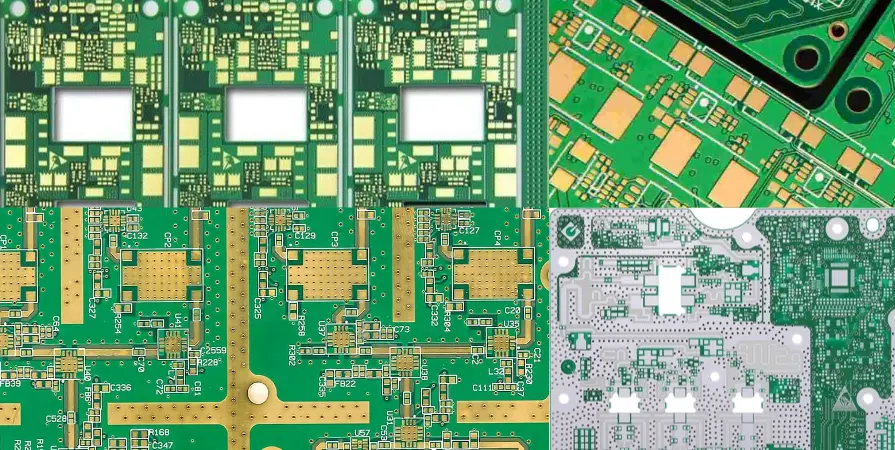
To get an accurate quote and a manufacturable board, you must translate functional desires into concrete fabrication data. Moving from "high reliability" to specific IPC standards prevents ambiguity.
- Base Material (Laminate):
- Specify High-Tg FR4 (Tg ≥ 170°C) to withstand thermal stress during high-current testing.
- For high-frequency data transmission, consider hybrid stackups using Rogers or similar low-loss materials if the analyzer transmits real-time data.
- Copper Weight:
- Define copper weight based on current carrying capacity. Solar analyzers often require 2oz or 3oz copper on inner layers to handle load currents without excessive heating.
- Specify "Heavy Copper" capability if your design exceeds 3oz.
- Layer Stackup & Isolation:
- Clearly define the separation between High Voltage (HV) and Low Voltage (LV) sections.
- Request a balanced stackup to prevent warping, which is critical if the board is mounted in a ruggedized enclosure.
- Surface Finish:
- Choose Electroless Nickel Immersion Gold (ENIG) for flat pads, which is essential for fine-pitch components like ADCs and processors.
- Avoid HASL for precision instrumentation as the uneven surface can lead to soldering defects on small components.
- Solder Mask & Legend:
- Specify matte green or black solder mask to reduce glare during automated optical inspection (AOI).
- Ensure high-contrast silkscreen for clear labeling of test points and safety warnings (e.g., "High Voltage").
- Impedance Control:
- List specific traces requiring impedance control (e.g., 50Ω for RF antennas, 90Ω for USB data).
- Provide the target frequency to allow the manufacturer to calculate the correct dielectric thickness.
- Via Types:
- Determine if blind or buried vias are necessary to save space or improve isolation.
- Specify "tented" or "plugged" vias in HV areas to prevent arcing or shorting.
- Cleanliness Standards:
- Require ionic contamination testing. Residues can cause leakage currents that drift measurement accuracy over time, acting like a parasitic resistor.
- Dimensional Tolerances:
- Tighten outline tolerances (±0.1mm) if the PCB must fit precisely into a waterproof, IP-rated enclosure.
- Documentation:
- Require IPC-A-600 Class 2 (standard) or Class 3 (high reliability) compliance explicitly in the fabrication notes.
Hidden risks (root causes & prevention)
Even with perfect specs, hidden risks can emerge during mass production or field operation. Identifying these early prevents costly recalls.
- Creepage and Clearance Violations:
- Risk: High voltage from PV strings arcs across the PCB surface or through the air, destroying the microcontroller.
- Detection: Review Gerber files against IPC-2221 voltage spacing standards.
- Prevention: Use milling slots (air gaps) between HV and LV sections to increase creepage distance without increasing board size.
- Thermal Drift Affecting Accuracy:
- Risk: Heat generated by the load switching transistors warms up the voltage reference chip, causing measurement errors.
- Detection: Thermal simulation during design; thermal camera imaging during prototyping.
- Prevention: Physically separate heat sources from precision analog circuits. Use thermal vias and metal core areas if necessary.
- Parasitic Inductance in Current Sensing:
- Risk: Poor layout of the current sense resistor traces creates inductance, distorting the waveform during fast switching (similar to issues in a Battery Analyzer PCB).
- Detection: Signal integrity simulation; testing with a high-speed oscilloscope.
- Prevention: Use Kelvin connections (4-wire sensing) layout techniques strictly.
- Electromagnetic Interference (EMI):
- Risk: The switching power supply inside the analyzer generates noise that interferes with the wireless data transmission or fails EMC compliance.
- Detection: Near-field scanning; pre-compliance EMC testing.
- Prevention: Proper ground plane partitioning and shielding cans over noisy circuits.
- Moisture Ingress causing Electromigration:
- Risk: In humid outdoor environments, moisture penetrates the PCB, causing copper dendrites to grow (electromigration), leading to shorts.
- Detection: Temperature-Humidity-Bias (THB) testing.
- Prevention: Apply conformal coating (acrylic or silicone) after assembly.
- Component Obsolescence:
- Risk: A critical specialized IC (like a specific ADC) goes end-of-life (EOL), forcing a redesign.
- Detection: BOM scrubbing tools.
- Prevention: Select components with a long lifecycle and identify pin-compatible alternatives during the design phase.
- Mechanical Stress on Connectors:
- Risk: Frequent plugging/unplugging of solar cables cracks the solder joints of the main connectors.
- Detection: Vibration and drop testing.
- Prevention: Use through-hole connectors with mechanical retention features (screws or snap-ins) rather than surface-mount only.
- Inconsistent Dielectric Constant:
- Risk: Batch-to-batch variation in FR4 material affects the tuning of the RF antenna, reducing range.
- Detection: Impedance coupons on the production panel.
- Prevention: Specify specific laminate brands or tighter dielectric tolerances for RF layers.
Validation plan (what to test, when, and what “pass” means)
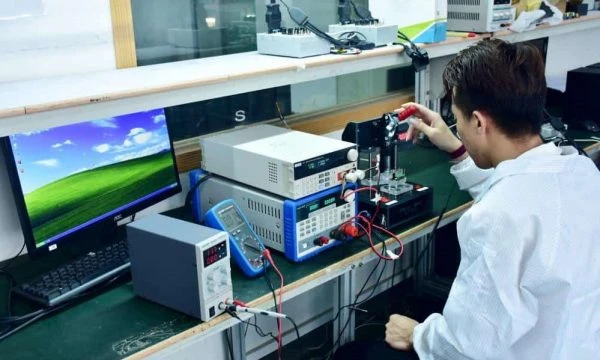
A robust validation plan bridges the gap between a prototype that works on the bench and a product that survives the field. This plan should be executed before full mass production.
- Electrical Continuity & Isolation (Bare Board):
- Objective: Ensure no shorts/opens and dielectric strength.
- Method: Flying probe test (for prototypes) or Bed of Nails (for production). High-pot test at 2x rated voltage + 1000V.
- Acceptance: 100% pass rate; zero leakage current above threshold.
- Automated Optical Inspection (AOI) - Assembly:
- Objective: Verify component placement, polarity, and solder joint quality.
- Method: High-resolution cameras scan the PCBA against the golden sample.
- Acceptance: No missing parts, tombstoning, or bridging.
- In-Circuit Testing (ICT):
- Objective: Verify values of passive components and basic operation of active ICs.
- Method: Pogo pin fixture measuring resistance, capacitance, and voltage rails.
- Acceptance: All measured values within specified tolerance (e.g., ±1%).
- Functional Circuit Test (FCT):
- Objective: Validate the device performs its actual job (measuring solar input).
- Method: Simulate a solar input (using a programmable power supply) and verify the analyzer reads the correct voltage/current.
- Acceptance: Reading accuracy within device spec (e.g., ±0.5%).
- Thermal Cycling Test:
- Objective: Simulate outdoor day/night cycles.
- Method: Chamber cycling from -40°C to +85°C for 50-100 cycles.
- Acceptance: No cracking of solder joints; device remains functional throughout.
- EMC/EMI Pre-compliance:
- Objective: Ensure the device doesn't emit excessive noise (like an EMC Analyzer PCB would detect).
- Method: Radiated and conducted emissions testing in a shielded tent or chamber.
- Acceptance: Emissions below regulatory limits (FCC/CE).
- Vibration/Drop Test:
- Objective: Simulate transport and handling.
- Method: Random vibration table; drop from 1 meter onto concrete (in enclosure).
- Acceptance: No mechanical damage; connectors remain seated; unit powers up.
- Firmware Flashing & Calibration:
- Objective: Load final software and calibrate ADCs.
- Method: Automated programming fixture.
- Acceptance: Checksum verification pass; calibration coefficients stored successfully.
Supplier checklist (RFQ + audit questions)
Use this checklist to vet suppliers like APTPCB or others. It ensures they have the specific capabilities required for Solar Analyzer PCB production.
Group 1: RFQ Inputs (What you send)
- Gerber files (RS-274X or X2 format) with clear outline and drill data.
- IPC Netlist for electrical test verification.
- Detailed Stackup drawing indicating material types and impedance requirements.
- Bill of Materials (BOM) with manufacturer part numbers and acceptable alternates.
- Pick and Place (XY) centroid file.
- Assembly drawings showing component orientation and special instructions (e.g., "Do not wash").
- Test requirements document (ICT/FCT procedures).
- Conformal coating specifications (areas to coat vs. mask).
Group 2: Capability Proof (What they must have)
- Demonstrated experience with Heavy Copper (≥3oz) manufacturing.
- Capability for milling slots/air gaps for high-voltage isolation.
- Impedance control reporting (TDR testing).
- X-Ray inspection capability for BGA/QFN components.
- Conformal coating line (automated or manual spray).
- Experience sourcing industrial/automotive grade components.
Group 3: Quality System & Traceability
- ISO 9001 certification (mandatory); ISO 13485 or IATF 16949 (bonus for reliability).
- UL rating for the bare PCB (flammability safety).
- System for tracking date codes of components (traceability).
- Incoming Quality Control (IQC) procedure for PCBs and components.
- Procedure for handling Non-Conforming Material (MRB).
- ESD control program in the assembly area.
Group 4: Change Control & Delivery
- Process Change Notification (PCN) policy (will they tell you before changing materials?).
- Lead time stability for high-layer count or heavy copper boards.
- Packaging standards (vacuum sealed, desiccant, humidity indicator cards).
- Logistics partners for safe international shipping.
Decision guidance (trade-offs you can actually choose)
Engineering is about compromise. Here is how to navigate the common trade-offs when specifying a Solar Analyzer PCB.
- ENIG vs. HASL Finish:
- If you prioritize reliability and flatness for fine-pitch parts: Choose ENIG. It costs slightly more but ensures better solder joints for sensitive ADCs.
- If you prioritize lowest cost for a simple through-hole board: Choose HASL.
- Heavy Copper vs. Busbars:
- If you prioritize compact size: Choose Heavy Copper (3oz+). It keeps the high current paths internal.
- If you prioritize thermal management and cost: Use standard 1oz copper and solder external Busbars or thick wire jumpers for high-current paths.
- Integrated vs. Modular RF:
- If you prioritize certification speed: Use a pre-certified RF module (soldered onto the main board).
- If you prioritize unit cost at high volume: Design the RF antenna and circuit directly onto the PCB (requires complex RF design and certification).
- Class 2 vs. Class 3 Manufacturing:
- If you prioritize standard commercial use: Choose IPC Class 2.
- If you prioritize "mission critical" reliability (no fail allowed): Choose IPC Class 3. This increases cost significantly due to stricter inspection criteria (e.g., plating thickness).
- Conformal Coating:
- If you prioritize outdoor longevity: Apply Coating. It is a must for solar analyzers used in the field.
- If you prioritize repairability: Skip Coating (only if the device is strictly for indoor lab use).
FAQ
Q: What is the best PCB material for high-voltage solar analyzers? A: High-Tg FR4 (Tg 170°C+) is the standard recommendation. It resists thermal expansion better than standard FR4, preventing barrel cracks in vias during load heating.
Q: Can I use a standard multimeter PCB design for solar analysis? A: Generally, no. Solar analyzers often handle higher energy transients and require specific load-switching circuits that standard multimeter PCBs lack.
Q: How do I prevent noise from affecting the measurement accuracy? A: Use a 4-layer stackup minimum. Dedicate internal layers to Ground and Power planes. Keep the sensitive analog sensing traces short and shielded by ground pours.
Q: Why is "Heavy Copper" often mentioned for these boards? A: Solar strings can generate significant current. Heavy copper (2oz, 3oz, or more) reduces the resistance of the traces, minimizing voltage drop and heat generation.
Q: Do I need impedance control if I don't have an antenna? A: You might. If you use high-speed interfaces like USB or Ethernet to download data, those specific differential pairs still require impedance control.
Q: What is the difference between a Solar Analyzer and a Battery Analyzer PCB? A: They are similar in current sensing, but Solar Analyzers must handle higher voltages (up to 1500V) and variable input sources, whereas battery analyzers focus on lower voltage, bi-directional current flow.
Q: How does APTPCB ensure the safety of high-voltage boards? A: We perform 100% Electrical Testing (E-Test) on bare boards to check for isolation breaches and can support High-Pot testing specifications upon request.
Q: What file format is best for manufacturing? A: Gerber X2 is preferred as it contains stackup and drill data metadata, reducing the chance of misinterpretation. ODB++ is also excellent.
Related pages & tools
- Heavy Copper PCB Manufacturing – Essential for understanding how to handle high currents in solar applications without overheating.
- Industrial Control PCB – Explore how we handle reliability for rugged industrial environments similar to PV fields.
- PCB Testing & Quality – Details on our electrical testing and AOI processes that ensure your analyzer works out of the box.
- Turnkey PCB Assembly – Learn how we can handle component sourcing and assembly for complex instrumentation boards.
- DFM Guidelines – Technical design rules to ensure your solar analyzer board is manufacturable at scale.
Request a quote
Ready to move your Solar Analyzer PCB from design to production? APTPCB offers a comprehensive Design for Manufacturing (DFM) review to catch high-voltage spacing issues and thermal risks before you pay.
To get an accurate quote and DFM report, please prepare:
- Gerber Files: Including all copper layers, drill files, and outline.
- Fabrication Drawing: Specifying material (High-Tg), copper weight, and surface finish.
- BOM (for Assembly): If you need us to source components and assemble the board.
- Volume & Timeline: Prototype quantity vs. expected production volume.
Click here to Upload Files & Get a Quote – Our engineering team will review your data for high-voltage safety and manufacturability within 24 hours.
Conclusion
Sourcing a Solar Analyzer PCB requires balancing the brute force needed for power handling with the finesse required for precision measurement. By defining clear requirements for isolation, materials, and testing, you protect your project from the hidden risks of field failure and signal noise. Whether you are building a rugged field unit or a precision lab instrument, following this validation and checklist approach ensures your product scales successfully.