
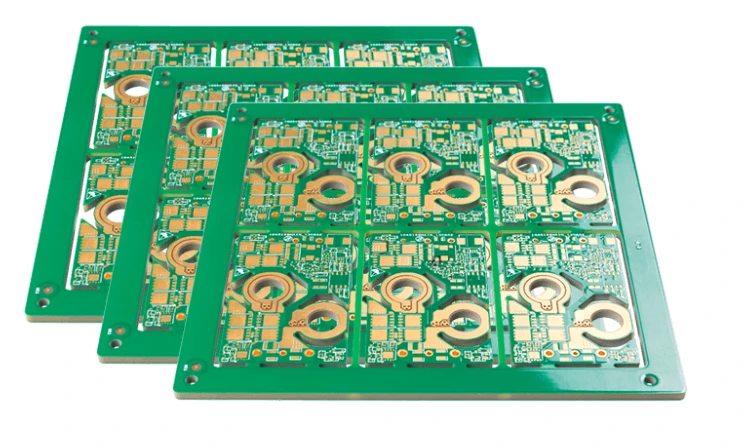
Solar-powered security and monitoring systems rely entirely on the efficiency and durability of their internal electronics. At the heart of these systems lies the Solar Camera PCB, a specialized printed circuit board designed to manage unstable power inputs while processing high-definition video data. Unlike standard electronics plugged into a stable grid, these boards must balance energy harvesting, battery management, and signal integrity in harsh outdoor environments.
This guide covers the entire lifecycle of a solar camera circuit board. We will move from definitions and critical metrics to material selection and manufacturing checkpoints. Whether you are designing a remote wildlife monitor or a traffic enforcement unit, understanding these parameters is essential for long-term reliability.
APTPCB (APTPCB PCB Factory) specializes in high-reliability boards for outdoor applications. We help engineers transition from prototype to mass production with strict adherence to IPC standards.
Key Takeaways
Before diving into technical specifications, here are the core principles of successful solar camera electronics:
- Power Efficiency is Paramount: The PCB layout must minimize leakage current to extend standby time during cloudy periods.
- Environmental Resilience: Outdoor boards require specific materials and coatings to resist UV radiation, humidity, and temperature cycling.
- Signal Integrity: High-resolution sensors (4K/8K) demand precise impedance control to prevent data loss.
- Integrated Power Management: A robust Solar Camera PCB integrates MPPT (Maximum Power Point Tracking) logic directly or via a daughterboard.
- Thermal Management: Heat from processors must be dissipated away from the battery connector to prevent degradation.
- Validation is Mandatory: Electrical testing and automated optical inspection (AOI) are non-negotiable for outdoor reliability.
What Solar Camera PCB really means (scope & boundaries)
Having established the core principles, we must define the specific scope of this technology. A Solar Camera PCB is not a single standard board but a category of interconnects designed for autonomous video systems. It acts as the central hub connecting the solar panel, the battery storage, the image sensor, and the wireless transmission module (4G/5G/Wi-Fi).
The primary distinction between a standard camera board and a solar variant is the power architecture. A standard board expects a clean 12V or 5V DC input. A solar board must handle voltage fluctuations from the panel (0V to 24V+) and manage the charging logic for lithium-ion or LiFePO4 batteries. This often involves complex switching regulators that introduce noise. Therefore, the PCB layout must isolate sensitive analog video signals from these noisy power switching loops.
Furthermore, the scope includes the physical constraints of the enclosure. Many solar cameras are compact. This necessitates high-density interconnect (HDI) designs or rigid-flex combinations to fit into tight, waterproof housings. Whether you are building a rugged Action Camera PCB for mobile solar kits or a static surveillance unit, the fundamental requirement is autonomy.
Metrics that matter (how to evaluate quality)
Understanding the definition helps, but you need quantifiable metrics to judge the quality of a design. The following table outlines the critical performance indicators for a solar-powered camera circuit board.
| Metric | Why it matters | Typical Range / Factors | How to Measure |
|---|---|---|---|
| Quiescent Current (Standby) | Determines how long the camera survives without sun. High leakage drains batteries fast. | < 50µA for the total PCB assembly in sleep mode. | Precision multimeter in series with battery input during sleep state. |
| Dielectric Constant (Dk) | Affects signal speed and integrity for high-speed video data (4K/8K). | 3.4 to 4.5 (FR4). Lower is better for high frequency. | Vector Network Analyzer (VNA) on test coupons. |
| Thermal Resistance (Rth) | Heat kills batteries and sensors. The PCB must conduct heat away efficiently. | Dependent on copper weight (1oz vs 2oz) and vias. | Thermal imaging camera under load; thermocouple testing. |
| Impedance Tolerance | Mismatched impedance causes video artifacts or signal reflection. | ±10% (Standard) or ±5% (High Precision) for 50Ω/90Ω/100Ω traces. | Time Domain Reflectometry (TDR) during manufacturing. |
| Glass Transition Temp (Tg) | Ensures the board survives soldering and outdoor heat without delaminating. | Tg > 150°C (High-Tg FR4) is recommended for outdoor use. | Differential Scanning Calorimetry (DSC) (Lab test). |
| CTI (Comparative Tracking Index) | Measures resistance to electrical breakdown (tracking) in humid conditions. | PLC 0 or 1 (600V+). Critical for high-voltage solar inputs. | Standard IEC 60112 test methods. |
| Solder Mask Hardness | Protects copper from oxidation and physical scratches during assembly. | > 6H pencil hardness. | Pencil hardness test per IPC-SM-840. |
Selection guidance by scenario (trade-offs)
Metrics provide the data, but the application dictates the design choices. Different environments require different trade-offs between cost, performance, and durability. Below are common scenarios for Solar Camera PCB deployment.
1. Remote Wildlife Monitoring (The "Battery" Focus)
In deep forests, maintenance is impossible. The priority is extreme power efficiency.
- Focus: Battery Camera PCB architecture.
- Trade-off: Lower processing speed is acceptable to save power.
- PCB Requirement: Low-leakage materials, thick copper for power efficiency, simple 4-layer stackup to reduce cost and failure points.
2. Construction Site Security (The "Resolution" Focus)
Sites require identifying faces and license plates. Power is available via larger solar trailers, but data rates are high.
- Focus: 4K Camera PCB or 8K Camera PCB.
- Trade-off: Higher power consumption is acceptable; signal integrity is non-negotiable.
- PCB Requirement: Controlled impedance is critical. High-speed materials (like Megtron or high-performance FR4) may be needed. 6 to 8 layers with dedicated ground planes for noise shielding.
3. Traffic Enforcement (The "Speed" Focus)
Automatic Number Plate Recognition (ANPR) requires fast shutter speeds and rapid processing.
- Focus: ANPR Camera PCB.
- Trade-off: High thermal generation due to fast processors.
- PCB Requirement: Metal-core PCB (MCPCB) or heavy copper FR4 to dissipate heat. High reliability under constant vibration from passing traffic.
4. Portable/Wearable Solar Kits (The "Size" Focus)
Used by hikers or field researchers, these cameras charge via small portable panels.
- Focus: Action Camera PCB.
- Trade-off: Space is extremely limited; thermal management is difficult.
- PCB Requirement: HDI (High Density Interconnect) with blind/buried vias. Rigid-flex technology allows the board to fold into compact housings.
5. Coastal/Marine Surveillance (The "Corrosion" Focus)
Salt mist destroys standard electronics in weeks.
- Focus: Chemical resistance.
- Trade-off: Higher manufacturing cost for protective measures.
- PCB Requirement: ENIG (Electroless Nickel Immersion Gold) surface finish is mandatory. Conformal coating (acrylic or silicone) must be applied post-assembly.
6. Agricultural Monitoring (The "Range" Focus)
Farms cover vast areas. Cameras often use LoRaWAN or 4G LTE to transmit data.
- Focus: RF performance.
- Trade-off: Board layout is dictated by antenna placement.
- PCB Requirement: RF-specific layout guidelines. Separation of digital logic and RF sections to prevent interference.
From design to manufacturing (implementation checkpoints)
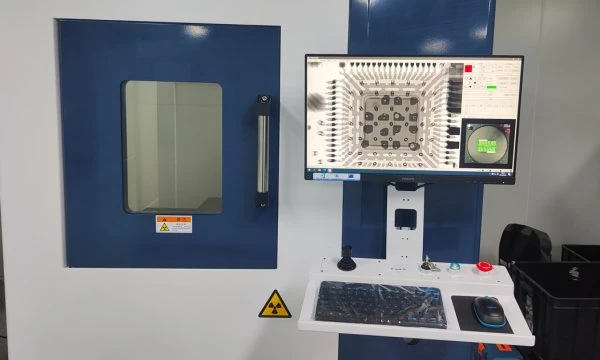
Once you have identified your scenario, the transition from schematic to physical board requires a disciplined approach. At APTPCB, we recommend the following checkpoints to ensure your Solar Camera PCB is manufacturable and reliable.
1. Stackup Definition Before routing a single trace, define the layer stackup. For a solar camera, a 4-layer board is the minimum standard (Signal - Ground - Power - Signal). This provides a solid reference plane for video signals and reduces EMI.
- Risk: Poor stackup leads to radiated emissions and failed EMC tests.
- Action: Consult our PCB manufacturing capabilities to choose standard prepreg thicknesses.
2. Material Selection Standard FR4 is usually sufficient, but ensure it is "High-Tg" (Tg 150°C or 170°C). Outdoor cameras can get very hot inside their enclosures.
- Risk: Delamination during summer heatwaves.
- Action: Review material options specifically for high-temperature endurance.
3. Power Trace Width Calculation Solar inputs and battery charging currents can be significant (2A - 5A). Traces must be wide enough to prevent voltage drops and overheating.
- Risk: Thin traces act as fuses or resistors, wasting power.
- Action: Use a trace width calculator. Consider 2oz copper for power layers.
4. Impedance Control for Video MIPI CSI-2 interfaces (connecting the sensor to the processor) require differential pairs (usually 100Ω).
- Risk: Video signal loss or "ghosting" in the image.
- Action: Use an impedance calculator to determine trace width and spacing based on your stackup.
5. Component Placement (Thermal Strategy) Do not place the PMIC (Power Management IC) or the main processor directly next to the image sensor or the battery connector.
- Risk: Heat noise affects image quality (thermal noise); heat degrades battery life.
- Action: Separate heat-generating components and use thermal vias to transfer heat to the bottom layer.
6. Design for Manufacturing (DFM) Check Ensure minimum trace widths and clearances meet factory capabilities (typically 4mil/4mil for standard, tighter for HDI).
- Risk: Shorts or opens during etching; increased scrap rate.
- Action: Run a DFM check before finalizing the layout. Read our DFM guidelines for specific rules.
7. Surface Finish Selection For solar cameras, HASL (Hot Air Solder Leveling) is often too uneven for fine-pitch components.
- Risk: Poor soldering on small processor pins.
- Action: Choose ENIG. It is flat, lead-free, and corrosion-resistant.
8. Solder Mask and Silkscreen Use a matte black solder mask if the PCB is visible or near the lens to reduce light reflection.
- Risk: Stray light reflections affecting image quality.
- Action: Specify matte finish in your fabrication notes.
9. Test Point Strategy Add test points for all power rails (Solar In, Battery, 3.3V, 1.8V, etc.).
- Risk: Inability to diagnose failures in the field.
- Action: Place test points on the bottom side for easy access during fixture testing.
10. Conformal Coating Plan Decide which areas need coating and which (like connectors) must be masked.
- Risk: Coating getting inside connectors, ruining connectivity.
- Action: Create a detailed coating drawing.
Common mistakes (and the correct approach)
Even with a solid plan, specific errors frequently occur in Solar Camera PCB designs. Avoiding these pitfalls saves time and money.
- Ignoring Voltage Drop on Solar Lines: Designers often route the solar input with thin traces. Even a 0.5V drop can significantly reduce charging efficiency. Correction: Use polygons or planes for solar inputs, not thin traces.
- Placing Vias in Pads: To save space, designers put vias inside component pads. This sucks solder away from the joint (solder wicking). Correction: Use "dog-bone" fanouts or request "via-in-pad plated over" (VIPPO) if budget allows.
- Neglecting Inrush Current: When the battery connects, a massive current spike occurs. Without protection, traces can blow. Correction: Add proper bulk capacitance and ensure trace width can handle the surge.
- Poor Grounding of the Antenna: Wireless solar cameras need a perfect ground plane under the antenna connector. Correction: Stitch the ground plane with vias around the RF section.
- Forgetting Moisture Protection: Relying solely on the enclosure for waterproofing is risky. Condensation happens. Correction: Always plan for conformal coating on the PCB itself.
- Over-specifying Materials: Using Rogers material for a sub-1GHz LoRa signal is often unnecessary and expensive. Correction: Standard FR4 with good layout is usually sufficient for sub-6GHz applications unless strictly required.
- Inadequate Test Access: Making a board so small that it cannot be probed. Correction: If space is tight, use edge plating or a dedicated debug connector that is removed or covered later.
FAQ
Q: What is the best surface finish for a Solar Camera PCB? A: ENIG (Electroless Nickel Immersion Gold) is the best choice. It offers a flat surface for fine-pitch components (like the camera processor) and excellent corrosion resistance for outdoor environments.
Q: Can I use a flexible PCB for a solar camera? A: Yes, especially for Action Camera PCB designs or compact housings. Rigid-flex is common, where the rigid part holds the heavy components and the flex part connects to the sensor or battery.
Q: How many layers do I need for a 4K solar camera? A: Typically, a 4K Camera PCB requires at least 4 to 6 layers. You need dedicated layers for ground and power to ensure the high-speed video signals (MIPI) are shielded from noise.
Q: Does the color of the solder mask matter? A: Yes. Matte black is preferred for camera PCBs to prevent light reflections from interfering with the image sensor. Green is standard but can reflect light.
Q: How do I ensure my PCB can handle the heat of direct sunlight? A: Use High-Tg FR4 material (Tg > 150°C). Also, design the enclosure to dissipate heat and ensure the PCB layout uses thermal vias to spread heat to the ground plane.
Q: What is the difference between an ANPR Camera PCB and a regular one? A: An ANPR Camera PCB usually runs more intensive algorithms for license plate recognition, generating more heat. It requires better thermal management and often higher-spec vibration resistance.
Q: Why is impedance control important for solar cameras? A: Solar cameras transmit high-definition video. If the impedance of the traces doesn't match the sensor's output (usually 100Ω differential), the signal will degrade, causing video glitches.
Q: How do I protect the PCB from humidity? A: Apply conformal coating (acrylic, silicone, or urethane) after assembly. This creates a barrier against moisture and dust.
Q: What data do I need to send for manufacturing? A: You need to send Gerber files (RS-274X), a Drill file, the BOM (Bill of Materials), and a Pick-and-Place file. Also, include a "Read Me" text file with stackup and impedance requirements.
Q: Can APTPCB handle the assembly of these boards? A: Yes, we provide full turnkey services, including PCB fabrication, component sourcing, and assembly.
Glossary (key terms)
| Term | Definition |
|---|---|
| BMS | Battery Management System. Circuitry that protects the battery from overcharging or deep discharge. |
| MPPT | Maximum Power Point Tracking. A technique used to maximize energy extraction from solar panels. |
| MIPI CSI | Mobile Industry Processor Interface Camera Serial Interface. The standard high-speed protocol for connecting image sensors. |
| HDI | High Density Interconnect. PCBs with blind/buried vias and fine lines, used in compact devices. |
| ENIG | Electroless Nickel Immersion Gold. A high-quality surface finish for PCBs. |
| Gerber File | The standard file format used to describe PCB images (copper, mask, legend) to the manufacturer. |
| Impedance | The opposition to AC current flow in a trace. Critical for high-speed signals. |
| Vias | Plated holes that connect copper traces on different layers of the PCB. |
| Blind Via | A via that connects an outer layer to an inner layer but does not go through the entire board. |
| Buried Via | A via connecting inner layers only; not visible from the outside. |
| Tg | Glass Transition Temperature. The temperature at which the PCB material begins to soften. |
| IPC Class 3 | A manufacturing standard for high-reliability electronics (medical, aerospace, harsh environment). |
| DFM | Design for Manufacturing. The practice of designing boards that are easy and cheap to manufacture. |
| PCBA | Printed Circuit Board Assembly. The finished board with all components soldered on. |
Conclusion (next steps)
Designing a Solar Camera PCB is a balancing act between power autonomy, signal fidelity, and environmental ruggedness. Whether you are engineering a high-resolution 8K Camera PCB for surveillance or a low-power Battery Camera PCB for wildlife tracking, the success of the product depends on the details of the circuit board.
From selecting the right High-Tg materials to ensuring precise impedance control for video data, every decision impacts the camera's field performance. Do not overlook the importance of a robust DFM review before committing to mass production.
Ready to manufacture your solar camera design? APTPCB is ready to assist. To get an accurate quote and a comprehensive DFM review, please prepare the following:
- Gerber Files: Including all copper, mask, and drill layers.
- Stackup Details: Specify layer count and desired thickness (e.g., 1.6mm).
- Impedance Requirements: List specific traces that need control (e.g., 100Ω diff pairs).
- Material Specs: Mention if you need High-Tg or specific brands (Isola, Rogers).
- Assembly Files: BOM and Pick-and-Place data if you need PCBA.
Contact us today to ensure your solar camera performs flawlessly in any environment.