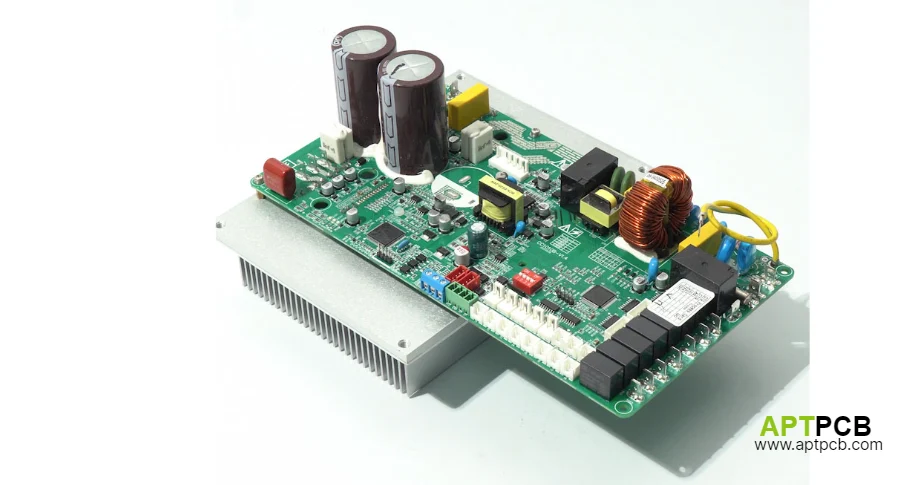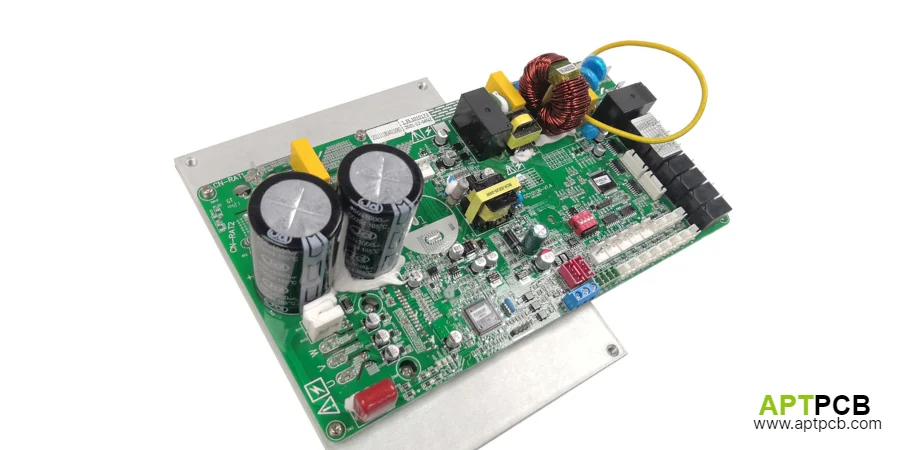
Solar inverter control PCBs are the electronic control center of photovoltaic power conversion systems. They collect voltage, current, and temperature measurements, execute control algorithms, manage communication, and activate protection functions when operating conditions change.
For engineering teams and procurement managers, selecting a solar inverter control PCB manufacturer requires more than confirming PCB assembly capability. The supplier must demonstrate control over mixed-signal design requirements, manufacturing consistency, functional validation, environmental protection, and production documentation.
A reliable manufacturing partner should help reduce risks before production begins by reviewing design files, identifying manufacturing concerns, supporting prototype builds, and providing evidence that the final control PCB meets defined requirements.
What Should You Evaluate When Selecting a Solar Inverter Control PCB Manufacturer?
A solar inverter control PCB must balance several technical requirements:
- Accurate analog measurement for voltage, current, and temperature sensing.
- Stable digital processing for DSP, MCU, or FPGA-based control systems.
- Reliable communication in electrically noisy environments.
- Protection against humidity, contamination, and temperature cycling.
- Manufacturing traceability for production release and qualification.
The supplier evaluation process should connect each technical requirement with measurable manufacturing evidence.
| Decision area | Primary requirement | Supplier evidence to request |
|---|---|---|
| Mixed-signal design | Stable sensing and control accuracy | PCB stack-up review, layout review process, signal integrity validation |
| Communication interfaces | Reliable operation under electrical noise | Interface testing records, isolation review, protection verification |
| Environmental protection | Long-term outdoor reliability | Coating controls, cleanliness testing, environmental test records |
| Functional validation | Correct control and protection behavior | Functional test procedures, programming records, test results |
| Production quality | Repeatable manufacturing | Traceability records, process documentation, first article reports |
A capable supplier should demonstrate how engineering requirements are translated into controlled manufacturing processes.
How Does Mixed-Signal PCB Design Affect Solar Inverter Control Performance?
Solar inverter control boards combine sensitive analog circuits with digital processors and communication hardware. Current sensing, voltage feedback, and temperature measurement circuits often require high accuracy while processors and switching-related signals introduce noise sources.
Poor mixed-signal design can create measurement errors, unstable control loops, communication failures, and electromagnetic compatibility problems.
How Should Analog and Digital Circuits Be Separated?
Analog sensing circuits should be planned separately from high-noise digital sections through controlled placement, grounding strategy, and PCB layer planning.
A carefully designed PCB stack-up helps manage return paths, power distribution, and signal integrity. The correct grounding method depends on the inverter architecture, isolation boundaries, and validation requirements.
Important design review points include:
- Sensor traces should have controlled routing paths.
- High-noise switching areas should be physically separated from measurement circuits.
- Reference voltages should be protected from digital interference.
- Decoupling components should be positioned according to processor and signal requirements.
How Should High-Speed Interfaces Be Manufactured Reliably?
Modern inverter controllers may include microcontrollers, DSPs, FPGAs, memory devices, and communication interfaces. Controlled impedance routing and consistent fabrication processes help maintain signal quality.
Manufacturing reviews should confirm that the supplier can achieve the required PCB parameters through validated PCB fabrication processes.
How Should Solar Inverter Control PCBs Handle Communication Reliability?
Solar inverter systems commonly communicate with monitoring platforms, energy management systems, service tools, and grid-connected equipment.
Typical interfaces include:
- RS-485 industrial communication.
- CAN bus integration.
- Ethernet communication.
- Wireless communication modules.
- Programming and diagnostic interfaces.
Communication reliability depends on both circuit design and manufacturing execution.
| Communication requirement | Design consideration | Manufacturing verification |
|---|---|---|
| Electrical isolation | Protect control electronics from higher-voltage sections | Verify isolation components and assembly quality |
| Surge and ESD protection | Protect external interfaces from electrical disturbances | Confirm component placement and inspection |
| Signal integrity | Maintain communication performance in noisy environments | Review routing and interface testing |
| Connector reliability | Support installation and service cycles | Verify connector assembly quality |
A supplier should test communication functions as part of the completed control PCB validation process rather than relying only on visual inspection.
What Environmental Protection Does a Solar Inverter Control PCB Need?
Solar inverter control electronics may operate in outdoor environments where temperature changes, humidity, dust, and contamination can affect long-term reliability.
The correct protection strategy depends on installation conditions, enclosure design, and expected service life.
| Environmental condition | PCB manufacturing response |
|---|---|
| Temperature cycling | Select suitable laminate materials and validate thermal performance |
| Moisture exposure | Apply controlled protective coating where required |
| Corrosion risk | Select appropriate surface finishes and contamination controls |
| Insulation reliability | Verify cleanliness and electrical insulation performance |
High-temperature applications may require High-Tg PCB materials to maintain mechanical stability during thermal cycling.
Conformal coating can improve protection against moisture and contamination, but the process requires controlled application. PCB conformal coating must consider connector areas, test points, and thermal transfer requirements.
What Testing Should Be Included Before Solar Inverter PCB Production Release?
A solar inverter control PCB requires more than visual inspection. The test strategy should verify electrical performance, firmware behavior, communication functions, and protection responses.
| Test area | Purpose |
|---|---|
| Analog signal testing | Verify voltage, current, and temperature measurement accuracy |
| Processor validation | Confirm MCU, DSP, FPGA, memory, and programmed functions |
| Communication testing | Validate interface operation and data transmission |
| Protection testing | Confirm fault detection and shutdown behavior |
| Firmware verification | Confirm software loading and configuration status |
| Environmental validation | Identify reliability concerns under operating conditions |
Aoi inspection can identify assembly defects such as placement errors, solder problems, and visible abnormalities. However, AOI should be combined with electrical and functional testing because many control failures are not visible.
What Failure Modes Should Engineers Review Before Selecting a PCB Supplier?
Supplier discussions should focus on how manufacturing controls address realistic field failure mechanisms.
| Potential failure mode | Impact on inverter operation | Supplier validation method |
|---|---|---|
| Noise coupling into sensor circuits | Incorrect measurements and unstable control | Layout review and signal integrity evaluation |
| Poor solder quality | Intermittent operation or field failures | AOI, electrical inspection, process records |
| Communication interface damage | Loss of monitoring or remote control | Interface protection review and functional testing |
| Moisture contamination | Insulation degradation and corrosion | Cleanliness testing and coating process control |
| Firmware programming errors | Incorrect control behavior | Programming records and functional verification |
This type of failure-mode review helps engineering teams compare suppliers based on prevention capability rather than production price alone.
How Should You Compare Solar Inverter Control PCB Manufacturers?
A supplier comparison should evaluate engineering support, manufacturing capability, and quality evidence together.
| Supplier evaluation category | Questions to ask |
|---|---|
| Manufacturing capability | Can the supplier support required layers, materials, assembly methods, and inspection processes? |
| Engineering support | Does the supplier provide DFM feedback before production? |
| Testing capability | Can the supplier develop fixtures and perform functional validation? |
| Quality documentation | Are materials, components, revisions, and test results traceable? |
| Production scalability | Can prototype builds transition into stable volume production? |
Important supplier capabilities include:
- Design-for-manufacturing review.
- Prototype manufacturing support.
- Engineering change management.
- Programming and test fixture development.
- Production documentation.
- Quality traceability.
For specialized energy applications, suppliers with experience in the power energy industry and special PCB manufacturing understand the reliability requirements of power conversion electronics.
What Should Be Included in a Solar Inverter Control PCB RFQ Package?
A complete RFQ package allows suppliers to identify manufacturing risks early and provide comparable quotations.
Provide:
- PCB design files.
- Fabrication requirements.
- Assembly drawings.
- Bill of materials.
- Required PCB materials and layer stack-up.
- Operating environment information.
- Communication interface requirements.
- Functional test requirements.
- Regulatory or customer specifications.
Request supplier feedback on:
- Manufacturing feasibility.
- DFM concerns.
- Required process controls.
- Inspection coverage.
- Test methods.
- Available qualification documentation.
Quick prototype programs can accelerate engineering validation. Quick turn PCB manufacturing supports early design verification before larger production commitments.
Solar Inverter Control PCB Supplier Selection Checklist
Before approving a supplier, confirm that the manufacturer can provide:
- Mixed-signal PCB design review capability.
- Controlled PCB fabrication processes.
- Reliable SMT assembly and inspection.
- Communication interface testing.
- Firmware programming support.
- Functional test capability.
- Environmental protection processes.
- Manufacturing traceability.
A supplier should be able to explain not only how boards are built, but also how manufacturing evidence proves that released products match engineering requirements.
Frequently Asked Questions About Solar Inverter Control PCB Manufacturing
Can a PCB manufacturer guarantee inverter efficiency?
No. PCB manufacturing quality affects reliability, signal integrity, and control stability, but inverter efficiency also depends on power-stage design, firmware algorithms, thermal management, and system architecture.
Does every solar inverter control PCB require conformal coating?
No. Coating requirements depend on enclosure protection, installation environment, humidity exposure, contamination risk, and reliability targets.
What information is needed before PCB manufacturing starts?
Manufacturers typically require PCB design files, BOM data, assembly documentation, testing requirements, environmental conditions, and quality requirements.
Why is functional testing required for inverter control boards?
Functional testing verifies sensing circuits, processors, communication interfaces, firmware behavior, and protection functions that cannot be confirmed through visual inspection alone.
How is PCB quality different from inverter qualification?
PCB quality confirms that the board is manufactured according to defined requirements. Inverter qualification evaluates the complete product against performance, safety, and regulatory requirements.
Conclusion
Selecting a solar inverter control PCB manufacturer requires evaluating engineering capability, manufacturing control, testing coverage, and documentation quality together.
The best supplier is not simply the one that assembles a circuit board. It is the partner that can support mixed-signal design decisions, protect communication reliability, validate environmental durability, and provide production evidence throughout the product lifecycle.
A structured evaluation process using supplier matrices, failure-mode reviews, testing requirements, and RFQ documentation helps solar inverter developers reduce manufacturing risk and build reliable control electronics.