
Key Takeaways
- Definition: A soldermask exposure tutorial is not just a lesson; it is a critical manufacturing protocol defining how UV light polymerizes photosensitive ink to protect PCB circuitry.
- Core Mechanism: The process relies on photoinitiators in the ink absorbing specific UV wavelengths (typically 365nm–405nm) to harden the material.
- Critical Metric: The "Stouffer Step" (usually aiming for step 10–12 on a 21-step wedge) is the primary validation tool for exposure energy.
- Technology Split: High-density designs require Laser Direct Imaging (LDI), while standard boards often use film contact exposure for cost efficiency.
- Common Failure: Underexposure leads to "sticky" mask and chemical attack during plating; overexposure causes residue on pads (poor solderability).
- Validation: Visual inspection alone is insufficient; cross-hatch adhesion tests and ionic contamination checks are mandatory.
- Design Impact: Proper solder mask expansion settings in CAD are as vital as the physical exposure process itself.
What soldermask exposure tutorial really means (scope & boundaries)
Understanding the technical depth of a soldermask exposure tutorial requires looking beyond the simple act of shining light on a board. In professional electronics manufacturing, this term encompasses the entire lithographic process that defines the permanent insulation layer of a Printed Circuit Board (PCB). It begins immediately after the solder mask ink is applied and pre-baked, and it ends only when the unexposed ink is successfully developed (washed away).
The primary goal of this process is to create a robust "dam" between copper features. This dam prevents solder bridging during assembly and protects the copper traces from oxidation and physical damage. At APTPCB (APTPCB PCB Factory), we view exposure as the defining moment for PCB longevity. If the exposure energy is too low, the polymer chains do not cross-link fully, leaving the mask weak against heat. If the energy is too high, light scatters (diffracts) under the film or laser path, closing off small openings intended for soldering.
Therefore, a robust tutorial on this subject must cover the interaction between the light source, the artwork (film or digital data), and the chemical properties of the ink. It is a balance of physics (optics) and chemistry (polymerization).
Metrics that matter (how to evaluate quality)
Having defined the scope of the process, we must now quantify success using specific industrial metrics. Without measurable data, exposure is merely guesswork.
The following table outlines the critical parameters engineers monitor during the soldermask exposure phase.
| Metric | Why it matters | Typical range or influencing factors | How to measure |
|---|---|---|---|
| Exposure Energy | Determines the degree of polymerization (hardening). | 300–600 mJ/cm² (varies by ink color and thickness). | UV Radiometer (measure intensity × time). |
| Stouffer Step | Validates that the energy delivered actually cured the ink to the correct depth. | Step 10–12 clear (on a 21-step wedge). | Place a Stouffer transmission wedge on the panel during exposure. |
| Alignment Accuracy | Ensures the mask opening sits exactly over the copper pad. | ±35µm for standard; ±15µm for LDI. | Automated Optical Inspection (AOI) or Vernier scales on the panel edge. |
| Solder Dam Width | The minimum strip of mask retained between pads to prevent bridging. | Min 3–4 mil (75–100µm) for green; larger for black/white. | Micro-section analysis or high-magnification microscope. |
| Undercut Ratio | Measures how much the developed image deviates from the vertical sidewall. | <10% of ink thickness is ideal. | Cross-section analysis (SEM or optical). |
| Resolution | The smallest feature the light source can resolve without blurring. | Film: ~3 mil; LDI: ~2 mil or better. | Resolution test patterns (line/space arrays). |
Selection guidance by scenario (trade-offs)
Once you understand the metrics, the next step is choosing the right exposure technology for your specific project requirements. Not all PCBs require the same exposure method; the choice often lies between Film Contact Exposure and Laser Direct Imaging (LDI).
Scenario 1: Standard Consumer Electronics (Cost-Sensitive)
- Method: Film Contact Exposure (Collimated Light).
- Why: For 2-layer or 4-layer boards with standard pitch (0.5mm+), film exposure is fast and inexpensive.
- Trade-off: Alignment is mechanical. If the panel stretches during manufacturing, the film cannot "scale" to match it perfectly, reducing yield on tight designs.
Scenario 2: High-Density Interconnect (HDI) Boards
- Method: Laser Direct Imaging (LDI).
- Why: HDI boards have tiny pads and tight clearances. LDI uses digital data to "paint" the exposure directly. It can dynamically scale the image to match the actual dimensional changes of the panel.
- Trade-off: Slower throughput per panel and higher machine cost compared to flood exposure.
- Related Capability: HDI PCB Manufacturing
Scenario 3: Quick-Turn Prototyping
- Method: LDI.
- Why: Eliminates the time and cost of plotting phototools (films). You can go from CAM data to exposure in minutes.
- Trade-off: None for the customer; ideal for speed.
Scenario 4: Thick Copper / Power Electronics
- Method: High-Energy Contact Exposure or Multi-pass LDI.
- Why: Thick copper (3oz+) creates large topography differences. The ink is thicker in the gaps. High energy is needed to penetrate the full depth of the ink to the base laminate.
- Trade-off: Risk of "undercut" if the top cures faster than the bottom.
Scenario 5: Flexible Circuits (FPC)
- Method: LDI or Roll-to-Roll Exposure.
- Why: Flexible materials deform easily. Film contact pressure can distort the material. LDI is non-contact, preventing physical distortion during the image transfer.
- Trade-off: Requires specialized flexible soldermask inks which may have different photosensitivity speeds.
Scenario 6: Matte Black or White LED Boards
- Method: High-Intensity Exposure (often 2x energy of green).
- Why: Black and white pigments reflect or absorb UV light aggressively, making it hard for UV to reach the bottom of the ink layer.
- Trade-off: Slower cycle time; high risk of the mask peeling off during HASL or ENIG processing if not fully cured.
From design to manufacturing (implementation checkpoints)
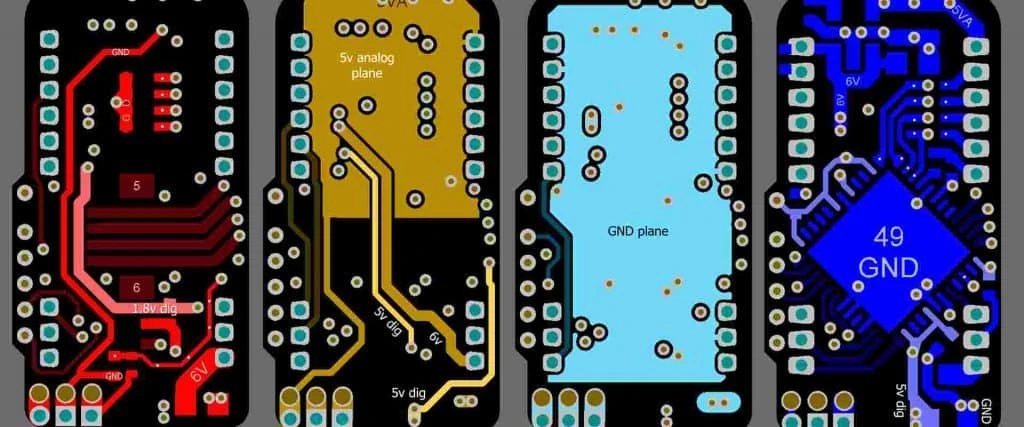
Selecting the right method is only half the battle; successful execution requires a rigorous checkpoint system from the design file to the final cure. This section details the step-by-step implementation of a soldermask exposure tutorial in a production environment.
1. Design Phase: Solder Mask Expansion
- Checkpoint: Ensure the CAD file defines a solder mask opening larger than the copper pad (typically 2–4 mils larger).
- Risk: If expansion is zero (1:1), manufacturing tolerance may cause the mask to cover part of the pad.
- Resource: Review DFM Guidelines for specific expansion rules.
2. Design Phase: Panelization and Fiducials
- Checkpoint: Follow a strict
panelization design guide. Include global fiducials on the panel rails. - Reason: Exposure machines (especially LDI) need these fiducials to align the image to the drilled holes and copper pattern.
3. Pre-Process: Surface Preparation
- Checkpoint: Copper surface must be roughened (micro-etched) and chemically clean.
- Risk: If the surface is smooth or oxidized, the exposed ink will not adhere, regardless of exposure quality.
4. Process: Ink Coating and Pre-Bake
- Checkpoint: Achieve uniform thickness. Pre-bake removes solvents but keeps the ink unpolymerized.
- Risk: If pre-bake is too hot, the ink "thermally cures" before exposure, making it impossible to develop (wash away).
5. Process: Exposure (The Core Step)
- Checkpoint: Set energy (mJ/cm²) based on the Stouffer wedge reading.
- Action: For LDI, load the correct CAM data. For film, ensure the vacuum drawdown is perfect (<0.2 bar absolute pressure) to prevent light leakage.
6. Process: Hold Time
- Checkpoint: Allow a 15–30 minute hold time after exposure before development.
- Reason: This allows the polymerization reaction to stabilize.
7. Process: Development
- Checkpoint: Use Sodium Carbonate (typically 1%) at controlled temperature.
- Risk: "Scumming" (residue) occurs if the developer is too weak or the spray pressure is too low.
8. Post-Process: Final Cure
- Checkpoint: High-temperature bake (150°C+) to finalize the cross-linking.
- Validation: The mask should withstand the tape test and solvent resistance test.
9. Topography Check: Inner Layer Etching
- Checkpoint: For multilayers,
inner layer etching controlis vital. - Reason: If inner layers are over-etched, the pre-preg flows into deep voids, creating an uneven outer surface. This unevenness makes it difficult to coat soldermask uniformly, leading to inconsistent exposure results (thick areas under-cure, thin areas over-cure).
10. Final Inspection
- Checkpoint: Check for encroachment (mask on pad) and slivers (thin floating pieces of mask).
Common mistakes (and the correct approach)
Even with strict checkpoints, errors occur. Identifying these common pitfalls is an essential part of any soldermask exposure tutorial.
1. The "Vacuum Gap" Error
- Mistake: In film exposure, air gets trapped between the film and the PCB surface.
- Result: Light diffracts (bends) under the film's opaque areas. This causes the solder mask opening to shrink or become fuzzy.
- Correction: Improve vacuum drawdown time or switch to LDI which requires no vacuum contact.
2. Ignoring Lamp Aging
- Mistake: Assuming the UV lamp intensity is constant. UV bulbs degrade over time.
- Result: The same time setting delivers less energy, leading to underexposure and peeling mask.
- Correction: Use an integrating radiometer that measures energy (accumulated dose), not just time.
3. Incorrect Scaling Factors
- Mistake: Using 1:1 artwork on a panel that has shrunk during lamination.
- Result: The mask openings drift off-center across the panel (misregistration).
- Correction: Measure the panel before exposure and apply global scaling factors to the artwork.
4. Over-Aggressive Development
- Mistake: Increasing developer speed or concentration to fix "sticky" mask issues.
- Result: This attacks the sidewalls of the exposed mask, causing severe undercut and weakening the dam.
- Correction: Fix the root cause (underexposure) rather than compensating with aggressive chemistry.
5. Neglecting Environmental Control
- Mistake: Exposing boards in a room with uncontrolled humidity or temperature.
- Result: The artwork film expands/contracts (if using film), or the ink viscosity changes.
- Correction: Maintain a Class 10,000 cleanroom environment with strict temp/humidity controls (e.g., 22°C ±2°C, 50% RH).
6. Poor Handling of Halation
- Mistake: Not accounting for light reflecting off the shiny copper surface back into the mask.
- Result: The mask cures in areas it shouldn't (bridging small gaps).
- Correction: Use darker copper oxide treatments or specific LDI parameters to minimize reflection effects.
FAQ
Q1: What is the difference between LDI and traditional film exposure? LDI (Laser Direct Imaging) uses a UV laser to draw the image directly from digital data onto the PCB. Traditional exposure uses a physical phototool (film) and a flood UV light. LDI is more accurate and handles distortion better but is generally slower.
Q2: Why is my solder mask peeling off after HASL? This is usually due to underexposure (insufficient energy to cross-link the polymer) or poor surface preparation (copper was oxidized or dirty before ink application).
Q3: What is a Stouffer Wedge? It is a strip of film with 21 steps of increasing opacity. It is placed on the PCB during exposure. By seeing which "step" the ink remains on after developing, manufacturers verify the exposure energy level.
Q4: Can I repair a board with bad exposure? If caught after developing but before final cure, the ink can be stripped off chemically, and the board can be re-coated and re-exposed. Once cured, it is permanent.
Q5: How does copper thickness affect exposure? Thicker copper (e.g., 3oz) creates deeper "valleys" between traces. The ink is thicker in these valleys. You need higher exposure energy or multi-wavelength UV to ensure the light penetrates to the bottom of these thick ink deposits.
Q6: What is "solder mask encroachment"? This happens when the solder mask flows or is exposed onto the copper pad where components are supposed to be soldered. It causes soldering defects.
Q7: Why are black and white solder masks harder to expose? Black ink contains carbon which absorbs UV; white ink contains titanium dioxide which reflects UV. Both prevent the light from easily reaching the bottom of the ink layer, requiring higher energy and tighter process windows.
Q8: Does the surface finish happen before or after exposure? Surface finishes (like ENIG, HASL, Immersion Silver) happen after the solder mask is exposed, developed, and cured. The mask defines where the finish will be applied. See PCB Surface Finishes for more details.
Q9: What is the minimum solder dam width APTPCB can achieve? With LDI technology, APTPCB can achieve solder dams as small as 3 mil (75µm) for green mask, though 4 mil is standard for robust manufacturability.
Q10: How do I specify exposure requirements in my Gerber files? You don't specify "exposure energy" in Gerbers. You specify the result: the solder mask opening size. The manufacturer calculates the necessary process parameters to achieve that geometry.
Glossary (key terms)
| Term | Definition |
|---|---|
| Actinic Light | Light in the UV spectrum (usually 365nm) capable of causing chemical changes in the photoresist. |
| Collimated Light | Light rays that are parallel. Essential for film exposure to prevent light from creeping under the artwork. |
| Development | The chemical process (usually alkaline) that dissolves unexposed (soft) solder mask ink. |
| Fiducial | An optical marker on the PCB panel used by the exposure machine to align the image to the board. |
| Halation | The spreading of light beyond its intended boundaries, often caused by reflection off the copper. |
| LDI (Laser Direct Imaging) | A digital exposure method that eliminates phototools/films. |
| Mylar / Diazo | Types of films used in contact printing. Mylar is stable; Diazo is semi-transparent but blocks UV. |
| Overhang | When the top of the solder mask cures wider than the bottom, creating a mushroom shape. |
| Photoinitiator | The chemical ingredient in solder mask ink that reacts to UV light and triggers hardening. |
| Polymerization | The chemical reaction where small molecules link together to form a solid plastic (the cured mask). |
| Registration | The accuracy of the alignment between the solder mask image and the copper pads. |
| Solder Dam | The bridge of solder mask material between two adjacent copper pads. |
| Stouffer Step | A unit of measure derived from a standardized step-wedge film to quantify exposure dosage. |
| Tenting | Using solder mask to cover a via hole completely (like a tent) rather than filling it. |
| Undercut | When the developer attacks the sidewall of the mask, making the bottom narrower than the top. |
Conclusion (next steps)
Mastering the soldermask exposure tutorial is about recognizing that this process is the primary guardian of PCB reliability. It is the step that transforms a delicate etched copper sheet into a robust electronic component capable of withstanding soldering heat and environmental stress. From selecting the right energy density to choosing between LDI and film based on your design's density, every decision impacts the final yield.
For designers, the key takeaway is to ensure your data supports the process—maintain adequate solder mask expansion and follow a robust panelization design guide to aid alignment. For procurement and quality teams, understanding metrics like the Stouffer Step allows you to audit manufacturers effectively.
APTPCB utilizes advanced LDI systems and rigorous process controls to ensure every board meets IPC Class 2 and Class 3 standards. When you are ready to move your design into production, ensure your quote package includes:
- Gerber files with clear Solder Mask layers.
- Stack-up details (copper thickness affects exposure parameters).
- Specific requirements for solder mask color and minimum dam width.
- Any special testing requirements (e.g., specific adhesion standards).
By aligning your design specifications with capable manufacturing processes, you ensure a seamless transition from digital file to physical reality.