
Solder Paste Inspection (SPI) is the most critical quality gate in the Surface Mount Technology (SMT) process, as nearly 70% of soldering defects originate at the printing stage. This spi inspection tutorial provides a practical framework for engineers to establish acceptance criteria, configure machine parameters, and troubleshoot printing errors before components are placed. At APTPCB (APTPCB PCB Factory), we utilize 3D SPI to ensure that solder paste volume, area, and height meet strict IPC specifications, preventing costly rework later in the assembly line.
spi inspection tutorial quick answer (30 seconds)
For engineers setting up a production line, here are the core parameters and boundaries for a successful SPI process:
- Volume Thresholds: Standard acceptance is typically 75% to 125% of the theoretical stencil aperture volume.
- Height Limits: Solder paste height should generally fall between 60µm and 150µm, depending on stencil thickness (usually ±30% of foil thickness).
- Area Coverage: Minimum area coverage is often set at 80% to ensure sufficient wetting pad coverage.
- Offset Tolerance: Maximum X/Y offset is usually restricted to <20% of the pad width to prevent bridging or tombstoning.
- Critical Focus: Prioritize Fine Pitch (0.4mm and below) and BGA pads, as these are most susceptible to insufficient paste.
- Validation: Always perform a "Golden Board" verification after stencil cleaning or new squeegee installation.
When spi inspection tutorial applies (and when it doesn’t)
Understanding when to deploy rigorous SPI protocols ensures cost-effective quality control without unnecessary bottlenecks.
When to apply strict SPI protocols:
- Fine Pitch Components: Essential for 0201, 01005, QFNs, and BGAs where visual inspection is impossible or unreliable.
- High-Reliability Sectors: Mandatory for automotive, medical, and aerospace PCBA where joint reliability is non-negotiable.
- High-Volume Production: Critical for automated feedback loops where SPI data automatically corrects printer alignment.
- Step-Stencil Applications: Necessary to verify complex paste deposition on boards requiring multiple paste heights.
When SPI might be simplified or skipped:
- Prototype Hand Assembly: If paste is applied manually or via a simple jig for a single board, automated SPI is not feasible.
- Large THT-Only Boards: If the board primarily uses Through-Hole Technology with minimal SMT, visual inspection may suffice.
- Low-Density Consumer Electronics: For simple designs with large 1206 components, 2D inspection might replace full 3D volumetric analysis.
spi inspection tutorial rules and specifications (key parameters and limits)
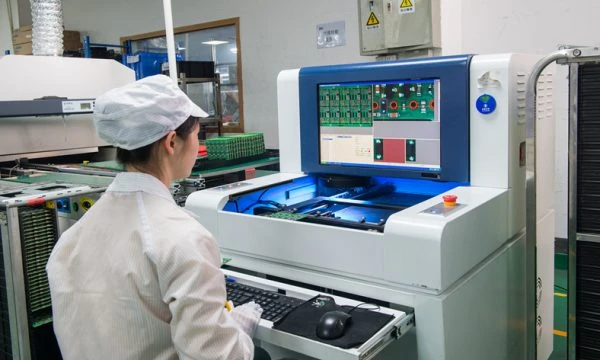
To configure your machine correctly, you must define specific pass/fail criteria. The following table outlines the standard rules used in a robust spi inspection tutorial workflow.
| Rule | Recommended Value/Range | Why it matters | How to verify | If ignored |
|---|---|---|---|---|
| Volume % | 75% – 125% | Ensures enough solder for a strong joint without bridging. | 3D SPI Volumetric Analysis | Dry joints (low) or Short circuits (high). |
| Height % | 70% – 130% of Stencil Foil | Prevents "dog ears" or insufficient peak height for component contact. | Laser Triangulation / Moiré | Open joints or component skewing. |
| Area % | > 80% of Aperture | Guarantees the paste covers enough pad surface for wetting. | 2D/3D Image Processing | Poor wetting angles and weak mechanical bonds. |
| Offset X/Y | < 20% of Pad Width | Prevents paste from touching mask or adjacent pads. | Alignment Fiducial Check | Bridging, tombstoning, or solder balls. |
| Bridge Detection | 0 (None allowed) | Any connection between pads is a guaranteed short. | Algorithm Gap Analysis | Immediate electrical short after reflow. |
| Shape Deformity | < 20% Deviation | Indicates slumping or poor release from stencil. | Contour Analysis | Inconsistent joint shapes and potential voids. |
| Coplanarity (BGA) | < 30µm variance | Ensures all balls on a BGA touch the paste simultaneously. | Multi-pad Height Comparison | Head-in-Pillow (HiP) defects on BGAs. |
| Paste Viscosity | Monitor Process Window | Affects how paste rolls and releases, impacting volume. | Rheometer (Offline) | Inconsistent print volume across the board. |
| Squeegee Speed | 20 – 100 mm/sec | Too fast causes skipping; too slow causes bleeding. | Printer Parameter Log | Variable height or smeared paste. |
| Separation Speed | 0.5 – 2.0 mm/sec | Critical for defining the sharpness of the paste brick edges. | Printer Setup Screen | "Dog ears" or peaked paste deposits. |
spi inspection tutorial implementation steps (process checkpoints)
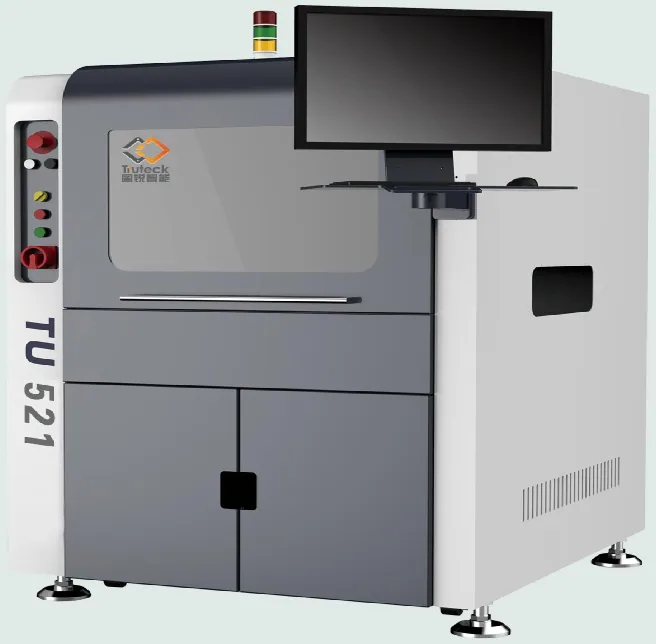
Implementing SPI requires integrating the inspection machine into the SMT line and establishing a feedback loop.
- Stencil Design & Gerber Import: Load the stencil Gerber data into the SPI machine. Define "Keep Out" areas and identify critical components (BGAs, QFNs) requiring tighter tolerances.
- Zero-Plane Calibration: Calibrate the machine using a bare PCB to establish the "zero height" reference. Warped boards can distort height readings, so ensure the clamping system flattens the PCB effectively.
- Parameter Configuration: Set the Upper Specification Limit (USL) and Lower Specification Limit (LSL) for volume, area, and height based on the table above.
- Teach & Debug: Run a "Golden Board" (a known good print). The machine learns the pad locations and typical reflection characteristics. Adjust lighting settings to eliminate noise from HASL or ENIG finishes.
- First Article Inspection (FAI): Print the first production panel. The SPI machine scans it. Verify any failures manually to rule out false calls. If the print is good, save the settings as the master program.
- Closed-Loop Feedback Setup: Connect the SPI machine to the Solder Paste Printer. Configure the system to trigger an automatic stencil wipe if consecutive defects (e.g., clogged apertures) are detected.
- Production Monitoring: Monitor real-time SPC (Statistical Process Control) charts (X-bar, R-chart). Look for trends, such as gradually decreasing volume, which indicates the stencil needs cleaning or paste needs replenishment.
- Defect Review & Disposition: When the machine flags a defect, the operator must review the 2D/3D image. True defects require the board to be washed and reprinted. False calls require fine-tuning the threshold settings.
spi inspection tutorial troubleshooting (failure modes and fixes)
Even with perfect settings, defects occur. This section of the spi inspection tutorial focuses on diagnosing common failure modes.
Symptom: Insufficient Volume (Low Paste)
- Causes: Clogged stencil apertures, dried paste, low squeegee pressure, or insufficient paste on the stencil.
- Checks: Inspect stencil cleanliness; verify paste roll diameter (should be 15-20mm).
- Fix: Perform an underscreen wipe; add fresh paste; increase squeegee pressure slightly.
- Prevention: Increase automatic wipe frequency.
Symptom: Excessive Height (Peaking/Dog Ears)
- Causes: Poor separation speed (too fast), paste viscosity too high, or stencil snap-off distance incorrect.
- Checks: Verify separation speed settings; check paste expiration/exposure time.
- Fix: Slow down the separation speed; replace old paste.
- Prevention: Control temperature and humidity in the SMT room.
Symptom: Bridging (Shorts)
- Causes: Excessive squeegee pressure causing "pumping," poor board support, or misalignment.
- Checks: Check for paste smearing under the stencil; verify board support pins.
- Fix: Clean the bottom of the stencil thoroughly; reduce pressure; realign PCB.
- Prevention: Use better board support tooling to prevent PCB flex.
Symptom: Offset (Misalignment)
- Causes: PCB not clamped tightly, fiducial recognition error, or stencil stretch.
- Checks: Check fiducial marks on PCB for oxidation; verify transport rail width.
- Fix: Clean fiducials; adjust rail width; recalibrate printer alignment.
- Prevention: Regular maintenance of printer vision system.
Symptom: Scooping (Low Center Height)
- Causes: Squeegee blade is too soft or pressure is too high over large apertures.
- Checks: Inspect rubber/metal blade condition.
- Fix: Switch to a metal squeegee; reduce pressure; use cross-hatch aperture design.
- Prevention: Optimize aperture design for large pads.
Symptom: Random Debris Warnings
- Causes: Dust, fibers, or oxidation on the bare board triggering false calls.
- Checks: Inspect incoming PCB cleanliness.
- Fix: Adjust SPI sensitivity or lighting; use PCB cleaner/web cleaner before printing.
- Prevention: Improve storage conditions for bare PCBs.
How to choose spi inspection tutorial vs other methods
When designing a quality control strategy, engineers often compare SPI with other inspection technologies.
SPI vs. AOI (Automated Optical Inspection): SPI happens before component placement and reflow, focusing solely on solder paste. AOI inspection occurs after reflow (or sometimes pre-reflow) to check component placement, polarity, and final solder joint quality. You need both: SPI prevents defects, while AOI catches placement errors.
SPI vs. X-Ray Inspection: SPI uses optical lights (Moiré fringe) to measure surface topology. It cannot see inside a joint. An x ray inspection intro would explain that X-ray is necessary to see through the component to check BGA voiding or shorting under the package after reflow. SPI predicts BGA quality by measuring paste volume, but X-ray confirms it.
2D vs. 3D SPI: 2D SPI only checks area and coverage (like a camera). 3D SPI measures height and volume. For modern electronics with varying component sizes, 3D is mandatory because a pad can have perfect area coverage but insufficient height, leading to an open joint.
spi inspection tutorial FAQ (cost, lead time, common defects, acceptance criteria, Design for Manufacturability (DFM) files)
1. Does adding SPI increase the cost of PCB assembly? The direct cost is negligible compared to the savings. While there is a machine setup time, SPI reduces rework costs by catching defects before the expensive reflow process. APTPCB includes SPI as a standard part of our quality process for complex boards.
2. How does SPI impact production lead time? It adds minimal time (seconds per panel) to the cycle. The setup is done in parallel with printer setup. For quick turn PCB orders, the slight setup time is worth the risk reduction.
3. What are the acceptance criteria for 0201 passives? For 0201s, volume consistency is key. We typically look for volume >80% and <120%, with zero bridging allowed. Height variation should be strictly controlled to prevent tombstoning.
4. Can SPI detect defects on BGA pads? Yes. SPI is the best tool for preventing BGA defects. It measures the coplanarity of paste deposits across the BGA footprint. If one pad has low volume, it will likely cause a "Head-in-Pillow" defect.
5. What files do I need to send for SPI programming?
You need to provide the Paste Layer Gerber files (usually .GTP or .GBP) and the XY Pick and Place file (for component reference).
6. How do you handle false calls in SPI? False calls often arise from PCB warpage or oxidation on pads. We adjust the height reference plane and optimize lighting angles. We do not simply widen tolerances to ignore them.
7. Is SPI necessary for rigid-flex PCBs? Yes, rigid-flex PCB surfaces can be uneven. 3D SPI is crucial to compensate for the slight height variations at the transition zones to ensure proper paste deposition.
8. What is the difference between Area Ratio and Aspect Ratio in SPI context? These are stencil design terms. Aspect Ratio is Aperture Width / Foil Thickness (>1.5). Area Ratio is Area of Aperture Opening / Area of Aperture Walls (>0.66). SPI verifies if these ratios successfully allowed paste release.
9. Can SPI data be used for DFM? Absolutely. If SPI consistently shows low volume on specific pads, we feed this back to the design team to adjust aperture sizes in the stencil or modify the PCB footprint in future revisions.
10. How does SPI relate to aoi basics? While aoi basics focus on component presence and joint fillets, SPI focuses on the raw material (paste) quantity. A failure in SPI is a leading indicator of a failure in AOI.
spi inspection tutorial glossary (key terms)
| Term | Definition |
|---|---|
| Volume | The total amount of solder paste deposited on a pad, calculated as Area × Height. |
| Coplanarity | The maximum height difference between the highest and lowest paste deposits within a single component footprint (critical for BGAs). |
| Moiré Fringe | An optical technique using interference patterns to measure the 3D height of the solder paste. |
| Slump | The tendency of solder paste to spread out and lose height after printing but before reflow. |
| Bridging | Solder paste connecting two adjacent pads, leading to a short circuit. |
| Dog Ears | Peaks of paste at the corners of a pad caused by poor separation from the stencil. |
| Tombstoning | A defect where a component stands up on one end; often caused by uneven paste volume (detected by SPI). |
| Zero Plane | The reference height level of the bare PCB surface (solder mask) used to calculate paste height. |
| SPC | Statistical Process Control; using SPI data to monitor process stability over time. |
| Transfer Efficiency | The percentage of paste volume deposited on the PCB compared to the aperture volume. |
Request a quote for spi inspection tutorial (Design for Manufacturability (DFM) review + pricing)
Ready to ensure your PCBA yield is maximized? APTPCB provides comprehensive 3D SPI inspection as part of our assembly services, ensuring your boards meet the highest reliability standards.
To get a precise quote and DFM review, please send:
- Gerber Files: Specifically the Paste Layer and Copper Layers.
- BOM (Bill of Materials): To identify critical components like BGAs or fine-pitch connectors.
- Assembly Drawings: Indicating any special masking or paste requirements.
- Quantity: Prototype or Mass Production volume.
Conclusion (next steps)
Implementing a robust spi inspection tutorial workflow is the single most effective step to reducing SMT defects. By strictly monitoring volume, height, and offset parameters, engineers can virtually eliminate soldering issues before they become permanent. Whether you are prototyping a complex HDI board or scaling up production, relying on data-driven SPI processes ensures that every joint is mechanically and electrically sound.